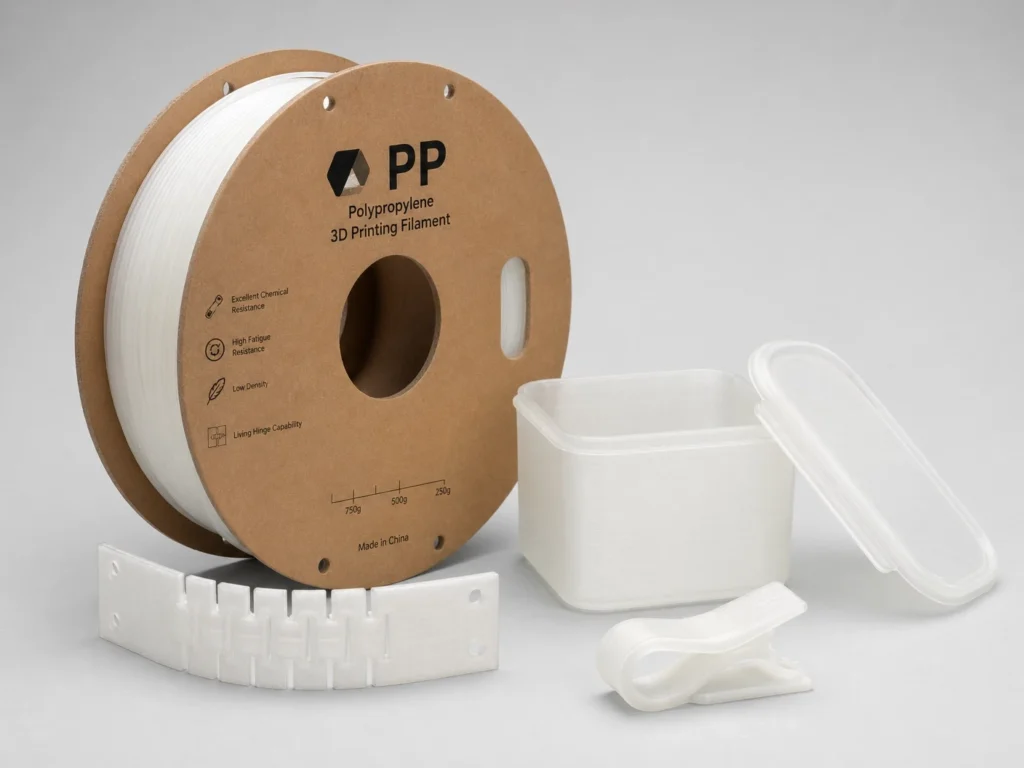
نعم، يوجد خيوط طباعة ثلاثية الأبعاد من البولي بروبلين. في سوق الطباعة ثلاثية الأبعاد، تُباع عادةً على أنها خيوط البولي بروبيلين بروبيلين أو خيوط البولي بروبلين لطباعة FFF أو FDM. ومن الأمثلة الرسمية على ذلك مادة Ultrafuse® PP من شركة BASF Forward AM و UltiMaker PP وFiberlogy PP وForfutura Centaur PP وBCN3D PP. وهذا يعني أن البولي بروبيلين ليس مجرد مادة معملية أو مادة وسيطة صناعية مخصصة للحبيبات. فهو متوفر بالفعل كخيوط تجارية حقيقية للطابعات المكتبية والطابعات الاحترافية القائمة على الخيوط.
السؤال الأكثر فائدة ليس ما إذا كان خيوط PP موجودة أم لا. فهو موجود. السؤال الأكثر فائدة هو ما إذا كان خياراً جيداً لتطبيقك. تتمتع مادة البولي بروبيلين بسمعة قوية في التصنيع التقليدي، ولكن لا يزال من الصعب طباعتها أكثر من المواد المبتدئة مثل PLA. الأدلة الرسمية من Prusa و UltiMaker كلاهما يوضح ذلك. تقول Prusa أنه لا يُنصح باستخدام البولي بروبيلين للمبتدئين بسبب سعره المرتفع وصعوبة طباعته، بينما تقول UltiMaker أنه من الصعب استخدام البولي بروبيلين في الطباعة ثلاثية الأبعاد على الرغم من أنه أحد أكثر أنواع البلاستيك استخدامًا في العالم.
ما هو خيوط الطباعة ثلاثية الأبعاد من البولي بروبلين
خيوط الطباعة ثلاثية الأبعاد المصنوعة من البولي بروبلين هي خيوط من نفس عائلة البوليمر العامة المستخدمة في العديد من منتجات التعبئة والتغليف والمنتجات المنزلية والسيارات والمنتجات الصناعية. تصف BCN3D البولي بروبيلين بأنه بلاستيك حراري شبه بلوري معروف بمقاومته للعوامل الكيميائية ومقاومة الصدمات ومقاومة التآكل والمرونة والمتانة. يصف صانع البولي ميكر البولي بروبيلين بأنه بلاستيك حراري خفيف الوزن ومقاوم للإجهاد يعمل بشكل جيد للنماذج الأولية الوظيفية وأجزاء الاستخدام النهائي التي تواجه ضغوطًا متكررة أو بيئات قاسية.
هذا الأمر مهم لأن خيوط البولي بروبيلين PP ليست مادة هواية زخرفية في الأساس. وعادةً ما يتم اختياره من أجل الأجزاء الوظيفية. تقول شركة BASF أن Ultrafuse® PP مصنوع للأجزاء التي تحتاج إلى تحمل الإجهاد والإجهاد والبيئات العدوانية كيميائيًا. كما أنها تتميز بالكثافة المنخفضة والمقاومة الكيميائية ومقاومة التعب. وبكلمات بسيطة، يوجد خيوط PP لأن بعض المستخدمين يحتاجون إلى مادة تتصرف مثل البلاستيك الصناعي الحقيقي أكثر من PLA.
لماذا يستخدم الناس خيوط PP
السبب الأكبر الذي يجعل الناس يستخدمون خيوط البولي بروبلين هو التوازن بين خفة الوزن والمرونة والمقاومة الكيميائية. تسلط شركة BASF الضوء على المتانة ومقاومة الإجهاد ومقاومة المواد الكيميائية والكثافة المنخفضة. تسلط شركة Polymaker الضوء على المرونة والمقاومة الكيميائية والمتانة. كما تقوم شركة Fiberlogy أيضًا بتسويق البولي بروبيلين بروبيلين من أجل المرونة وانخفاض الوزن والمتانة ومقاومة المواد الكيميائية. هذه ليست فوائد صغيرة. إنها الأسباب الدقيقة التي تجعل PP جذابًا للأجزاء الهندسية والأجزاء الملامسة للسوائل والمكونات خفيفة الوزن.
ومن المزايا الرئيسية الأخرى مقاومة الإجهاد, مما يعني أن المادة يمكنها التعامل مع الانحناء المتكرر بشكل أفضل من العديد من الخيوط الشائعة. وتقول شركة UltiMaker إن مادة PP لديها مقاومة عالية للإجهاد ولا تنكسر عند ثنيها بشكل متكرر، وتشير مباشرة إلى مفصلات حية والمشابك كاستخدامات نموذجية. يقول دليل المبتدئين أن البولي بروبيلين بروبيلين خيار رائع للطباعة ثلاثية الأبعاد للمفصلات الحية لأنها تحافظ على شكلها ووظيفتها تحت الثني المتكرر. وهذا أحد أوضح الأسباب التي تجعل للـ PP مكانًا حقيقيًا في الطباعة ثلاثية الأبعاد. بعض الأجزاء لا تحتاج إلى أن تكون شديدة الصلابة. فهي تحتاج إلى الانحناء مرارًا وتكرارًا دون أن تفشل.
السبب الثالث هو مقاومة المواد الكيميائية. تقول شركة Prusa أن الـ PP مناسب لمعدات المعامل وحاويات سوائل المحركات. وتضع شركة BASF خيوط البولي بروبيلين بروبيلين للنماذج الأولية والأدوات التي تتلامس مع المواد الكيميائية. تقول شركة BCN3D أن خيوط البولي بروبيلين شائعة الاستخدام في تغليف المواد الغذائية والكيميائية لأنها لا تتفاعل بسهولة مع العديد من المواد. هذا لا يعني أن كل جزء مطبوع آمن تلقائيًا لكل مادة كيميائية. ولكن هذا يعني أن مادة PP جذابة عندما يكون الجزء المطبوع ملامسًا للمنظفات أو السوائل أو الوسائط العدوانية التي قد تكون أصعب على بعض الخيوط الأخرى.
لماذا لا تزال طباعة خيوط البولي بروبيلين البولي بروبيلين أصعب في الطباعة
على الرغم من أن خيوط البولي بروبلين حقيقية ومفيدة، إلا أنها لا تزال ليست واحدة من أسهل المواد للطباعة. المشكلة الرئيسية هي التصاق السرير. تقول Prusa إن الالتصاق بألواح البولي بروبيلين القياسية ضعيف للغاية بشكل عام، ولهذا السبب تقدم ورقة PP مخصصة لطباعة البولي بروبيلين. تقول ماتر هاكرز أيضًا أن البولي بروبيلين محدود للغاية فيما يحب أن يلتصق به ويميل بشدة إلى الالتواء إذا لم يتم التعامل مع الطبقة الأولى بشكل جيد.
يخلق هذا الالتصاق الضعيف مشكلة ثانية وهي الالتواء. عندما تتقلص المادة وترتفع من السرير، تصبح المطبوعات المسطحة الكبيرة غير موثوقة. يقول UltiMaker إن البولي بروبلين يمكن أن يكون من الصعب استخدامه في الطباعة ثلاثية الأبعاد، وتوصي BCN3D بمنتج التصاق محدد لمواد البولي بروبلين وتقترح تسخين السرير قبل الطباعة لتقليل الالتواء. يقول ماتر هاكرز إن وجود رابطة قوية للطبقة الأولى أمر بالغ الأهمية لأن البولي بروبلين لديه ميل قوي للالتواء وحساس لدرجة الحرارة.
ولهذا السبب غالبًا ما يوصف خيوط PP بأنها المواد التقنية, ليست مادة للمبتدئين. تعطيها Prusa نطاق فوهة يتراوح بين 220-270 درجة مئوية ونطاق سرير يتراوح بين 85-100 درجة مئوية، ثم تقول إنها لا يوصى بها للمبتدئين. تصف FormFutura أيضًا مادة Centaur PP الخاصة بها بأنها وسيط مادة وتعطي نطاق طباعة يتراوح بين 245 و270 درجة مئوية مع سرير 80-85 درجة مئوية. لذا، نعم، خيوط البولي بروبيلين بولي بروبيلين موجودة، ولكنها عادةً ما تتطلب من الطابعة والمستخدم أكثر مما يتطلبه PLA أو PETG الأساسي.
ما تحتاجه عادةً لطباعته بشكل جيد
عادةً ما تبدأ الطباعة PP الناجحة بـ سطح البناء الأيمن. تقول شركة Prusa إن ورقة PP الخاصة بها موجودة لأن التصاق البولي بروبيلين PEI القياسي ضعيف بالنسبة للبولي بروبيلين. تقول شركة BASF أن لوح البولي بروبيلين فائق الصهر® Ultrafuse PP الخاص بها يطبع جيدًا على ماكينات FFF القياسية عند استخدامه مع أسطح البناء المتوافقة مع البولي بروبلين. تقول MatterHackers أن سطح بناء البولي بروبيلين المخصص ومحلول التصاق سرير خاص بالبولي بروبيلين يمكن أن يحسن النجاح بشكل كبير.
وغالبًا ما تحتاج أيضًا إلى سرير ساخن ونافذة درجة الحرارة المناسبة. توصي Prusa ب 220-270 درجة مئوية عند الفوهة و85-100 درجة مئوية على السرير. تسرد BCN3D 210-240 درجة مئوية مع سرير 70 درجة مئوية لملف PP الخاص بها، وتوصي بالتسخين المسبق للقاعدة الساخنة لمدة خمس دقائق قبل الطباعة. تسرد FormFutura ما يقرب من 245-270 درجة مئوية مع سرير 80-85 درجة مئوية لسرير Centaur PP. هذه النطاقات ليست متطابقة لأن المنتجات والطابعات تختلف، ولكنها تشير جميعها إلى نفس الفكرة: خيوط PP هي خيوط تقنية حقيقية مع نافذة طباعة خاصة بها، وليست بديلاً لإعدادات PLA.
التخزين مهم أيضًا. توصي BCN3D بحفظ بكرات PP في صندوق أو حاوية محكمة الإغلاق مع مادة مجففة عندما لا تكون قيد الاستخدام. هذه النصيحة بسيطة ولكنها مفيدة. حتى عندما تكون المادة أقل إزعاجًا من النايلون من حيث الرطوبة، فإن التخزين المستقر لا يزال يدعم الطباعة الأكثر موثوقية. لا تزال التهوية مهمة أيضًا. تقول BCN3D أن مادة PP تنبعث منها مستويات منخفضة من الغازات والجسيمات عند الطباعة وتوصي بالطباعة في منطقة جيدة التهوية.
ما هو خيوط البولي بروبيلين البولي بروبيلين الأفضل للاستخدام
خيوط البولي بروبلين هي الأفضل لـ الأجزاء الوظيفية التي تحتاج إلى المرونة أو مقاومة التعب أو الوزن الخفيف أو المقاومة الكيميائية. تشير Prusa إلى معدات المختبرات وحاويات سوائل المحرك. تشير شركة UltiMaker إلى المفصلات الحية والمشابك والنماذج الأولية المصنوعة من نفس المواد المستخدمة في الاستخدام النهائي. وتشير شركة BASF إلى النماذج الأولية الملامسة للمواد الكيميائية والأدوات والرقصات والحاويات والحاويات والحاويات المرنة. هذه كلها حالات استخدام عملية. وهي تُظهر أن البولي بروبيلين بروبيلين هو الأقوى عندما يكون للجزء المطبوع وظيفة حقيقية.
كما أنها مادة قوية لـ الحاويات والأجزاء المرنة الرقيقة. يقول دليل شركة UltiMaker أن البولي بروبيلين متعدد البروبيلين يستخدم على نطاق واسع لتصنيع حاويات تخزين السوائل. تقول FormFutura إن الطباعة المانعة للماء ممكنة مع الطباعة أحادية الجدار على بعض منتجات البولي بروبيلين البولي بروبيلين، وتسلط الضوء على الالتصاق الممتاز بين الطبقات والخصائص المرنة والمقاومة الكيميائية العالية. وهذا يجعل الـ PP أكثر جاذبية من PLA عندما يحتاج الجزء إلى ثني متكرر أو تلامس السوائل أو مادة منخفضة الكثافة.
وفي الوقت نفسه، لا تكون مادة PP عادةً الخيار الأول للنماذج المرئية البسيطة أو المطبوعات الزخرفية أو مشاريع المبتدئين. إذا كان الجزء لا يحتاج إلى مقاومة كيميائية أو مفصلات حية أو وزن منخفض، فقد تكون المواد الأخرى أسهل وأرخص في الاستخدام. تقول Prusa هذا بوضوح من خلال عدم التوصية بالـ PP للمبتدئين. هذا درس شراء مفيد. الخيوط الجيدة ليست تلك التي تحتوي على قصة المواد الأكثر إثارة للإعجاب. بل هو الذي يتطابق مع حالة الاستخدام الحقيقي.
هل هو آمن للطعام؟
يحتاج هذا الموضوع إلى إجابة دقيقة. يُستخدم البولي بروبيلين كبوليمر على نطاق واسع في التعبئة والتغليف، ويبيع بعض صانعي الخيوط درجات محددة مع ادعاءات ملامسة الطعام. على سبيل المثال، تقول FormFutura أن النوع الطبيعي من Centaur PP متوافق مع الأغذية. ولكن تقول شركة UltiMaker أيضًا أنها لا أوصي بمنتجات الطباعة ثلاثية الأبعاد للطعام أو الشراب لأن طابعاتها ليست مصممة لتكون آمنة على الطعام.
لذا فإن الاستنتاج الأسلم هو هذا: قد تستند بعض خيوط البولي بروبيلين بولي بروبيلين على درجات مواد متوافقة مع المواد الغذائية، ولكن هذا لا يجعل كل جزء مطبوع آمنًا على الطعام بشكل افتراضي. فالطابعة، وحالة الفوهة، وسطح الطباعة، ومخاطر التلوث، وهندسة الجزء النهائي كلها أمور مهمة. بالنسبة لكتابة المقالات وتثقيف العملاء، يعد هذا تمييزًا مهمًا. فهو يمنع المبالغة في بيع المواد.
توجد أيضًا خيوط البولي بروبيلين بروبيلين معدلة
من العلامات المفيدة الأخرى على أن خيوط البولي بروبيلين البولي بروبيلين هي فئة حقيقية وناضجة هي أنها لم تعد تقتصر على البولي بروبيلين البولي بروبيلين العادي بعد الآن. هناك أيضًا مركبات الـ PP المقواة. تبيع BCN3D مادة PP GF30، وهي خيوط بولي بروبيلين مع ألياف زجاجية 30% للأجزاء خفيفة الوزن وثابتة الأبعاد. تسرد FormFutura أيضًا مادة PP المقواة بألياف الكربون للاستخدام الصناعي. هذه المنتجات أكثر تخصصًا، لكنها تُظهر أن عائلة البولي بروبيلين بروبيلين في الطباعة ثلاثية الأبعاد قد توسعت بالفعل إلى ما هو أبعد من الخيوط المرنة القياسية.
وهذا يعني أيضًا أنه يمكن للمستخدمين اختيار PP بطرق مختلفة. يكون ال PP العادي منطقيًا عندما تكون المرونة والمقاومة الكيميائية والأداء المفصلي أكثر أهمية. يكون PP المملوء أكثر منطقية عندما يريد المستخدم مزيدًا من الصلابة أو ثبات الأبعاد مع الحفاظ على بعض المزايا الكيميائية والوزن للبولي بروبيلين. وبعبارة أخرى، لم يعد البولي بروبلين خيار مادة واحدة ضيقة في الطباعة ثلاثية الأبعاد. إنها الآن عائلة مواد أوسع نطاقًا.
كيفية اتخاذ قرار ما إذا كان خيوط البولي بروبيلين بروبيلين مناسبة لك أم لا
إذا كان الجزء الخاص بك يحتاج إلى مفصلات حية، أو مفصلات حية، أو انثناء متكرر، أو مقاومة كيميائية، أو وزن خفيف، أو نفس البوليمر الأساسي كمنتج نهائي مصبوب من البولي بروبيلين متعدد البروم, فإن خيوط PP تستحق الاهتمام الجاد. تقوم كل من UltiMaker و BASF و Prusa و Polymaker و BCN3D بوضع خيوط PP حول نقاط القوة هذه. وهذا يعطي نمطًا واضحًا عبر السوق.
إذا كان الجزء الخاص بك يحتاج إلى سهولة الطباعة وانخفاض المخاطر وبساطة الالتصاق بالسرير, ، PP ليس عادةً الطريق الأسهل. تقول Prusa إنها ليست للمبتدئين. توجد ورقة PP المخصصة لـ Prusa لأن الالتصاق العادي ضعيف. تنفق كل من MatterHackers و BCN3D الكثير من الاهتمام على الالتصاق والتحكم في الالتواء. لذا فإن PP حقيقي، ولكنه يكافئ المستخدمين الذين لديهم إعداد طابعة وسير عمل جاهز للمواد التقنية.
نعمل في Ecocretefiber™ في شركة Ecocretefiber™ في الغالب في مجال البولي بروبلين من زاوية مواد البناء وليس من زاوية الطباعة المكتبية. ومع ذلك، لا يزال هذا الموضوع مفيدًا لأنه يُظهر مدى اتساع عائلة مواد البولي بروبيلين. إن عائلة البوليمر نفسها التي تظهر في الألياف الخرسانية والبلاستيك الصناعي لها أيضًا مكان قوي في الطباعة بتقنية FDM وFFF عندما يحتاج التطبيق إلى المرونة والوزن المنخفض والمتانة الكيميائية.
الخاتمة
نعم، يوجد خيوط طباعة ثلاثية الأبعاد من البولي بروبلين. يباع عادةً على أنه خيوط البولي بروبيلين بروبيلين, وهي متوفرة من الشركات المصنعة المعروفة مثل BASF Forward AM و UltiMaker و Fiberlogy و FormFutura و BCN3D وغيرها. والسبب في وجودها بسيط: يمنح البولي بروبيلين المستخدمين مزيجًا مفيدًا من الوزن الخفيف والمرونة ومقاومة التعب والمقاومة الكيميائية التي لا يمكن للعديد من خيوط الهوايات الشائعة أن تضاهيها.
والإجابة الأكثر اكتمالاً هي أن خيوط PP عبارة عن حقيقية ولكن أكثر تطلبًا مادة الطباعة ثلاثية الأبعاد. وهي ليست عادةً الخيار الأسهل للمبتدئين لأن التصاق السرير والالتواء يمكن أن يكون صعبًا. ولكن عندما يحتاج الجزء إلى مفصلات حية، أو مقاومة للتلامس الكيميائي، أو أداء وظيفي مرن، أو كثافة منخفضة، يمكن أن يكون خيوط البولي بروبلين أحد أفضل الخيارات المتاحة من المواد. هذه هي الطريقة الأكثر صدقًا للإجابة على السؤال، وهي أيضًا أفضل طريقة لوضع المادة للمستخدمين الجادين.