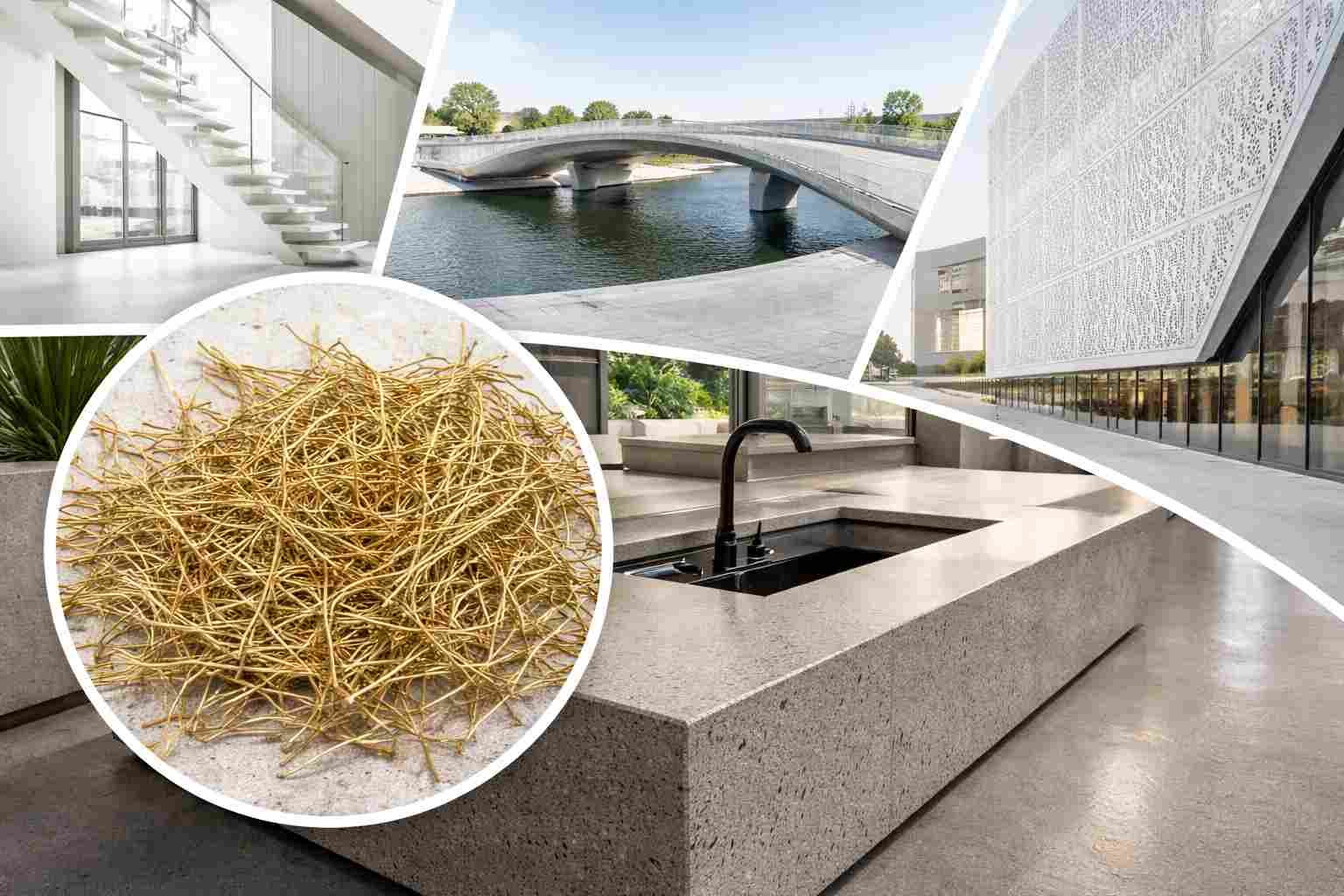
当人们问及 “What is brass-coated steel fiber?”, the simplest answer is this: it is a steel fiber with a thin layer of brass on its surface. Brass itself is a copper-zinc alloy. In concrete work, this product is often a small, straight, high-strength steel fiber used in UHPC, UHPFRC, and RPC rather than a large hooked-end floor fiber. FHWA describes the common UHPC fiber as a high-tensile steel fiber with a thin brass coating, and it explains that the brass layer helps during drawing and also gives corrosion resistance to the raw fibers.
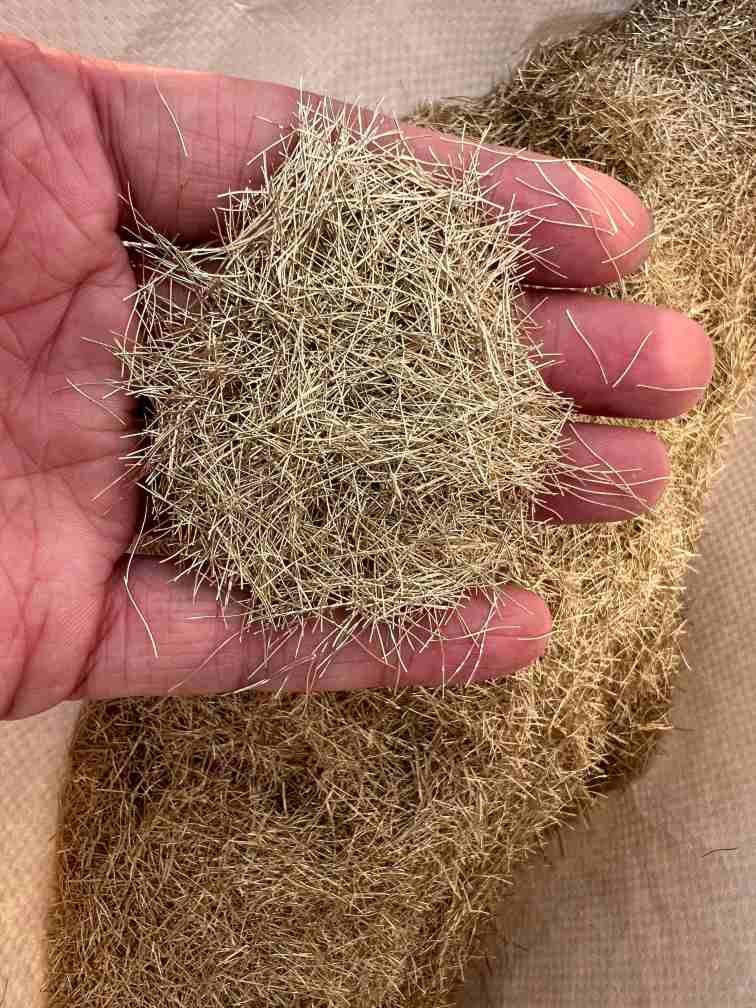
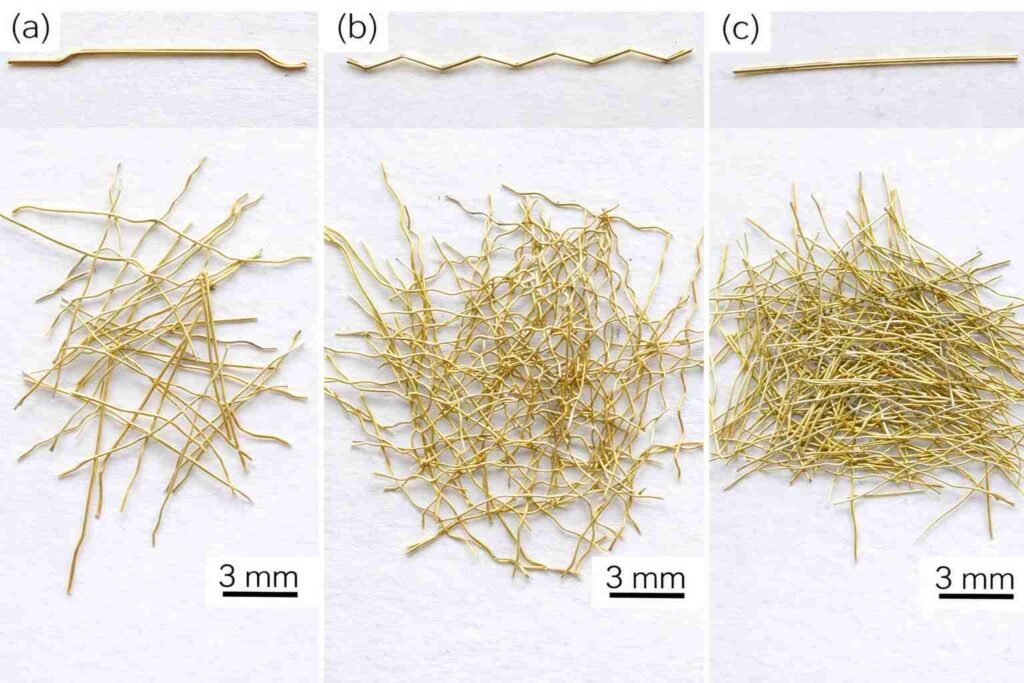
This is why the product often looks different from ordinary steel fiber. Many standard steel fibers for slabs or shotcrete are dark gray and easy to identify as plain steel. Brass-coated steel fibers often have a gold-toned surface because of the brass layer. FHWA even notes in one UHPC implementation transcript that the fibers look gold because they are brass coated. In real projects, this type of fiber is widely linked to UHPC rather than ordinary low-strength concrete.
简短回答
A brass-coated steel fiber is a steel reinforcement fiber, usually straight and small in diameter, with a thin brass surface coating. It is mainly used to improve crack bridging, toughness, tensile behavior, and post-crack performance in very dense cementitious materials such as UHPC. The coating is not there only for color. Available sources point to three common reasons: it helps the wire-drawing process, it provides protection for the raw fibers during storage and transport, and it can influence how the fiber interacts with the cement matrix.
That said, the coating does not change the fact that the fiber is still a steel fiber. Its main reinforcement role still comes from the steel core, the fiber geometry, and the bond or pullout behavior inside concrete. In other words, brass coating is helpful, but it is not the whole story. The final result still depends on fiber length, diameter, tensile strength, dosage, dispersion, and the concrete matrix around it.
What the “Brass-Coated” Part Really Means
这个词 brass means a copper-zinc alloy. So a brass-coated steel fiber is not a bronze fiber, and it is not a pure copper-coated fiber in the strict metallurgical sense. It is steel with a thin copper-zinc surface layer. Research on the surface of these fibers confirms that the brass layer contains copper and zinc, and microscopy studies have examined how that surface behaves once the fiber is embedded in a cement-based material.
In practical manufacturing terms, the brass layer is thin. FHWA states that the steel fibers in a common UHPC mix had a thin brass coating that provides lubrication during the drawing process and corrosion resistance for the raw fibers. That is an important detail because it shows the coating is not only about in-service performance. It also helps during production and handling before the fiber ever reaches the mixer.
This also explains why buyers should avoid thinking of brass-coated steel fiber as a completely different class of reinforcement. It is better understood as a specialized steel fiber surface treatment, most often seen on fine straight fibers for high-performance concrete systems. The steel still provides the main strength. The coating changes surface behavior and handling.
What Brass-Coated Steel Fiber Usually Looks Like
In the market, brass-coated steel fiber is usually a micro steel fiber or a fine straight steel fiber, not a large hooked-end fiber for industrial floors. Several research papers on UHPC and RPC used straight brass-coated steel fibers with dimensions around 13 mm length 和 0.2 to 0.3 mm diameter. Reported tensile strengths are often above 2000 MPa, and one study listed 2850 MPa with an elastic modulus of 200 GPa for a straight brass-coated steel fiber used in reactive powder concrete. Another UHPC study reported brass-coated straight fibers with 13 mm length and 0.3 mm diameter.
These numbers should be treated as common examples, not as a universal rule. Other studies have used shorter or longer brass-coated fibers, and at least one recent UHPC paper compared short straight, long straight, and hooked-end brass-coated fibers in the same matrix. That means brass coating is not limited to one exact shape or one exact size, even though the most familiar commercial version is the short straight micro steel fiber used in UHPC.
For buyers, this is an important point. If a supplier says “brass-coated steel fiber,” that is still not enough information. You should also ask whether it is straight or hooked-end, micro or macro, what the length and diameter are, and what tensile strength the supplier declares. The name alone is too broad for a good buying decision.
Where Brass-Coated Steel Fiber Is Used
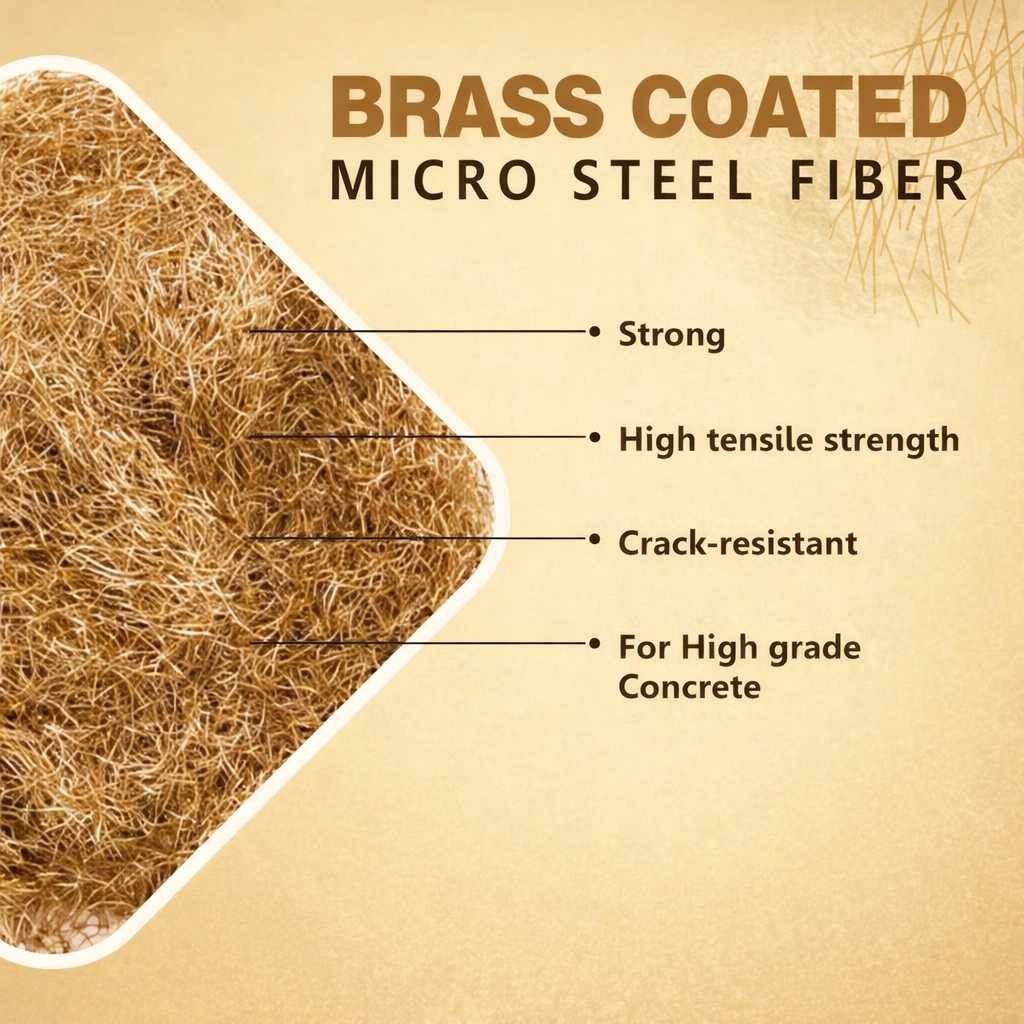
The most common answer is UHPC and UHPFRC. FHWA documents on UHPC connections describe steel fibers of about 12.7 mm length and 0.2 mm diameter with thin brass coating used in UHPC. Academic studies on UHPC, RPC, and UHPFRC also repeatedly use straight brass-coated steel fibers as the standard reinforcing fiber in dense, high-strength cementitious matrices.
This use is logical. UHPC has very high compressive strength, but it still needs discrete fibers to bridge cracks and carry tensile stress after the matrix cracks. FHWA explains that final tensile failure of UHPC generally occurs when the steel fiber reinforcement begins to debond and pull out from the matrix. In other words, the fiber–matrix interface is one of the key parts of UHPC performance, and brass-coated fibers are one of the fiber types often used in that system.
Brass-coated steel fibers also appear in bridge connections, prefabricated deck joints, thin UHPC overlays, impact-resistant cementitious composites, and other advanced precast or repair systems. FHWA has documented field-cast UHPC connections for bridges and notes the role of steel fiber reinforcement in maintaining tensile capacity after cracking. Other research has used brass-coated micro steel fibers in impact, blast, and high-temperature RPC studies.
So, if someone asks whether brass-coated steel fiber is used in normal ready-mix floors, the answer is usually “not as the first choice.” It is far more strongly associated with high-performance cement-based materials than with everyday slab reinforcement. That is why this product is often sold as a premium, specialized fiber rather than a general steel fiber for all concrete jobs.
Why Brass-Coated Steel Fiber Is Used
The first reason is the same reason any steel fiber is used in UHPC: it helps the concrete carry load after cracking. Reviews and FHWA reports show that steel fibers in UHPC improve tensile response, toughness, ductility, crack control, and energy absorption. These gains are critical in a brittle matrix like UHPC.
The second reason is the surface coating itself. FHWA says the thin brass coating provides lubrication during the drawing process and corrosion resistance for the raw fibers. A recent Springer paper also states that the brass coating protects the steel fibers from corrosion, improves tensile performance, and reduces friction among fibers, which can help prevent fiber balling during mixing.
The third reason is interface behavior. A ScienceDirect study focused directly on the effects of brass coating on the steel fiber–matrix interface in cement-based composites. That paper notes that brass is the most commonly used coating for steel fibers and that the coating is an important factor in interfacial properties because it is the part that directly touches the cement matrix. This matters because good reinforcement in fiber concrete depends heavily on bond and pullout behavior, not only on raw fiber strength.
Does the Brass Coating Always Improve Bond?
This is where the honest answer becomes more careful. Not always in a simple way. The literature does not support a blanket claim that brass coating always gives stronger bond in every matrix. The ScienceDirect paper on brass coating says the effect on interfacial properties is still unclear and that previous studies reached different conclusions. The same paper reports that brass-coated fibers can change from bright gold to dark silver after exposure and pullout, and it examined how the brass layer behaves in a cement hydration environment.
A 2022 open-access paper also looked at what happens when brass is removed from steel fibers used in UHPC. That study states that the behavior of brass on the steel fiber surface in the UHPC matrix is not yet fully understood, and it discusses prior findings that the matrix can potentially dezincify the brass. In simple words, the brass layer may change in the alkaline cement environment, so its effect is more complex than many sales descriptions suggest.
This does not mean brass-coated steel fiber is a poor product. It means buyers should not treat the brass layer as magic. The real performance still depends on the whole system: fiber geometry, matrix density, curing, fiber content, fiber orientation, and pullout behavior. That is why test data matters more than product color or one short brochure sentence.
How Brass-Coated Steel Fiber Compares With Other Steel Fibers
Compared with a 钩端钢纤维 for floors or shotcrete, brass-coated steel fiber is often finer, straighter, and used in a denser matrix. Hooked-end fibers create strong mechanical anchorage mainly through their shape. Brass-coated straight fibers depend more on physicochemical bond, friction, and pullout resistance in the matrix. An ACI abstract on UHPC pullout behavior specifically compares brass-coated straight fibers with hooked-end and twisted steel fibers and frames the difference in terms of interfacial bond versus mechanical bond.
Compared with uncoated straight steel fibers, brass-coated fibers offer a surface treatment that helps manufacturing and storage and may change the interface behavior. FHWA directly credits the brass layer with lubrication in drawing and corrosion resistance for raw fibers. Some studies also report reduced fiber friction and better mixing behavior.
Compared with 不锈钢纤维, brass-coated carbon steel fibers are usually chosen for performance and cost balance in UHPC rather than for the highest corrosion resistance in highly aggressive environments. Stainless steel fiber is a different product family with a different corrosion profile. Buyers should not assume the two are interchangeable just because both are fine metallic fibers.
What Buyers Should Check Before Choosing It
If you are buying brass-coated steel fiber, start with the basics: length, diameter, tensile strength, shape, and recommended dosage. Research examples often use 13 mm straight fibers with about 0.2 to 0.3 mm diameter, but your project may need something else. Ask for real product data, not only a generic name.
Next, check the target application. If the project is UHPC, UHPFRC, RPC, bridge joints, thin precast members, or a high-performance repair material, brass-coated micro steel fiber is a familiar and technically grounded choice. If the project is a warehouse slab or pavement, another steel fiber type may be more suitable.
Then ask for performance data in concrete, not only fiber data. In UHPC, the whole point of the fiber is post-crack strength, tensile behavior, and pullout performance. A supplier should be able to discuss how the fiber behaves in the target matrix, not just say that it is brass coated. This is especially important because research shows the interfacial effect of brass can vary with the matrix and exposure conditions.
At Ecocretefiber™, we believe buyers should read brass-coated steel fiber as a high-performance steel micro fiber, not just a shiny product. The right supplier should explain the fiber geometry, the coating role, the target matrix, and the test results. That is how 山东建邦化纤有限公司. thinks about serious concrete reinforcement products: not only by appearance, but by real behavior in the mix and in the finished structure.
结论
So, what is brass-coated steel fiber? It is a steel reinforcement fiber, usually a fine straight high-strength fiber, with a thin brass layer on the surface. In the concrete industry, it is best known as a fiber for UHPC, UHPFRC, and RPC rather than for ordinary floor slabs. The brass layer helps during manufacturing, protects the raw fibers, and can influence fiber–matrix interaction, while the steel core still provides the main reinforcing function.
The most practical buying view is simple. Brass-coated steel fiber is a specialized high-performance concrete fiber, not just a decorative variation of steel fiber. It is valuable when the project needs very high tensile performance, crack control, and toughness in dense cementitious materials. But it should still be chosen by test data, geometry, and target application, not by color alone. That is the standard we support at Ecocretefiber™ 生态岩浆纤维 and Shandong Jianbang Chemical Fiber Co., Ltd.