Apa yang Sebenarnya Dilakukan Penguatan Serat Beton
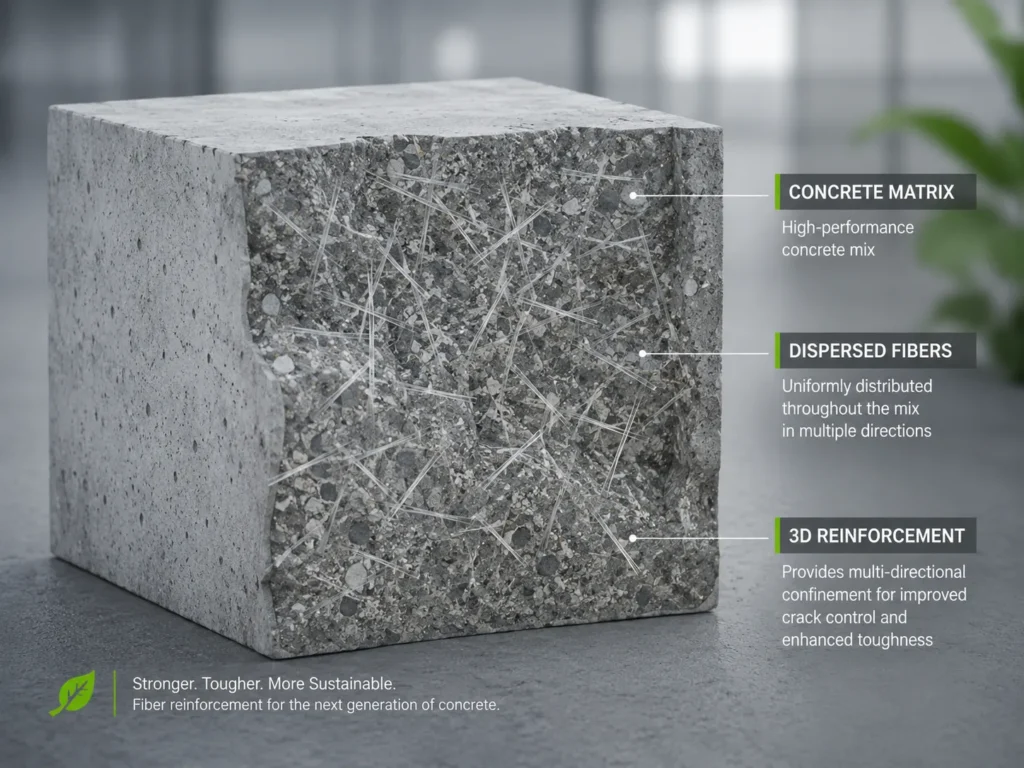
Beton kuat dalam kompresi tetapi lemah dalam tegangan. Fakta tersebut telah mendorong industri konstruksi selama lebih dari satu abad. Tulangan dan wire mesh memecahkan sebagian masalah, tetapi hanya memperkuat dalam dua dimensi. Penguatan serat beton bekerja secara berbeda. Serat pendek dan terpisah menyebar ke seluruh campuran, menciptakan tulangan tiga dimensi yang menangkap retakan di setiap sudut.
Penguatan serat mengatasi beberapa masalah beton sekaligus. Mengendalikan retak susut plastik selama jam-jam pertama setelah penempatan. Mengurangi retak susut pengeringan dalam jangka panjang. Meningkatkan ketahanan terhadap benturan dan ketangguhan pasca retak. Dalam banyak aplikasi, serat dapat menggantikan tulangan konvensional sepenuhnya.
Pasar mencerminkan pergeseran ini. Konsumsi beton bertulang serat global telah berkembang dengan mantap seiring dengan peralihan dari desain yang hanya menggunakan tulangan ke solusi yang disempurnakan dengan serat atau hanya menggunakan serat. Bagi distributor, hal ini menciptakan peluang yang jelas: kategori produk berkembang, tetapi sebagian besar pembeli masih membutuhkan edukasi tentang apa yang dilakukan oleh setiap jenis serat dan kapan menggunakannya.
Jika Anda menyediakan beton bertulang serat polypropylene solusi atau berencana untuk itu, memahami lanskap penguatan serat secara menyeluruh sangatlah penting. Panduan ini mencakup keempat jenis serat, spesifikasi, aplikasi, biaya, dan permintaan regional - dari sudut pandang distributor.
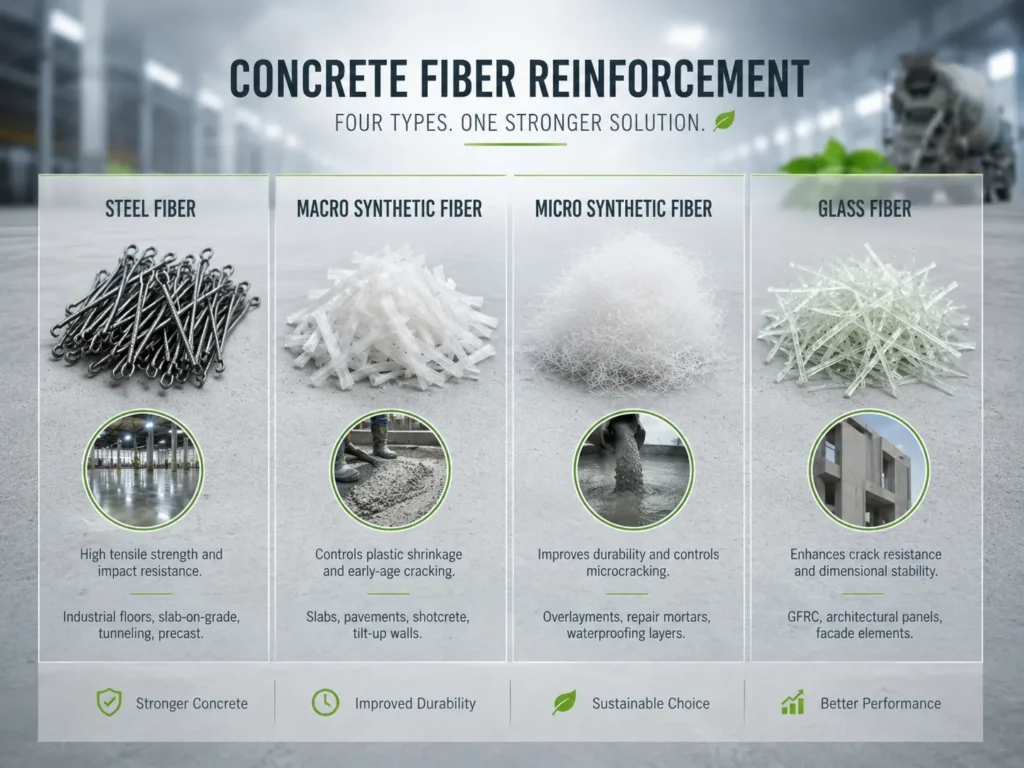
Empat Jenis Penguatan Serat Beton
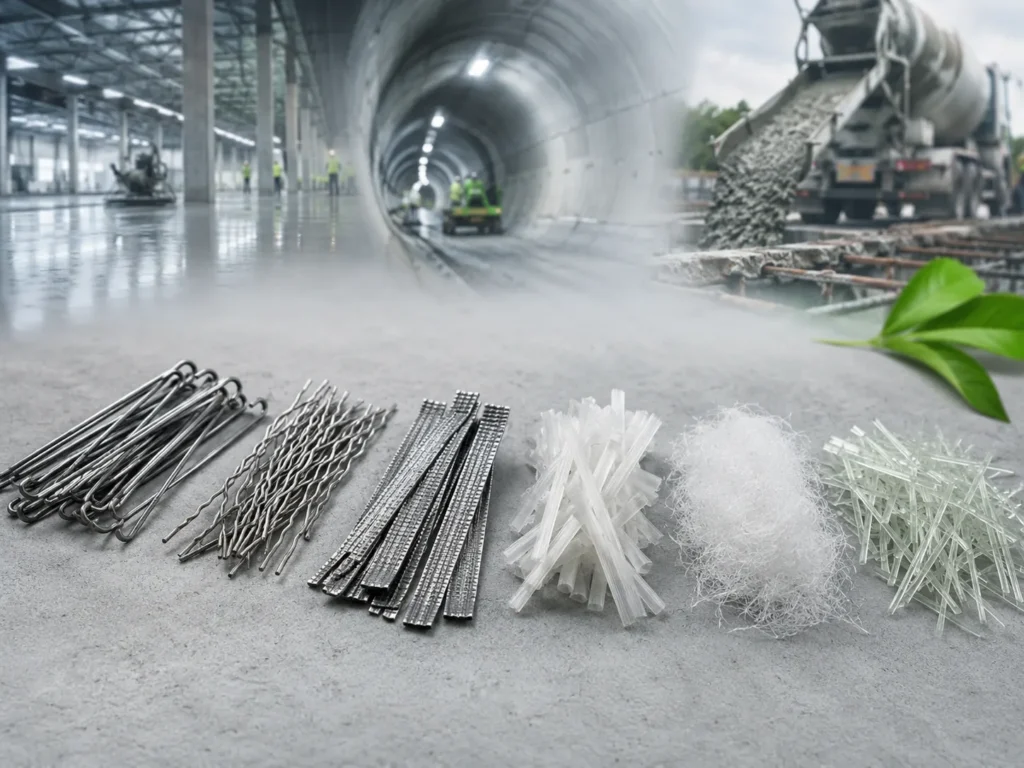
Tidak semua tulangan serat sama. Bahan, bentuk, dan ukuran serat menentukan apa yang dapat dilakukannya pada beton. Pemahaman jenis serat beton membantu distributor merekomendasikan produk yang tepat kepada pembeli yang tepat.
Penguatan Serat Baja
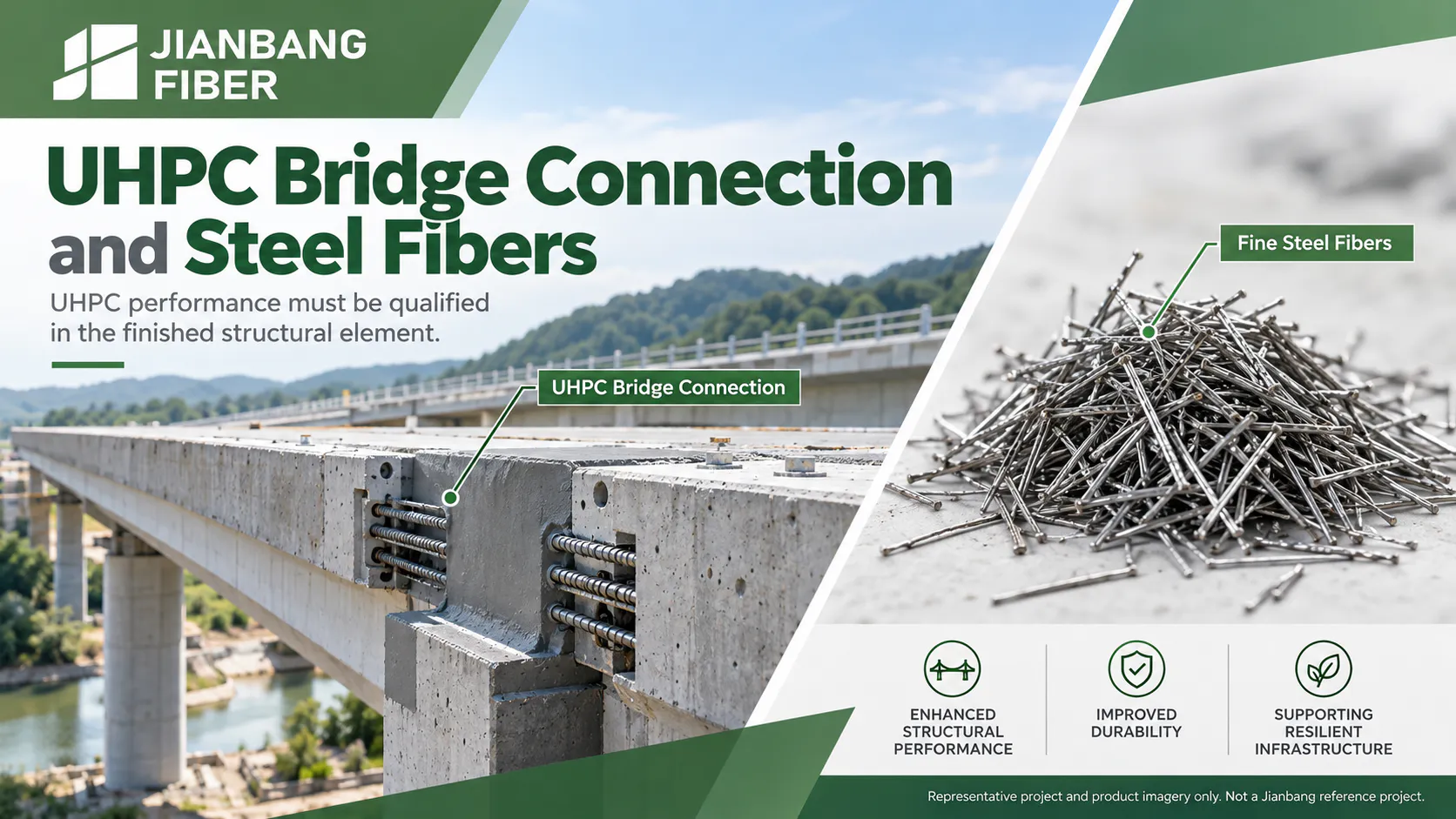
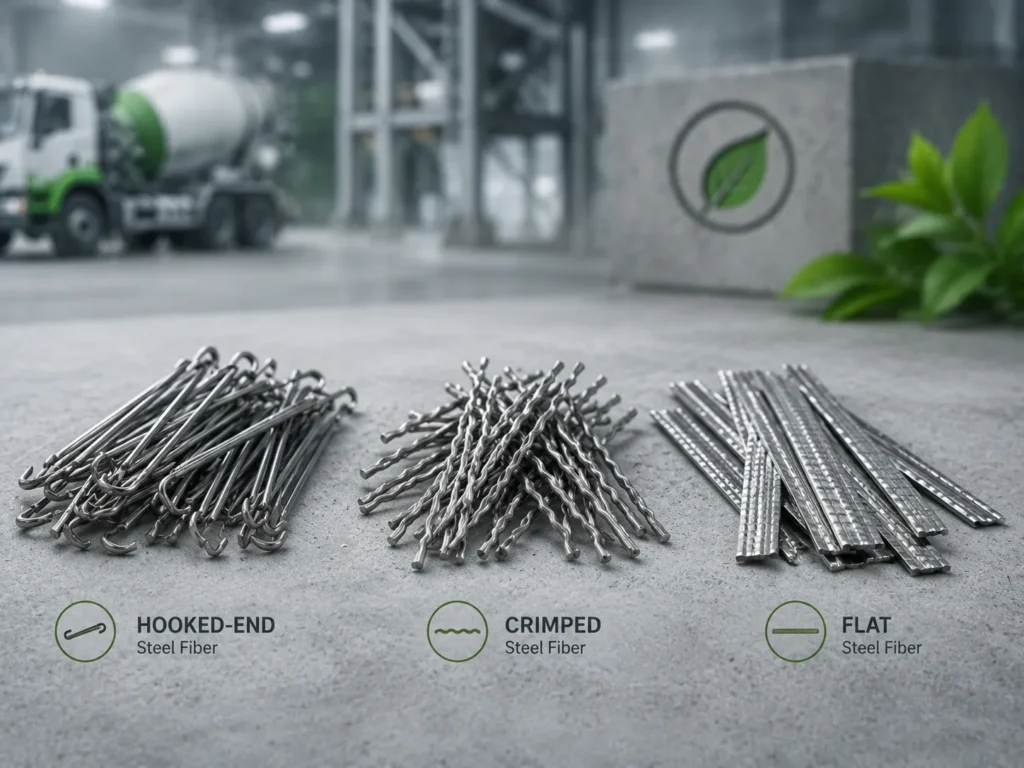
Serat baja tulangan untuk beton adalah bentuk tertua dan paling mapan dari tulangan serat beton. Terbuat dari baja karbon atau baja tahan karat, serat ini tersedia dalam konfigurasi ujung bengkok, berkerut, atau datar. Bentuk ujungnya penting karena mempengaruhi ketahanan tarikan - serat yang mengaitkan ujungnya akan mengait ke dalam matriks beton dengan lebih efektif.
Serat baja memberikan tulangan struktural yang asli. Serat baja meningkatkan kapasitas beban pasca retak, sehingga cocok untuk lantai industri, trotoar, dan lapisan terowongan di mana beton harus menahan beban setelah retak. Dosis yang umum berkisar antara 20 hingga 60 kg/m³, tergantung pada aplikasi dan persyaratan kinerja.
Standar utama meliputi ASTM A820 (spesifikasi serat baja) dan EN 14889-1 (Klasifikasi Eropa). Untuk distributor yang menargetkan proyek infrastruktur, serat baja sering kali merupakan lini produk wajib.
Untuk perincian lebih dalam tentang opsi serat baja, lihat panduan kami tentang berbagai jenis serat baja.
Serat Sintetis Makro Penguatan
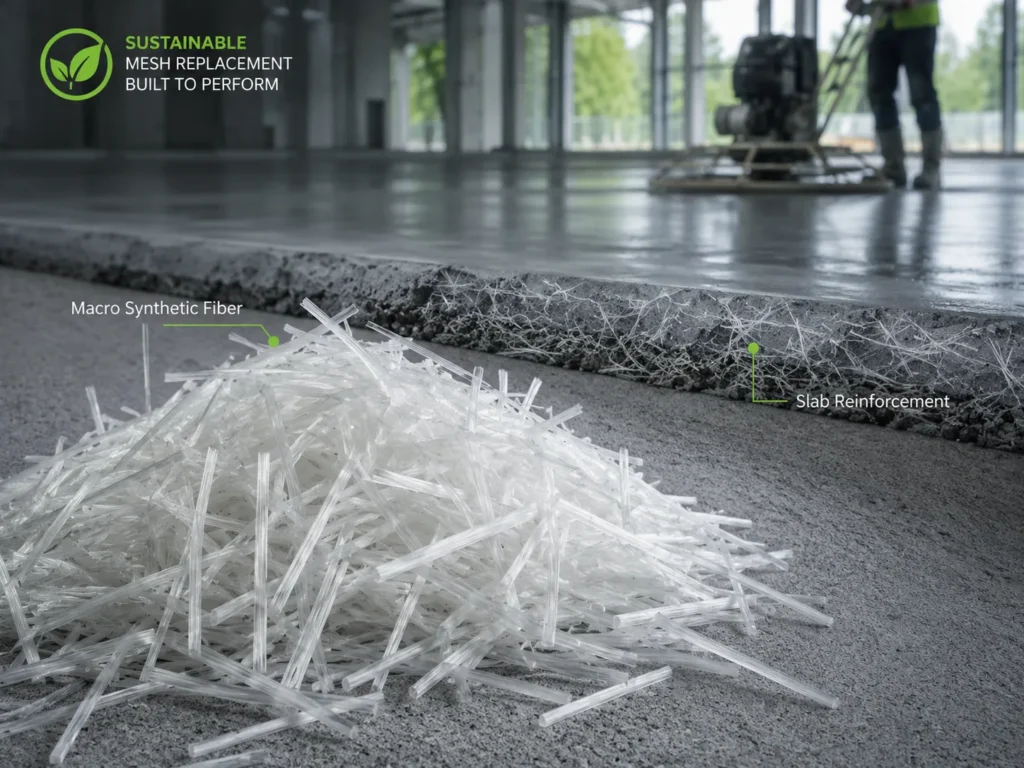
Serat sintetis makro adalah kategori yang paling cepat berkembang tulangan serat sintetis untuk beton. Serat ini terbuat dari polipropilena, polietilena, atau polimer campuran. Serat ini lebih besar dari serat sintetis mikro, biasanya berukuran 30 hingga 55 mm. Dalam banyak aplikasi non-struktural dan semi-struktural, serat ini berfungsi sebagai penguat struktural.
Penggunaan utama serat sintetis makro adalah menggantikan jaring baja pada pelat di atas tanah, dek komposit, dan shotcrete. Dengan dosis tipikal 2 hingga 8 kg/m³, serat sintetis makro menghilangkan biaya tenaga kerja untuk memasang wire mesh sekaligus memberikan kontrol retak dan ketangguhan yang sebanding.
Standar-standar utama adalah ASTM C1116 Tipe III dan EN 14889-2 Kelas II. Yang terakhir ini sangat penting untuk pasar Eropa dan Timur Tengah, di mana sertifikasi EN sering kali merupakan persyaratan pembelian.
Distributor harus memperhatikan bahwa serat sintetis makro adalah segmen yang paling cepat berkembang dalam tulangan serat beton. Ecocretefiber™ mengkhususkan diri dalam kategori ini, memproduksi serat sintetis makro dan mikro berbasis polipropilena untuk distribusi global. Untuk mempelajari lebih lanjut tentang kategori ini, lihat artikel kami di serat sintetis makro dan panduan kami tentang cara pilih produsen serat PP makro.
Serat Sintetis Mikro Penguatan
Serat sintetis mikro adalah jenis serat dengan volume tertinggi berdasarkan jumlah proyek. Terbuat dari polipropilena dalam bentuk monofilamen atau fibrilasi, serat-serat ini pendek (6 hingga 19 mm) dan ditambahkan dengan dosis rendah - biasanya 0,6 hingga 1,2 kg/m³.
Fungsi utama serat sintetis mikro adalah mengendalikan retak susut plastik selama 24 jam pertama setelah penempatan beton. Serat mikro tidak memberikan penguatan struktural atau ketangguhan pasca retak. Serat mikro mencegah retakan awal yang muncul sebelum beton memperoleh kekuatan.
Perbedaan ini penting bagi para distributor. Serat mikro mudah dijual karena tidak mahal dan hampir setiap tuangan beton mendapat manfaat darinya. Namun, serat mikro bukanlah pengganti serat sintetis makro atau serat baja jika diperlukan kinerja struktural.
Standar meliputi ASTM C1116 Tipe III dan EN 14889-2 Kelas I. Perhatikan bahwa serat sintetis makro dan mikro termasuk dalam ASTM C1116 Tipe III - perbedaan di antara keduanya adalah dosis dan fungsi, bukan klasifikasi ASTM.
Serat Kaca Penguatan
Penguatan serat kaca menggunakan serat kaca tahan alkali (AR). Ini adalah produk khusus dibandingkan dengan baja dan serat sintetis, terutama digunakan pada panel arsitektural, pracetak berpenampang tipis, dan elemen beton dekoratif.
Serat kaca memungkinkan panel beton yang tipis dan ringan yang tidak mungkin dilakukan dengan tulangan konvensional. Standar utamanya adalah ASTM C1666. Bagi sebagian besar distributor lini umum, serat kaca bukanlah barang persediaan utama. Hal ini menjadi relevan hanya ketika melayani produsen pracetak atau spesialis beton arsitektural.
| Jenis Serat | Bahan | Fungsi Utama | Dosis Khas | Standar Utama |
|---|---|---|---|---|
| Baja | Baja karbon/stainless steel | Penguatan struktural | 20-60 kg/m³ | ASTM A820, EN 14889-1 |
| Sintetis Makro | Polipropilena / polimer | Penggantian jaring, ketangguhan | 2-8 kg/m³ | ASTM C1116 Tipe III, EN 14889-2 Kelas II |
| Mikro Sintetis | Polypropylene | Kontrol retakan penyusutan plastik | 0,6-1,2 kg/m³ | ASTM C1116 Tipe III, EN 14889-2 Kelas I |
| Kaca | Kaca AR | Pracetak berpenampang tipis, arsitektural | Bervariasi | ASTM C1666 |
Tulangan Serat Beton vs Tulangan dan Jaring Kawat
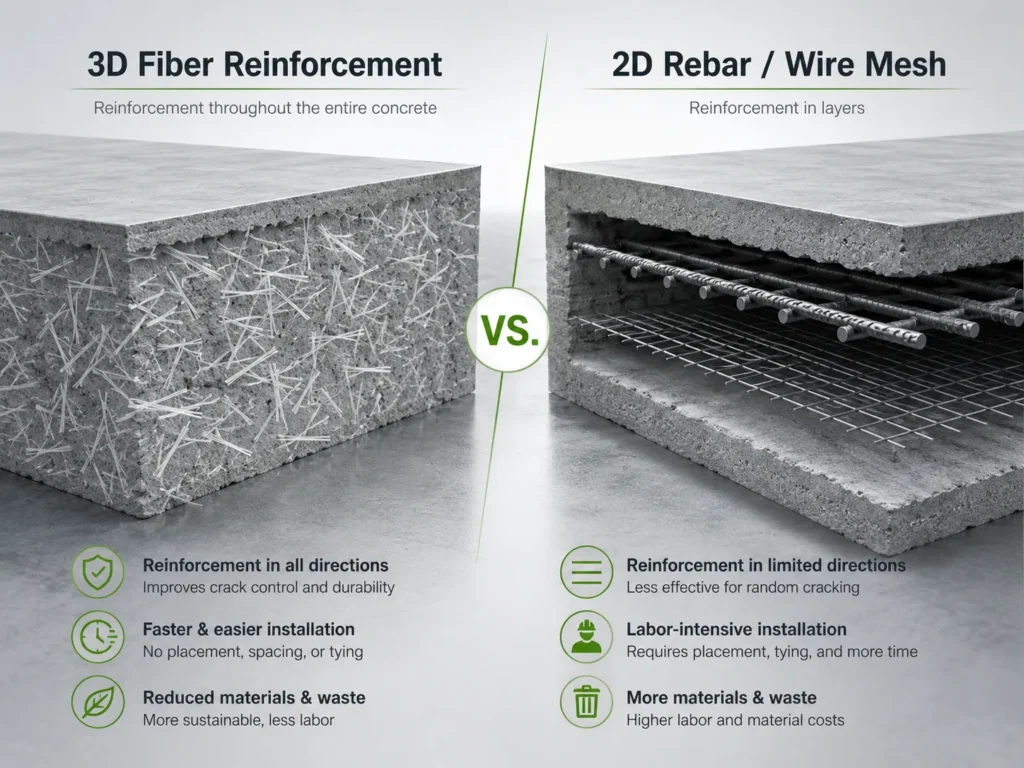
Perbandingan antara tulangan serat beton vs tulangan baja adalah pertanyaan yang paling sering didengar oleh para distributor. Pembeli ingin tahu apakah fiber dapat menggantikan baja yang selama ini mereka gunakan. Jawabannya tergantung pada aplikasinya, tetapi trennya jelas: fiber menggantikan rebar dan wire mesh dalam sejumlah proyek yang terus bertambah.
| Faktor | Penguatan Serat Beton | Tulangan / Jaring Kawat |
|---|---|---|
| Dimensi penguatan | 3D (tersebar di seluruh bagian) | 2D (ditempatkan pada kedalaman tertentu) |
| Instalasi | Ditambahkan ke campuran di pabrik batch | Ditempatkan di tempat, diikat, diketuai |
| Persyaratan tenaga kerja | Tidak ada (bercampur secara otomatis) | Signifikan (menempatkan, mengikat, memberi jarak) |
| Mekanisme kontrol retak | Menangkap retakan pada kedalaman berapa pun | Hanya menahan retakan pada kedalaman tulangan |
| Kapasitas struktural | Tergantung pada jenis dan dosis serat | Terbukti dan terdokumentasi dengan baik |
| Biaya tipikal per m² | Hanya biaya serat | Bahan + tenaga kerja + waktu penempatan |
Pada pelat di atas tanah, serat sintetis makro sering kali menggantikan wire mesh secara keseluruhan. Serat ini bercampur dengan beton di pabrik, sehingga tidak ada tenaga kerja di lokasi untuk memasang jaring. Kontraktor menghemat waktu dan mengurangi risiko kesalahan penempatan tulangan.
Pada elemen struktur - balok, kolom, rangka seismik - tulangan tetaplah penting. Serat dapat melengkapi tulangan dalam aplikasi ini, meningkatkan kontrol retak dan daya tahan, tetapi tidak menggantikan baja struktural yang diperlukan.
Untuk distributor, poin utama yang perlu dibicarakan adalah total biaya pemasangan. Fiber mungkin lebih mahal per kilogramnya daripada wire mesh, tetapi ketika Anda memperhitungkan penghematan tenaga kerja, total biaya proyek seringkali lebih rendah.
Spesifikasi Utama yang Perlu Diketahui Distributor
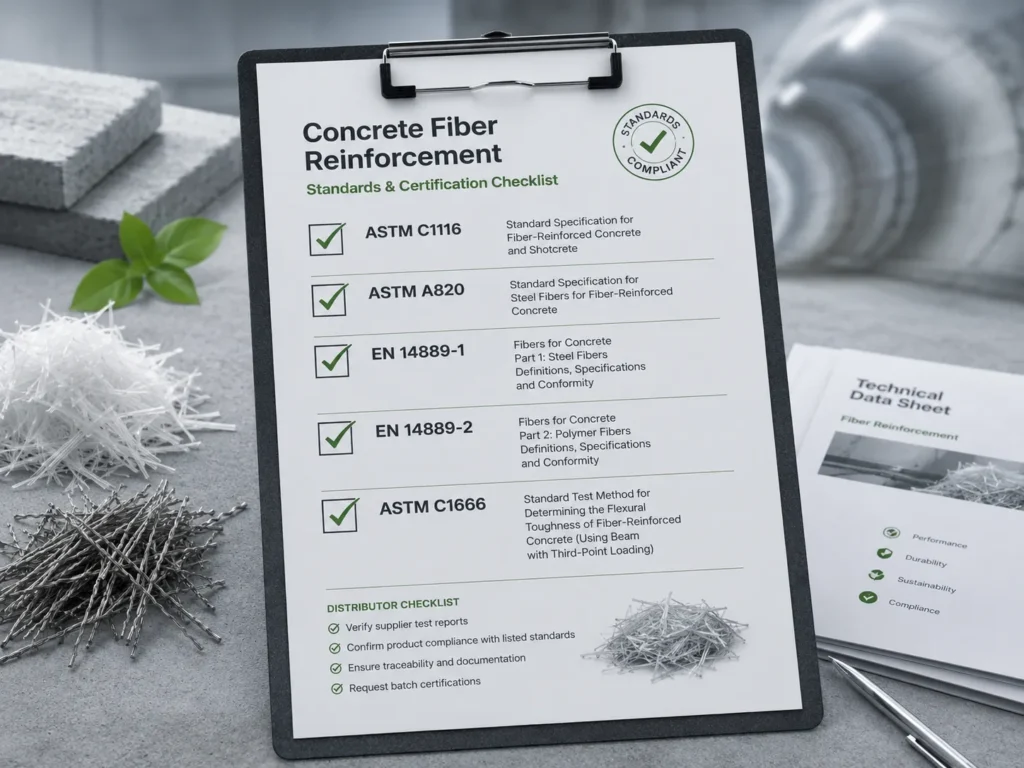
Klasifikasi ASTM C1116
ASTM C1116 adalah spesifikasi utama untuk beton bertulang serat di Amerika Serikat. Standar ini mengklasifikasikan beton bertulang serat menjadi tiga jenis:
- Tipe I: Beton bertulang serat baja
- Tipe II: Beton yang diperkuat serat kaca
- Tipe III: Beton bertulang serat sintetis (mencakup sintetis makro dan mikro)
Distributor harus memverifikasi bahwa produk yang mereka sediakan memiliki dokumentasi kepatuhan ASTM C1116. Ini berarti serat telah diuji dan diklasifikasikan sesuai dengan standar. A spesifikasi tulangan serat beton yang mengacu pada ASTM C1116 memberikan kepercayaan diri kepada para penentu spesifikasi terhadap kinerja produk. Tanpa dokumentasi ini, penentu spesifikasi tidak dapat merujuk produk dalam spesifikasi proyek yang membutuhkan beton bertulang serat ASTM C1116.
Ketika meninjau lembar data produk, carilah klasifikasi Jenis yang spesifik. Produk berlabel “ASTM C1116 Tipe III” mencakup serat sintetis tetapi tidak memberi tahu Anda apakah serat tersebut makro atau mikro - Anda perlu memeriksa spesifikasi dosis dan panjangnya secara terpisah.
EN 14889-1 dan EN 14889-2
Untuk pasar Eropa dan Timur Tengah, sertifikasi EN sering kali bersifat wajib. Ada dua standar yang berlaku:
- EN 14889-1: Serat baja untuk beton. Standar ini mengklasifikasikan serat baja berdasarkan kekuatan tarik dan bentuknya.
- EN 14889-2: Serat polimer untuk beton. Standar ini terbagi menjadi dua kelas:
- Kelas I: Serat sintetis mikro (untuk pengendalian retak susut plastik)
- Kelas II: Serat sintetis makro (untuk penguatan struktural)
Perbedaan antara Kelas I dan Kelas II dalam EN 14889-2 sangat penting bagi distributor. Serat makro Kelas II memiliki harga yang lebih tinggi dan membutuhkan dokumentasi pengujian yang lebih ketat. Pembeli di Uni Eropa dan Timur Tengah sering kali meminta sertifikat kepatuhan EN 14889-2 Kelas II sebelum melakukan pemesanan.
Untuk mengetahui lebih lanjut tentang kinerja serat sintetis dalam beton, lihat artikel kami tentang efek serat polipropilena dalam beton.
Kisaran Dosis berdasarkan Jenis Serat
Dosis secara langsung memengaruhi kinerja dan biaya. Distributor perlu mengetahui kisaran dosis yang umum untuk membantu pembeli memperkirakan kebutuhan mereka dan menghitung kebutuhan inventaris mereka sendiri.
| Jenis Serat | Rentang Dosis | Fokus Aplikasi |
|---|---|---|
| Baja | 20-60 kg/m³ | Lantai industri, trotoar, shotcrete |
| Sintetis Makro | 2-8 kg/m³ | Pelat di atas tanah, dek komposit, shotcrete |
| Mikro Sintetis | 0,6-1,2 kg/m³ | Kontrol retak susut plastik, semua beton |
| Kaca | Khusus proyek | Panel arsitektur, pracetak tipis |
Distributor yang menjual serat sintetis makro dengan takaran 4 kg/m³ untuk proyek pelat 5.000 m³ membutuhkan 20.000 kg produk. Memahami dosis tulangan serat beton membantu Anda mengutip harga secara akurat dan stok yang sesuai.
Penguatan Serat Beton untuk Pelat dan Trotoar
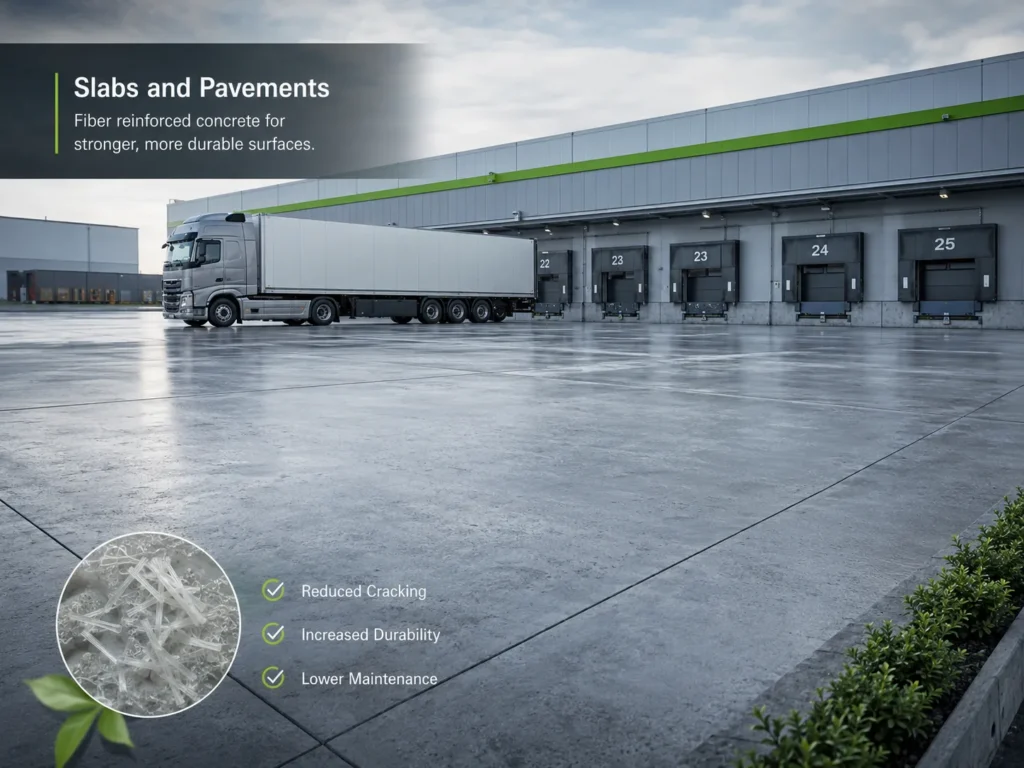
Pelat dan trotoar merupakan segmen aplikasi terbesar untuk tulangan serat beton berdasarkan volume. Lantai gudang industri, struktur parkir, pelat perumahan, dan trotoar jalan raya semuanya menggunakan beton bertulang serat.
Untuk pelat di atas tanah, spesifikasi yang paling umum adalah serat sintetis makro atau serat baja sebagai pengganti wire mesh. Serat sintetis makro dengan berat 4-6 kg/m³ memberikan kinerja yang setara atau lebih baik daripada wire mesh untuk pengendalian retakan, sekaligus menghilangkan tenaga kerja untuk memasang jaring di lokasi.
Serat baja tetap menjadi pilihan utama untuk lantai industri tugas berat yang terkena beban terkonsentrasi dan benturan berulang. Spesifikasi tipikal mungkin memerlukan 30-40 kg/m³ serat baja ujung bengkok dalam lempengan 150-200 mm.
Untuk pelat perumahan dan aplikasi komersial ringan, serat sintetis mikro sering kali ditentukan bersama serat makro atau sebagai pengganti untuk pengendalian retak dasar. Biaya rendah dan kemudahan penambahan membuat serat mikro menjadi penjualan yang mudah bagi distributor.
Apa yang harus disediakan oleh distributor untuk segmen ini? Jajaran produk yang paling praktis adalah serat sintetis mikro untuk pengendalian retakan umum dan serat sintetis makro untuk penggantian jala. Tambahkan serat baja jika pasar Anda mencakup proyek-proyek industri berat.
Spesifikasi proyek yang harus diketahui distributor:
- Lempengan perumahan: 0,9 kg/m³ serat mikro atau 3-4 kg/m³ serat makro
- Lembaran komersial/gudang: 4-6 kg/m³ serat makro atau 25-35 kg/m³ serat baja
- Trotoar jalan raya: 30-40 kg/m³ serat baja (bervariasi menurut wilayah)
Penguatan Serat Beton untuk Shotcrete dan Lapisan Terowongan
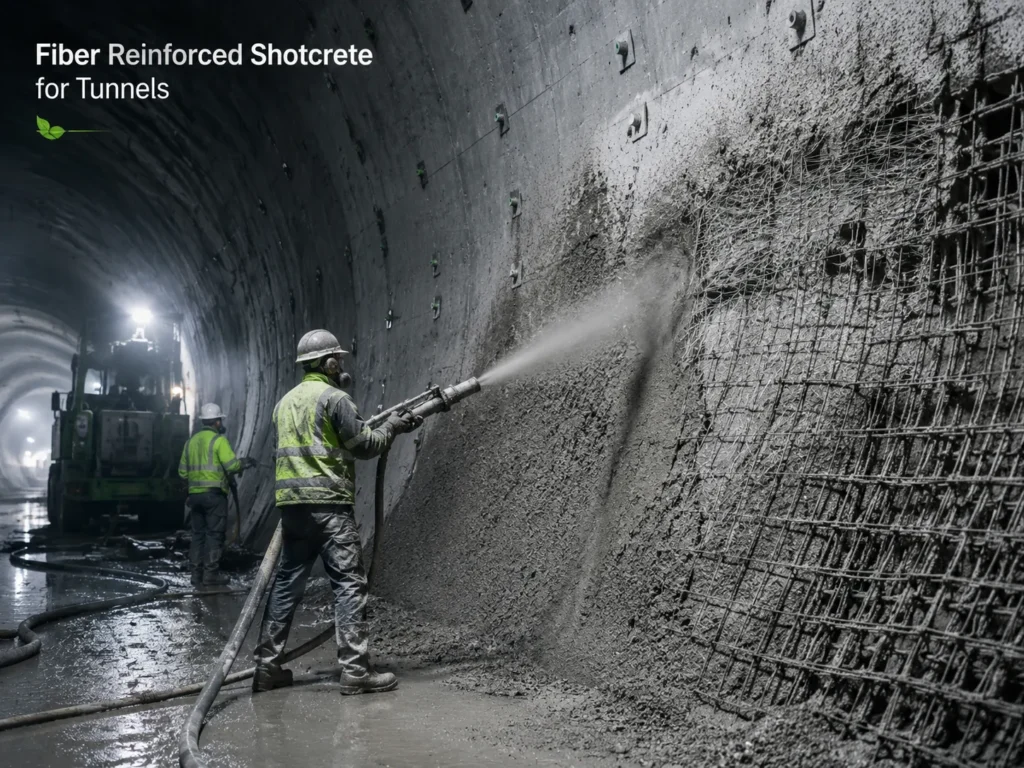
Shotcrete adalah aplikasi dengan pertumbuhan tinggi untuk tulangan serat beton. Dalam konstruksi terowongan, pertambangan, stabilisasi lereng, dan konstruksi kolam, shotcrete yang diperkuat serat sebagian besar telah menggantikan shotcrete yang diperkuat jaring tradisional.
Serat baja mendominasi pasar shotcrete, terutama pada lapisan terowongan yang membutuhkan penyerapan energi pasca retak yang tinggi. Dosis yang umum berkisar antara 30 hingga 50 kg/m³. Serat ini menghilangkan kebutuhan untuk menggantung jaring di dalam terowongan sebelum penyemprotan, sehingga meningkatkan keamanan dan produktivitas.
Serat sintetis makro semakin banyak digunakan dalam shotcrete, terutama dalam stabilisasi lereng dan konstruksi kolam renang yang bebannya lebih rendah. Dosis 4-7 kg/m³ adalah tipikal.
Pengujian kinerja untuk aplikasi shotcrete menggunakan metode yang berbeda dari pekerjaan datar. ASTM C1550 (uji panel beton bertulang serat) dan EN 14488-5 (penentuan kapasitas penyerapan energi) adalah standar utama. Pengujian ini mengukur berapa banyak energi yang diserap oleh shotcrete yang diperkuat serat setelah retak. Metrik tersebut sangat penting untuk keselamatan terowongan.
Distributor di pasar yang padat infrastruktur - Timur Tengah, Asia Tenggara, dan beberapa bagian Eropa - harus mempertimbangkan untuk menyimpan serat baja khusus untuk proyek shotcrete. Sektor konstruksi terowongan adalah basis pelanggan yang dapat diandalkan dan selalu membeli ulang.
Perbandingan Biaya Penguatan Serat Beton
Harga selalu menjadi bagian dari pembicaraan. Distributor perlu memahami biaya tulangan serat beton pada berbagai tingkatan - per kilogram, per meter kubik beton, dan per meter persegi pelat jadi.
Biaya per Kilogram (Perkiraan)
| Jenis Serat | Perkiraan Kisaran Biaya (USD/kg) |
|---|---|
| Serat baja | 1.00-1.00-2.50 |
| Serat sintetis makro | 3.00-3.00-6.00 |
| Serat sintetis mikro | 2.50-2.50-5.00 |
| Serat kaca | 3.00-3.00-8.00 |
Serat baja paling murah per kilogramnya, tetapi dosisnya jauh lebih tinggi. Serat sintetis mikro tampak mahal per kilogramnya, tetapi dosisnya sangat rendah sehingga biaya per meter kubiknya tidak mahal.
Biaya per Meter Kubik Beton
| Jenis Serat | Dosis Khas | Biaya per m³ Beton |
|---|---|---|
| Baja | 30 kg/m³ | 30-30-75 |
| Sintetis makro | 5 kg/m³ | 15-15-30 |
| Sintetis mikro | 0,9 kg/m³ | 2.25-2.25-4.50 |
| Jaring kawat (perbandingan) | - | 8-8-15 (bahan + tenaga kerja) |
Pada dosis tipikal, serat sintetis makro bersaing dengan wire mesh ketika Anda memperhitungkan penghematan tenaga kerja. Serat sintetis mikro menambah biaya minimal per meter kubik. Serat baja adalah pilihan yang paling mahal per meter kubik tetapi memberikan kinerja struktural tertinggi.
Total Biaya Terinstalasi
Perbandingan nyata bagi distributor untuk dibagikan kepada pembeli adalah total biaya pemasangan. Jaring kawat membutuhkan tenaga kerja untuk memasang, mendudukkan, dan mengikat. Biaya tenaga kerja tersebut sering kali melebihi biaya material. Penguatan serat menghilangkan tenaga kerja itu sepenuhnya.
Untuk pelat seluas 5.000 m² dengan kedalaman 150 mm (750 m³ beton):
| Jenis Penguatan | Biaya Material | Tenaga Kerja Instalasi | Total Biaya |
|---|---|---|---|
| Jaring kawat | 6,000-6,000-11,250 | 4,000-4,000-8,000 | 10,000-10,000-19,250 |
| Sintetis makro (5 kg/m³) | 11,250-11,250-22,500 | $0 | 11,250-11,250-22,500 |
| Serat baja (30 kg/m³) | 22,500-22,500-56,250 | $0 | 22,500-22,500-56,250 |
Serat sintetis makro berada dalam kisaran total biaya yang sama dengan wire mesh tetapi menghilangkan variabel penjadwalan dan tenaga kerja. Ini adalah nilai jual yang kuat bagi distributor.
Permintaan Pasar Regional untuk Penguatan Serat Beton
Amerika Utara
Pasar AS dan Kanada digerakkan oleh ASTM. Serat baja memiliki sejarah panjang dalam lantai industri, tetapi serat sintetis makro adalah segmen yang paling cepat berkembang. Penggantian wire mesh di perumahan dan lembaran komersial ringan adalah pendorong pertumbuhan utama.
Tren utama untuk distributor: meningkatnya penggunaan serat sintetis makro oleh perusahaan-perusahaan beton siap pakai, meningkatnya keakraban para penentu spesifikasi dengan ASTM C1116, dan meningkatnya penggunaan shotcrete yang diperkuat serat dalam perbaikan infrastruktur. Pasar slab perumahan sangat besar dan kurang terlayani - banyak cor perumahan yang masih belum menggunakan tulangan sama sekali, sehingga memberikan jalan masuk yang mudah untuk penjualan serat mikro.
Eropa dan Inggris
Sertifikasi EN adalah wajib untuk produk serat yang dijual di Uni Eropa. Hal ini menciptakan penghalang untuk masuk bagi pemasok yang tidak bersertifikat, yang menguntungkan distributor yang membawa produk bersertifikat. Peraturan keberlanjutan juga mendorong permintaan serat sintetis sebagai alternatif yang lebih rendah karbon untuk jaring baja.
Pasar Inggris menggunakan “fiber” dan “fiber” dalam spesifikasi dan permintaan pencarian. Distributor yang melayani pasar Inggris harus memastikan materi pemasaran mereka mencakup kedua ejaan tersebut untuk menjaring audiens penelusuran secara menyeluruh.
Investasi infrastruktur dalam proyek-proyek terowongan dan rel kereta api mendorong permintaan serat baja, terutama di Skandinavia, Jerman, dan Inggris.
Timur Tengah
Timur Tengah merupakan pasar dengan pertumbuhan tinggi untuk tulangan serat beton. Pembangunan infrastruktur yang cepat, suhu ekstrim yang meningkatkan risiko retak, dan preferensi yang kuat untuk produk bersertifikasi EN menjadi ciri khas wilayah ini.
Proyek terowongan dan metro di negara-negara Teluk adalah konsumen utama serat baja untuk shotcrete. Pada saat yang sama, serat sintetis makro mulai diterima untuk pelat dan trotoar di proyek-proyek komersial dan perumahan.
Untuk distributor, Timur Tengah menawarkan margin yang tinggi tetapi menuntut dokumentasi sertifikasi yang ketat. Kepatuhan terhadap EN 14889-2 Kelas II sering kali menjadi prasyarat pembelian.
Asia Tenggara
Asia Tenggara adalah pasar yang sensitif terhadap harga dan didorong oleh volume. Serat sintetis mikro memiliki penetrasi tertinggi di sini, digunakan secara luas dalam konstruksi perumahan untuk pengendalian retak dasar. Permintaan serat sintetis makro meningkat seiring dengan meningkatnya investasi infrastruktur, terutama di Vietnam, Indonesia, dan Filipina.
Serat baja masih merupakan produk khusus di sebagian besar Asia Tenggara, terbatas pada proyek-proyek industri dan infrastruktur bernilai tinggi. Distributor harus mengutamakan serat mikro untuk volume dan serat makro untuk margin, dan menambahkan serat baja hanya jika ada proyek-proyek tertentu yang membutuhkannya.
Cara Mengevaluasi Pemasok Tulangan Serat Beton
Tidak semua pemasok serat sama. Distributor yang memilih pemasok yang salah akan menghadapi kualitas produk yang tidak konsisten, sertifikasi yang tidak ada, dan pengiriman yang tertunda. Inilah yang harus diperiksa sebelum berkomitmen.
Kontrol kualitas manufaktur: Tanyakan tentang sertifikasi ISO 9001 dan pengujian konsistensi batch. Pemasok yang tidak dapat menyediakan produk yang konsisten dari batch ke batch akan menyebabkan masalah pada desain campuran pelanggan Anda.
Dokumentasi sertifikasi: Verifikasi bahwa pemasok menyediakan laporan pengujian terkini dan valid untuk ASTM C1116, EN 14889-2, atau standar lain yang relevan. Sertifikat harus terbaru (dalam 12-24 bulan) dan dari laboratorium yang terakreditasi.
Jumlah pesanan minimum dan waktu tunggu: Hal ini secara langsung memengaruhi biaya penyimpanan inventaris Anda. Pemasok dengan jumlah minimum yang tinggi dan waktu tunggu yang lama dapat memaksa Anda untuk membawa lebih banyak stok daripada yang dapat dibenarkan oleh kecepatan penjualan Anda.
Kemampuan dukungan teknis: Dapatkah pemasok membantu pelanggan Anda menentukan jenis dan dosis serat yang tepat? Pemasok yang menawarkan dukungan desain campuran, referensi proyek, dan pemecahan masalah di tempat membuat pekerjaan Anda lebih mudah dan mengurangi risiko penyalahgunaan produk.
Rekam jejak di pasar sasaran Anda: Pemasok yang telah melakukan pengiriman ke wilayah Anda memahami persyaratan sertifikasi, logistik, dan ekspektasi pelanggan. Untuk serat polypropylene untuk beton dan serat sintetis lainnya, pastikan bahwa pemasok memiliki pengalaman mengekspor ke target pasar Anda.
Untuk kerangka kerja terperinci, lihat serat polipropilena untuk panduan distributor beton.
Apa yang Harus Dipersiapkan: Membangun Portofolio Produk Penguatan Serat
Distributor baru sering bertanya produk serat mana yang harus dibawa terlebih dahulu. Jawabannya tergantung pada pasar Anda, tetapi pendekatan praktis dapat diterapkan di sebagian besar wilayah.
Mulailah dengan serat sintetis mikro dan serat sintetis makro. Serat mikro adalah produk yang paling mudah untuk dijual. Tidak mahal, dapat digunakan pada hampir semua jenis beton, dan jarang membutuhkan dukungan spesifikasi yang rumit. Serat makro adalah produk pertumbuhan. Permintaan meningkat dan margin lebih tinggi, yang memposisikan Anda lebih dari sekadar pemasok komoditas.
Tambahkan serat baja saat pelanggan infrastruktur muncul. Serat baja membutuhkan lebih banyak pengetahuan teknis dan investasi inventaris yang lebih besar. Tunggu hingga Anda memiliki peluang proyek yang spesifik sebelum melakukan pembelian.
Pertimbangkan serat kaca hanya jika Anda melayani pelanggan pracetak atau arsitektural. Untuk sebagian besar distributor lini umum, volume tidak membenarkan persediaan.
Strategi bundling: Menjual serat mikro dan serat makro secara bersamaan sebagai “sistem pengendalian retak”. Pendekatan ini meningkatkan nilai pesanan rata-rata dan memberikan alasan kepada kontraktor untuk membeli kedua produk tersebut dari Anda alih-alih membagi pesanan di antara para pemasok.
Ketika membangun lini produk Anda, pikirkan tentang perkembangan dari mikro ke makro ke baja. Setiap langkah menambah kemampuan dan margin, tetapi juga kompleksitas. Mulailah dari volume yang kecil, lalu naikkan seiring dengan bertambahnya pengetahuan pasar dan basis pelanggan Anda.
Untuk panduan dalam memilih produsen, lihat artikel kami tentang memilih produsen serat PP makro.
Kesimpulan
Penguatan serat beton tidak lagi menjadi spesifikasi khusus. Ini adalah bahan konstruksi umum dengan standar yang jelas, permintaan yang terus meningkat, dan aplikasi yang semakin meluas di keempat jenis serat. Distributor yang memahami perbedaan antara baja, sintetis makro, sintetis mikro, dan serat kaca - dan yang dapat mencocokkan produk yang tepat untuk setiap kebutuhan pembeli - berada pada posisi yang lebih baik untuk menangkap pertumbuhan ini. Kepatuhan sertifikasi melalui ASTM C1116, EN 14889-1, dan EN 14889-2 tidak dapat dinegosiasikan untuk perdagangan internasional. Ecocretefiber™ memasok produk serat polipropilena yang memenuhi standar-standar ini, dan Shandong Jianbang Chemical Fiber Co, Ltd. mendukung distributor dengan dokumentasi teknis, file sertifikasi, dan panduan khusus pasar. Pasar tulangan serat memberikan penghargaan kepada distributor yang memiliki informasi yang memadai yang menyediakan produk yang tepat dan dapat menjelaskannya dengan jelas.