لماذا يحتاج الخرسانة المستخدمة في الطرق إلى التعزيز بالألياف
يتعرض الخرسانة المستخدمة في الطرق لضغوط متكررة يوميًا. فهي تتحمل أحمال المركبات، وصدمات العجلات، وتغيرات درجات الحرارة، ودورات التجمد والذوبان، والرطوبة، وتآكل السطح. يتمتع الخرسانة العادية بقوة ضغط جيدة، لكنها تظل مادة هشة. وبمجرد ظهور الشقوق، يمكن أن تتسرب المياه والأيونات الضارة إلى الرصيف. وقد يؤدي ذلك إلى تقليل العمر التشغيلي للطريق وزيادة تكلفة الإصلاح.
لهذا السبب تقوية الألياف تُعد الألياف مفيدة في صناعة الخرسانة المستخدمة في الطرق. حيث يمكن أن تشكل الألياف شبكة تقوية موزعة داخل مصفوفة الأسمنت. وتساعد في الحد من توسع الشقوق. كما يمكنها تحسين أداء الخرسانة عند التعرض للانحناء. ويمكنها أيضًا تحسين مقاومة الصدمات والمتانة عند اتباع تصميم خلط صحيح.
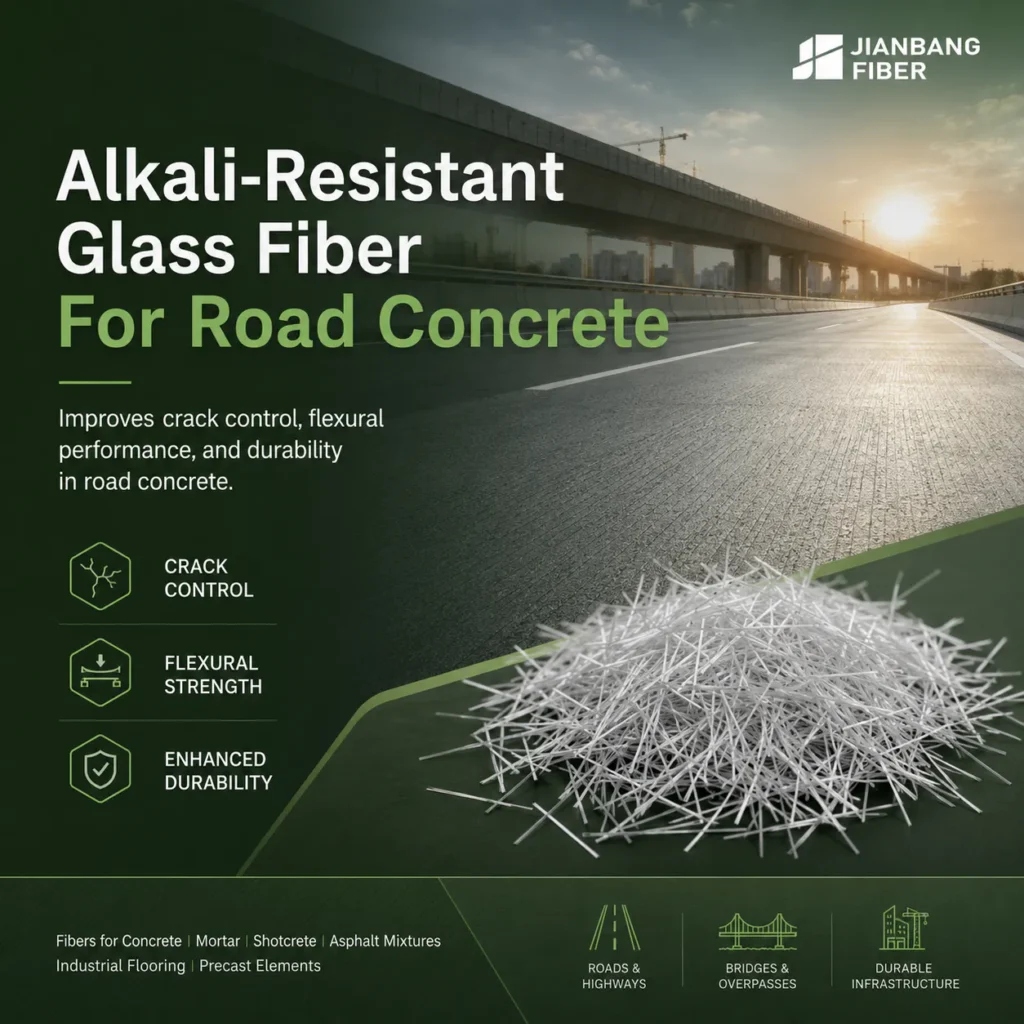
اكتشفت شركة شاندونغ جيانبانغ أن ألياف زجاجية مقاومة للقلويات يمكن استخدامه كمواد تقوية في خرسانة الطرق. ويمكن أن يساعد في تحسين خصائص الشد والانحناء، ومقاومة التشقق الناتج عن التجمد، ومقاومة الصدمات، ومقاومة التآكل. وتجعله هذه المزايا مفيدًا في خرسانة الرصف، وخرسانة إصلاح الطرق، وتطبيقات الخرسانة الأخرى في مجال البنية التحتية.
في شركة شاندونغ جيانبانغ للألياف الكيماوية المحدودة., علامتنا التجارية للألياف الخرسانية إيكوكريتي فايبر™ Ecocretefiber™ تركز على الحلول العملية لتقوية الخرسانة بالألياف. ولا يقتصر هدفنا على بيع الألياف فحسب، بل نسعى إلى مساعدة العملاء على اختيار نظام الألياف الذي يتناسب مع خليط الخرسانة وبيئة الطريق وطريقة البناء والعمر التشغيلي المستهدف.
ما هي الألياف الزجاجية المقاومة للقلويات؟
ألياف زجاجية مقاومة للقلويات، والتي تُعرف غالبًا باسم ألياف زجاجية بتقنية AR, ، هي ألياف زجاجية مصممة خصيصًا للمواد القائمة على الأسمنت. ويُعد معجون الأسمنت مادة قلوية. وقد تفقد الألياف الزجاجية العادية قوتها في هذه البيئة القلوية. أما ألياف AR الزجاجية، فقد صُنعت لتقاوم تأثير القلويات بشكل أفضل من الألياف الزجاجية العادية.
في الخرسانة المستخدمة في الطرق، يمكن استخدام ألياف الزجاج المقواة (AR) لتحسين مقاومة التشقق وأداء الانحناء. فهي تعمل كأضلاع تقوية صغيرة داخل الخرسانة. وعندما تبدأ الشقوق الدقيقة في الظهور في الخرسانة، تساعد هذه الألياف على سد تلك الشقوق وإبطاء توسعها.
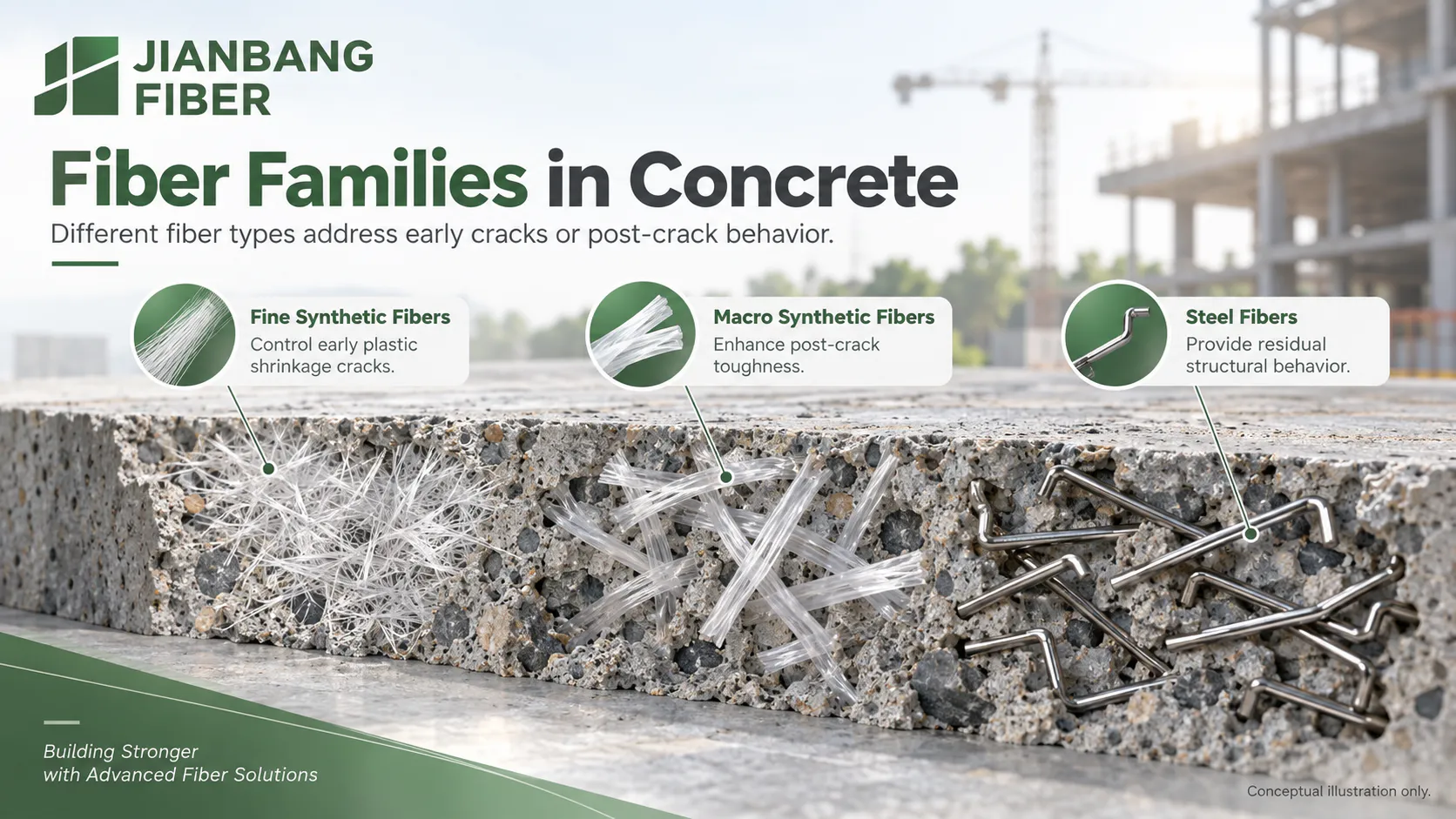
وهذا لا يعني أن ألياف الزجاج المقواة (AR) يمكنها أن تحل محل كل أنواع مواد التعزيز. بل يجب استخدامها للغرض المناسب. فهي أكثر ملاءمة للتحكم في التشققات، وتوفير الدعم عند الانحناء، والحد من الانكماش، وتحسين متانة السطح. أما بالنسبة لأداء الهياكل الثقيلة بعد حدوث التشققات،, الألياف الفولاذية أو الألياف الاصطناعية الكبيرة قد تظل هناك حاجة إليها حسب متطلبات التصميم.
اكتشفت شركة شاندونغ جيانبانغ أن اختيار ألياف الخرسانة للطرق يجب أن تستند إلى العوامل البيئية، ونوع التشقق المتوقع، وتصميم الخلطة، وظروف المعالجة، وعملية البناء.
الفوائد الرئيسية لألياف الزجاج المعززة بالآر في خرسانة الطرق
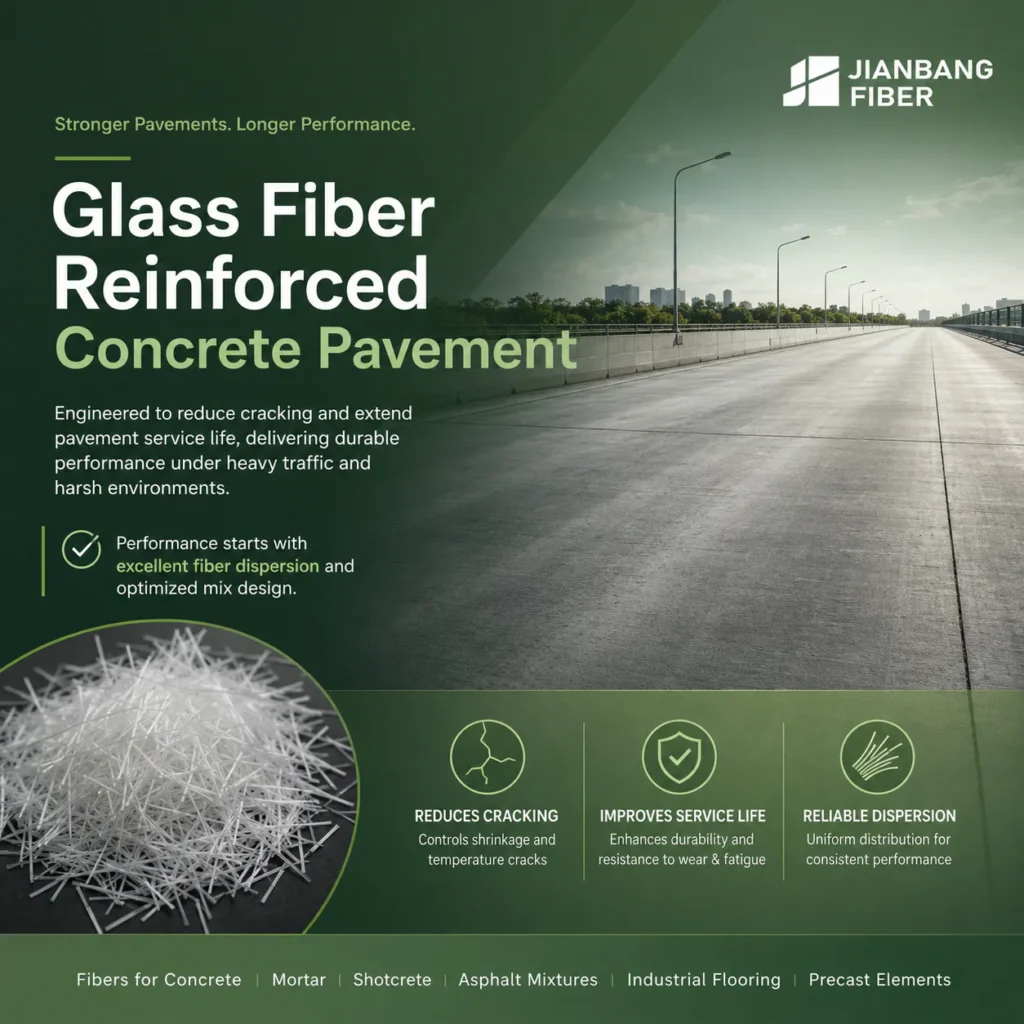
يمكن أن توفر ألياف الزجاج المقواة بالآر (AR) العديد من المزايا لخرسانة الطرق عند استخدامها بشكل صحيح.
الميزة الأولى هي تحسين التحكم في التشققات. غالبًا ما يتشقق خرسانة الطرق بسبب الانكماش، وتغير درجات الحرارة، والتجفيف، والتعرض المتكرر للأحمال. وتساعد الألياف على توزيع الضغط وتقليل توسع التشققات.
الميزة الثانية هي تحسين الأداء عند الانحناء. غالبًا ما تتأثر ألواح الطرق بضغط الانحناء. ويمكن لشبكة الألياف أن تساعد في مقاومة تشققات الانحناء وتحسين قدرة الرصف على الحفاظ على سلامته تحت تأثير الأحمال.
الميزة الثالثة هي مقاومة أفضل للتشقق الناتج عن التجمد. في المناطق الباردة، قد يتسرب الماء إلى المسام والشقوق. وعندما يتجمد الماء، فإنه يتمدد ويولد ضغطًا. ويمكن أن يساعد تعزيز الألياف في الحد من توسع الشقوق وتقليل مخاطر التلف.
الميزة الرابعة هي مقاومة أفضل للصدمات. يتعرض الخرسانة المستخدمة في الطرق لصدمات العجلات والاهتزازات. ويمكن للألياف أن تساعد في امتصاص جزء من الطاقة وتقليل الأضرار الناتجة عن الهشاشة.
الميزة الخامسة هي مقاومة التآكل. لا تصدأ ألياف الزجاج المقاومة للتآكل (AR) مثل الفولاذ. وقد يكون ذلك مفيدًا في بيئات الطرق الرطبة أو التي تتسم بنشاط كيميائي. لكن ألياف الزجاج المقاومة للتآكل (AR) لا تزال تواجه تحديات المتانة في مصفوفة الأسمنت القلوي, ، لذا يجب أن يقلل تصميم المزيج من مخاطر التآكل قدر الإمكان.
المشكلة الرئيسية: التآكل القلوي
على الرغم من أن ألياف الزجاج المقاومة للقلويات تتمتع بمقاومة أفضل للقلويات مقارنة بألياف الزجاج العادية، إلا أنها لا تزال تعمل ضمن نظام الأسمنت. حيث يؤدي تفاعل الأسمنت مع الماء إلى تكوين بيئة قلوية، وقد تؤدي هذه البيئة إلى تآكل ألياف الزجاج بمرور الوقت.
اكتشفت شركة شاندونغ جيانبانغ أنه عندما يتم وضع ألياف الزجاج المقواة بالأسمنت في بيئة قلوية ذات أساس أسمنتي, ، قد يؤدي التآكل إلى انخفاض مقاومة الألياف للشد وقدرتها على تحمل الأحمال. ومع اشتداد التآكل، قد تظهر المزيد من المسام الشعرية في الألياف والملاط المحيط بها. وهذا قد يؤدي إلى انخفاض مقاومة الانحناء والمتانة.
هذه نقطة مهمة للمشترين. لا ينبغي اختيار الألياف الزجاجية المقاومة للقلويات لمجرد أن اسمها يشير إلى أنها “مقاومة للقلويات”.” يجب أن يهدف التصميم الجيد لخرسانة الطرق أيضًا إلى الحد من الأضرار التي تلحق بالبيئة المحيطة بالألياف.
ويمكن تحقيق ذلك من خلال تصميم الخلطة، واستخدام الرماد المتطاير، والضغط الكثيف، والمعالجة المناسبة، والتوزيع المتجانس للألياف.
لماذا قد تتغير قوة الانحناء المبكرة
تعد قوة الانحناء من أهم الخصائص التي يجب أن يتحلى بها خرسانة الطرق. فرصف الطرق لا يتحمل الضغط فحسب، بل يواجه أيضًا إجهاد الانحناء. ولهذا السبب، فإن الأداء الانحنائي أكثر أهمية من قوة الضغط وحدها.
اكتشفت شركة شاندونغ جيانبانغ أن الملاط المقوى بالألياف الزجاجية AR يمكن أن يصل إلى قوة انحناء عالية في مرحلة مبكرة من التصلب. وفي الظروف التي أجريت فيها الاختبارات، بلغت قوة الانحناء ذروتها في حوالي اليوم الرابع. وبعد ذلك، قد تنخفض القيمة لأن الألياف نفسها تبدأ في التحلل في البيئة القلوية.
وهذا يوضح لنا أمراً واحداً بوضوح. فالتحسن المبكر في القوة لا يعني دائماً أن مشكلة المتانة على المدى الطويل قد حُلّت تماماً. فقد تقلل الألياف من احتمالية حدوث تشققات مبكرة، لكن أداءها على المدى الطويل لا يزال يعتمد على مقاومة التآكل، وكثافة المصفوفة، وعملية المعالجة، وجودة السطح البيني.
فيما يتعلق بمشاريع الطرق، يعني ذلك أن الخرسانة المسلحة بالألياف الزجاجية من نوع AR يجب أن تُصمم بحيث تلبي احتياجات الإنشاءات في المراحل المبكرة وتضمن أداءً جيدًا للرصف على المدى الطويل.
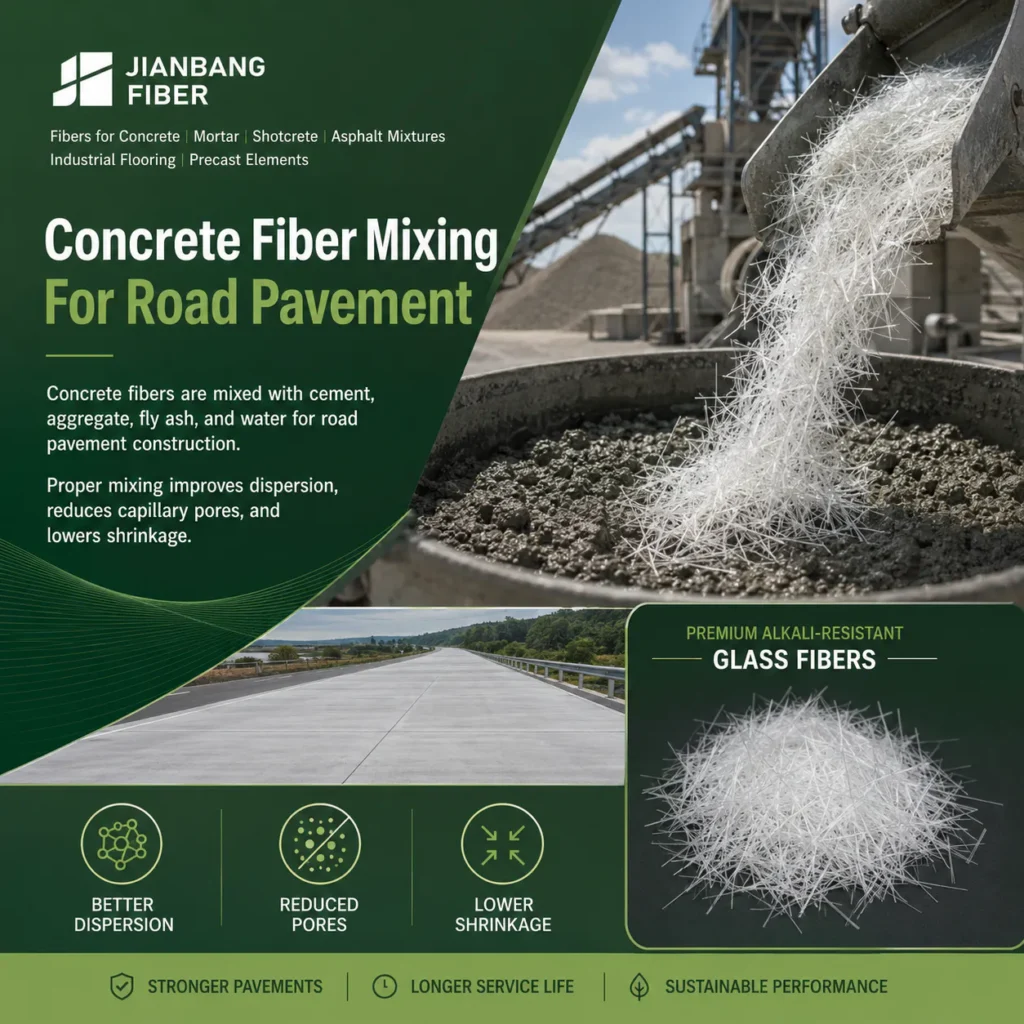
لماذا تعتبر الرماد المتطاير عنصراً مهماً في الخرسانة المُعززة بألياف الزجاج المقوى بالهواء المضغوط
يمكن أن يلعب الرماد المتطاير دورًا مهمًا في خلطات الخرسانة المخصصة للطرق التي تحتوي على ألياف زجاجية معززة بالأسمنت. فهو قادر على تحسين البنية المجهرية للخرسانة، كما يمكنه الحد من التأثير السلبي لفقدان القوة المبكرة عند تصميم الخلطة بشكل صحيح، بالإضافة إلى أنه يزيد من كثافة مصفوفة الأسمنت.
توصلت شركة شاندونغ جيانبانغ إلى أن إضافة الرماد المتطاير إلى خرسانة الطرق يمكن أن يغير التركيب الكيميائي والفيزيائي للخليط. فقد تصبح البنية المجهرية أكثر تماسكًا. وهذا يساعد في الحد من تآكل ألياف الزجاج المقواة بالألومنيوم. كما أن المصفوفة الأكثر كثافة يمكن أن تقلل من حركة المحاليل الضارة داخل الخرسانة، وتحد أيضًا من تكوّن المسام الشعرية.
ومع ذلك، يمكن أن يؤدي الرماد المتطاير إلى انخفاض القوة المبكرة في بعض تصميمات الخلطات العادية. ولهذا السبب، ينبغي أن تعتمد الخلطة على استراتيجية التعبئة الكثيفة. ويستخدم تصميم التعبئة الكثيفة الركام كهيكل أساسي، مما يقلل من الفراغات ويحسن ترتيب الجسيمات، كما يساعد الخرسانة على بلوغ كثافة أفضل.
في بعض تصاميم الخرسانة المستخدمة في الطرق، عندما يتجاوز محتوى الرماد المتطاير 33%، يمكن أن يظل المزيج قادراً على تلبية متطلبات القوة المبكرة شريطة أن يكون نظام الجسيمات مصمماً بشكل جيد وأن يتم التحكم في عملية المعالجة. ولا يكمن السر في كمية الرماد المتطاير فحسب، بل في كيفية تفاعل الرماد المتطاير مع الأسمنت والركام والألياف والماء والمواد المضافة.
تصميم التعبئة الكثيفة لخرسانة الطرق
يعني الضغط الكثيف أن الجسيمات مرتبة بطريقة تقلل من الفراغات. وفي خلطات الخرسانة المستخدمة في الطرق، تُعد هذه الطريقة مفيدة لأن تقليل الفراغات يؤدي إلى تعزيز المتانة، والحد من الانكماش، وتحسين المتانة.
توصلت شركة شاندونغ جيانبانغ إلى أن الخرسانة المسلحة بالألياف الزجاجية (AR) يجب أن تستخدم الركام كهيكل أساسي. وقد يتعين تعديل الكمية الإجمالية للركام، لكن النسبة بين الركام والرمل يجب أن تظل ثابتة. وهذا يساعد في الحفاظ على توازن هيكل الخرسانة.
عندما يكون حجم عجينة الأسمنت ونسبة الماء إلى المادة الرابطة ثابتين، فإن جودة العجينة قد تتغير مع ذلك بسبب الرماد المتطاير والألياف وكثافة حبيبات الخرسانة. وتساعد الكثافة العالية على جعل الخرسانة متماسكة من الناحية الفيزيائية، وتعد مصفوفة الخرسانة المتماسكة أفضل لضمان متانة الطرق.
بالنسبة لخرسانة الألياف الزجاجية المقواة بالأسمنت (AR)، يعد هذا الأمر بالغ الأهمية. فالمصفوفة المتماسكة يمكنها الحد من حركة المحلول القلوي، مما يساعد على تقليل مخاطر تآكل الألياف. كما أنها تقلل من ضغط المسام الداخلي وتحد من الانكماش.
يجب ألا يكون خليط الخرسانة الجيد المخصص للطرق مساميًا بشكل مفرط. كما يجب ألا يتسم بحد كبير من النزف. ويجب ألا يتفكك. ويجب أن يسمح بـ توزيع الألياف بالتساوي.
تشتت الألياف وتقليل الانكماش
يُعد توزيع الألياف أحد أهم عوامل البناء. فإذا تم توزيع ألياف الزجاج المقاومة للانحراف (AR) بشكل متساوٍ، فإنها تقلل من عدد وحجم المسام الشعرية في الخرسانة. وهذا يساعد على خفض الضغط الداخلي، كما يساعد على تقليل معدل الانكماش.
توصلت شركة شاندونغ جيانبانغ إلى أن تحسين توزيع الألياف يمكن أن يقلل من الانكماش ويحد من مخاطر تشقق الطرق. ويعد هذا الأمر مفيدًا لرصف الطرق، حيث تُعد شقوق الانكماش مشكلة شائعة. وبمجرد ظهور شقوق الانكماش، يمكن أن تؤدي أحمال المرور والرطوبة إلى تفاقمها.
يعتمد التوزيع المتجانس للألياف على عدة عوامل. يجب أن يكون طول الألياف مناسبًا. ويجب التحكم في الجرعة. كما يجب أن تكون عملية الخلط صحيحة. ويجب أن تكون قابلية الخرسانة للتشكيل مستقرة. ويجب ألا تعيق تصنيفات الركام توزيع الألياف.
إذا تكتلت الألياف، فقد تظهر نقاط ضعف في الخرسانة. ولا تؤدي تكتلات الألياف إلى تحسين الأداء، بل قد تقلل من قابلية التشكيل وتسبب عيوبًا موضعية. ولهذا السبب التحكم في المزج أمر بالغ الأهمية.
المعالجة القياسية والمعالجة الحرارية
يؤثر المعالجة على أداء خرسانة الطرق. فقد تؤدي المعالجة غير السليمة إلى حدوث انكماش وتشققات سطحية وانخفاض في القوة وضعف في المتانة.
بالنسبة لعملية المعالجة القياسية، توصي شركة شاندونغ جيانبانغ بوضع العينات في الماء بعد إخراجها من القوالب. ويجب الحفاظ على درجة حرارة الماء عند حوالي 20 درجة مئوية. وتساعد بيئة المعالجة المستقرة هذه على استمرار عملية ترطيب الأسمنت، كما تساعد الخرسانة على اكتساب قوتها.
يمكن أيضًا استخدام المعالجة الحرارية لتسريع عملية الشيخوخة وتوقع المتانة. في هذه الطريقة، تُعالج العينات أولاً في ظروف قياسية، ثم تُسخَّن ببطء ضمن نطاق زمني محكوم. ويمكن رفع درجة الحرارة إلى حوالي 80 درجة مئوية للمعالجة في درجة حرارة ثابتة حتى الوصول إلى عمر الاختبار المطلوب.
قد تؤدي هذه الطريقة إلى تسريع عملية الشيخوخة. كما أنها تساعد في توقع مقاومة القلويات وسلوك المنتج خلال فترة الخدمة. لكن يجب توخي الحذر عند استخدام المعالجة الحرارية. فهي طريقة للاختبار أو لمراقبة الإنتاج، وليست مجرد بديل عن المعالجة الميدانية السليمة.
في مجال إنشاء الطرق، يجب أن يحمي التثبيت الرصيف من الجفاف السريع وأشعة الشمس الحارقة والرياح والتجمد وأحمال المرور المبكرة. ويمكن للألياف أن تساعد في الحد من التشققات، ولكن الألياف لا يمكن أن تحل محل المعالجة الجيدة.
كيفية تصميم الخرسانة المزودة بألياف زجاجية للطرق باستخدام تقنية الواقع المعزز
يجب أن يبدأ التصميم الجيد لخرسانة الطرق ذات الألياف الزجاجية AR بمتطلبات المشروع. ولا ينبغي نسخ تركيبة الخرسانة بشكل أعمى من مشروع آخر.
تتمثل الخطوة الأولى في تحديد الغرض من الاستخدام. هل يتعلق الأمر برصف جديد، أم بطبقة إصلاحية، أم برصف مطار، أم بطريق صناعي، أم بطريق بلدي؟ فكل غرض من هذه الأغراض يتطلب مستوى مختلفًا من قوة الانحناء والقدرة على مقاومة التشقق.
الخطوة الثانية هي تحديد وظيفة الألياف. هل تُستخدم الألياف للحد من التشقق المبكر، أم لتحسين الأداء عند الانحناء، أم للحد من الانكماش، أم لتعزيز المتانة؟
تتمثل الخطوة الثالثة في تصميم المصفوفة. يجب أن تتكامل مكونات الأسمنت، والرماد المتطاير، والركام، ونسبة الماء إلى المادة الرابطة، والمواد المضافة، ونسبة الرمل مع بعضها البعض. وبالنسبة لألياف الزجاج المقواة بالأسمنت (AR)، من المهم أن تكون المصفوفة كثيفة ومستقرة.
الخطوة الرابعة هي التحكم جرعة الألياف وتوزيعها. يجب إضافة الألياف بطريقة تمنع تكتلها. وينبغي أن تكون مدة الخلط كافية لتوزيعها بشكل متجانس، دون أن تكون طويلة لدرجة تضر بقدرة الخلطة على التشكيل.
الخطوة الخامسة هي اختبار المزيج. يجب أن يتضمن المشروع فحص قابلية التشغيل، وقوة الانحناء، والانكماش، وتوزيع الألياف، واستجابة المعالجة، والمتانة.
ألياف الزجاج المقواة بالألياف المعدنية مقارنةً بالألياف الفولاذية والألياف الاصطناعية
تُعد ألياف الزجاج AR أحد الخيارات المتاحة ضمن مجموعة ألياف الخرسانة. وينبغي مقارنتها بألياف الصلب والألياف الاصطناعية وفقًا لاحتياجات المشروع.
| نوع الألياف | القيمة الرئيسية | إرشادات الاستخدام الأمثل |
|---|---|---|
| ألياف زجاجية بتقنية AR | التحكم في التشققات ودعم الانحناء | الخرسانة المستخدمة في الطرق، الأجزاء الخرسانية الرقيقة، المنتجات القائمة على الأسمنت |
| الألياف الفولاذية | قدرة عالية على تجاوز الشقوق وصلابة | الأرصفة شديدة التحمل، أسطح الجسور، الأرضيات الصناعية، بطانات الأنفاق |
| ألياف دقيقة من البولي بروبيلين | التحكم في تشقق الانكماش البلاستيك | الرصف، الملاط، الجص، الخرسانة الجاهزة |
| الألياف الاصطناعية الكلية | صلابة مقاومة للتآكل بعد حدوث التشقق | الألواح الخرسانية، والخرسانة المرشوشة، والخرسانة الجاهزة، وأعمال الطرق والجسور |
تُعد ألياف الزجاج المقواة مفيدة عندما يتطلب المشروع مقاومة للتآكل والتشقق ودعمًا للانحناء. تتميز ألياف الفولاذ بمتانة أعلى بعد حدوث التشقق. تُعد ألياف البولي بروبيلين الدقيقة أكثر فعالية في الحد من تشققات الانكماش في البلاستيك. تتميز الألياف الاصطناعية الكبيرة بمتانة مقاومة للتآكل، مما يساعد على الحد من انتشار الشقوق الكبيرة.
توصي شركة شاندونغ جيانبانغ باختيار الألياف بناءً على الحالة الفعلية للمشروع, ، وليس اسم المادة فقط.
نصائح عملية في مجال البناء
يتطلب الخرسانة المسلحة بالألياف الزجاجية (AR) مراقبة دقيقة لأعمال البناء. النقطة الأولى هي ترتيب الخلط. يجب إضافة الألياف بشكل متساوٍ وببطء. ولا ينبغي صبها دفعة واحدة في مكان واحد. ويجب أن يتيح الخلاط توزيعها بشكل متساوٍ.
النقطة الثانية هي قابلية التشكيل. يجب أن يكون المزيج قابلاً للتشكيل بدرجة كافية لتسهيل صبه وتشطيبه. فإذا كان المزيج جافاً للغاية، فقد تتكتل الألياف. أما إذا كان المزيج رطباً للغاية، فقد يحدث تفكك.
النقطة الثالثة هي التكثيف. يجب ضغط الخرسانة المستخدمة في الطرق بشكل جيد. فالتضغط السيئ يؤدي إلى ظهور فراغات. وتؤدي هذه الفراغات إلى انخفاض القوة والمتانة.
النقطة الرابعة هي التشطيب. يجب أن يكون سطح الرصف أملسًا ومتماسكًا. فقد يؤدي الإفراط في استخدام مياه التشطيب إلى إضعاف السطح. كما أن التشطيب السيئ قد يتسبب في ظهور عيوب مبكرة.
النقطة الخامسة هي المعالجة. يجب معالجة الرصف في أسرع وقت ممكن بعد الانتهاء من العمل. فالمعالجة الجيدة تقلل من الانكماش وتساعد على زيادة المتانة لاحقًا.
لماذا تختار Ecocretefiber™ لألياف الخرسانة المستخدمة في الطرق
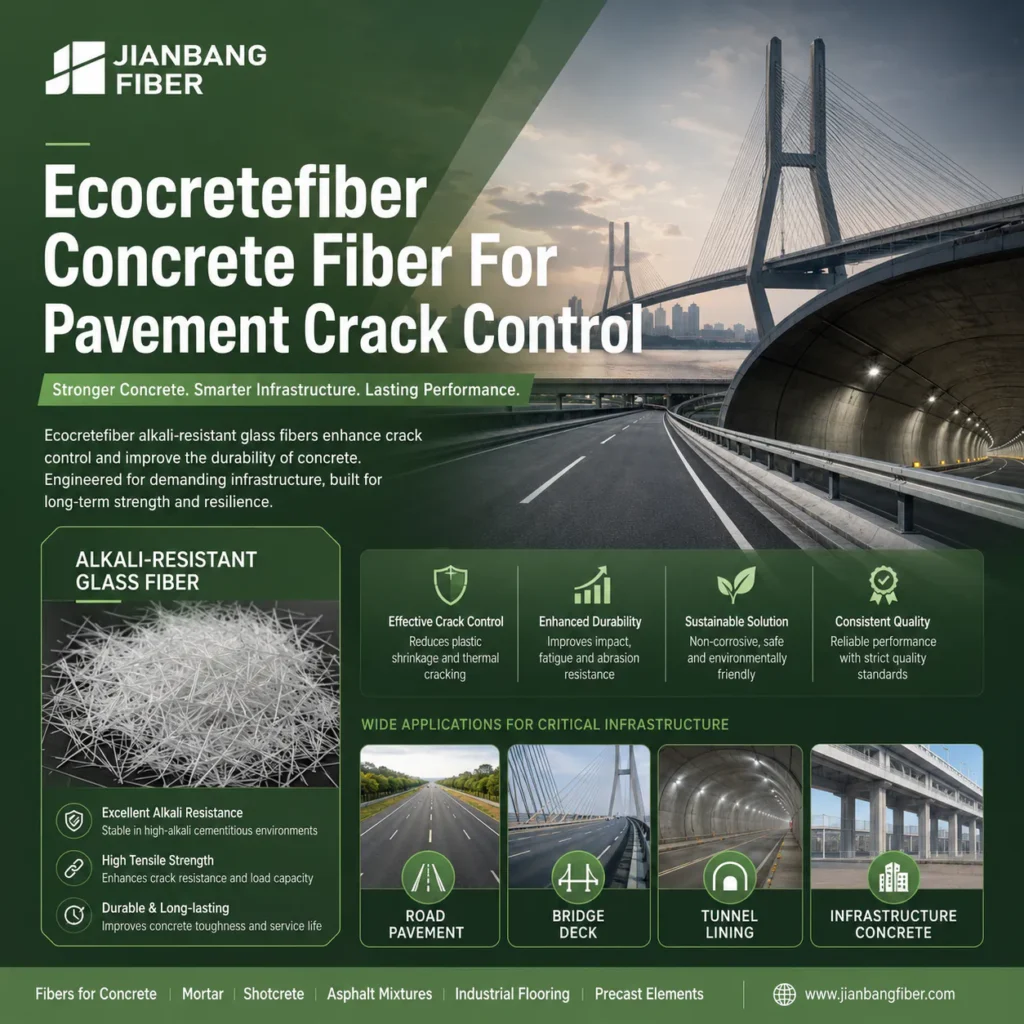
إيكوكريتي فايبر™ Ecocretefiber™ هي العلامة التجارية للألياف الخرسانية شركة شاندونغ جيانبانغ للألياف الكيماوية المحدودة. نحن نقدم حلولًا من ألياف الخرسانة لرصف الطرق، وأسطح الجسور، وتبطين الأنفاق، والخرسانة المرشوشة، والخرسانة مسبقة الصب، والأرضيات الصناعية، وإصلاح الخرسانة.
تشمل توجهات منتجاتنا ما يلي ألياف الصلب، ألياف البولي بروبيلين، الألياف الاصطناعية الكبيرة, ، وغيرها من ألياف تقوية الخرسانة. نساعد العملاء على اختيار الألياف المناسبة بناءً على نوع التشققات، وتصميم الخرسانة، وطريقة البناء، والبيئة المحيطة، والعمر التشغيلي المستهدف.
فيما يتعلق بمشاريع الخرسانة للطرق، ندرك أن الألياف المختلفة تعالج مشاكل مختلفة. يمكن لألياف الزجاج المقواة بالألومنيوم أن تعزز مقاومة التشقق والأداء عند الانحناء. يمكن لألياف الفولاذ أن توفر متانة عالية التحمل. يمكن لألياف البولي بروبيلين أن تساعد في الحد من الشقوق الدقيقة. يمكن للألياف الاصطناعية الكبيرة أن توفر ربطًا للشقوق دون التعرض للتآكل.
يمكن لـ Ecocretefiber™ دعم الموزعين والمقاولين ومصانع الخرسانة الجاهزة وأصحاب المشاريع في اختيار الألياف وخيارات التعبئة والتغليف وخدمات تصنيع المعدات الأصلية (OEM) والتواصل بشأن التطبيقات.
قائمة مراجعة المشتري قبل طلب الألياف الخرسانية
قبل طلب الألياف المستخدمة في صناعة الخرسانة للطرق، ينبغي على المشترين التأكد من عدة تفاصيل.
| سؤال | ما أهمية ذلك |
|---|---|
| ما نوع مشروع الطرق هذا؟ | تتطلب أعمال الرصف الجديدة والإصلاحات ووضع الطبقات الإضافية ورصف المطارات أنظمة ألياف مختلفة. |
| ما هي المشكلة الرئيسية؟ | تتطلب مراقبة التشققات وقوة الانحناء والانكماش والمتانة حلولاً مختلفة. |
| هل المقاومة للقلويات مطلوبة؟? | تتميز الأنظمة القائمة على الأسمنت بطابعها القلوي، لذا فإن متانة الألياف أمر مهم. |
| هل مقاومة التآكل مهمة؟? | قد تكون الألياف غير المعدنية مفيدة في البيئات الرطبة. |
| ما هي درجة الخرسانة؟ | تؤثر قوة المصفوفة على أداء الألياف. |
| هل سيتم استخدام الرماد المتطاير؟ | يمكن أن يساهم الرماد المتطاير في تحسين كثافة المصفوفة ويساعد في تقليل مخاطر التآكل. |
| ما هي طريقة المعالجة التي سيتم استخدامها؟ | يؤثر التماسك على القوة والانكماش والمتانة. |
| كيف سيتم خلط الألياف؟ | قد يؤدي الخلط غير الجيد إلى تكوّن كتل من الألياف ومناطق ضعيفة. |
تساعد قائمة المراجعة هذه على الحد من اختيار المنتجات غير المناسبة ومخاطر البناء.
الخاتمة
يمكن أن تكون ألياف الزجاج المقاومة للقلويات مفيدة في خلطات خرسانة الطرق شريطة أن يتم التحكم بشكل سليم في تصميم الخلطة وعملية البناء. فهي قادرة على تحسين التحكم في التشققات، وسلوك الخرسانة عند الانحناء، ومقاومة الصدمات، ومقاومة التشققات الناتجة عن التجمد، وتعزيز المتانة.
اكتشفت شركة شاندونغ جيانبانغ أن ألياف الزجاج AR لا تزال معرضة لخطر التآكل في مصفوفة الأسمنت القلوية. وهذا يعني أنه يجب تصميم نظام الخرسانة بعناية. وتعد الرماد المتطاير، والتعبئة الكثيفة، والمعالجة المناسبة، والتوزيع المتجانس للألياف من العوامل المهمة. كما أن البنية المجهرية الكثيفة يمكن أن تقلل من المسام الشعرية، وتحد من الانكماش، وتقلل من خطر تشقق الطرق.
الألياف ليست مجرد مادة مضافة بسيطة. إنها جزء لا يتجزأ من نظام الخرسانة بأكمله. ويأتي الأداء المطلوب من اختيار نوع الألياف المناسب، والجرعة الصحيحة، وتصميم الخلطة، وعملية الخلط، وطريقة المعالجة، ومراقبة عملية البناء.
شركة شاندونغ جيانبانغ للألياف الكيماوية المحدودة. الإمدادات إيكوكريتي فايبر™ Ecocretefiber™ حلول الألياف الخرسانية لـ رصف الطرق, ، سطح الجسر،, بطانة النفق, ، والخرسانة المرشوشة، والخرسانة الجاهزة، ومشاريع البنية التحتية. إذا كان مشروع الخرسانة الخاص بالطرق الخاص بك يحتاج إلى التحكم في الشقوق, سواء كنت تبحث عن متانة أعلى أو خطة عملية لاختيار الألياف، فإن Ecocretefiber™ يمكنها مساعدتك في اختيار الحل المناسب من ألياف الخرسانة.