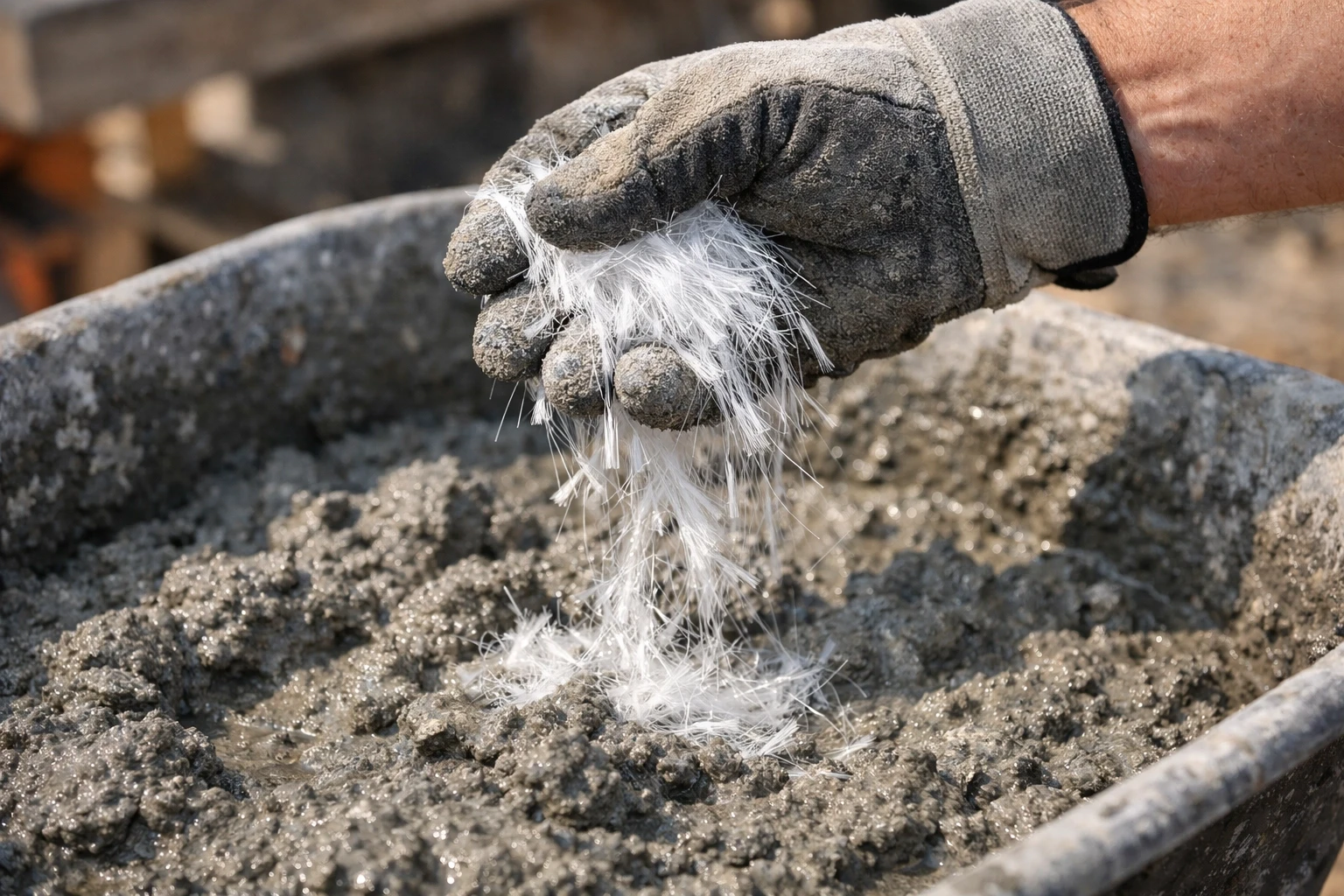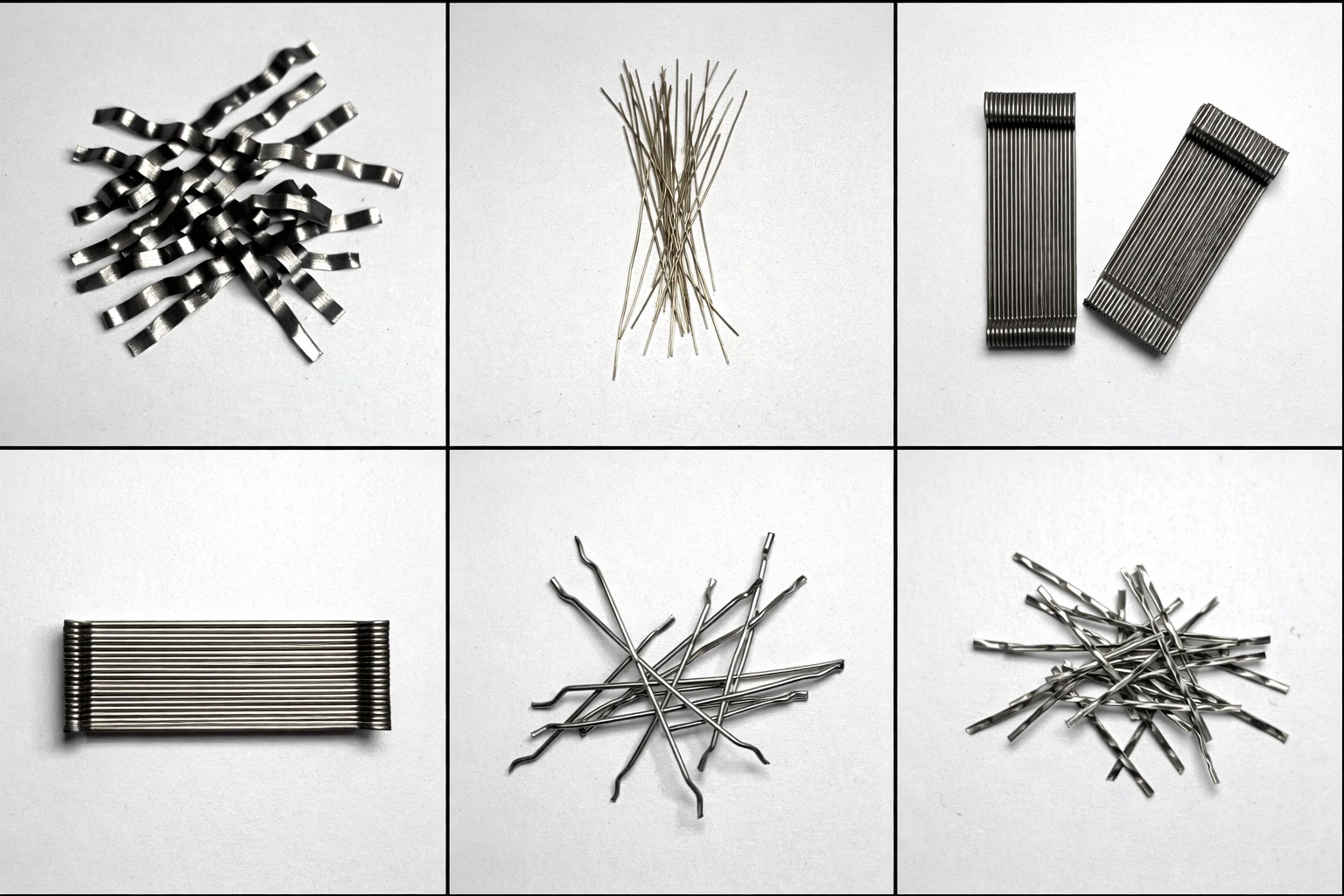
When buyers ask whether fibra de polipropileno is better than fibra de poliéster, the most useful answer is this: polypropylene fiber is usually the better all-round choice for standard concrete work, but polyester fiber can be better in some specific cases. Polypropylene is lighter, melts at a much lower temperature, and has a strong track record in cement-based materials for crack control, durability, and fire-spalling mitigation. Polyester fiber, which in concrete usually means PET fiber, has a higher melting point and can perform very well in selected shrinkage-control, ductility, and recycled-fiber applications.
This means the question should not be treated as a simple battle between a “good” fiber and a “bad” fiber. Both are useful. Both can improve concrete when the dosage, geometry, and mix design are right. The real difference is that polypropylene is often the safer and more practical default, while polyester usually needs a more targeted reason for use.
Why This Comparison Matters In Concrete
In construction, synthetic fibers are not added to concrete just to make the mix look more advanced. They are added to solve real jobsite problems. The main goals are often early crack control, better toughness, improved durability, and, in some projects, better behavior under fire or temperature change. That is why the choice between polypropylene and polyester matters. A fiber that looks good on a datasheet may not be the best match once it enters a wet, alkaline cement matrix.
Polypropylene fiber is known for low density and a low melting point. One polypropylene fiber datasheet lists a bulk density of about 0.91 g/cm3 and a melting point near 160 °C. A polyester fiber datasheet lists a specific gravity of about 1.38 and a melt point of 256 °C. Those are not just lab details. They affect how the fibers disperse in the mix, how much weight they add, and how the concrete behaves when temperature rises.
In concrete language, polyester fiber usually refers to polyethylene terephthalate, or PET. PET belongs to the polyester family. It is widely used in many industries, and it also appears in concrete as virgin fiber or recycled fiber from bottles or waste fabric. This gives polyester a strong sustainability story, especially in projects that want to reuse plastic waste.
Why Polypropylene Fiber Is Usually The Better All-Round Choice
Polypropylene earns its reputation because it performs well in the places where concrete most often fails early. One study on polypropylene fiber reinforced concrete found that adding 0.1% PP fiber caused only a small drop in compressive strength, while tensile strength increased by 39%, and the crack generation, first-crack time, and crack area all improved clearly compared with plain concrete. A broader 2024 review also found that fibers delay crack initiation and reduce plastic shrinkage cracking, with volume fraction having a strong effect on crack reduction.
That is a major reason polypropylene is so common in practical construction. Many projects do not need the highest possible fiber stiffness. They need a fiber that is easy to use, stable in concrete, and effective against early-age cracking. Polypropylene fits that role very well. Recent durability research also reports that macro polypropylene fibers can improve freeze-thaw-related performance and reduce compressive strength loss in self-compacting concrete exposed to aggressive cycles.
Another reason polypropylene is often preferred is chemical confidence inside the cement matrix. A comparative study that used PET and PP fibers with similar properties noted that PET faces uncertainty in alkaline concrete because alkaline hydrolysis can degrade the fiber. The same paper noted that there were no published scientific papers pointing to unsatisfactory behavior of PP fibers in the alkaline environment of concrete. That does not mean PP is perfect in every mix. It means buyers can usually specify it with less concern about long-term chemical attack from the cement system itself.
For buyers who want a practical recommendation, this is the big takeaway. If the job is a normal concrete application and the main goal is crack control, durability support, and dependable field use, polypropylene is usually the smarter first choice. This is why many construction fiber suppliers, including Ecocretefiber™, treat PP fiber as a core product rather than a niche option.
Where Polyester Fiber Can Be Better
Polyester should not be treated as a backup option with no clear strengths. It has real advantages. One 2023 study on cement-stabilized concrete found that increasing polyester fiber content significantly improved shrinkage resistance, especially temperature shrinkage. The same paper also noted that prior studies had indicated polyester fiber could provide more effective effects on mechanical strength and shrinkage resistance than polypropylene in that material system.
That is important because some buyers ask the wrong version of this question. They ask, “Which fiber is better overall?” A better question is, “Better for what?” If the project is sensitive to temperature shrinkage, or if the engineer is working with a cement-stabilized system where polyester has already been tested and optimized, polyester may be the better answer.
Polyester also stands out when recycled-content value matters. A 2023 PET-in-concrete review notes that using PET in concrete can reduce plastic waste disposal issues and may reduce environmental pollution. The review also summarizes that PET fibers can improve energy absorption, ductility, crack behavior, and, at optimum dosages, tensile, compressive, and flexural strengths. Another 2022 study on recycled foamed concrete reported that PET fiber improved mechanical properties and durability, with an optimum content and length identified for that system.
So polyester has a strong case in green concrete positioning. If a buyer wants a sustainability story tied to recycled bottles or waste textile streams, PET fiber can be very attractive. In marketing terms, this can matter. In engineering terms, it still needs careful mix design and dosage control. The PET review also warns that high PET contents can reduce overall concrete properties and significantly reduce workability.
Fire Performance Is One Of The Biggest Reasons To Choose Polypropylene
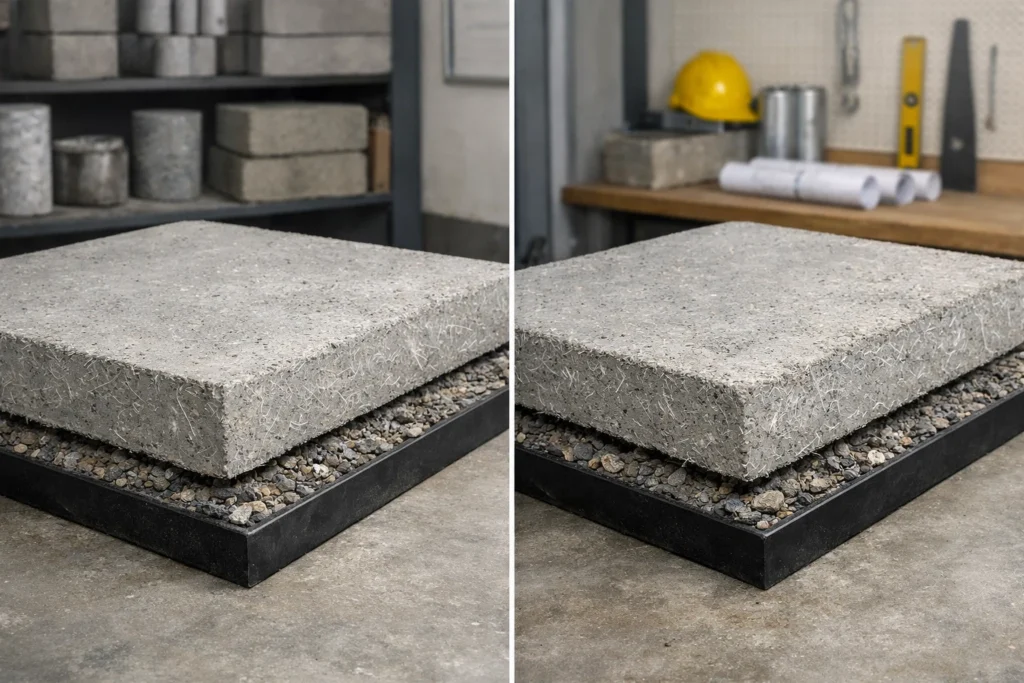
If the project involves high-strength concrete, dense concrete, or a structure where fire spalling is a concern, polypropylene has one very strong advantage. When concrete with PP fibers is heated, the fibers melt at relatively low temperature and create channels that increase permeability. A review on concrete spalling risk reports that permeability can increase strongly when the fibers melt, and the resulting pore network helps relieve internal pressure. Another MDPI review states plainly that adding polypropylene fibers is a proven solution for reducing concrete spalling in fire.
This is a very practical benefit. Concrete does not only fail in fire because it gets weaker. Dense concrete can also fail because vapor pressure builds inside it. Polypropylene helps by opening escape paths earlier. Since PP melts around 160 °C and polyester around 256 °C, PP starts doing this job sooner. That early melting is often a strength, not a weakness, in fire design.
Polyester can also help in high-temperature concrete, but the picture is more mixed. A comparative UHPC study found that PET fibers could prevent heat-induced cracking and spalling, but a higher dosage of PET was needed than PP to eliminate spalling risk. The researchers linked PET’s lower spalling-mitigation efficiency to its higher melting temperature, which delayed the formation of interconnected channels.
This is why polypropylene is often the better choice when the buyer asks about fire safety in concrete rather than just room-temperature mechanical properties. Polyester may still work, but polypropylene usually reaches the spalling-control target more directly.
Durability In Alkaline Cement Environments
The alkaline nature of concrete is one of the most important parts of this comparison. Polyester is useful, but PET hydrolysis in alkaline environments has been documented in both review and comparative studies. The 2020 review on polyester fibers in alkaline and cementitious environments says that chemical degradation of PET fibers and their subsequent behavior in alkaline cementitious systems are well documented. The earlier comparison study also reports severe weight loss of PET fibers in the initial stages of alkaline treatment, while PP fibers did not show significant reduction in strength under the same type of evaluation.
That said, the PET story is not as simple as “alkali destroys it, so never use it.” The same comparison study also notes that alkaline treatment can increase PET surface hydrophilicity and create dimples that improve fiber-matrix adhesion. It also cites earlier work showing that some PET-reinforced cement composites can maintain tensile strength, ductility, and toughness for a considerable time-span despite hydrolysis effects. In other words, PET can still work, but it needs more careful interpretation than polypropylene.
For most buyers, that still points to polypropylene as the lower-risk general option. When a specifier wants fewer durability questions and a more established comfort level in ordinary cementitious conditions, polypropylene usually wins.
Bonding And Mechanical Behavior Need A Nuanced View
One reason some engineers still look closely at polyester is that polypropylene does have its own weakness. Conventional PP fibers often have a smooth and hydrophobic surface, which can limit bond with the cement matrix. A 2024 study on activated polypropylene fibers showed that once the PP surface was modified to improve wettability and chemical bonding, crack resistance and shrinkage mitigation improved further. That tells us something useful: polypropylene is already strong as a general solution, but its bond mechanism can still be improved.
Polyester, by contrast, often shows value through energy absorption, ductility, and selected mechanical improvements when dosage is optimized. The PET review summarizes that split tensile strength can rise at certain PET addition levels, while the recycled foamed concrete study found improved compressive strength and durability at an optimum PET dosage and length. So polyester is not inferior in every mechanical category. It is more accurate to say that its performance window is narrower and more mix-dependent.
This matters for product positioning. Polypropylene is easier to recommend as a standard commercial product. Polyester is easier to recommend when the project has a defined technical target, a recycled-material objective, or an existing body of internal testing.
Which Fiber Should You Choose For Your Project
If your project needs a dependable synthetic fiber for mainstream concrete, polypropylene is usually the safer choice. It is light, stable in alkaline concrete, very effective for plastic shrinkage crack control, and especially valuable where fire-spalling mitigation matters. These are strong reasons why PP remains the default answer in many construction discussions.
If your project has a strong recycled-content goal, or if you are working with a system where polyester has already shown better shrinkage behavior, PET fiber may be the better fit. It can improve ductility and selected strength properties at optimum dosages, and it offers a clear sustainability story through plastic-waste reuse. But it also needs more care in mix design, dosage, and long-term durability evaluation in alkaline cement environments.
Em Ecocretefiber™, this is how we would guide the decision. Start from performance target first, not fiber name first. If the buyer wants the best all-round construction answer, polypropylene usually comes first. If the buyer wants a more specialized or sustainability-led answer, polyester may deserve a closer look. Shandong Jianbang Chemical Fiber Co., Ltd. can support that selection process with practical product guidance based on real concrete use, not only on generic material claims.
Conclusão
Polypropylene fiber is usually better than polyester fiber for general concrete use. It is lighter, more established in alkaline cement systems, highly effective in reducing early cracking, and especially strong in fire-spalling control because it melts early and creates pressure-relief channels. Polyester fiber still has real value. It can improve shrinkage resistance in some cement-stabilized systems, support recycled-material goals, and enhance ductility or selected mechanical properties when the mix is designed well. But in most standard construction situations, polypropylene is the more reliable first recommendation.
For most buyers, the best final answer is simple. Choose polypropylene when you want the stronger all-round concrete fiber. Choose polyester when you have a clear technical reason to do so. That is the practical view behind the market, and it is also the view that fits how Ecocretefiber™ approaches fiber selection for real projects.