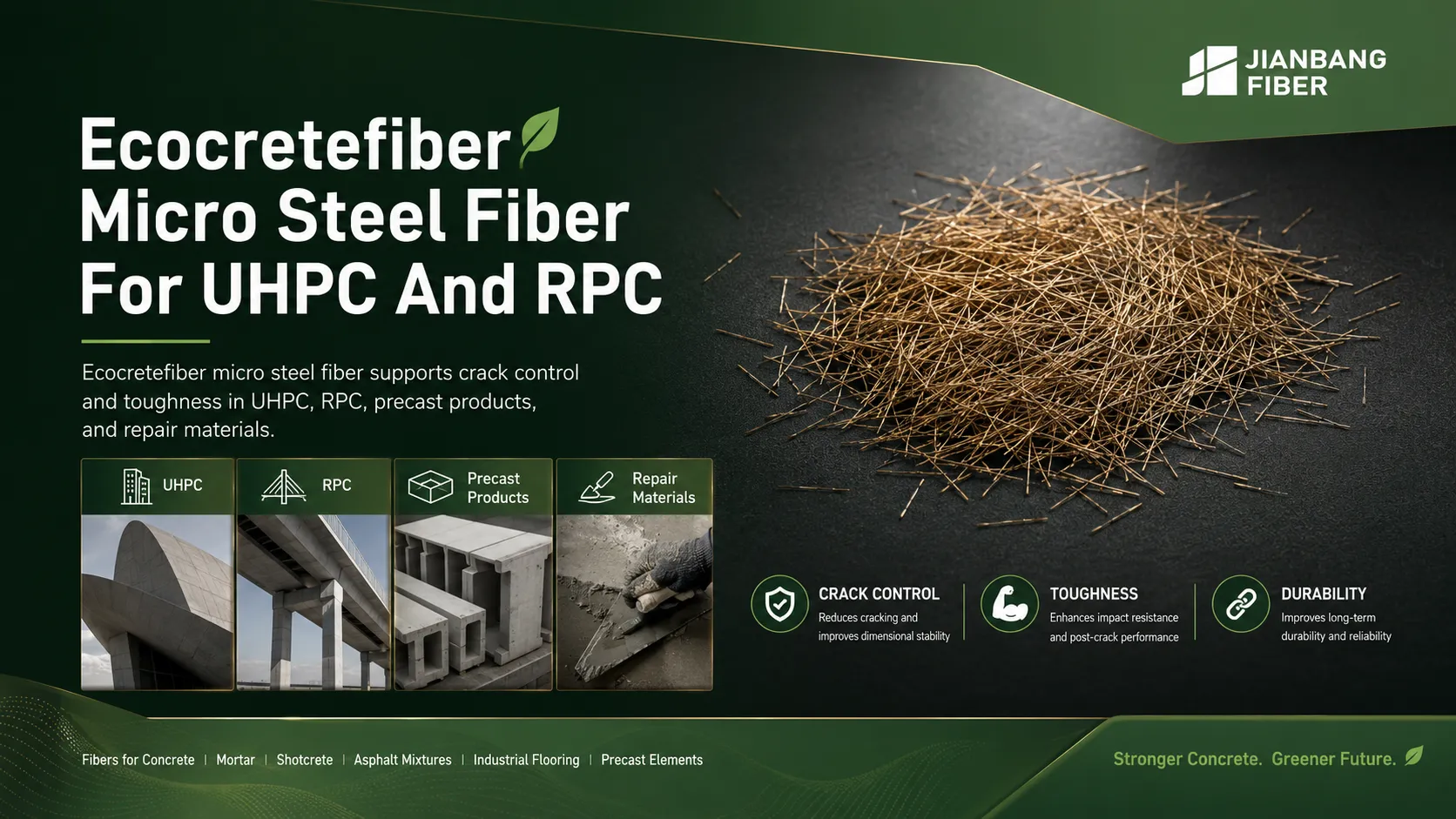
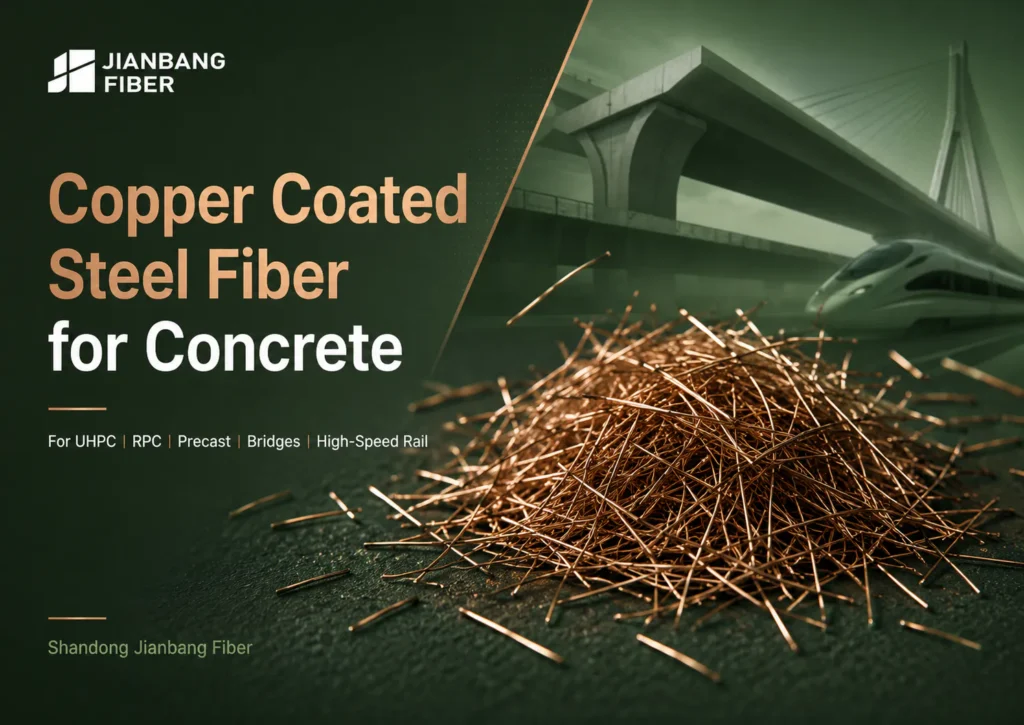
Bakır kaplı çelik fiber çelik elyaf pazarının premium ucunda yer alır. Düz çelik elyaftan daha pahalıdır, ancak en önemli uygulamalarda daha iyi performans gösterir: ultra yüksek performanslı beton (UHPC), reaktif toz beton (RPC) ve yüksek hızlı demiryolu prekast elemanları. Distribütörler için, beton i̇çi̇n bakir kapli çeli̇k elyaf teknik değer önerisini anlamanın doğrudan satışa dönüştüğü bir ürün kategorisidir.
Bu kılavuz neleri kapsar bakır kaplı çelik fiber bakır kaplamanın ne olduğu, neden önemli olduğu, hangi uygulamaların bunu gerektirdiği ve tedarikçilerin nasıl değerlendirileceği. İster bu ürünü kataloğunuza ekliyor ister daha iyi bir üretici arıyor olun, buradaki bilgiler güvenle kaynak bulmanıza yardımcı olacaktır.
Bakır Kaplı Çelik Elyaf Nedir
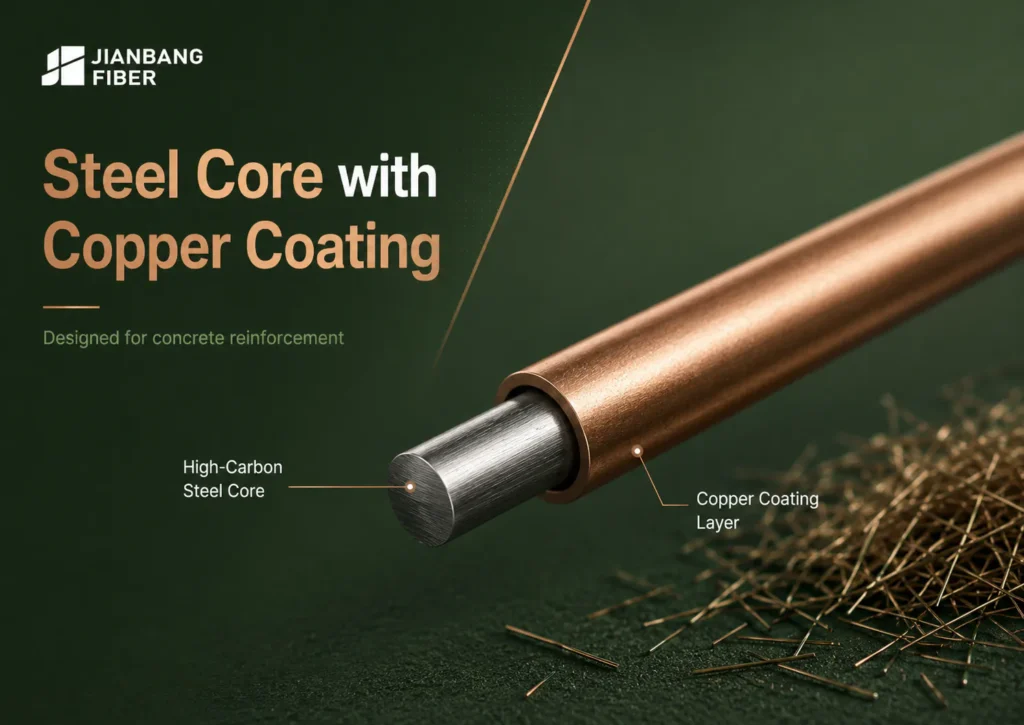
Bakır kaplamalı çelik çekirdek: yapısı ve amacı
Bu elyaf, yüksek karbonlu çelik telin yüzeyine elektrolizle kaplanmış ince bir bakır katmana sahip bir mikro çelik elyaftır. Çelik çekirdek gerilme mukavemeti sağlar (tipik olarak 2.000 MPa veya daha yüksek). Bakır kaplama iki ana amaca hizmet eder: korozyon direncini artırır ve elyaf ile çimento matrisi arasındaki bağı güçlendirir.
Elyaf, yüksek karbonlu çelik telin hedef çapa çekilmesi ve ardından yüzeye bakır bir tabakanın elektrolizle kaplanmasıyla üretilir. Kaplanan tel daha sonra belirtilen uzunlukta kesilir. Sonuç, spesifikasyona bağlı olarak tipik olarak 0,12-0,20 mm çapında ve 6-13 mm uzunluğunda pirinç renkli çelik tele benzeyen bir elyaftır.
Hakkında daha fazla bilgi bulabilirsiniz farklı çelik elyaf türleri ilgili kılavuzumuzda bulabilirsiniz. Bu makale özellikle bakır kaplı varyanta odaklanmaktadır.
Bakır kaplama vs bakır kaplama vs pirinç kaplama: terminolojinin açıklığa kavuşturulması
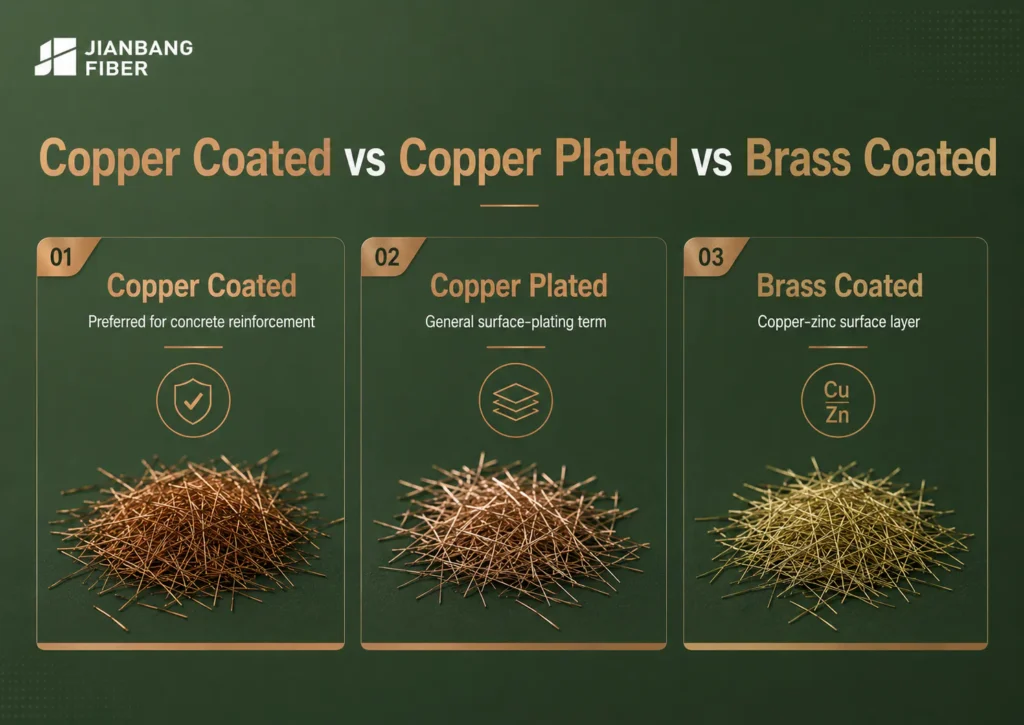
Çelik elyaf endüstrisinde “bakır kaplı” ve “bakır kaplama” terimleri birbirinin yerine kullanılmaktadır. Her ikisi de aynı ürünü ifade eder: elektrolizle kaplanmış bakır yüzey tabakasına sahip çelik elyaf. “Bakır kaplı” ürün açıklamalarında ve B2B pazar yeri listelerinde daha yaygındır. “Bakır kaplama” daha çok teknik belgelerde ve spesifikasyon dokümanlarında görülür. Bakır kaplamalı çelik elyaf aynı üründür; terimler birbirinin yerine kullanılabilir.
“Pirinç kaplı” farklı bir ürünü ifade eder. Pirinç kaplı çelik elyafta saf bakır yerine bakır-çinko alaşımlı bir katman bulunur. Pirinç kaplama da bağ ve korozyon direncini artırır ancak farklı elektriksel ve kimyasal özelliklere sahiptir. Çoğu beton uygulamasında bakır kaplı ve pirinç kaplı fiberler benzer performans gösterir. İletken beton veya akıllı yapısal izleme gibi özel uygulamalarda ayrım daha önemlidir.
Tedarik ederken, üreticiden saf bakır kaplama mı yoksa pirinç kaplama mı tedarik ettiklerini teyit edin. Bazı üreticiler pirinç kaplamalı ürünleri tanımlamak için gevşek bir şekilde “bakır kaplamalı” ifadesini kullanmaktadır. Müşterileriniz birini veya diğerini belirtiyorsa, aradaki fark önemlidir.
Bakır Kaplama Neden Önemlidir?
Alkali beton ortamlarda korozyon direnci
Taze betonun pH değeri 12-13 arasındadır ve oldukça alkalidir. Bu alkali ortam başlangıçta çeliği pasifleştirerek koruyucu bir oksit tabakası oluşturur. Zamanla karbonatlaşma ve klorür penetrasyonu beton yüzeyindeki pH değerini düşürerek pasif tabakayı parçalar ve çeliğin korozyona uğramasına neden olur.
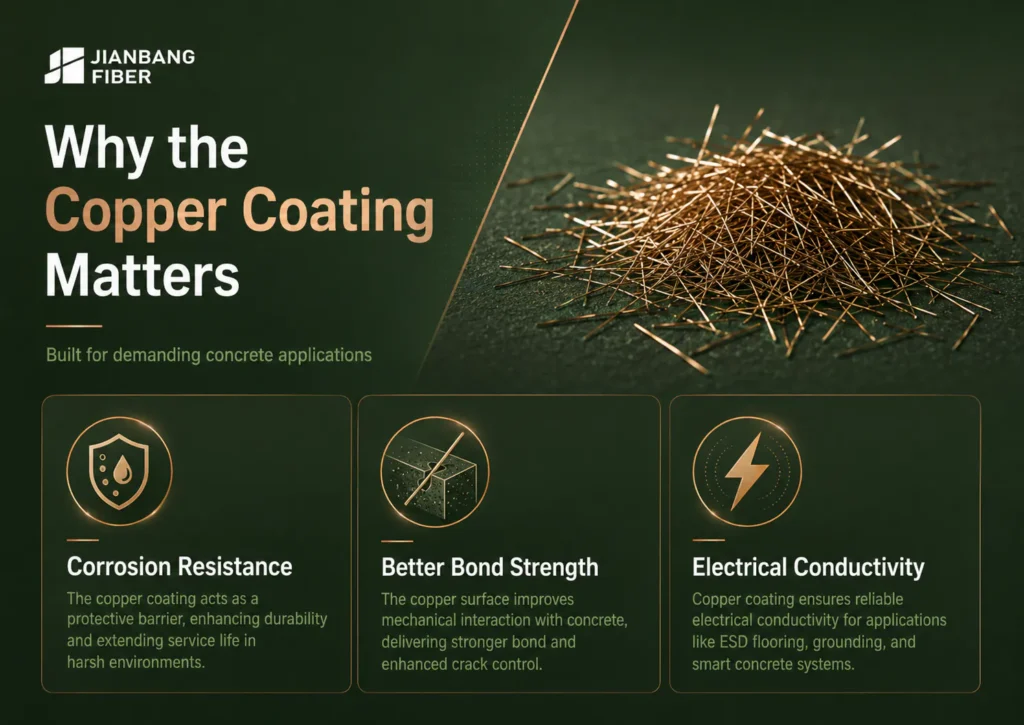
Betondaki düz çelik lifler bu korozyon sürecine karşı savunmasızdır. Çelik lifler paslandığında kesit alanını ve bağlanma gücünü kaybeder. Maruz kalınan veya deniz ortamlarında bu durum fiberin etkin hizmet ömrünü azaltabilir. Bakır kaplı çelik fiber korozyon direnci Alkali ortamlarda elektrokimyasal olarak çelikten daha kararlı olan bakır tabakadan gelir. Bakır kaplama, çelik çekirdek ile beton gözenek çözeltisi arasında bir bariyer görevi görerek korozyonun başlama sürecini yavaşlatır.
Bu nedenle bu elyaf türü, deniz yapıları, buz çözücü tuzlara maruz kalan köprü tabliyeleri, yeraltı suyundaki tünel kaplamaları ve uzun süreli dayanıklılığın bir tasarım gereksinimi olduğu her türlü uygulama gibi agresif ortamlarda belirtilir.
Geliştirilmiş fiber-matris bağ mukavemeti
Bakır yüzey, çimento hidratasyon ürünleri ile çıplak çelikten farklı şekilde etkileşime girer. Çalışmalar, bakır kaplı fiberlerin çimento hamuru ile daha yoğun bir arayüzey geçiş bölgesi (ITZ) geliştirdiğini göstermiştir. ITZ, her bir elyafı hemen çevreleyen ince çimento hamuru tabakasıdır ve kalitesi, elyafın matrise ne kadar iyi bağlandığını doğrudan etkiler.
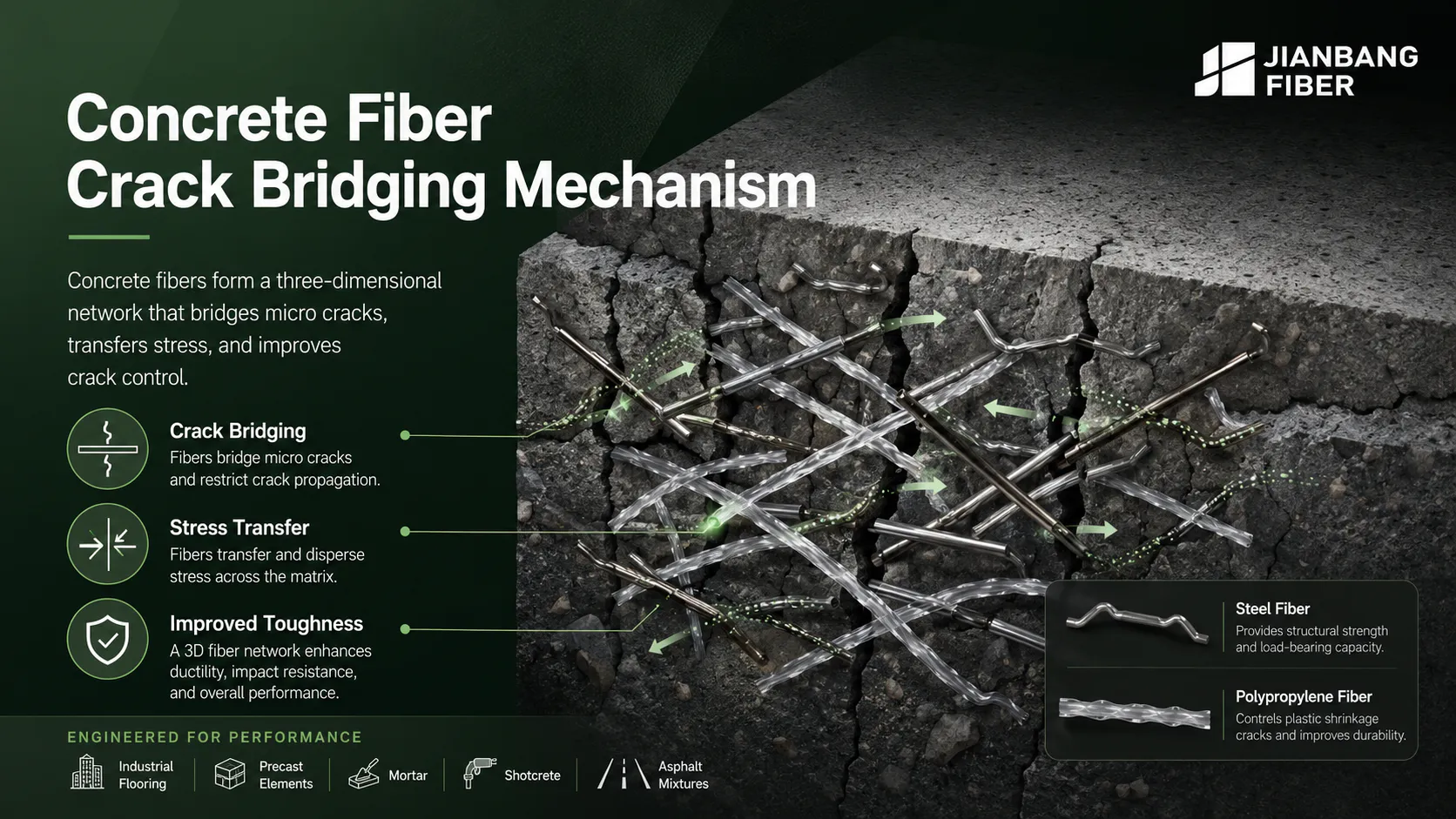
Daha güçlü bir ITZ, fiberin çekilmeden önce daha fazla gerilim aktarabileceği anlamına gelir. Pratik anlamda bu, çelik fiber takviyeli betonda daha yüksek çatlak sonrası artık mukavemet anlamına gelir. Fiber, çatlak yüzeylerini daha etkili bir şekilde bir arada tutar, bu da betona fiber eklemenin tüm amacıdır.
İçin bakır kaplı çelik elyaf çekme dayanımı, Çelik çekirdek, fiberin nihai kapasitesini belirler. Bakır kaplama, bu kapasitenin ne kadar etkili bir şekilde harekete geçirildiğini geliştirir. Mükemmel gerilme mukavemetine sahip ancak zayıf bağlanmış bir elyaf, tam yük taşıma potansiyeline ulaşmadan önce çekilecektir. Bakır kaplama bu boşluğu kapatmaya yardımcı olur.
Akıllı beton uygulamaları için elektriksel iletkenlik
Bakır mükemmel bir elektrik iletkenidir. Çelik de iletkendir, ancak bakır çok daha iyidir. Bu bakır kaplı lifler bir beton matris boyunca dağıtıldığında, iletken yollardan oluşan bir ağ oluştururlar. Bu özellik gelişmekte olan iki uygulamaya olanak sağlamaktadır:
Birincisi, kendi kendini algılayan beton. Mühendisler, fiber takviyeli betonun elektrik direncini ölçerek gerinim değişikliklerini, çatlak oluşumunu ve hasar ilerlemesini gerçek zamanlı olarak tespit edebilirler. Bu, köprülerin, tünellerin ve kritik altyapıların yapısal sağlık takibi için değerlidir.
İkincisi, buz çözücü ve kar eritici beton. İletken fiber ağ boyunca düşük voltaj uygulandığında, beton dirençli ısıtma üretir. Bu, köprü güvertelerinde, havaalanı pistlerinde ve yaya yüzeylerinde kimyasal buz çözücüler olmadan buz oluşumunu önleyebilir.
Bu uygulamalar henüz yeni ortaya çıkıyor, ancak büyüyen bir pazarı temsil ediyorlar. İletkenlik açısını anlayan distribütörler, bu elyafı sadece bir takviye malzemesi olarak değil, akıllı beton projeleri için bir kolaylaştırıcı olarak konumlandırabilir.
Bakır Kaplı Çelik Elyaf için Temel Uygulamalar
Ultra yüksek performanslı beton (UHPC)
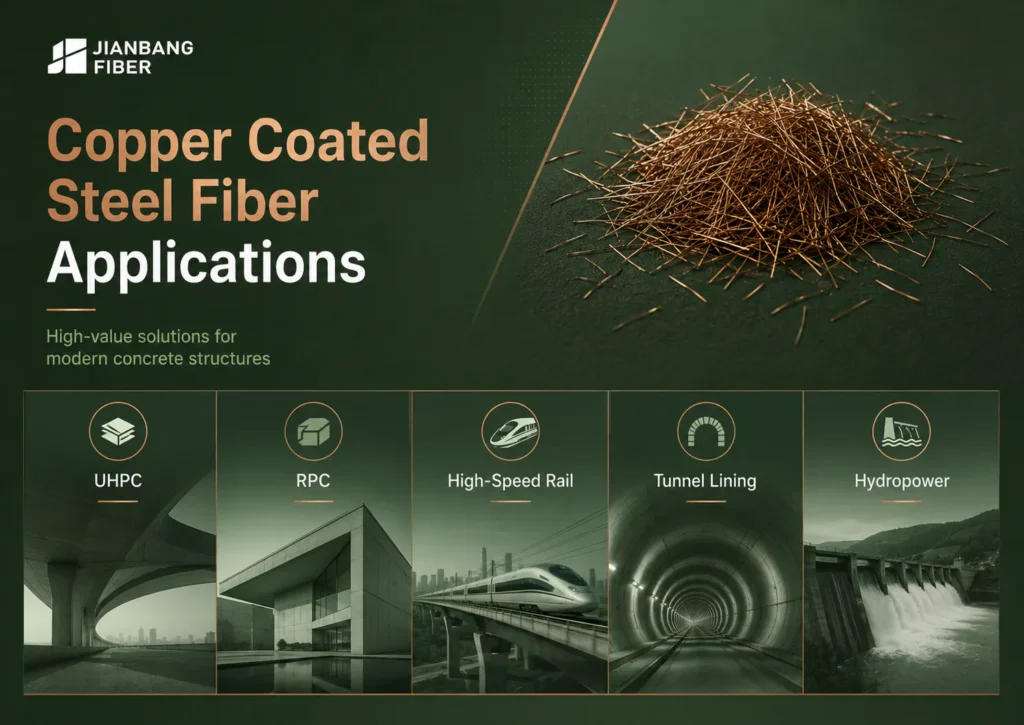
UHPC, bu elyaf için tek ve en büyük uygulamadır. UHPC karışımları tipik olarak hacimce 2-6% elyaf içerir, bu da geleneksel çelik elyaf takviyeli betonda kullanılan dozajın 5-10 katıdır. Bu dozajlarda, lif kalitesi UHPC performansını doğrudan belirler.
Bakır kaplı çelik fiber UHPC formülasyonları, çatlama sonrası sünekliği sağlamak için elyafa güvenir. Yeterli elyaf içeriği ve kalitesi olmadan UHPC çok güçlü ancak kırılgan bir harç gibi davranır. Lifler mikro çatlakları köprüler ve UHPC'yi yapısal uygulamalar için uygun hale getiren gerilme kapasitesini sağlar.
Bakır kaplı elyaf UHPC'de üç nedenden dolayı tercih edilir: gelişmiş bağ, yüksek dozajlarda çatlak sonrası performansı iyileştirir, korozyon direnci elyafları düşük su, yüksek yoğunluklu UHPC matrisinde korur ve bakır kaplama karıştırma sırasında elyaf dağılımını iyileştirir. Zayıf dağılım UHPC üretiminde yaygın bir sorundur ve bu elyaflar düz çelik elyaflara göre ayrılma ve daha eşit dağılma eğilimindedir.
Reaktif toz beton (RPC) ve prekast elemanlar
RPC, çok ince tozlar (silika dumanı, kuvars tozu) ve yüksek lif içeriği kullanan ultra yüksek performanslı betonun özel bir şeklidir. RPC, demiryolu traversleri, yüksek hızlı demiryolu için kapak plakaları ve ince kabuklu mimari paneller gibi prekast elemanlar için kullanılır.
Bu elyaf türü, dünya çapında RPC için standart takviyedir. Bunun nedeni basittir: RPC elemanları ince ve yoğun takviyelidir. İnce bir RPC panelindeki fiber korozyonu, kalın bir geleneksel beton elemanına göre yapısal bütünlüğü daha hızlı tehlikeye atacaktır. Bakır kaplama, şartname hazırlayanların talep ettiği korozyona karşı sigorta sağlar.
Yüksek hızlı demiryolu, tüneller ve hidroelektrik yapılar
Yüksek hızlı demiryolu altyapısı, bu fiber için en hızlı büyüyen pazarlardan biridir. Çin, Avrupa ve Orta Doğu'da yeni yüksek hızlı demiryolu hatları, tümü bakır kaplı çelik fiber ile güçlendirilmiş RPC kapak plakaları, kablo olukları ve prekast ses bariyerleri gerektirmektedir.
Su taşıyan zeminlerdeki tünel kaplamalarında da bakır kaplı fiber kullanılır. Yüksek yeraltı suyu basıncı, agresif su kimyası ve uzun tasarım ömrünün (100+ yıl) birleşimi, korozyon direncini kritik bir gereklilik haline getirmektedir. Hidroelektrik yapıları da benzer koşullarla karşı karşıyadır: sürekli suya maruz kalma, yüksek hidrostatik basınç ve onlarca yıl bakım gerektirmeyen hizmet ihtiyacı.
Distribütörler için bu uygulama sektörleri, sertifikalı, test edilmiş ürün için prim ödeyecek müşterileri temsil etmektedir. Yalnızca fiyata göre alışveriş yapmıyorlar. Dokümantasyon, tutarlılık ve proje gereksinimlerini anlayan bir tedarikçi istiyorlar.
Bakır Kaplı Çelik Elyaf Özellikleri
Elyaf boyutları: uzunluk, çap ve en-boy oranı
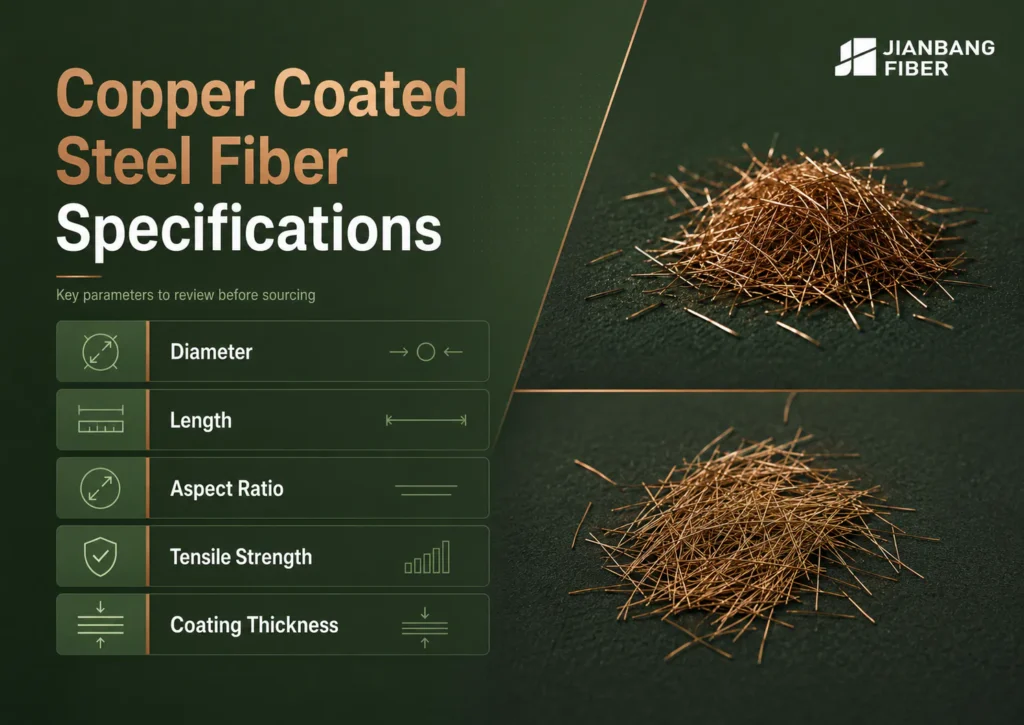
Bakır kaplı çelik elyaf özellikleri fiziksel boyutlarla başlar. Piyasadaki en yaygın boyutlar şunlardır:
- Çap: 0,12 mm, 0,15 mm, 0,175 mm, 0,20 mm
- Uzunluk: 6 mm, 8 mm, 10 mm, 12 mm, 13 mm
- En-boy oranı (uzunluk/çap): tipik olarak 40-80
En-boy oranı kritik bir parametredir. Daha yüksek en-boy oranları daha iyi çatlak köprüleme performansı sağlar ancak eşit şekilde karıştırılması ve dağıtılması daha zor olabilir. Düşük en-boy oranları daha kolay karışır ancak daha az çatlama sonrası mukavemet sağlar. UHPC spesifikasyonları tipik olarak 50-80 arasında en-boy oranlarını gerektirir.
Elyaf şekli de önemlidir. Bakır kaplı mikro çelik fiber iki ana formda gelir: düz kesim ve kancalı uç. Düz liflerin üretimi daha basit ve daha ucuzdur. Kancalı uçlu fiberlerin her bir ucunda betondaki mekanik ankrajı iyileştiren küçük bir bükülme vardır. UHPC için düz fiberler daha yaygındır çünkü çok yüksek çimento hamuru yoğunluğu zaten mükemmel bir bağ sağlar. Geleneksel beton için kancalı uçlu fiberler tercih edilebilir.
Çekme mukavemeti ve bakır kaplama kalınlığı gereksinimleri
Bu elyafın çekme mukavemeti, çelik kalitesine ve tel çekme işlemine bağlı olarak tipik olarak 2.000-2.850 MPa arasında değişir. Daha yüksek çekme mukavemeti, elyafın kırılmadan önce daha fazla yük taşımasını sağlar, bu da betonda daha yüksek artık eğilme mukavemeti anlamına gelir.
Bakır kaplama kalınlığı tipik olarak 0,5-2,0 mikrometredir. Daha kalın kaplamalar daha iyi korozyon koruması sağlar ancak maliyeti artırır. Kaplama düzgün ve iyi yapışmış olmalıdır. Karıştırma sırasında pul pul dökülen bir kaplama hiçbir fayda sağlamaz. Üreticileri değerlendirirken, kaplama kalınlığı test raporlarını ve yapışma testi sonuçlarını isteyin.
ASTM A820 ve EN 14889-1 uyumluluğu
Bakır kaplı çelik elyaf ASTM A820 lif takviyeli betonda kullanılan çelik lifler için Amerikan standardıdır. ASTM A820 çelik lifleri tiplerine göre sınıflandırır (morfolojiye göre Tip I'den Tip V'e kadar) ve çekme mukavemeti, eğilme ve boyutsal toleranslar için gereklilikleri belirtir. Bakır kaplı çelik elyaf tipik olarak Tip I (düz veya deforme olmuş soğuk çekilmiş tel) kapsamına girer.
EN 14889-1, betonda kullanılan çelik lifler için Avrupa standardıdır. Elyaf tanımlama, geometri, çekme mukavemeti ve Performans Beyanı için gereklilikleri belirler. Avrupa standartlarını referans alan AB veya Orta Doğu pazarlarına satış yapıyorsanız, EN 14889-1 uyumluluğu zorunludur.
Distribütörler için, kataloğunuzda hem ASTM A820 hem de EN 14889-1 uyumlu ürün bulundurmak en geniş pazar yelpazesini açar. Üreticinizden bakır kaplı çelik fiberlerinin her iki standarda göre test edilip onaylandığını teyit edin ve destekleyici test raporlarını talep edin.
Bakır Kaplı Çelik Elyaf vs Düz Çelik Elyaf
UHPC ve yüksek dayanımlı betonda performans karşılaştırması
Distribütörlerin karşılaştığı en yaygın soru: bu elyaf gerçekten düz çelik elyaftan daha mı iyi, yoksa sadece daha mı pahalı? Cevap uygulamaya göre değişir.
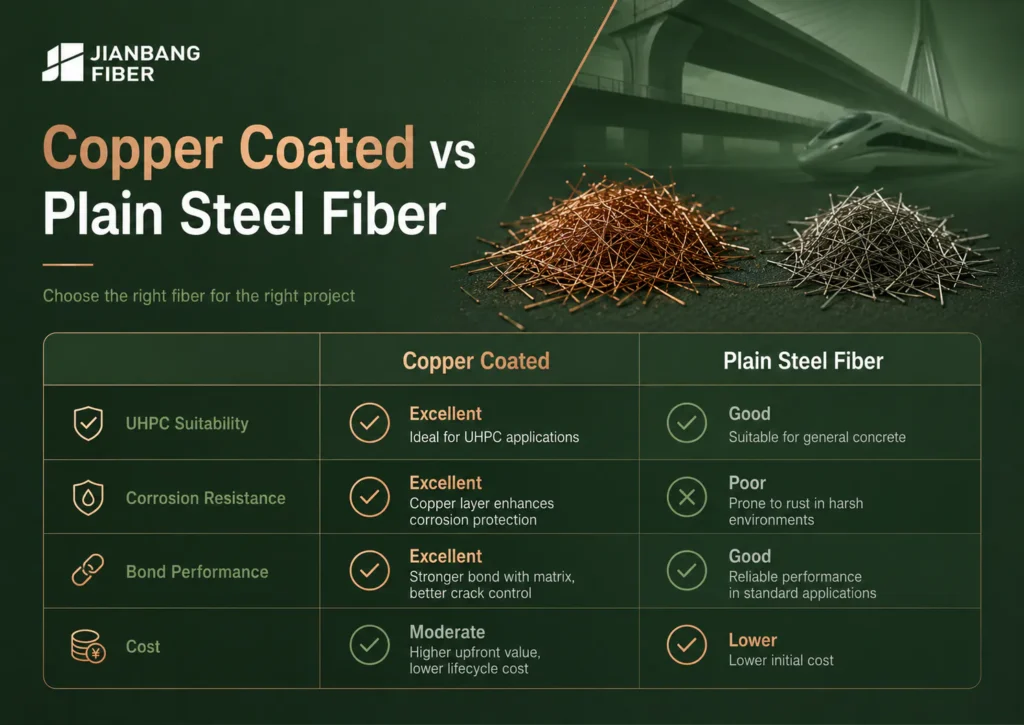
UHPC'de performans farkı önemlidir. ScienceDirect'te 2025 yılında yayınlanan araştırma, UHPC'deki bakır kaplı ve düz çelik fiberleri beş farklı fiber hacim fraksiyonunda karşılaştırdı. Bakır kaplamalı fiberler, çatlak sonrası kalıntı mukavemetinde düz fiberlerden sürekli olarak daha iyi performans göstermiş ve daha yüksek fiber dozajlarında fark açılmıştır. Bakır kaplamadan kaynaklanan gelişmiş bağ, daha fazla elyafın erken çekilmek yerine çatlak köprülemesine etkili bir şekilde dahil olduğu anlamına gelir.
Geleneksel betonda daha düşük dozajlarda (20-40 kg/m³) performans farkı daha azdır. Beton matrisi daha az yoğundur, elyaf-matris bağı çoğu düz çelik elyaf için zaten yeterlidir ve korozyon avantajı sadece agresif ortamlarda önemlidir.
Distribütörler için maliyet-fayda analizi
Bakır kaplı çelik fiber vs düz çelik fiber bakır kaplı fiber, düz çelik fibere göre kilogram başına 20-40% daha pahalıdır. Ancak düz fiberin ikame edilemediği uygulamalarda belirtilir.
UHPC projelerinde bakır kaplı fiber kullanılır çünkü şartname bunu gerektirir. Karışım tasarımını ihlal etmeden düz elyafı değiştiremezsiniz. Bu da bu elyafın genel olarak “daha iyi” olduğu için değil, belirli yüksek değerli uygulamalar talep ettiği için prim aldığı anlamına gelir.
Distribütörler için marj fırsatı açıktır. UHPC projeleri tipik olarak büyük, teknik açıdan zorlu ve malzeme açısından fiyat toleranslı projelerdir. Bu elyafı satın alan müşteriler, elyafı kilo bazında düz elyafla karşılaştırmıyor. Bakır kaplı fiber tedarikçilerini karşılaştırıyorlar. Sertifikalı, belgelenmiş ürün taşıyorsanız, fiyat üzerinden değil, güvenilirlik ve hizmet üzerinden rekabet edersiniz.
UHPC dışı uygulamalarda takviyeye ihtiyaç duyan müşteriler için düz çelik elyaf veya beton i̇çi̇n poli̇propi̇len elyaf daha uygun maliyetli olabilir. Bu, premium uygulamalar için premium bir üründür. Buna göre konumlandırın.
Düz çelik elyaf yeterli olduğunda
Düz çelik elyaf çoğu geleneksel beton uygulaması için yeterlidir: endüstriyel zemin döşemeleri, kaldırım kaplamaları, püskürtme beton ve konut döşemeleri. Bu uygulamalar, bakır kaplamanın sağladığı korozyon direnci veya gelişmiş bağ gerektirmez.
Polipropilen elyaf takviyeli beton elyafın rolünün yapısal takviyeden ziyade plastik büzülme çatlamasının önlenmesi olduğu çatlak kontrolü uygulamaları için başka bir alternatiftir. PP elyaf, yük taşıyan uygulamalarda çelik elyafın yerini alamaz, ancak çatlak kontrolünü maliyetin çok altında gerçekleştirir.
Distribütörler için önemli olan, her uygulama için doğru ürünü stoklamaktır. Bu elyafı, düz çelik elyaf veya PP elyafın yeterli olacağı uygulamalarda satmayın. Bu güveni aşındırır. İş için doğru ürün olduğu UHPC, RPC ve agresif ortam uygulamalarında satın.
UHPC Beton için Bakır Kaplı Çelik Elyaf
Dozaj aralıkları ve karışım tasarımında dikkat edilecek hususlar
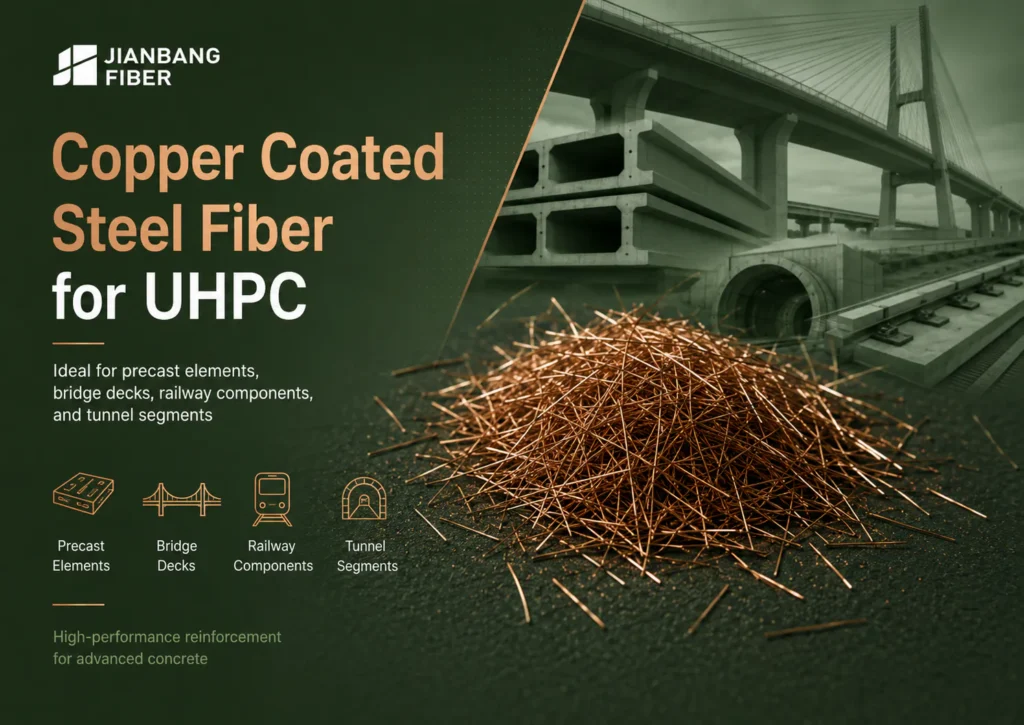
UHPC beton için bakır kaplı çelik elyaf tipik olarak hacimce 2-6% dozlanır, bu da yaklaşık 160-480 kg/m³ anlamına gelir. Tam dozaj UHPC formülasyonuna, hedef mekanik özelliklere ve proje şartnamesine bağlıdır.
UHPC karışım tasarımı geleneksel betondan temelde farklıdır. Su-bağlayıcı oranı çok düşüktür (0,15-0,25), çimento içeriği yüksektir (700-1.000 kg/m³) ve silis dumanı ve süperakışkanlaştırıcı temel bileşenlerdir. Lif dozajı karışım reolojisi ile etkileşime girer: daha yüksek lif içeriği viskoziteyi artırır ve karışım uygun şekilde tasarlanmamışsa yerleştirmeyi zorlaştırabilir.
Ürünleriyle birlikte dozaj kılavuzu sağlayabilen distribütörler bir avantaja sahiptir. Üreticiniz farklı UHPC formülasyonları ve uygulama türleri için önerilen dozaj aralıklarını sağlayabilmelidir. Bu teknik destek, müşterilerinizin ürününüzle başarılı olmasına yardımcı olur ve saha sorunları riskini azaltır.
UHPC'de lif oryantasyonu ve dağılımı
Elyaf yönelimi UHPC performansını önemli ölçüde etkiler. Yerinde dökme UHPC'de, lifler yerleştirme sırasında akış yönüne paralel olarak hizalanma eğilimindedir. Prekast UHPC elemanlarında, döküm yöntemi ve form geometrisi elyaf yönelimini etkiler. Düzgün dağılım kritiktir: kümelenmiş lifler zayıf bölgeler oluştururken, düşük lif içeriğine sahip alanlar kırılgan arızaya eğilimlidir.
Bu elyaflar karıştırma sırasında düz çelik elyaflara göre daha homojen bir şekilde dağılır. Bakır yüzey, çıplak çelikten farklı sürtünme özelliklerine sahiptir, bu da elyafın topaklanmasını ve kümelenmesini azaltır. Bu, UHPC üreticilerinin düz elyaftan bakır kaplı elyafa geçtiklerinde hemen fark ettikleri pratik bir avantajdır.
Bakır kaplı fiberin belirtildiği projeler
Dünya çapındaki büyük altyapı projelerinde UHPC uygulamaları için bu fiber kullanılmaktadır. Bunlar şunları içerir:
- Yüksek hızlı demiryolu kapak plakaları ve kablo olukları (Çin, Avrupa, Orta Doğu)
- Köprü tabliye kaplamaları ve bağlantı plakaları (ABD, Avrupa)
- Tünel kaplama segmentleri (Orta Doğu, Güneydoğu Asya)
- Mimari cepheler ve ince kabuklu yapılar (küresel)
- Patlamaya ve darbeye dayanıklı yapılar (askeri ve kamu)
- Metro sistemleri için prekast tünel kaplamaları (dünya çapında kentsel transit projeleri)
Bu projeler beton pazarının yüksek değerli ucunu temsil etmektedir. Distribütörler için, bir UHPC projesinde tedarik sözleşmesi kazanmak, projenin tipik olarak 12-36 ayı kapsayan inşaat zaman çizelgesi boyunca sürekli gelir sağlayabilir.
Kalite Kontrol ve Test
Çekme mukavemeti test protokolleri
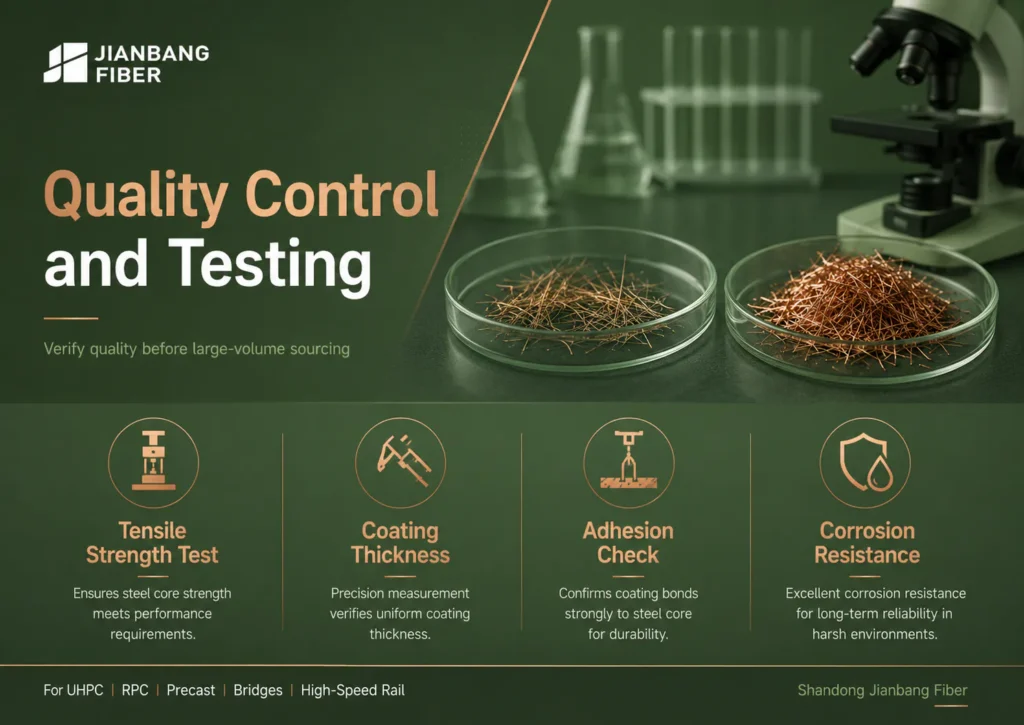
Çekme mukavemeti bu elyaf için birincil kalite ölçütüdür. Tek bir elyafın evrensel bir test makinesinde tutulması ve arızalanana kadar çekilmesi ile ölçülür. Sonuç MPa (megapaskal) cinsinden rapor edilir.
İçin bakır kaplı çelik elyaf çekme dayanımı, kabul edilebilir minimum değer spesifikasyona bağlıdır. ASTM A820, elyaf türüne göre değişen minimum bir gerilme mukavemeti gerektirir. Soğuk çekilmiş tel (Tip I) için gereklilik tipik olarak minimum 1.000 MPa'dır, ancak çoğu bakır kaplı mikro fiber 2.000 MPa'yı aşmaktadır.
Bir üreticiyi değerlendirirken, partiye özgü çekme mukavemeti test raporlarını isteyin. Raporlar test edilen elyaf sayısını, ortalama gerilme mukavemetini, standart sapmayı ve minimum değeri göstermelidir. Her üretim partisi için bu verileri sağlayabilen bir üretici sıkı kalite kontrol uyguluyor demektir. Bir tedarikçide ihtiyacınız olan şey budur.
Bakır kaplama yapışması ve homojenlik doğrulaması
Bakır kaplama çelik çekirdeğe sıkıca yapışmalı ve tüm elyaf yüzeyini eşit şekilde kaplamalıdır. Zayıf yapışma, karıştırma sırasında kaplamanın pul pul dökülmesine neden olur ve bu da korozyon direnci ve bağ geliştirme faydalarını ortadan kaldırır.
Kaplama yapışması tipik olarak elyafın belirlenen çaptaki bir mandrel etrafında bükülmesiyle test edilir. Kaplama çatlamaz veya soyulmazsa yapışma kabul edilebilir. Kaplama kalınlığı, bir elyaf numunesinin enine kesiti alınarak ve mikroskop altında incelenerek veya X-ışını floresan (XRF) analizi kullanılarak ölçülür.
Üreticinizden kaplama yapışma testi sonuçlarını ve kaplama kalınlığı ölçümlerini isteyin. Bu verileri sağlayamıyorlarsa, bu özellikleri test etmiyor olabilirler, bu da bir risktir.
Korozyon direnci test yöntemleri
Korozyon direnci, elyaf numunelerinin harç veya betona gömülmesi ve hızlandırılmış korozyon koşullarına tabi tutulmasıyla değerlendirilir: tuz spreyi, ıslak-kuru döngü veya klorür göllenmesi. Belirli bir maruz kalma süresinden sonra, lifler çıkarılır ve korozyon hasarı açısından incelenir.
En yaygın hızlandırılmış test, elyafları belirli bir süre boyunca 35°C'de 5% sodyum klorür sisine maruz bırakan tuz püskürtme testidir (ASTM B117). Bu lifler aynı koşullar altında düz çelik liflerden önemli ölçüde daha az korozyon göstermelidir.
Denizcilik veya buz çözücü tuz ortamlarına satış yapan distribütörler için, müşteri incelemesi için korozyon direnci test verilerine sahip olmak bir rekabet avantajıdır. Ürününüzün iddia edildiği gibi performans gösterdiğini kanıtlar.
Bakır Kaplı Çelik Elyaf Tedariki: Distribütörler Neleri Doğrulamalı
Üretici sertifikaları ve test raporları
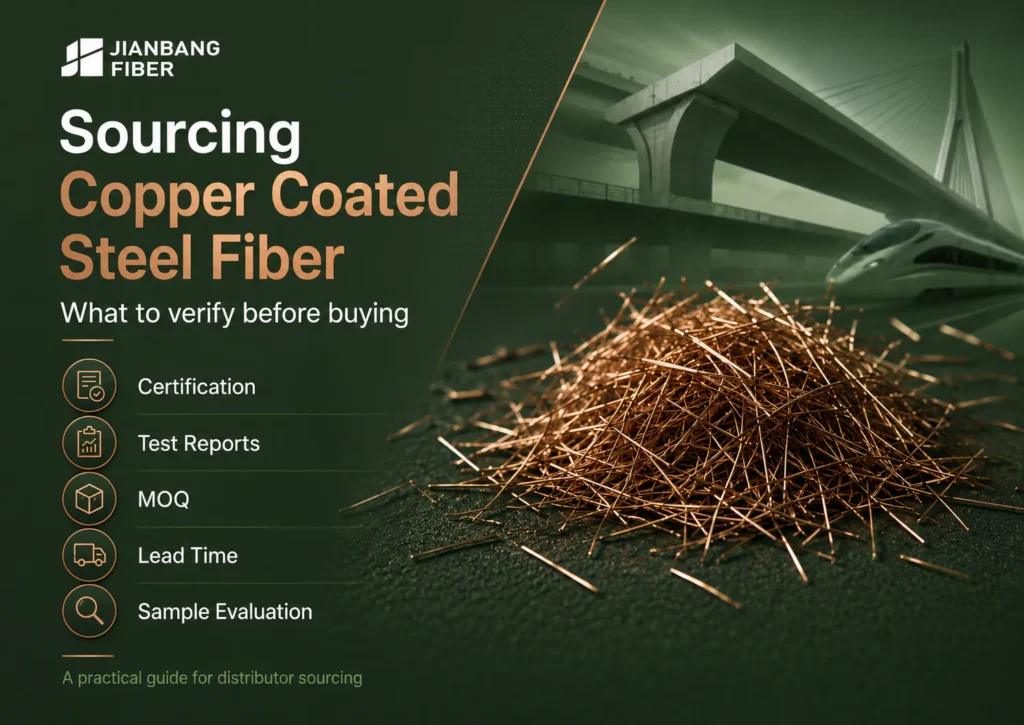
Bir taahhütte bulunmadan önce bakır kaplı çelik elyaf üreticisi, sertifikasyon portföylerini doğrulayın. En azından onaylamalısınız:
- Üretim tesisini kapsayan ISO 9001 sertifikası
- Akredite laboratuvarlardan alınan ASTM A820 veya EN 14889-1 test raporları
- Son üretim partileri için çekme mukavemeti test verileri
- Bakır kaplama yapışma ve kalınlık test raporları
- Korozyon direnci test verileri (agresif ortamlara satış yapıyorsanız)
Bu belgeleri sağlayamayan bir üretici ihracat pazarına hazır değildir. Devam edin.
Üretim kapasitesi, teslim süreleri ve MOQ
Bu, düz çelik elyaftan daha küçük üretim hacimlerine sahip özel bir üründür. Üreticinin özellikle bu elyaf için aylık kapasitesini teyit edin (toplam çelik elyaf kapasitesini değil). Mevcut kullanım oranlarını ve siparişleriniz artarsa üretimi ölçeklendirip ölçeklendiremeyeceklerini sorun.
Teslim süreleri tipik olarak 3-5 haftadır ve elektrokaplama adımı işlem süresini uzattığı için düz çelik fiberden daha uzundur. Bunu envanter planlamanıza dahil edin. MOQ gereksinimleri değişiklik gösterir: bazı üreticiler 1-2 tonluk deneme siparişlerini kabul ederken, diğerleri 5-10 tonluk minimum siparişler gerektirir.
Elyaf üreticilerini daha geniş kapsamlı değerlendirme konusunda rehberlik için şu makalemize bakın makro PP elyaf üreticisi seçimi, Aynı değerlendirme kriterlerinin çoğunu kapsamaktadır.
Örnek değerlendirme kontrol listesi
Büyük bir sipariş vermeden önce numune talep edin ve bu kriterlere göre değerlendirin:
- Görsel inceleme: Düzgün bakır rengi, çıplak çelik lekesi yok, pullanma yok
- Boyutsal ölçüm: Uzunluk ve çapın spesifikasyona uygun olduğunu doğrulayın
- Çekme mukavemeti: Mümkünse, bağımsız bir laboratuvara elyaf gerilme mukavemetini test ettirin
- Kaplama yapışması: Birkaç elyafı bükün ve kaplamanın dökülüp dökülmediğini kontrol edin
- Karıştırma testi: Küçük bir UHPC deneme partisine elyaf ekleyin ve dağılımı gözlemleyin
- Dokümantasyon: Test raporlarının numune lotuyla eşleştiğini doğrulayın
Bu kontrol listesi, aşağıdaki ilkelerimizi uygular beton dağitim kilavuzu i̇çi̇n poli̇propi̇len elyaf bakır kaplı çelik fiber bağlamına uyarlanmıştır. Değerlendirme çerçevesi aynıdır: taahhütte bulunmadan önce doğrulayın.
Distribütörler için Pazar Fırsatı
Bölgelere göre artan UHPC talebi
UHPC pazarı dünya çapında yıllık 8-12% oranında büyümektedir. Önemli büyüme bölgeleri şunlardır:
- Orta Doğu: Suudi Arabistan, BAE ve Katar'daki mega altyapı projeleri başlıca UHPC tüketicileridir
- Çin: Yüksek hızlı demiryollarının yaygınlaşması, RPC elemanlarında bakır kaplı fibere olan talebi artırmaya devam ediyor
- Avrupa: Köprü rehabilitasyonu ve yeni köprü inşaatlarında bağlantı plakaları ve tabliye kaplamaları için UHPC giderek daha fazla tercih ediliyor
- Birleşik Devletler: Eyalet DOT'ları köprü onarımı için UHPC şartnamelerini onayladıkça UHPC'nin benimsenmesi hızlanıyor
- Güneydoğu Asya: Tayland, Vietnam ve Endonezya'daki metro sistemleri tünel kaplamaları için UHPC kullanıyor
Her UHPC projesinin bu elyafa ihtiyacı vardır. Ecocretefiber™ bu elyafı tüm polipropilen elyaf ürün serisiyle birlikte tedarik etmektedir. Kataloğun tamamını taşıyan distribütörler müşterilerine eksiksiz bir elyaf çözümü sunabilir.
Fiyatlandırma yapısı ve marj potansiyeli
Bu ürün tipik olarak üretim seviyesinde düz çelik elyafa göre 20-40% primle satılır. Distribütör seviyesinde marjlar daha yüksek olabilir, çünkü UHPC projelerinin toplam proje değerine göre elyaf maliyetleri üzerinde daha az fiyat hassasiyeti vardır.
Bu makro senteti̇k elyaf ve polipropilen elyaf piyasaları fiyat açısından daha rekabetçidir. Bu ürün, daha az sayıda nitelikli tedarikçiye ve daha az fiyat şeffaflığına sahip özel bir ürün olduğu için daha iyi marjlar sunar. UHPC uygulamalarında uzmanlık geliştiren ve şartname hazırlayıcılarla ilişki kuran distribütörler, yüksek fiyatlandırma talep edebilir.
Sonuç
Bu, birinci sınıf uygulamalar için birinci sınıf bir üründür. Bakır kaplama, korozyon direnci ve gelişmiş fiber-matris bağının yanı sıra düz çelik fiberin eşleşemeyeceği elektrik iletkenliği sağlar. Bu özellikler en çok UHPC, RPC ve agresif ortamlardaki altyapı projelerinde önemlidir. Spesifikasyonları, uygulamaları ve kalite kriterlerini anlayan distribütörler, kendilerini bu büyüyen pazar segmenti için başvurulacak tedarikçi olarak konumlandırabilirler. Ecocretefiber™, tarafından üretilmiştir Shandong Jianbang Kimyasal Elyaf Co, Ltd., polipropilen elyaf ürün grubunun yanı sıra bakır kaplı çelik elyaf da üreterek distribütörlere her iki ürün kategorisi için tek bir kaynak sunuyor.