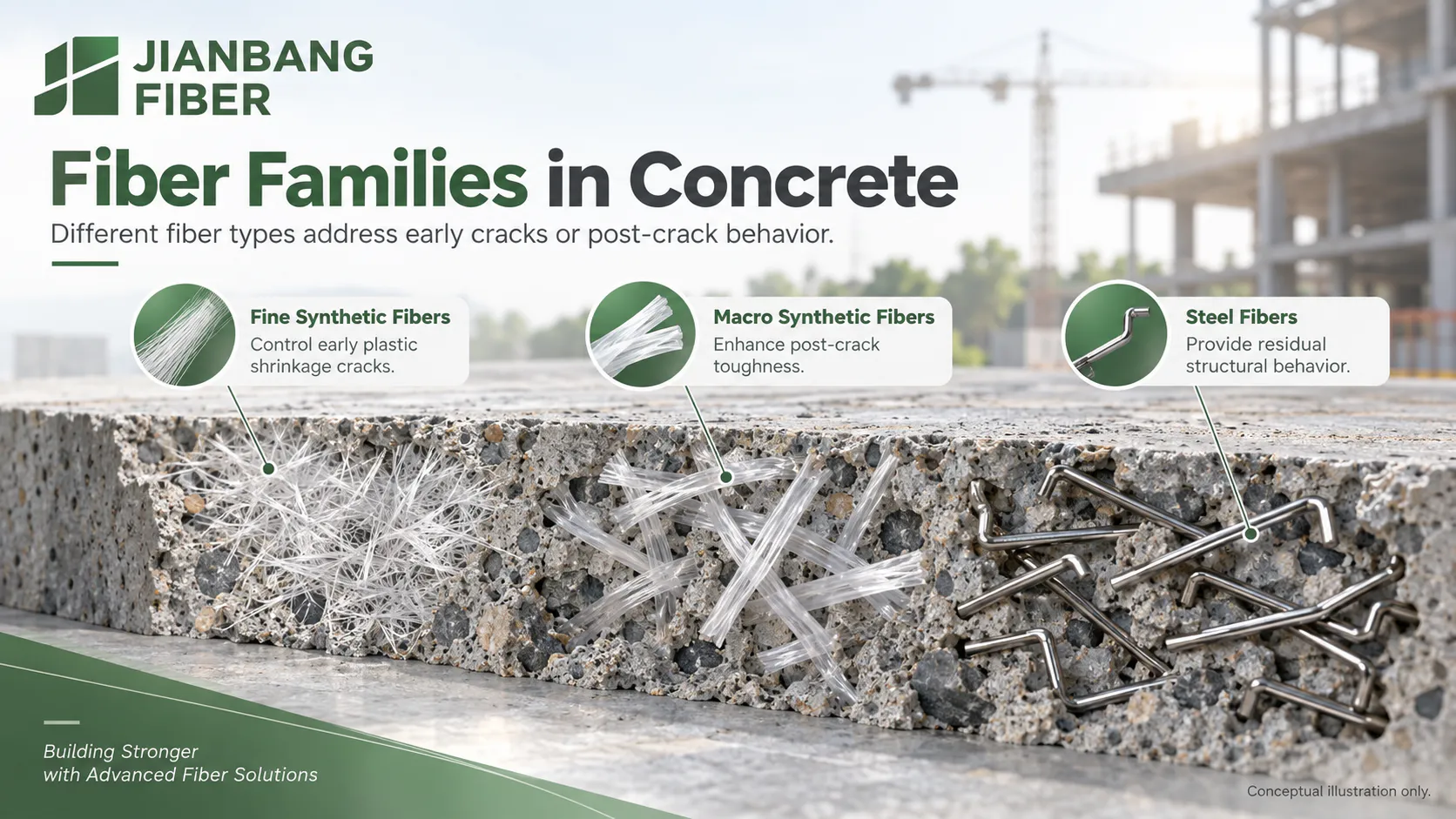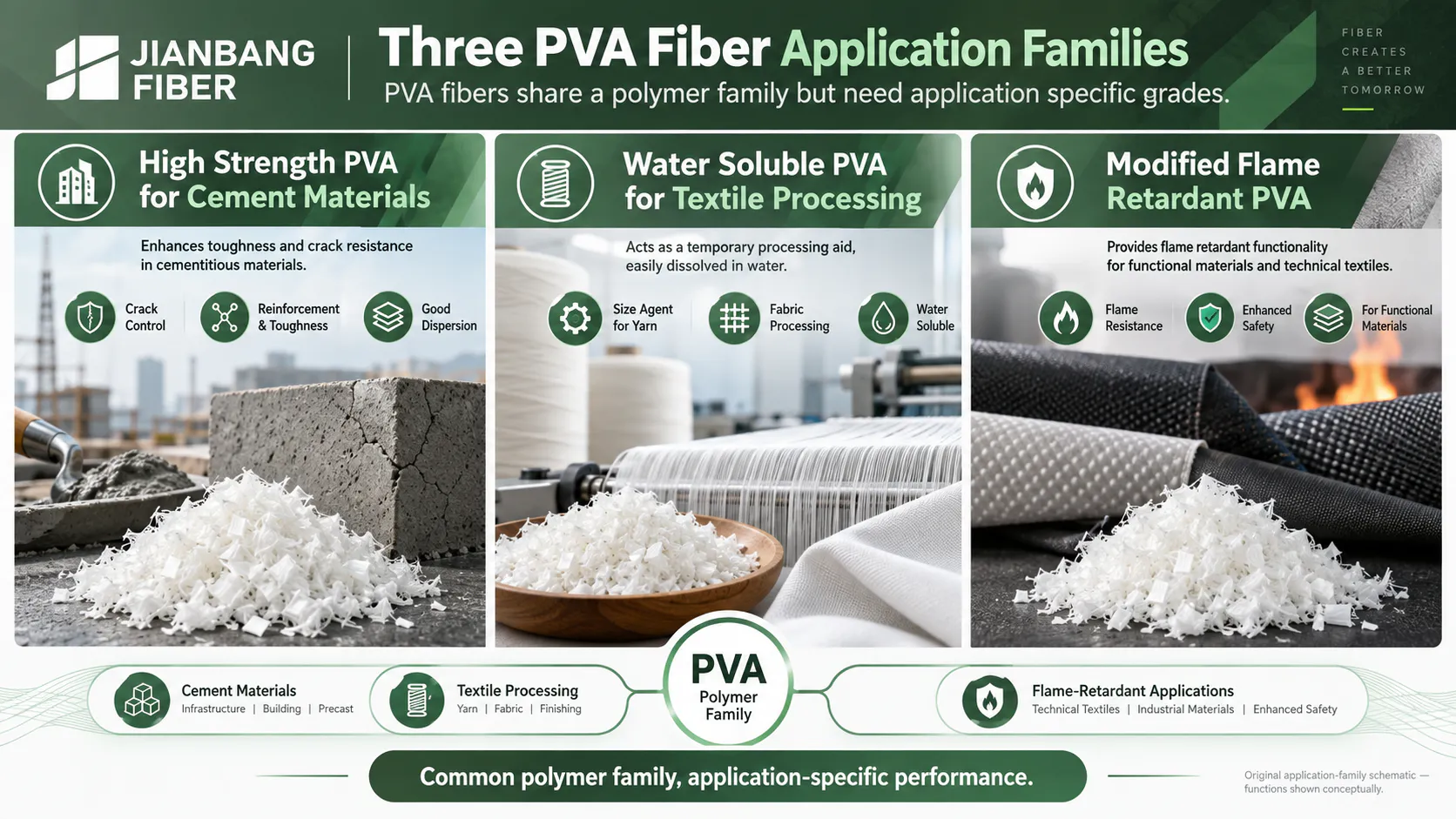
Polypropylene fiber-reinforced concrete is used to control cracking, improve toughness, support post-crack behavior, and solve specific durability or fire-related problems in concrete. The exact use depends on the fiber type. Micro polypropylene fibers are usually used for early-age crack control. Macro polypropylene fibers are usually used where the concrete needs better performance after cracking. ACI guidance says polypropylene fibers can be either microsynthetic or macrosynthetic, depending on size, and Sika’s concrete fiber guidance says macro fibers are used where an increase in residual post-cracking flexural strength is required.
That means polypropylene fiber-reinforced concrete is not one single product with one single job. It is a broad concrete category used in different ways across slabs, pavements, overlays, sprayed concrete, tunnel work, precast products, and high-temperature applications. EN 14889-2 says polymer fibres for concrete can be used for structural or non-structural use and covers sprayed concrete, flooring, precast, in-situ, and repair concretes.
It is widely used for early-age crack control in slabs and flatwork
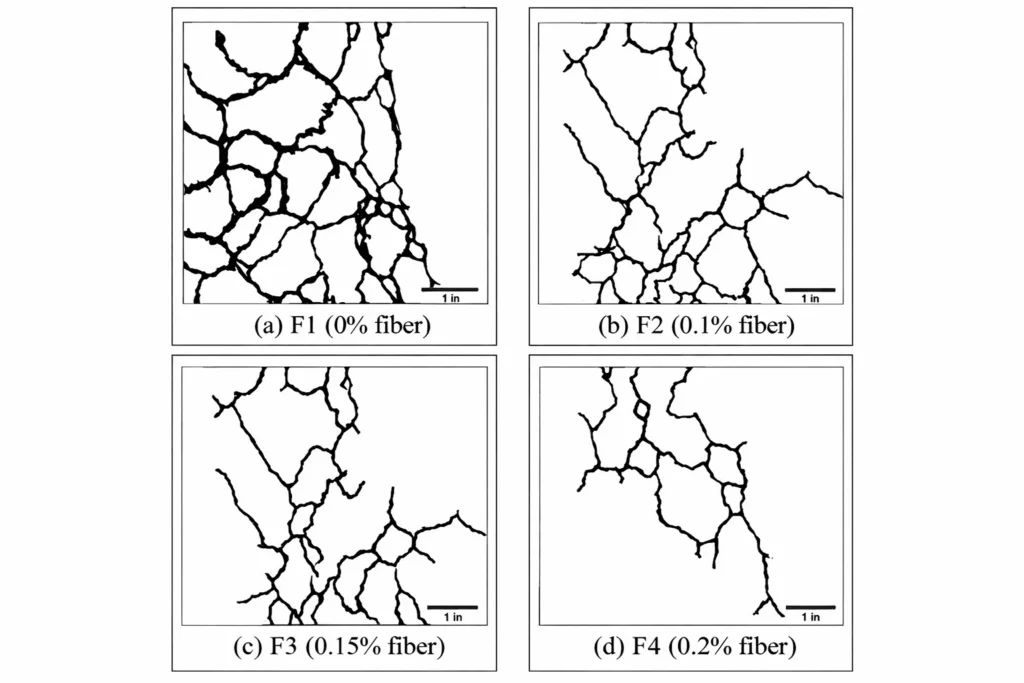
One of the most common uses of polypropylene fiber-reinforced concrete is reducing early-age cracking in slabs, floors, toppings, and pavement surfaces. This is the use most people mean when they talk about micro polypropylene fibers. NRMCA says synthetic fibers help by bridging and dispersing cracks and by providing an internal support system that inhibits plastic settlement cracking. ASTM C1579 is the standard test method used to compare plastic shrinkage cracking of fiber-reinforced concrete panels against control panels under severe moisture loss before final set. FHWA research also found that polypropylene fibers at relatively low fiber volumes substantially reduced total crack area and maximum crack width in slab surfaces subjected to restrained plastic shrinkage.
This is why polypropylene fibers are so common in slabs-on-ground, warehouse floors, sidewalks, residential flatwork, toppings, and many pavement-related pours. These are the jobs where hot air, wind, fast drying, or settlement around reinforcement can create surface cracks before the concrete has gained much strength. In those conditions, polypropylene fiber-reinforced concrete gives the contractor a practical way to reduce visible cracking risk and reduce later patching and complaint work.
It is also used as secondary reinforcement in slabs, toppings, and general concrete work
Polypropylene fiber-reinforced concrete is often used as secondary reinforcement, especially where the project needs better crack distribution and better serviceability but does not rely on the fibers as the main structural steel. NRMCA says macro-synthetic fibers can be used as nonstructural temperature and shrinkage reinforcement and as post-crack control reinforcement when the hardened concrete criteria are documented. Product specification language from Sika also states that synthetic micro-fibers can be retained for reducing plastic shrinkage cracking in cast-in-place concrete.
This use matters in real site work because many contractors are not only trying to stop one crack. They are trying to keep the slab tighter, more uniform, and less likely to develop wider service cracks. In this role, polypropylene fibers help spread crack movement through many finer cracks instead of allowing fewer larger ones. That is one reason polypropylene fiber-reinforced concrete keeps appearing in commercial floors, toppings, and general slab work where appearance and service life both matter.
It is used for post-crack performance in slabs, pavements, and shotcrete when macro PP fibers are selected
When the polypropylene fiber is a macro synthetic fiber, the concrete is used for a different job. In this case, polypropylene fiber-reinforced concrete is used where the designer wants post-crack residual strength, toughness, and crack-bridging capacity. Sika explains that structural macro fibers can be steel or synthetic, that they have a diameter greater than or equal to 0.3 mm, and that they can resist tensile stresses, control crack development, and be used where residual post-cracking flexural strength is required. ASTM C1609 is the standard test method used to evaluate this flexural performance through the load-deflection curve of a beam.
This is the polypropylene fiber-reinforced concrete that shows up in more demanding slab and pavement discussions. It is used in industrial floors, logistics floors, hardstands, external slabs, pavements, and some shotcrete systems because the concrete needs useful behavior after the first crack, not only during the first few hours after casting. Research and industry guidance both connect macro polypropylene fiber use with improved toughness and post-crack control, which is why the material is often discussed as a practical alternative to nominal mesh in selected applications.
It is used in sprayed concrete and tunnel support systems
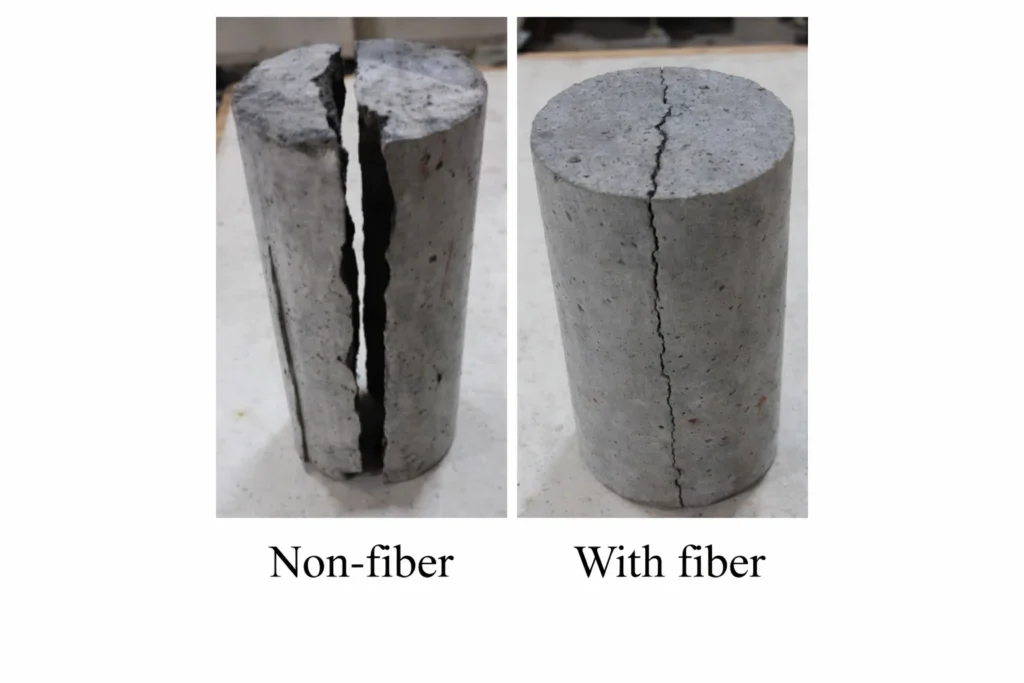
Polypropylene fiber-reinforced concrete is also used in sprayed concrete and tunnel-related applications. EN 14889-2 explicitly includes sprayed concrete in the scope for polymer fibers, and the Concrete Society says macro synthetic fibers can be used in some structural concrete applications based on plastic analysis, such as ground-supported slabs and rock support using sprayed concrete.
This matters because tunnel and ground-support work often needs a reinforcement system that is distributed through the whole concrete layer, not only placed in one reinforcement plane. In these applications, polypropylene fiber-reinforced concrete can help with crack control, energy absorption, and construction speed. That is why the material appears so often in sprayed concrete and shotcrete discussions. It fits jobs where speed, safety, and post-crack behavior all matter at once.
It is used in bridge deck overlays and pavement overlay systems
Polypropylene fiber-reinforced concrete has also been studied and used for bridge deck overlays and pavement-related overlay work. A Virginia Transportation Research Council report investigated fiber-reinforced concretes with polypropylene monofilament and fibrillated fibers for pavement and bridge deck overlay applications. More recent transportation reports on fiber-reinforced concrete overlays describe FRC as a versatile material that can tailor crack control and durability to overlay conditions, and they note that fiber type and dosage can be selected to address cracking at different ages.
This use makes sense because overlays are thin, restrained, and exposed to shrinkage and temperature stress. They need crack control early, and they also need durability later. In overlay work, polypropylene fiber-reinforced concrete is attractive because it can help reduce crack width, support toughness, and improve serviceability without requiring the same reinforcement layout as a thicker structural member. That makes it a practical fit for bridge deck overlays, bonded overlays, and some pavement rehabilitation systems.
It is used to improve fire-spalling resistance in high-strength concrete and tunnel linings
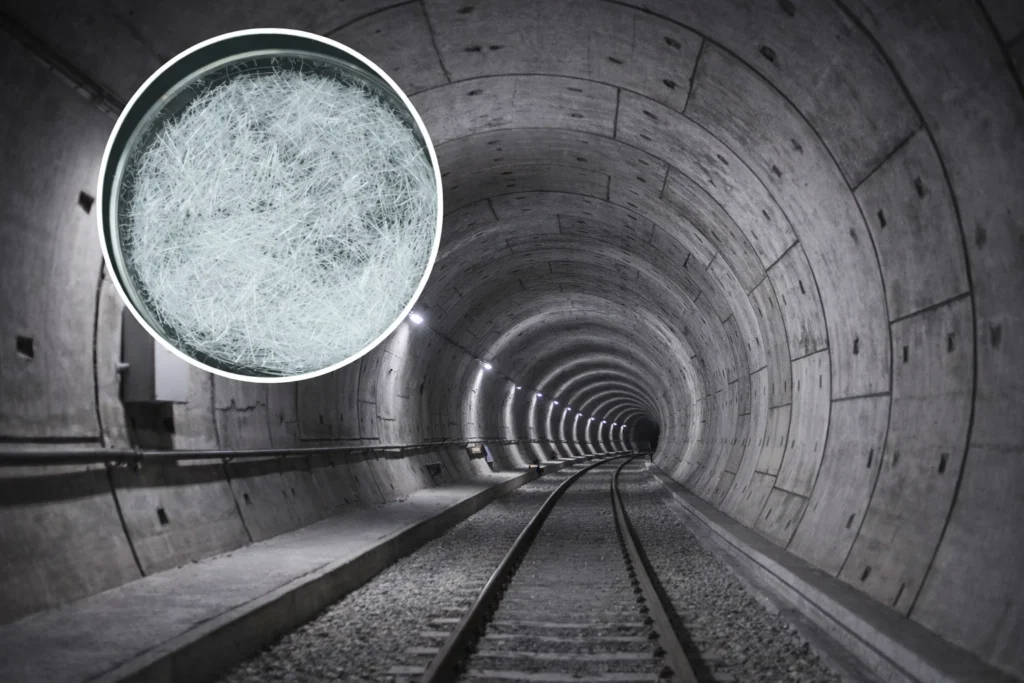
One of the most important specialized uses of polypropylene fiber-reinforced concrete is reducing explosive spalling risk in fire, especially in dense, high-strength concrete and tunnel work. A technical paper hosted by Sika states that using polypropylene fibres in concrete to inhibit explosive spalling in fire has become common practice in many parts of the world, particularly in tunnel construction. A 2019 review in Materials explains that polymeric fibers, including polypropylene, can help reduce explosive spalling by melting and freeing space for moisture movement and pressure relief.
This use is different from standard slab crack control. Here, the polypropylene fiber is not mainly there to improve day-one surface quality. It is there because high-strength concrete can build internal vapor pressure under fast heating, and polypropylene fibers can create pathways that help relieve that pressure once the fibers soften or melt. That is why polypropylene fiber-reinforced concrete appears in tunnel linings, tunnel segments, and other fire-sensitive concrete systems. Recent open-access literature also notes that polypropylene fibers are used in precast concrete tunnel lining elements to counteract explosive behavior and spalling at fire temperatures.
It is used in precast concrete products, including tunnel-related precast elements
Polypropylene fiber-reinforced concrete is also used in precast concrete, though the reason can change from one product to another. EN 14889-2 includes precast concrete in the scope of polymer fiber use, and concrete industry guidance includes precast among the normal application areas for polymer fibers. In tunnel-related precast products, polypropylene fibers are especially relevant because of their role in fire-spalling control and crack management.
For a precast producer, the attraction is practical. The fibers are distributed through the mix, they can support crack control from an early stage, and they can add value in products where durability, handling, and fire behavior matter. This is one reason polypropylene fibers continue to appear in segmental tunnel lining discussions and in precast systems where service conditions are demanding.
It is used when buyers want a corrosion-free fiber option
Another reason polypropylene fiber-reinforced concrete is used is that polypropylene is a polymeric, noncorroding reinforcement material. ASTM C1116 notes that polyolefins such as polypropylene and polyethylene have been shown to be durable in concrete. FHWA research on high-performance concrete also reported that nylon 6 and polypropylene fibers were durable in the alkaline environment present in concrete.
This is valuable in projects where the buyer wants the benefits of distributed fiber reinforcement but does not want steel-fiber corrosion concerns or exposed steel fiber tips at the surface. It does not mean polypropylene is the best answer for every job. It means polypropylene fiber-reinforced concrete is often chosen where corrosion-free reinforcement and easier handling are part of the value case.
What polypropylene fiber-reinforced concrete is not usually used for
It is just as important to say what polypropylene fiber-reinforced concrete is not usually used for. Micro polypropylene fiber concrete is not normally chosen as a full replacement for primary structural reinforcement. Its most common use is crack control and serviceability support. Macro polypropylene fiber concrete can replace nominal bar or fabric reinforcement in some systems, but the Concrete Society makes it clear that macro synthetic fibres do not replace structural steel in the general reinforced concrete design sense and cannot simply be treated as direct substitutes in standard Eurocode design.
So the right question is not “Can PP fiber replace all rebar?” The right question is “Which reinforcement function is the polypropylene fiber being asked to perform?” If the job is plastic shrinkage crack control, the answer is very different from a job that needs residual flexural strength in a slab or rock support layer. This is why product class, dosage, test method, and application all need to match.
What buyers should check before they specify it
A buyer should first check which fiber class is being proposed. ASTM C1116/C1116M-23 is the current ASTM specification for fiber-reinforced concrete, and ASTM D7508/D7508M-20 is the specification for polyolefin chopped strands for use in concrete. Those two documents help define what kind of polypropylene fiber product is being supplied.
A buyer should then check the performance target. If the project is about early-age crack control, ASTM C1579 is the right kind of reference because it compares plastic shrinkage cracking of fiber-reinforced panels. If the project is about residual flexural strength and post-crack behavior, ASTM C1609 or the EN residual strength framework is more relevant. EN 14889-2 covers polymer fibers for structural or non-structural use in concrete, mortar, and grout, including sprayed concrete, flooring, precast, in-situ, and repair concretes.
A buyer should also check the use case. A micro polypropylene fiber for slab crack control is not the same product as a macro synthetic fiber for post-crack slab design, and neither is the same as a polypropylene fiber added for fire-spalling protection in a tunnel lining mix. The product name may look similar, but the application logic is different.
Why this topic matters for Ecocretefiber™
This title is strong because it sits close to real purchase intent. A reader who asks what polypropylene fiber-reinforced concrete is used for is usually no longer at the very top of the funnel. That reader is often comparing product categories, deciding between micro and macro fiber, or trying to match a fiber type to a slab, overlay, or tunnel job. That makes the topic useful for search and useful for sales at the same time.
For Ecocretefiber™, the best answer is not vague. It should show that polypropylene fiber-reinforced concrete is used for early crack control, secondary reinforcement, post-crack slab performance, sprayed concrete, overlays, and fire-spalling mitigation, but that each use depends on the correct fiber form and the correct design basis. That is the kind of article that helps a buyer move from a broad search term to a serious product discussion.
Conclusion
Polypropylene fiber-reinforced concrete is used for early-age crack control, secondary reinforcement, post-crack performance, sprayed concrete and tunnel support, overlays, precast applications, and fire-spalling resistance in dense concrete. The exact use depends on whether the polypropylene fiber is micro or macro, and on whether the project is targeting plastic shrinkage control, residual flexural strength, or fire performance. ACI, NRMCA, ASTM, EN, FHWA, and current open-access research all support this split in use.
In simple terms, polypropylene fiber-reinforced concrete is used where a project wants better crack behavior than plain concrete and wants that benefit in a form that is practical for mixing, placing, and service. In slabs and overlays, that often means smaller early cracks. In macro-fiber systems, that often means better post-crack toughness. In tunnel and fire-related work, that can mean lower spalling risk. That is why polypropylene fiber-reinforced concrete remains one of the most useful and flexible fiber-concrete categories in today’s market.