
Fiber Reinforced Concrete: A Practical Guide from Material Selection to Site Acceptance
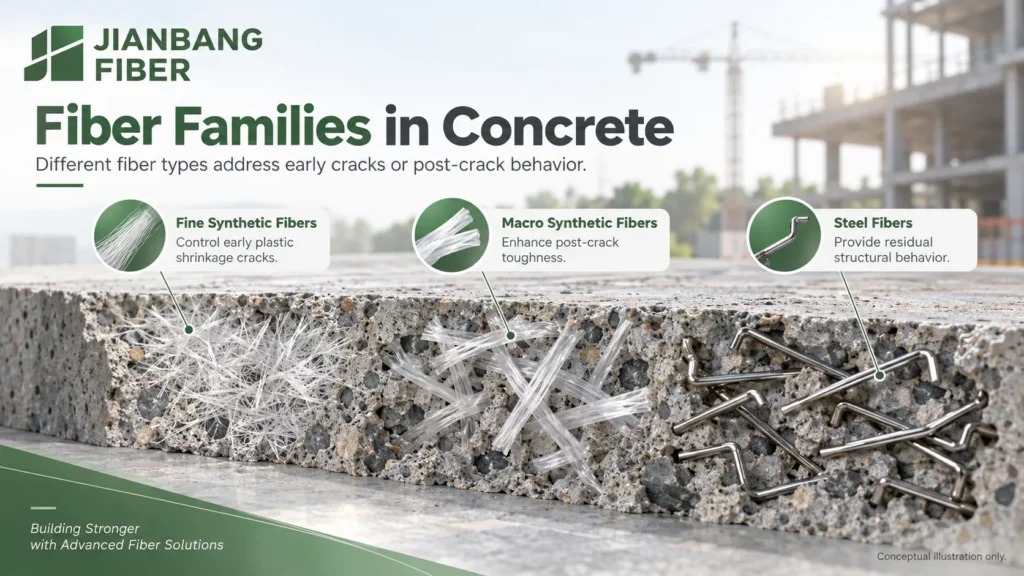
Concrete performs well in compression, yet cracks can form before it reaches full strength and grow under service loads. Fibers can help address different parts of that problem. A fine synthetic fiber may control early plastic shrinkage cracking. A larger synthetic or steel fiber can bridge cracks after the matrix has hardened. The benefit depends […]
Polyvinyl Alcohol Fiber Applications and Research Progress for Concrete Buyers
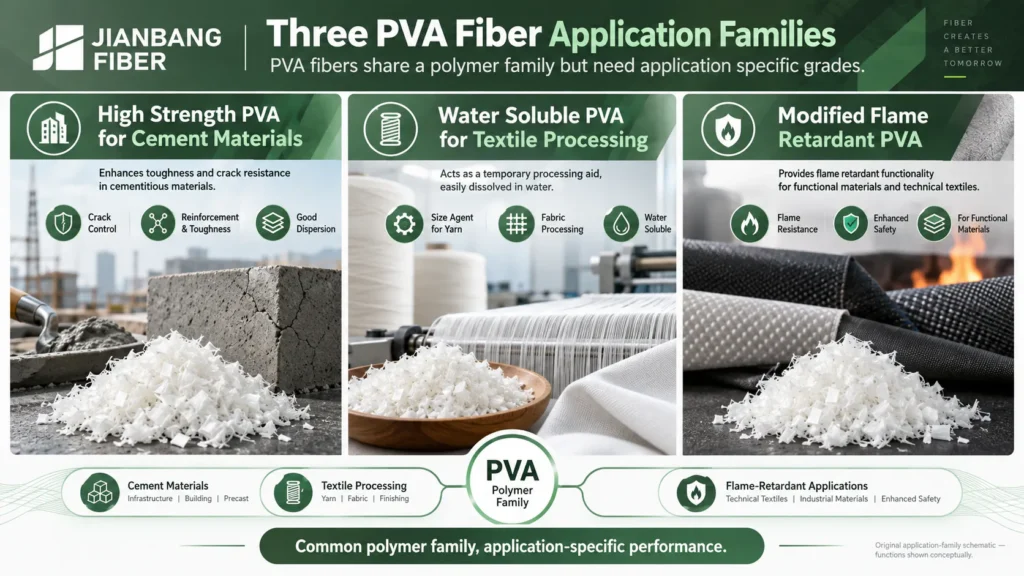
Polyvinyl alcohol, or PVA, is a useful example of why a polymer name alone cannot define a fiber specification. One PVA fiber is drawn for strength and remains in a cement composite to bridge cracks. Another is designed to dissolve during textile processing. A third is modified for a flame retardant textile application. These grades […]
Plant Fiber Concrete Performance: Strength, Water Absorption, Thermal Insulation And Mix Design
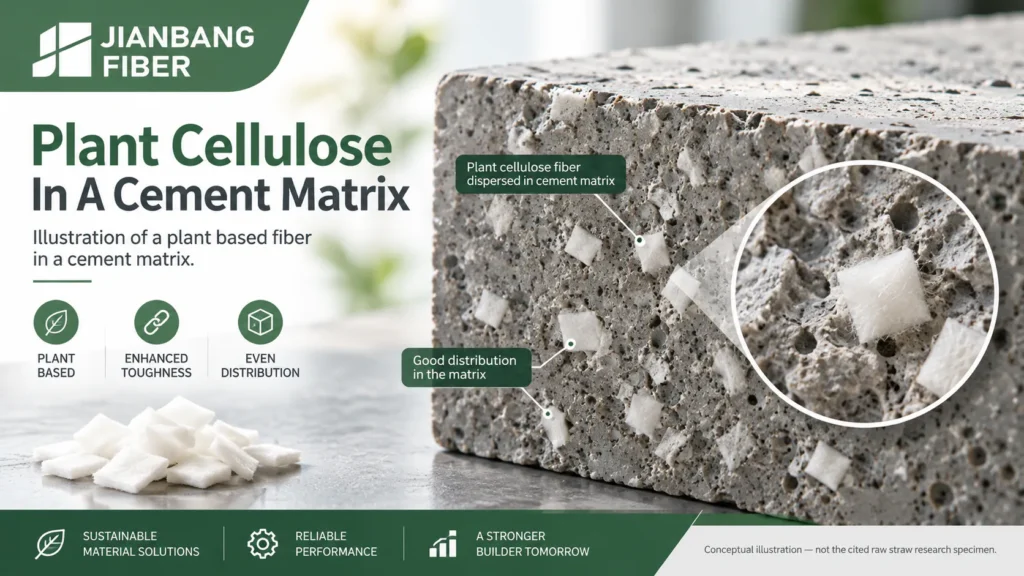
Plant fibers can give cement products a different mix of properties. They may help distribute small cracks, reduce density, and improve the thermal performance of some wall materials. They also absorb water, and many natural fibers change in the highly alkaline environment of Portland cement. A useful design starts by deciding what the product must […]
Polypropylene Fiber Modified Soil Under Freeze Thaw Cycles: What The Strength Tests Mean For Subgrade Design
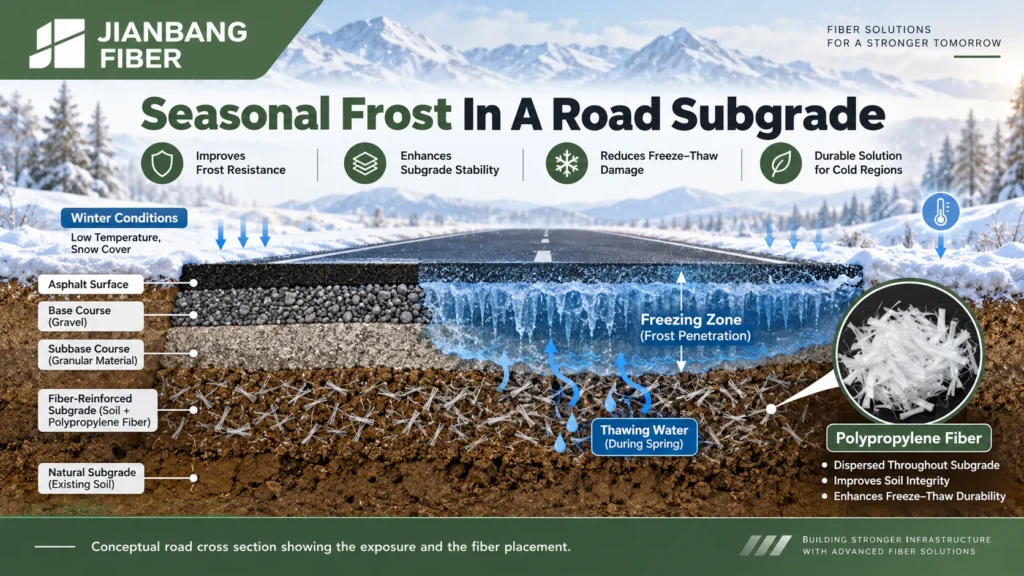
A road subgrade can appear firm before winter and lose support when spring thaw brings water back into its pores. For a contractor, that change matters more than how a soil performs on a dry day. Polypropylene (PP) fibers can help a compacted soil retain strength through freezing and thawing, but the correct fiber length […]
Synthetic Fiber Concrete Flexural Toughness And PAN Versus PVA Selection
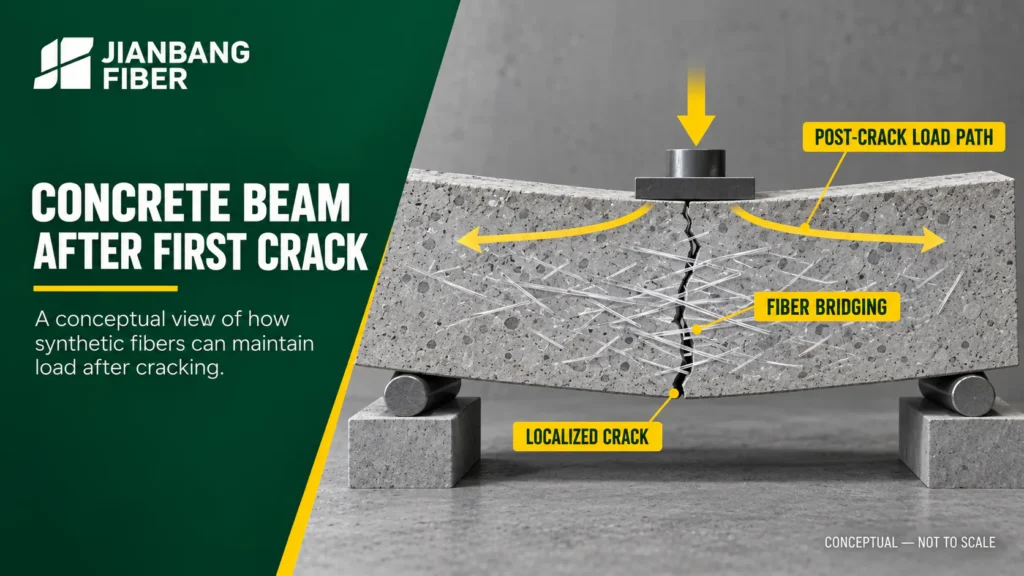
A concrete beam can carry a substantial load before its first major crack, then lose capacity quickly. For a floor, overlay, precast unit, or repair layer, the load after cracking can matter as much as the first peak. Flexural toughness describes how the material continues to resist bending and absorb energy as it deforms. At […]
UHPC Application Guide For Mixing Placement Curing And Steel Fiber Selection
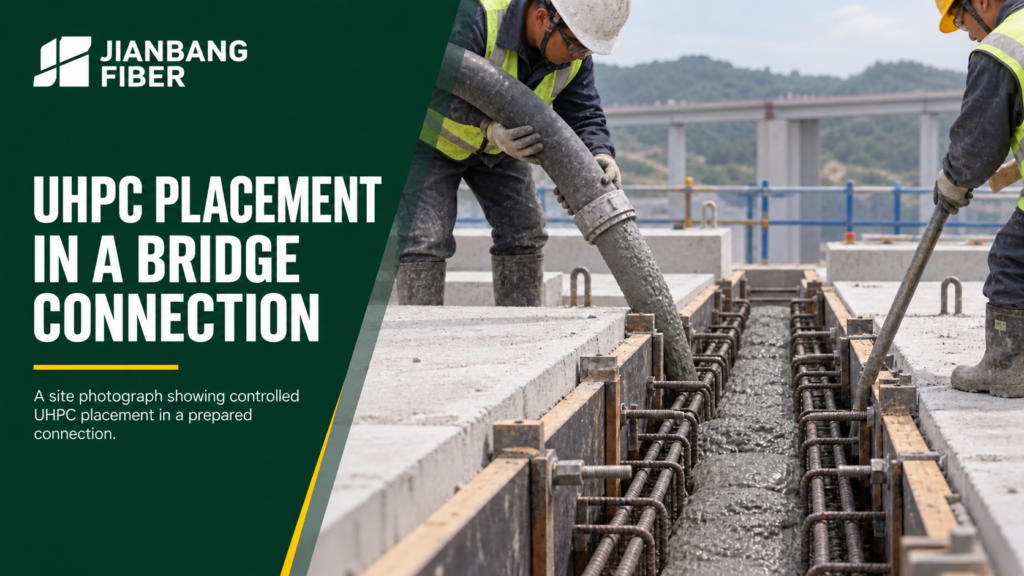
UHPC application requires control of the entire production process. A strong mix can still underperform if its fibers form clumps, its flow changes during delivery, or its surface dries before curing begins. Reliable results start with qualified materials and a procedure that works with the actual site equipment. At Shandong Jianbang Chemical Fiber Co., Ltd., […]
Modified Polypropylene Fiber For Concrete And Industrial Applications

Modified polypropylene fiber is PP fiber whose formulation, surface, or processing has been adjusted to achieve a defined performance target. The target may be higher tensile strength, better bonding, more stable processing, or improved resistance to a specific exposure. The word “modified” does not describe one standard material or guarantee that every property improves. For […]
Hooked End Steel Fiber Specifications And Uses
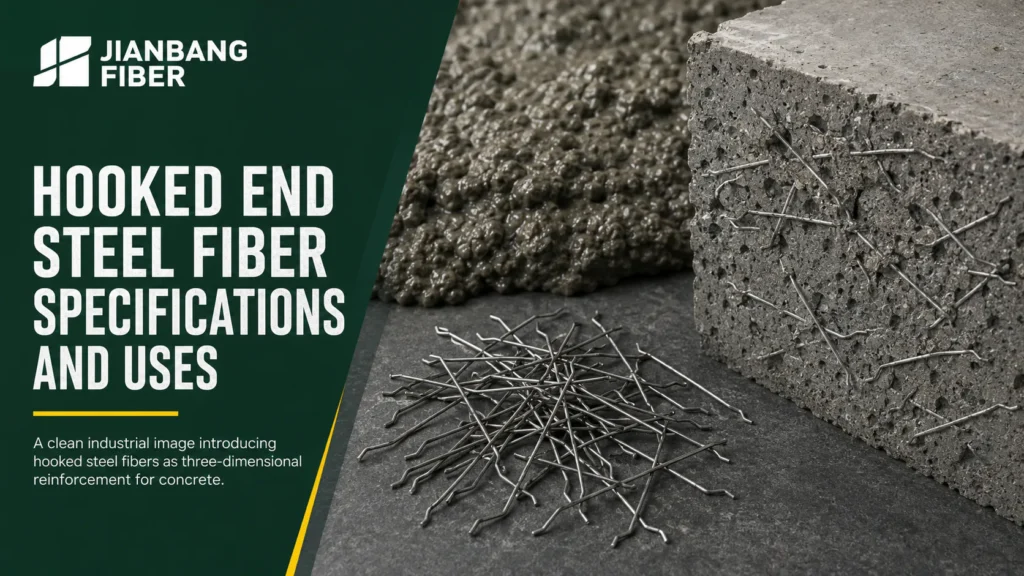
Hooked End Steel Fiber: Specifications, Anchorage, Concrete Performance, And Selection Guide Concrete carries compression well, but cracks can still form under shrinkage, bending, impact, fatigue, temperature change, or restraint. Once a crack opens, plain concrete loses tensile capacity quickly. A suitable steel fiber system changes this response. Hooked end steel fiber bridges cracks and transfers […]
Fiber Reinforced Concrete: Types, Crack-Bridging Mechanism, Mix Design, Performance, And Construction Guide
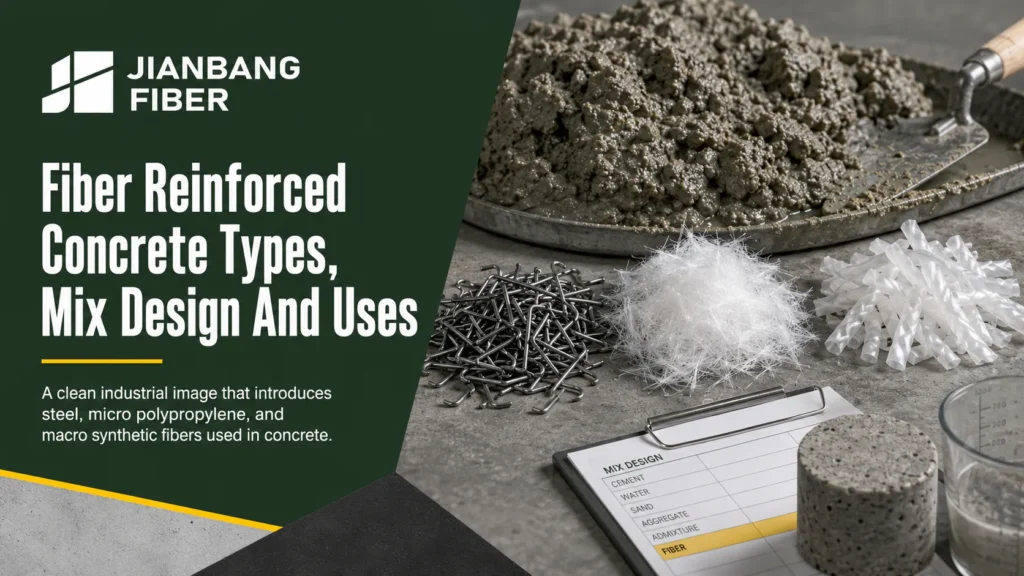
Concrete carries compression very well, but it has limited tensile capacity. Shrinkage, temperature change, bending, impact, or restraint can create tensile stress. Once that stress exceeds the capacity of the cement matrix, a crack begins. Fiber reinforced concrete uses short, discrete fibers to control how those cracks form and grow. The fibers spread through the mix. […]
Types of Fiber-Reinforced Concrete: Steel, Carbon, AR Glass, and Polypropylene Fiber Compared
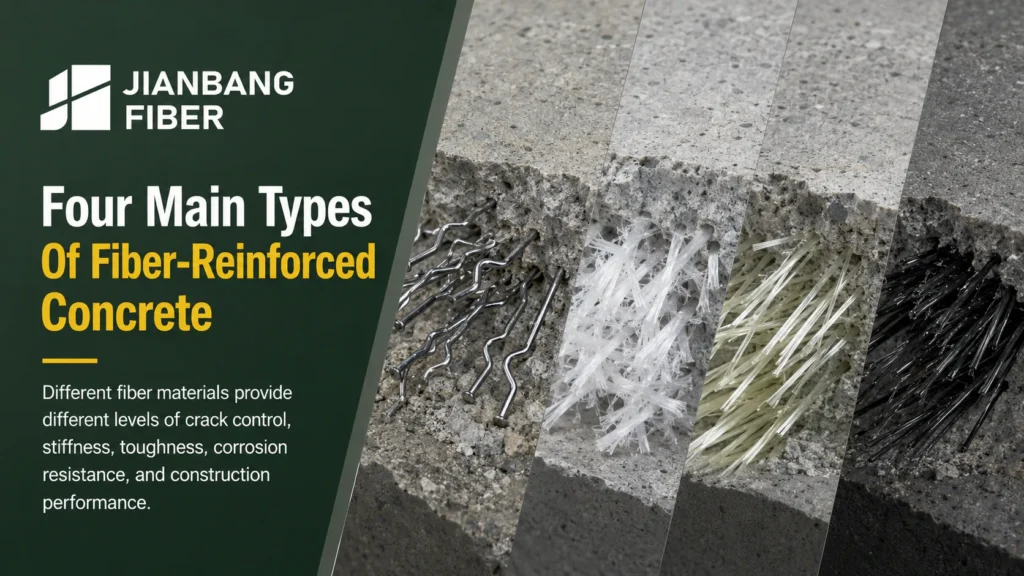
Why Fiber Classification Matters Fiber-reinforced concrete is not one single material. The term covers a large group of cement-based composites containing short or continuous fibers. Those fibers may be made from steel, polymers, glass, carbon, basalt, cellulose, PVA, or other materials. Although the products are placed under the same general category, their behaviour can be […]