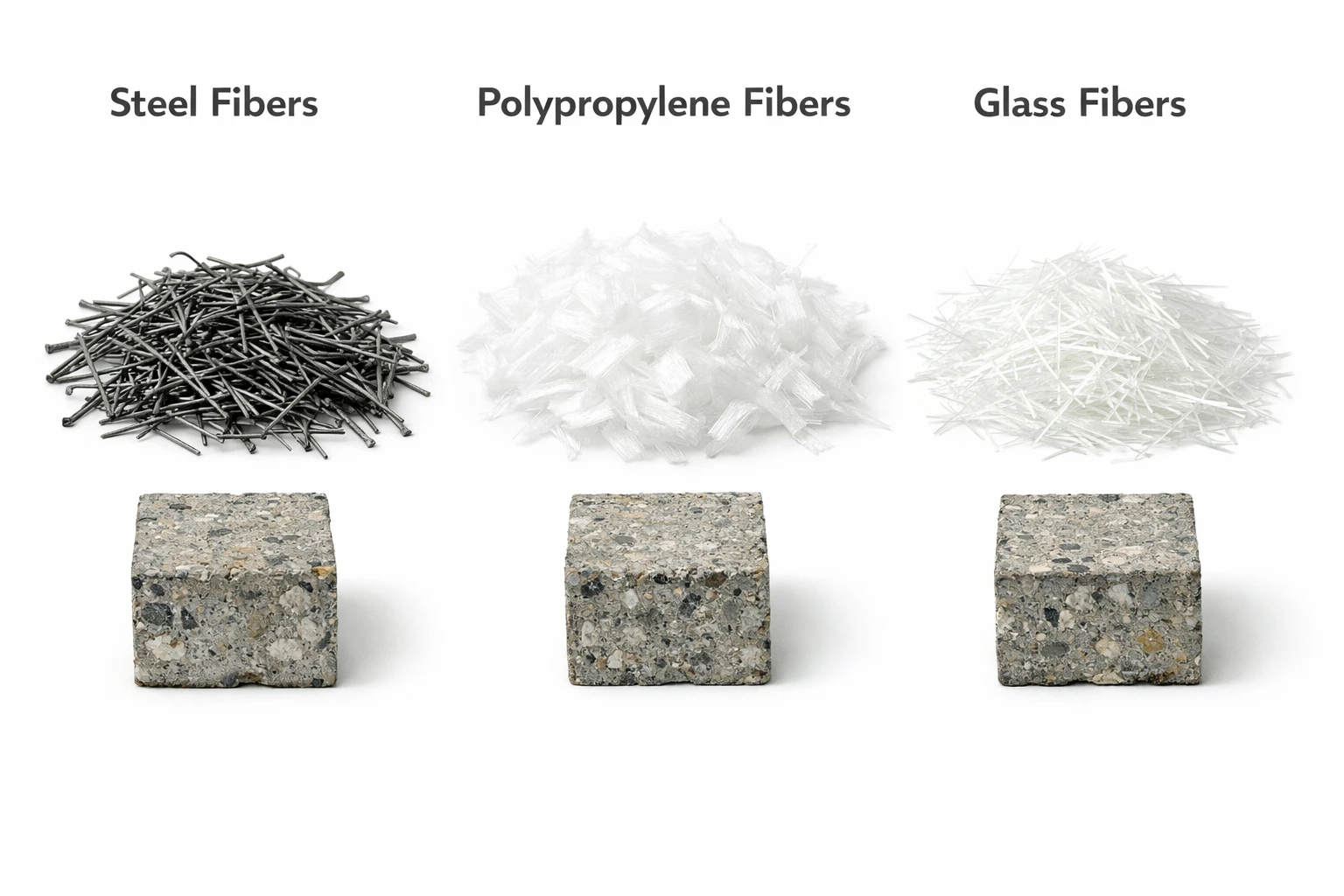
“Best” depends on the concrete problem, and the problem has to come first
A contractor often asks, “What is the best fiber for concrete?” A spec writer also asks the same question. A buyer wants one answer because buying needs speed and clarity.
A team still gets better results when the team asks one small question first. The team should ask, “What problem do we need to reduce?” A slab team may need fewer early surface cracks. A tunnel team may need less spalling risk in fire. A precast team may need stronger edges and fewer chips. A pavement team may need higher toughness under repeated wheel loads.
Most modern fiber guidance uses the same starting point. A team should separate micro fibers and macro fibers. ACI 544.3R defines microsynthetic fibers as below 0.3 mm in diameter (or equivalent) and macrosynthetic fibers as above 0.3 mm, and ACI states that polypropylene fibers can be either microsynthetic or macrosynthetic.
This split helps because micro fibers and macro fibers do different jobs in concrete. Micro fibers mainly help during the first hours after placement. Macro fibers mainly help after cracking starts, and they help carry load and control crack opening.
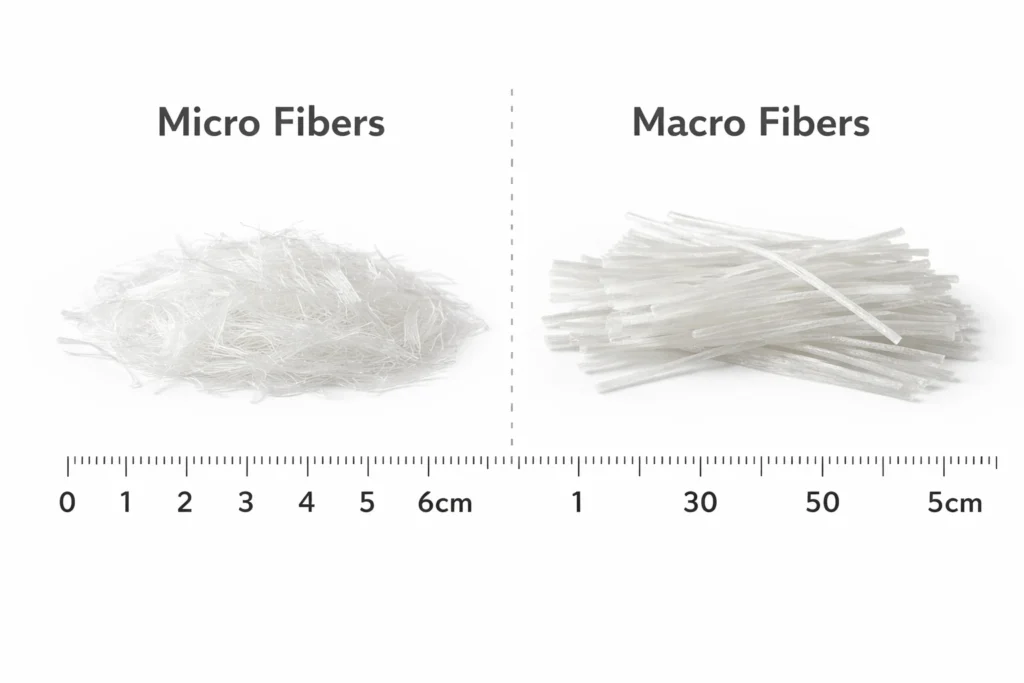
Micro fibers: the “best” choice for early cracks on fresh concrete
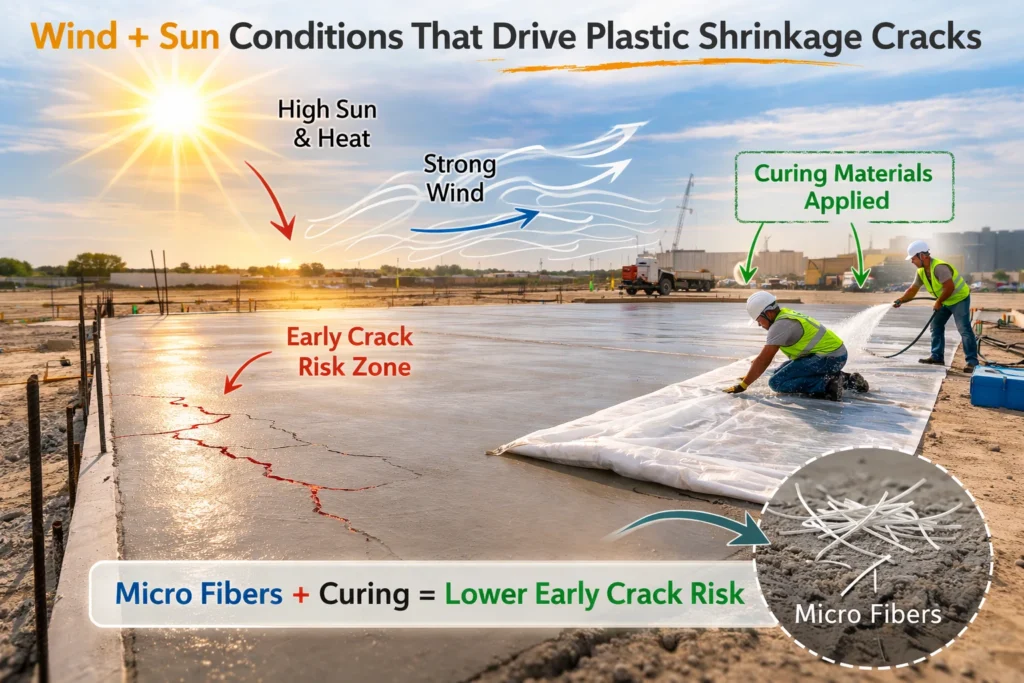
A fresh slab can crack before it even reaches final set. A slab can crack when wind and heat pull water from the surface. A slab can also crack as the concrete settles around rebar and large aggregate. These are early-age crack modes, and they are common on flatwork.
Many teams choose micro polypropylene (PP) fibers for this reason. NRMCA describes synthetic fibers as materials that can help bridge and spread cracks, and it links the benefit to cracking from shrinkage and temperature and bending, and it notes that fibers are added before or during mixing.
A micro PP fiber network works well because the fibers spread through the paste and help hold the mix together while the concrete is still weak. A micro PP fiber also fits jobsite reality because crews can add it without changing the rebar plan in most jobs.
If your main pain is plastic shrinkage cracking, micro PP fibers are often the best first choice. This is also why micro PP fibers are used in many residential and commercial slabs and toppings.
Macro fibers: the “best” choice when you need post-crack performance
A different problem starts after concrete cracks. A slab can crack from wheel loads and rack loads and joint movement. A pavement can crack under repeated loads. Shotcrete can crack under ground movement. These problems need toughness and residual strength after first cracking.
Macro fibers target that need. Sika’s fiber reinforced concrete handbook states that common fiber materials include steel and polyolefin fibers like polypropylene, and it stresses that performance comes from the composite behavior, not only from one fiber property.
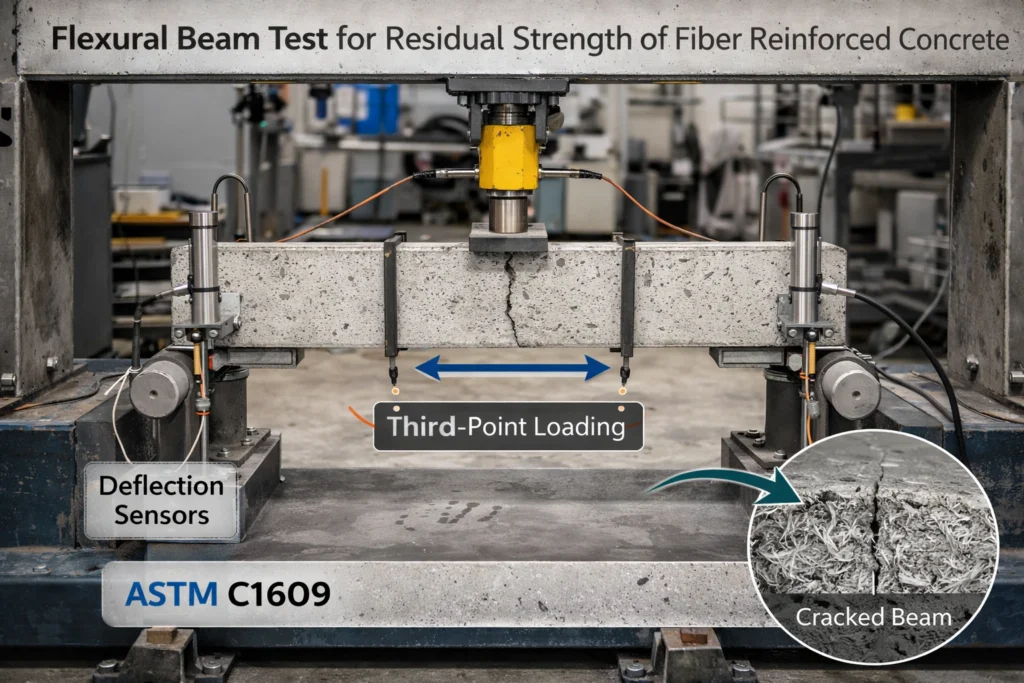
Designers often verify macro fiber contribution with flexural testing. ASTM C1609 states that the test evaluates flexural performance of fiber-reinforced concrete using parameters from the load-deflection curve from a beam tested in third-point loading.
If your main pain is post-crack load capacity, macro fibers are often the best fit, and the test data has to match the design target. Macro PP fibers can be a strong option when corrosion risk matters and when handling simplicity matters, and steel fibers can be a strong option when very high residual strengths are required.
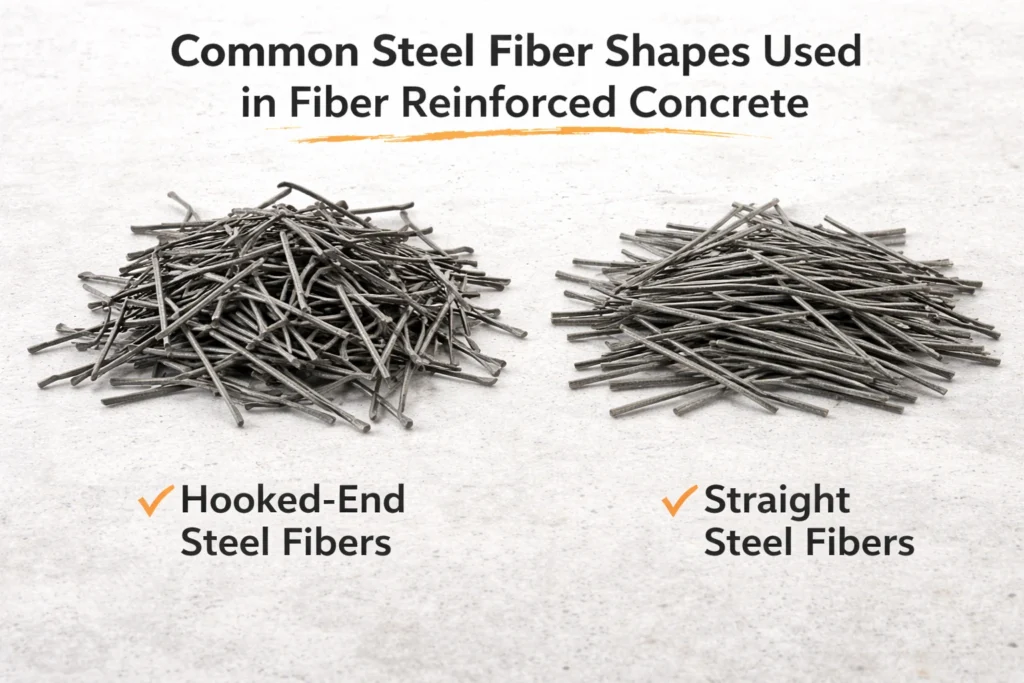
Steel fibers: a “best” choice when high residual strength is the priority
Steel fibers have a long history in fiber reinforced concrete. Steel fibers can deliver high bridging strength because steel has high tensile strength and stiffness. Steel fibers also bring clear standard frameworks for product types and classification.
ASTM A820 states that the specification covers minimum requirements for steel fibers for fiber-reinforced concrete, and it defines steel fiber types such as cold drawn wire, cut sheet, and melt-extracted fibers.
Some projects choose steel fibers because designers can reach high residual strength classes, and designers can use them in ground-supported slabs and tunnel linings and industrial pavements. Some projects also choose steel fibers because steel fibers can reduce or replace mesh in some slab systems when the design method supports it.
Steel fibers still have tradeoffs. Steel fibers can corrode in some exposure conditions. Some teams also want to avoid steel fiber protrusions at the surface for certain finishes. These tradeoffs do not make steel fibers “bad.” These tradeoffs only mean that the job conditions decide if steel fibers are the best choice.
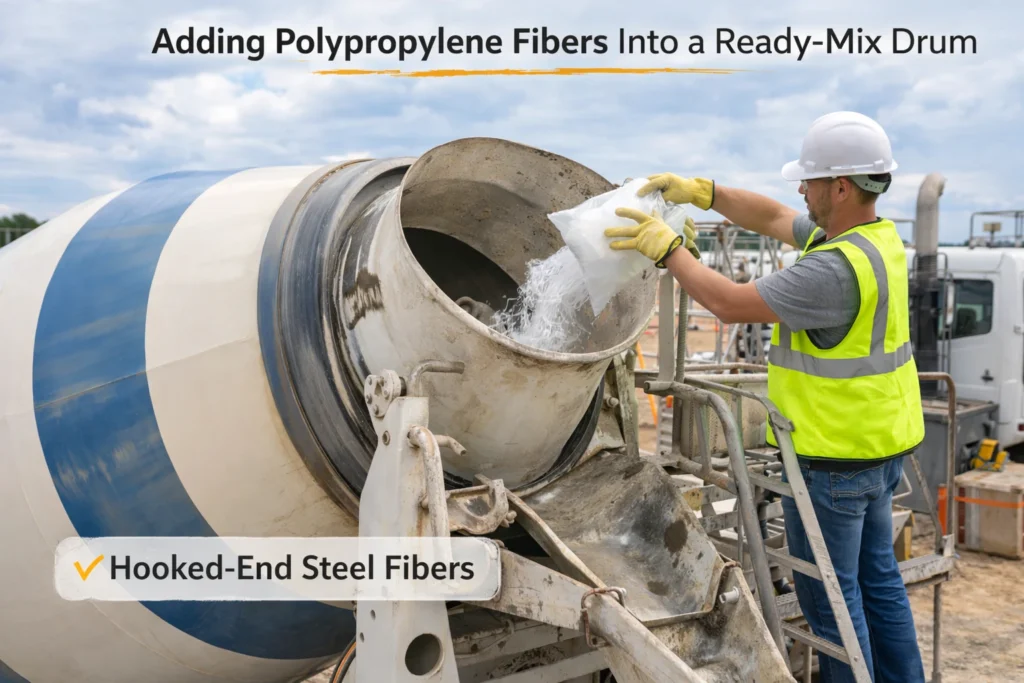
Polypropylene (PP) fibers: often the “best” choice when you want durability, low corrosion risk, and easy handling
Many teams choose polypropylene fibers because polypropylene is a durable polymer in the concrete environment and it does not rust. ASTM C1116 includes a note that fibers such as polyolefins, including polypropylene, have been shown to be durable in concrete.
PP fibers also split into micro and macro categories, and that split matches the main use cases.
- Micro PP fibers often target early-age cracking and surface integrity. ACI 544.3R defines microsynthetic fibers with the 0.3 mm line.
- Macro PP fibers often target post-crack strength and toughness, and teams often evaluate that effect with tests like ASTM C1609.
PP fibers can also support fire-related performance in specific contexts. Some tunnel projects and high performance concrete projects use PP microfibers to reduce explosive spalling risk. A review paper on spalling risk states that adding PP fibers to concrete can reduce spalling risk due to fire.
A technical paper on explosive spalling resistance states that using polypropylene fibres to inhibit explosive spalling in fire has become common practice in many parts of the world, particularly in tunnel construction.
If your job needs crack control and durability and low corrosion concerns, PP fibers are often the best all-around option. The exact answer still depends on whether you need micro behavior or macro behavior.
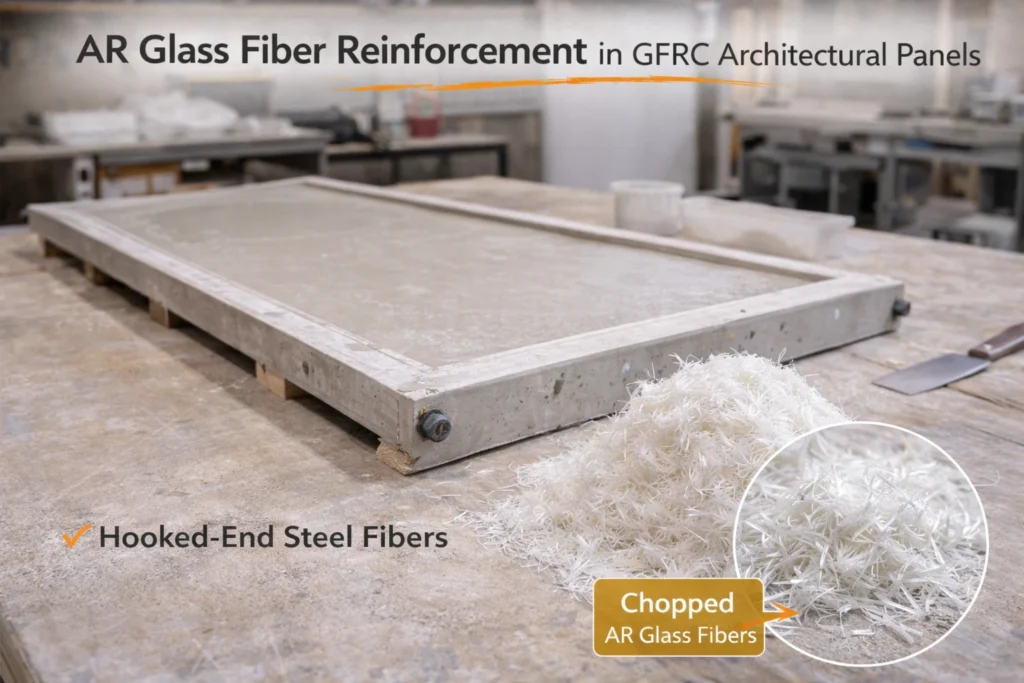
Glass fibers: a “best” choice for GFRC and thin panels that need tensile reinforcement
Some projects do not use fibers mainly for slab cracks. Some projects use fibers to make thin concrete panels and architectural shapes. Glass fiber reinforced concrete (GFRC) is a clear example.
AR glass fibers are designed for the alkaline cement environment. Concrete Network states that the alkali resistance of AR glass fibers comes from adding zirconia, and it notes that the best fibers have zirconia contents of 19% or higher.
A practical GFRC reference also states that AR glass fiber is the primary reinforcement used in GFRC.
If your job is GFRC panels and thin shells, AR glass fiber is often the best fiber choice. A team should still match fiber length and dispersion method to the GFRC process and mix design.
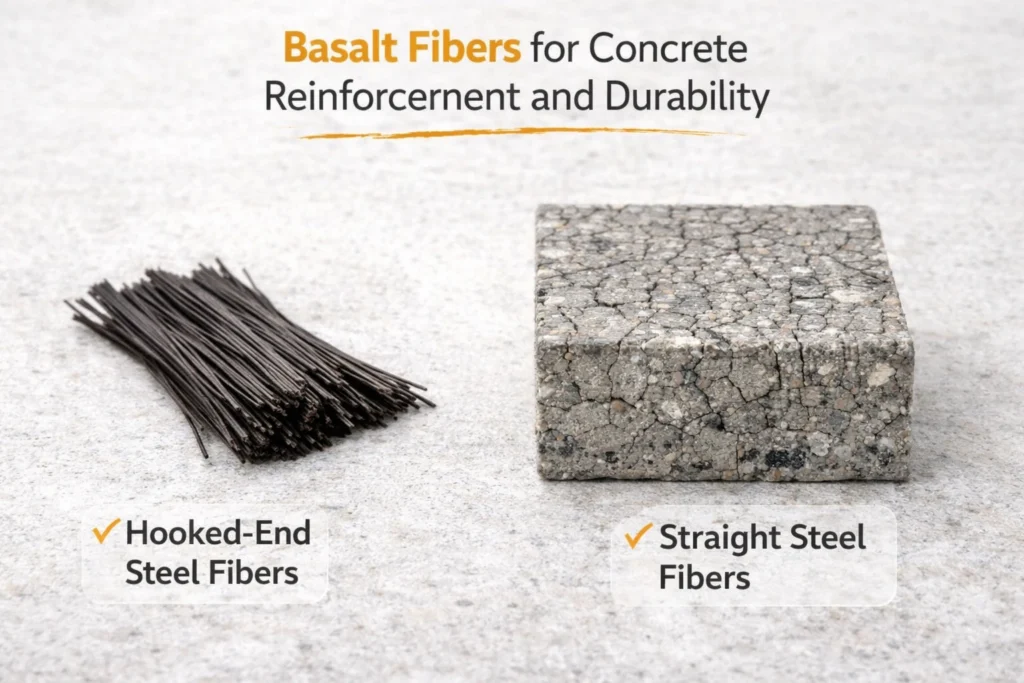
Basalt fibers: a “best” choice when durability and chemical resistance matter, and when the design can accept workability changes
Basalt fibers are mineral fibers that can improve toughness and crack control and some durability indicators. Basalt fibers also attract attention in marine and industrial exposure discussions.
A review on basalt fiber reinforced concrete describes basalt fiber advantages such as high elastic modulus and high fracture strength and corrosion resistance and good frost resistance.
A PMC review on basalt fiber reinforced concrete states that basalt fiber reinforced concrete can provide benefits like high tensile strength and elastic modulus and more resistance to acid, and it also notes tradeoffs like reduced flow properties and higher price compared with some alternatives.
If your job is in aggressive exposure and you need extra crack control and durability, basalt fibers can be a best choice in the right mix. A team should still run trial batches because workability changes can affect placement success.
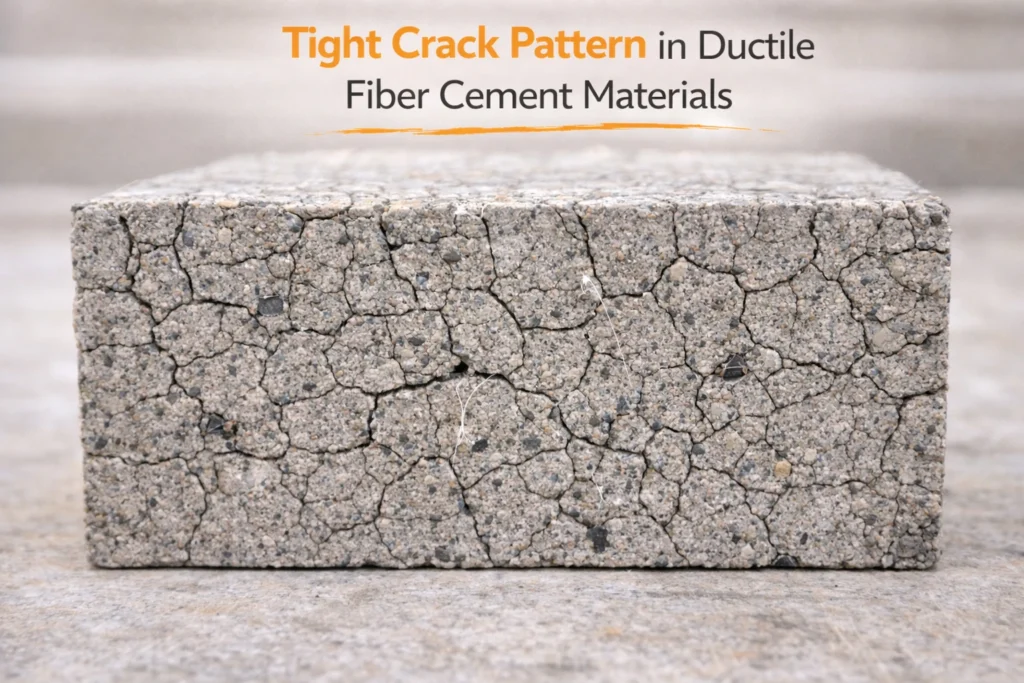
PVA fibers and ECC: a “best” choice when extreme ductility and tight crack widths are the goal
Some projects need more than “less cracking.” Some projects need a material that can strain in tension and still carry load and control crack widths. Engineered Cementitious Composites (ECC) is a key example, and PVA fibers are common in ECC systems.
Frontiers describes ECC as ultra-ductile fiber-reinforced cementitious composites, and it links ECC tensile strain-hardening behavior to micromechanics between fiber and matrix and interface.
A PMC paper on ECC durability performance also notes that ECC is receiving more attention because of tensile strain hardening and multiple cracking properties, and it mentions that PVA fiber cost can limit widespread adoption.
If your goal is high ductility and tight crack control for resilience, PVA fibers in ECC-type systems can be the best choice. A team should expect higher material cost and more mix control requirements.
How standards and design guides help you pick the “best” fiber without guessing
A buyer can make fiber selection simple when the buyer ties choices to standard language and standard test data.
1) Use the micro vs macro split for synthetic fibers
ACI 544.3R gives the 0.3 mm split for microsynthetic and macrosynthetic fibers.
This split helps because it links directly to function, and it helps a team avoid buying a micro fiber for a macro job.
2) Use durability language for synthetic fibers
ASTM C1116 requires documentary evidence for resistance to deterioration in moisture and alkalis in cement paste and in admixture exposure, and it notes that polyolefins like polypropylene have been shown to be durable in concrete.
This point matters when a project file needs a clean compliance line.
3) Use residual strength testing for macro performance
ASTM C1609 defines flexural performance evaluation from the load-deflection curve.
A buyer should ask for the test method and the reported residual values, and the buyer should match those values to the design guide used.
4) Use clear product type standards for steel fibers
ASTM A820 defines steel fiber types and basic requirements.
This gives buyers a shared vocabulary for procurement.
5) Use EN-based declarations when the project uses EN practice
A Singapore design guide states that fibers must conform to EN 14889-1 for steel fibers and EN 14889-2 for polymer fibers, and it ties fiber reinforced concrete design to residual strength classes.
A technical note that explains EN 14889-2 also states that the manufacturer declares the unit volume of fibers that achieves stated residual flexural strength at CMOD values in the EN test framework.
These tools do not remove engineering judgment. These tools do reduce confusion and make vendor comparisons fair.
A practical “best fiber” map by application
A team can use this map as a quick decision guide.
Slabs-on-ground and warehouse floors
A team often wants fewer early cracks and better service performance under traffic. Micro PP fibers often fit early crack control, and macro fibers fit post-crack performance needs. ACI defines micro and macro synthetic fiber groups, and PP fibers can be in either group.
A team can choose macro PP fibers when corrosion concerns matter and when handling matters, and a team can choose steel fibers when the design needs higher residual strengths and stiffness.
Tunnels and fire spalling risk
A team often uses PP microfibers for spalling resistance in high performance concrete. A review paper supports that PP fibers can reduce spalling risk due to fire, and a technical paper notes that this practice has become common in tunnel construction.
Architectural panels and thin products
A team often uses AR glass fibers for GFRC. AR glass fibers are designed for alkaline concrete, and zirconia content supports alkali resistance.
Marine and industrial exposure and durability work
A team can consider basalt fibers when chemical resistance and toughness matter, and the team should also plan for workability checks.
Seismic and impact resilience and tight crack width control
A team can consider PVA fibers in ECC-type systems when ductility and multiple cracking behavior are the top goals, and the team should plan for higher cost and tighter mix control.
Where Ecocretefiber™ fits when you want a “best” result that is also easy to build
Ecocretefiber™ focuses on polypropylene fiber solutions for concrete, and our products fit the micro and macro framework that specs already use. ACI 544.3R gives the 0.3 mm split and it states that polypropylene fibers can be microsynthetic or macrosynthetic.
ASTM C1116 notes that polyolefins like polypropylene have been shown to be durable in concrete, and this supports long-term confidence in PP fiber use.
ASTM C1609 gives a standard path to verify macro fiber flexural performance using the load-deflection curve.
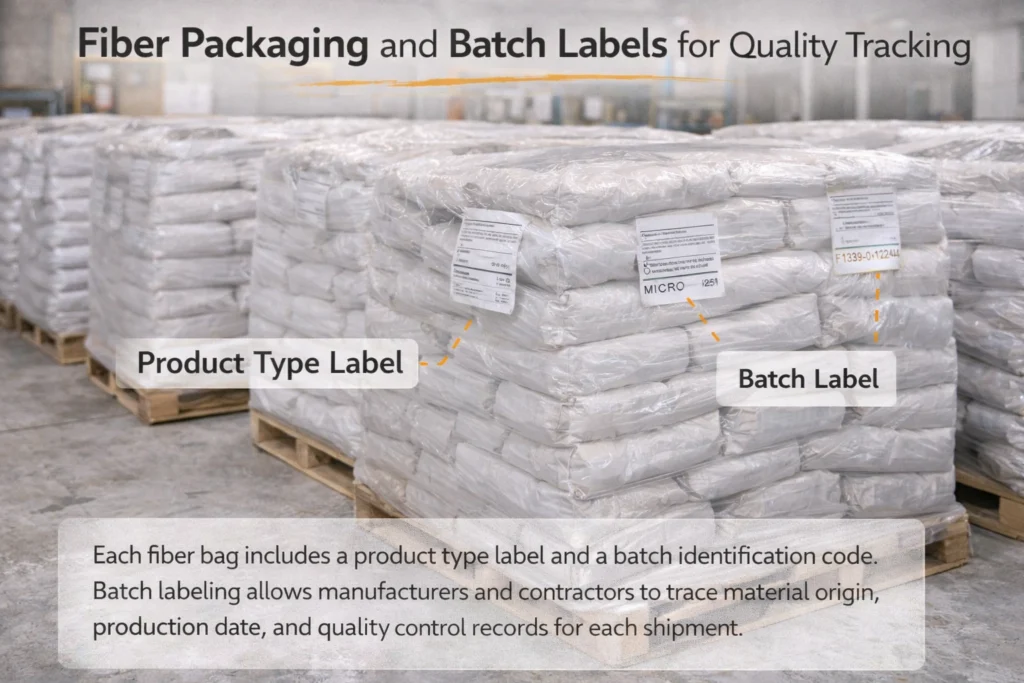
Shandong Jianbang Chemical Fiber Co., Ltd. supports buyers with stable supply and consistent fiber geometry and clear documentation. A buyer can then match fiber choice to the job, and the buyer can build a repeatable spec that works across pours.
Conclusion
There is no single best fiber for all concrete. The best fiber matches the problem and the spec and the placement method. Micro fibers are often best for early-age crack control, and macro fibers are often best for post-crack strength and toughness. ACI 544.3R sets a simple micro and macro split at 0.3 mm, and it states that polypropylene fibers can be in either group.
Steel fibers can be best when very high residual strength is the priority, and ASTM A820 gives a standard framework for steel fiber types.
PP fibers are often best when durability and low corrosion risk and easy handling matter, and ASTM C1116 notes polyolefins like polypropylene as durable in concrete.
AR glass fibers are often best for GFRC, and zirconia content supports alkali resistance.
Basalt fibers and PVA fibers can be best in specialized cases where durability or ductility goals lead the design.
If you want a practical fiber choice that fits common specs and real jobsite workflows, Ecocretefiber™ from Shandong Jianbang Chemical Fiber Co., Ltd. can support your micro and macro polypropylene fiber needs.