Why “types” matter when you buy polypropylene fibers
A project team often says “PP fiber” as if it is one product. A project team still gets very different results from different fiber types. A slab team wants fewer early cracks on the surface. A tunnel team wants better behavior in a fire event. A precast team wants better edge strength and fewer chips. These goals need different fiber sizes and different shapes and different test checks.
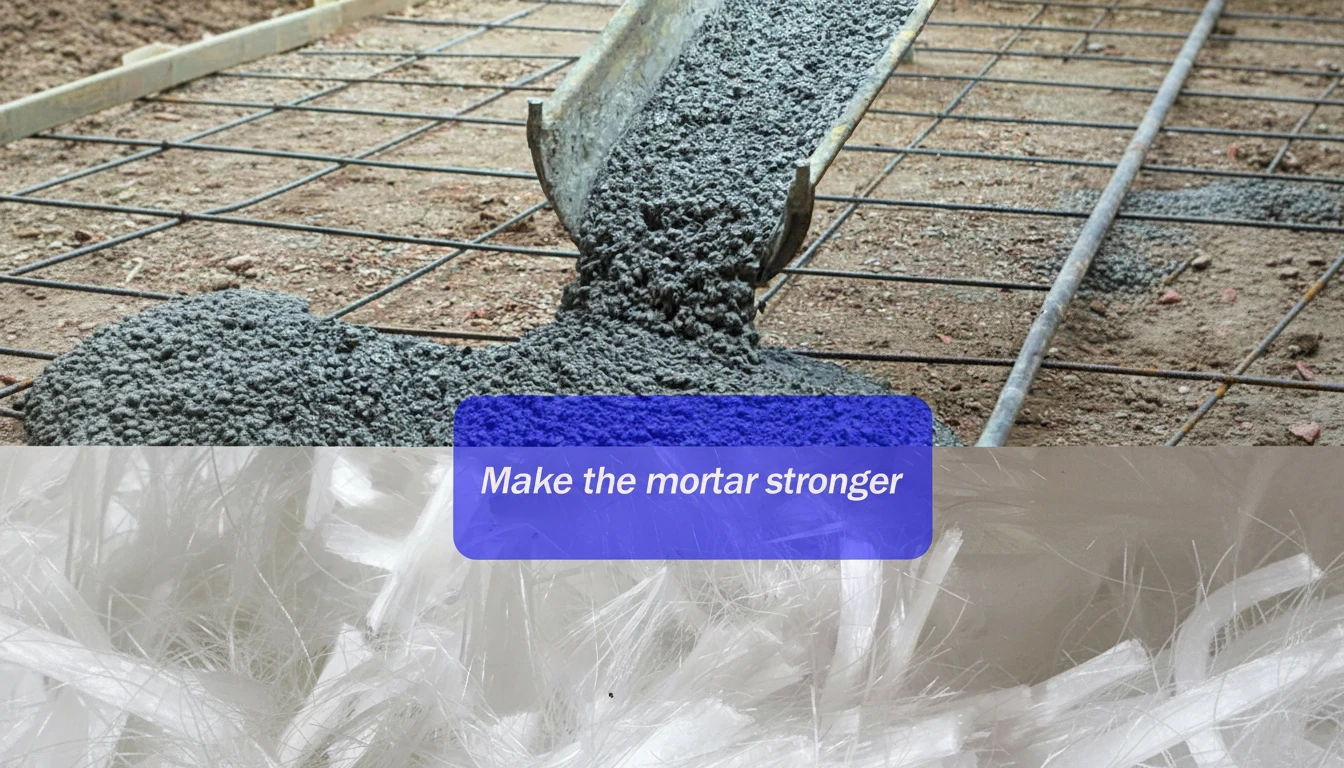
This is the core view that makes the topic simple. Polypropylene fibers can be divided into microfibers and macrofibers based on size and based on what they do in the concrete. A research review states this idea in a direct way, and it adds that length and function drive the split in practice. ACI guidance uses a clear size line for synthetic fibers, and it defines microsynthetic fibers as below 0.3 mm in diameter (or equivalent) and macrosynthetic fibers as 0.3 mm or above.
A buyer can use that split to avoid wrong specs. A buyer can also use that split to choose the right test method and the right dosage. Ecocretefiber™ supports both groups, and Shandong Jianbang Chemical Fiber Co., Ltd. supports buyers with stable supply and clear documentation.
What polypropylene fibers do in concrete at a basic level
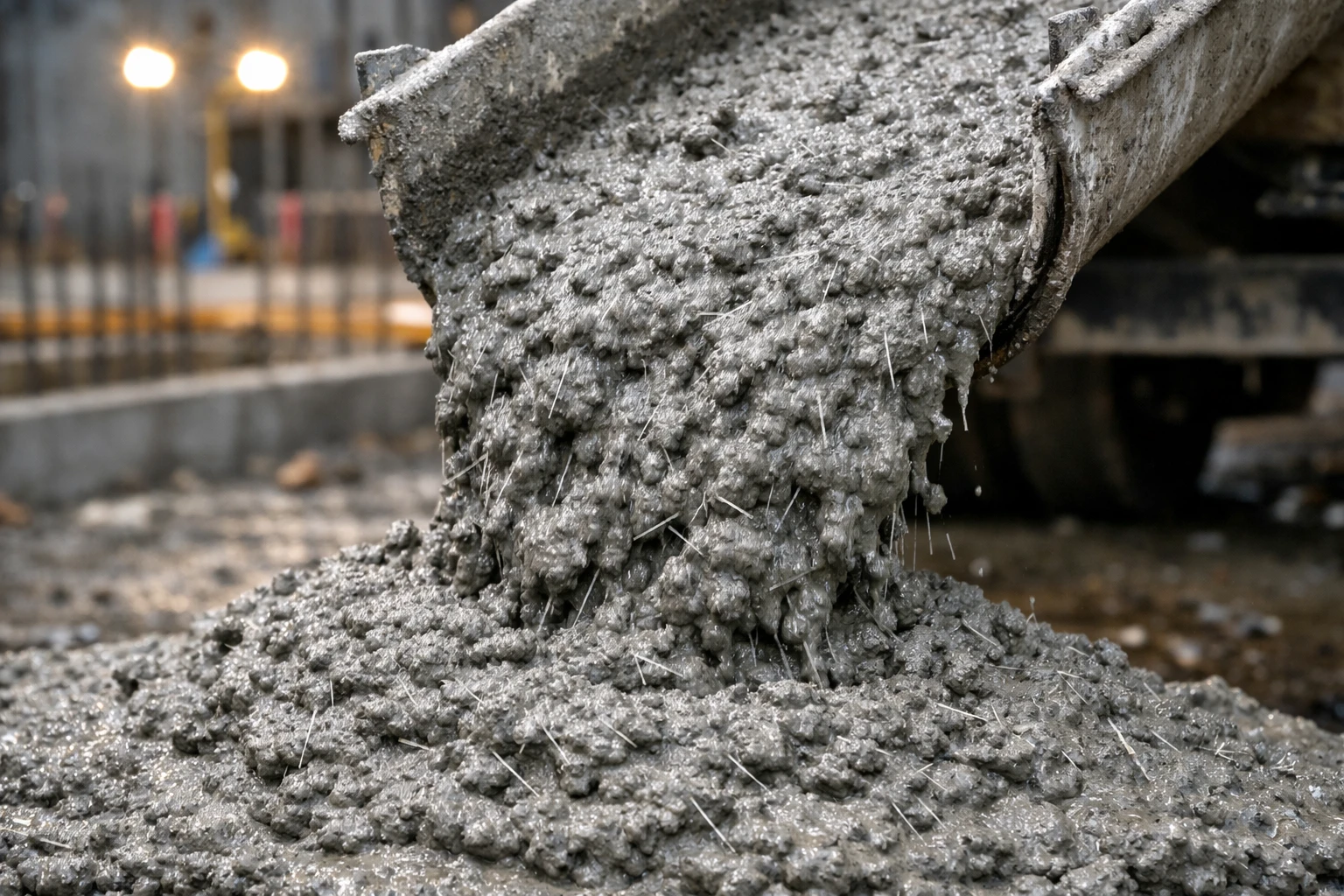
Polypropylene fibers act as small reinforcement that spreads through a mix. Fibers help because concrete cracks when tension rises above its tensile strength. Fibers bridge small cracks and they spread stress across many tiny lines. Fibers also help hold fresh concrete together while it is still weak.
NRMCA explains this general idea for synthetic fibers. NRMCA states that synthetic fibers bridge and disperse cracks and they hold concrete tightly together, and NRMCA links these benefits to cracking from bending and temperature and shrinkage. A project team still needs curing and good joint layout and good finishing, and fibers still help when site conditions push the slab toward early cracking.
Polypropylene matters because it is durable in the alkaline environment of cement paste. ASTM C1116 defines Type III synthetic fiber reinforced concrete and it asks for evidence of resistance to deterioration in moisture and alkalis in cement paste and in admixture exposure, and the note lists polyolefins such as polypropylene as durable in concrete. This is one reason why polypropylene fibers became a common option for both micro and macro use.
Type 1: Micro polypropylene fibers
What “micro” means and what micro fibers are meant to do
Micro polypropylene fibers are small diameter fibers that mainly target the first hours after placement. ACI describes micro synthetic fibers as below 0.3 mm in diameter (or equivalent). ASTM D7508 uses linear density to describe micro polyolefin fiber, and it sets micro below 580 denier, which the standard links to an equivalent diameter below 0.3 mm.
Micro PP fibers focus on plastic shrinkage cracking and plastic settlement cracking. These cracks show up while concrete is still fresh. The surface loses water and the surface shrinks and the paste is still weak, so the surface opens fine cracks. NRMCA describes synthetic fibers as a practical tool for plastic shrinkage crack control in concrete practice. A micro fiber network helps because it gives the paste many tiny bridges across the early crack paths.
A micro PP fiber does not act like rebar, and it does not replace structural reinforcement. A micro PP fiber mainly improves early crack control and mix cohesion. A buyer gets the best value when the buyer uses micro fibers for early cracking risk and keeps the design steel plan for structural needs.
Micro type A: Monofilament micro polypropylene fiber
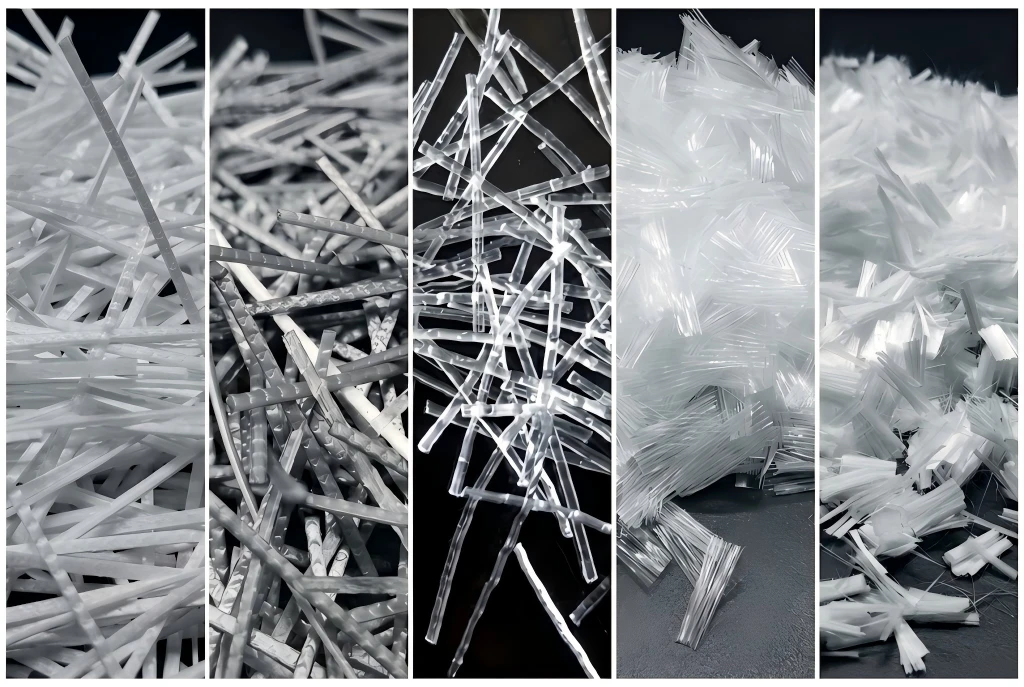
A monofilament micro PP fiber is a single strand style fiber. The fiber looks like thin hair, and the fiber disperses through the mix when mixing energy is enough. Many suppliers use monofilament micro fibers to reduce plastic shrinkage cracking and to improve cohesion. A practical industry description says microfibers include monofilament and fibrillated forms, and it frames monofilament as “individual strands” and fibrillated as a net-like form.
A monofilament micro fiber tends to spread well when the crew adds it in a controlled way. A crew should still avoid dumping a full dose into one dry pocket. A crew should add the fiber into moving concrete, and the crew should mix long enough for even spread. NRMCA frames synthetic fiber addition as a normal part of batching and mixing when the crew follows basic procedures.
A buyer often chooses monofilament micro fiber for slabs, toppings, and precast surfaces where fine early cracks cause repairs and complaints. A buyer also chooses it when finishing quality matters, because many crews find monofilament micro fibers easier to finish than net-like fibers at similar dosages.
Micro type B: Fibrillated film polypropylene fiber
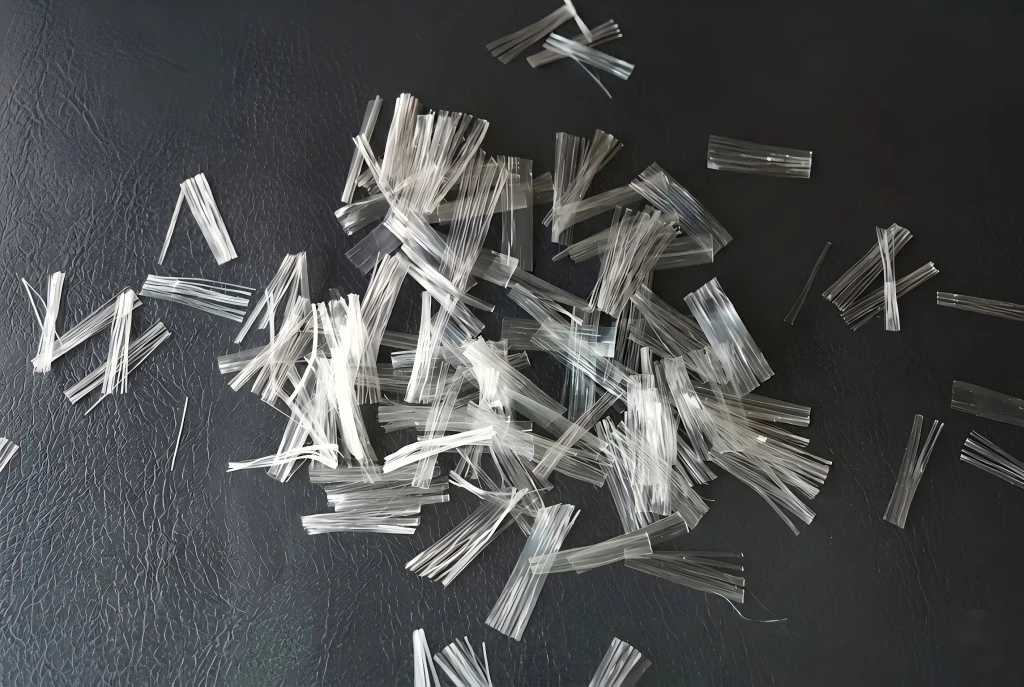
A fibrillated PP fiber starts as a film, and the film is slit and stretched so it opens into a network shape during mixing. This form can create more mechanical interlock in paste because the network offers more surface area and more “nodes” for paste to grip.
A DOT research report describes this bond point in plain language. The report states that polypropylene fibers in the form of fibrillated films and tapes or woven meshes provide better bond with the cement matrix than chopped monofilament fibers, and it links the effect to cement paste penetration into the network created by fibrillation. This bond is still mostly physical, so the job still depends on dispersion and proper mixing.
A fibrillated micro fiber often works well for plastic shrinkage cracking control and for impact and abrasion resistance in some mixes. A crew may see more fiber pattern at the surface in some finishes, so a crew should run a trial pour when surface appearance is a high priority. A buyer should also check the product’s stated dosage range, because fibrillated products can use different dosage targets than monofilament products.
Micro type C: Multifilament polypropylene fiber
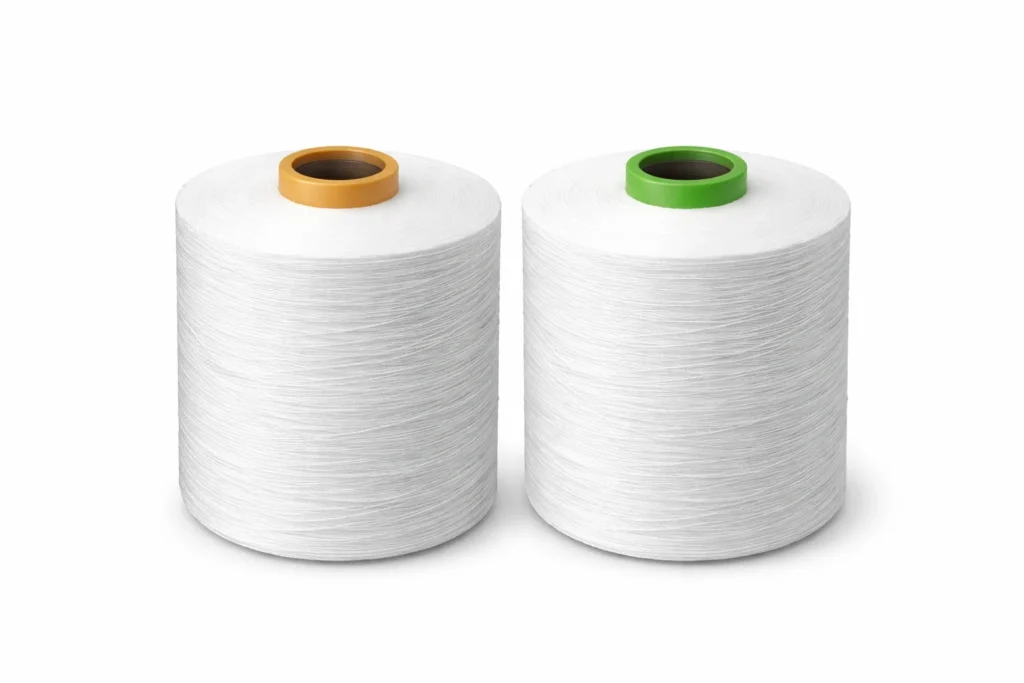
The keyword that many buyers search is multifilament polypropylene fiber, and buyers often use it in two different ways. Some people use “multifilament” to mean any fiber made from many tiny filaments. Some people use “multifilament” as a textile term for how a fiber gets extruded or assembled.
A recent fiber reinforced concrete handbook from Sika explains this naming confusion. The handbook lists monofilament and fibrillated as the two main types of synthetic micro-fibres, and it says the textile industry sometimes refers to fibrillated fibres as multifilament because of how the fibres get extruded through a multi-headed die head. This point matters because a buyer can order the wrong form if the buyer only uses “multifilament” without a shape description.
Some products are also true yarn-like multifilament systems. A research paper in Applied Sciences (MDPI) compares macro monofilaments and micro multifilament yarns, and the authors treat micro multifilament yarns as a distinct fiber type for cementitious composites. In this yarn style, the fiber bundle contains many fine filaments. The bundle can spread stress across many micro bridges, and the bundle can also change crack spacing behavior in some mixes.
A buyer who wants “multifilament polypropylene fiber” should ask one extra question. The buyer should ask if the supplier means fibrillated film that opens into a net, or the buyer should ask if the supplier means a yarn bundle made from many filaments. A buyer should also ask for fiber length and linear density and the intended role, so the product matches the job.
Type 2: Macro polypropylene fibers
What “macro” means and what macro fibers are meant to do
Macro polypropylene fibers are larger fibers that mainly target performance after cracking. ACI defines macrosynthetic fibers as 0.3 mm or greater in diameter (or equivalent). ASTM D7508 sets macro polyolefin fiber at 580 denier or above, and it links that cutoff to an equivalent diameter of 0.3 mm.
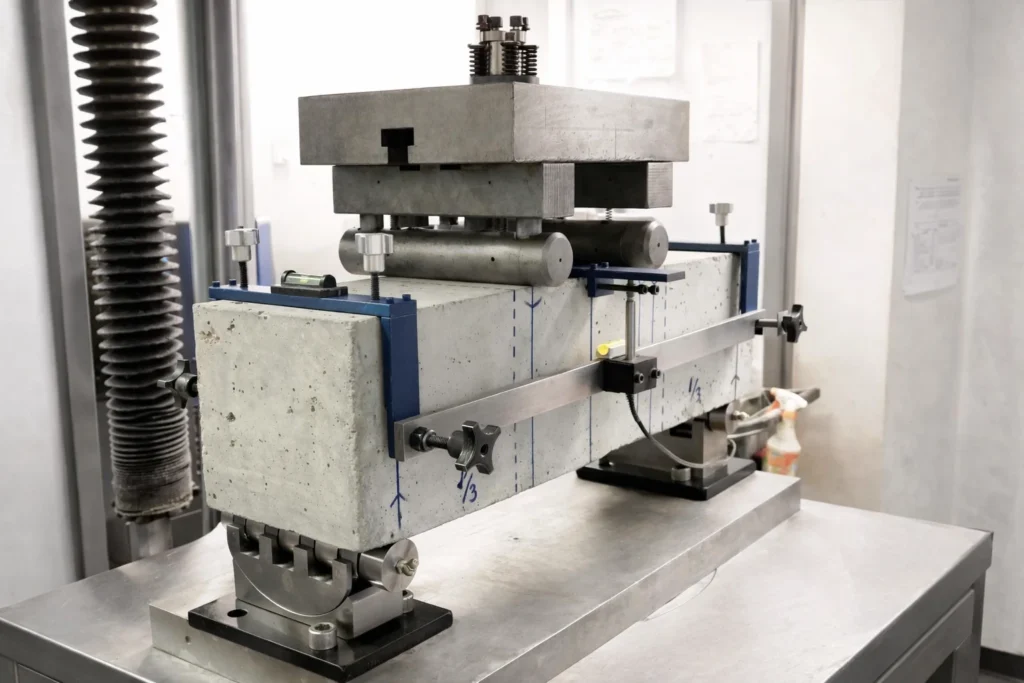
Macro fibers help because they bridge larger cracks and they keep load capacity after the first crack. Designers often call this residual strength or post-crack strength. ASTM C1609 is a common flexural test method for fiber reinforced concrete, and ASTM describes that the test evaluates flexural performance from the load-deflection curve of a beam test. This is the kind of test that macro fibers target.
A macro PP fiber often competes with steel fibers in slabs and shotcrete, and it can be attractive where corrosion risk matters and where handling safety matters. The Concrete Society notes that BS EN 14889-2 covers polymer fibers and it links requirements to residual flexural strength values from beam testing, and it treats macro synthetic fibres as an established category.
A buyer should still treat macro fiber as an engineering product. A buyer should ask for the test method and the reported residual values, and the buyer should ask for dosage that matches the target performance.
Macro type A: Monofilament macro synthetic polypropylene fiber
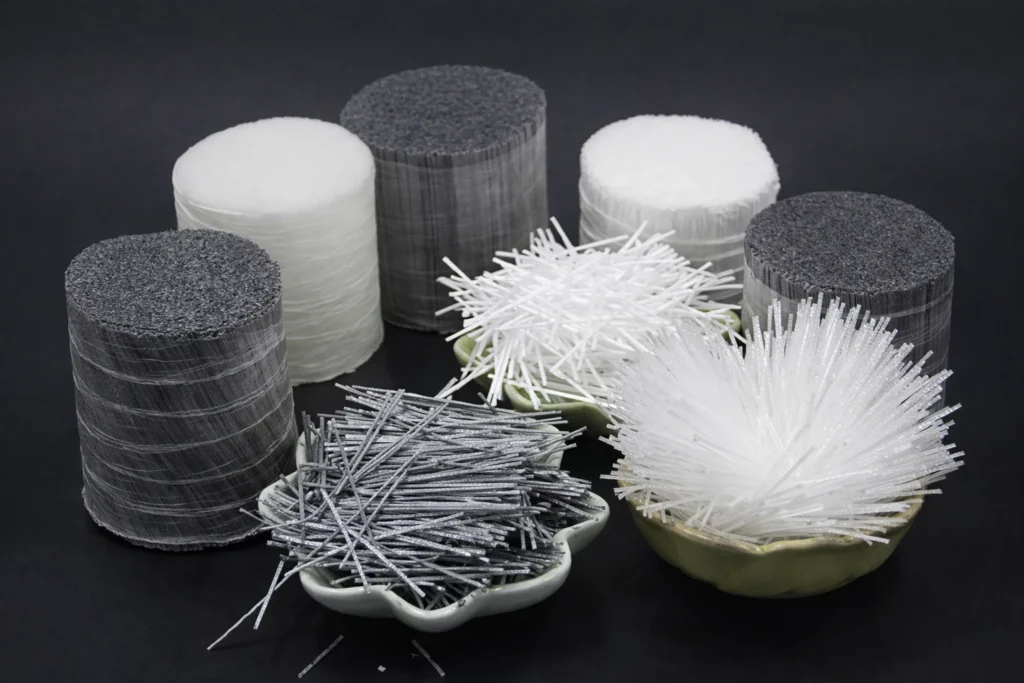
A monofilament macro fiber is a thick single strand fiber. Many products use a crimped or embossed surface to improve pullout resistance. Many products also use deformed shapes, like twisted or textured profiles, to increase mechanical bond.
EN 14889-2 gives examples of labeling that include polymer type, class, length, diameter, and shape, and it includes polypropylene as a polymer type and “deformed” as a shape example. This kind of information helps a buyer compare products in a consistent way. A macro fiber length is often far longer than micro fiber length, and a common range in industry bulletins is around 38 to 50 mm for macro synthetic fibers, with higher dosages than micro fibers.
A macro monofilament product often fits slabs on ground, pavements, and shotcrete where the designer wants a measured post-crack contribution. A buyer should link the product choice to a test method like ASTM C1609, because that test is designed to capture post-crack behavior from a beam load-deflection curve.
Macro type B: Twisted bundle and engineered profile polypropylene macro fibers
Some macro PP fibers use a twisted bundle structure or a flattened tape style with texture. Some fibers also use a blend of shapes or a multi-rib pattern. These designs aim to raise bond and reduce slip, so the fiber can carry load after cracking with less pullout.
ASTM D7508 recognizes that fiber products can also be “multi-length” and “graded,” and it also recognizes “hybrid” as a combination of macro and micro polyolefin fibers. This standard language fits the market reality because many macro fiber products do not look like a plain round strand.
A buyer should treat these engineered macro fibers as performance products. The buyer should ask for the geometry and for the tensile properties and for the residual strength test results. The buyer should also ask how the product affects workability and finishing at the target dosage. The Concrete Society notes that EN 14889-2 asks suppliers to declare dosage to reach stated residual flexural strength levels under a defined beam test approach. This point matters because a macro fiber purchase is not only “kg per m³.” The purchase is also “performance per kg.”
Other classification labels you will see in specs
A buyer will see extra terms in specs and data sheets, and these terms often sit under the micro or macro umbrella.
Hybrid polypropylene fiber systems combine micro and macro fibers in one product pack or one design. ASTM D7508 includes hybrid fiber as a recognized category that combines macro and micro polyolefin fibers. A hybrid concept can make sense when a project wants early crack control and also wants post-crack support in one system.
Multi-length polypropylene fibers include chopped strands of different lengths. ASTM D7508 also lists multi-length fibers as a category. A supplier may use this approach to tune dispersion and crack bridging across different crack sizes.
Graded polypropylene fibers include multiple lengths and multiple deniers in a gradation. ASTM D7508 lists graded fiber as a category. This design can target both paste-level cracking and larger crack bridging, depending on the exact blend.
These labels still need the micro and macro question first. A buyer should still ask which part of the system acts as micro, and which part acts as macro, and which function the supplier claims for each part.
How to choose the right polypropylene fiber type for a concrete job
A buyer can choose faster when the buyer links fiber type to the failure mode the buyer wants to reduce.
If the job shows early surface cracks on hot and windy days, the job needs micro PP fibers plus curing discipline. A buyer can compare early-age crack control with ASTM C1579, and ASTM states that the method compares surface cracking of fiber reinforced panels with control panels under restraint and moisture loss that is severe enough to crack before final set. A buyer can use this method to compare mixes that include monofilament micro fibers and fibrillated micro fibers and multifilament polypropylene fiber yarn options, as long as the buyer runs the test in a consistent way.
If the job needs post-crack capacity, the job needs macro PP fibers or steel fibers, and the job needs a design method that uses residual strength data. ASTM C1609 evaluates flexural performance from the load-deflection curve, and that curve captures post-crack behavior that macro fibers provide.
If the job needs long-term durability confidence, the job needs a fiber that fits a durability framework like ASTM C1116 Type III, and ASTM C1116 asks for evidence of resistance to deterioration in cement paste moisture and alkalis and admixtures.
NRMCA also gives a practical dosage anchor for common synthetic fiber use, and it describes typical use for plastic shrinkage control and then notes that higher dosage can enhance benefits beyond that basic use. A buyer should still use supplier guidance and trial batches, because mix design and aggregate and transport time change real dispersion.
Where Ecocretefiber™ fits in this classification
Ecocretefiber™ is a fiber brand from Shandong Jianbang Chemical Fiber Co., Ltd., and the product focus is concrete reinforcement fibers for professional buyers. Our product planning follows the same logic that standards and guidance use. ACI separates micro and macro synthetic fibers at the 0.3 mm line. ASTM D7508 also separates micro and macro polyolefin fibers at the 580 denier cutoff that aligns with that 0.3 mm equivalent diameter line.
A buyer can use Ecocretefiber™ for micro PP fiber needs like plastic shrinkage crack control, and a buyer can use Ecocretefiber™ for macro PP fiber needs like post-crack support in slabs and shotcrete. A buyer who specifically searches multifilament polypropylene fiber can also use this term in a precise way. The buyer can choose a micro fiber form that matches the intended meaning, and the buyer can choose net-opening fibrillated products when the job needs that form, and the buyer can choose yarn-like multifilament products when the job needs that form, and the buyer can verify the choice with the right test method.
Our team supports this buying process with clear product identification, and clear packaging labels, and stable batch control, and documentation that matches common standards.
Conclusion
Polypropylene fibers come in different types, and the clean first split is microfibers and macrofibers. ACI uses a 0.3 mm diameter (or equivalent) line to separate microsynthetic and macrosynthetic fibers, and polypropylene fibers can sit in either group. A review paper also states the same core view in practical terms, and it says polypropylene fibers divide into micro and macro based on length and function in concrete. Micro polypropylene fibers mainly help with early-age cracking, and micro products include monofilament, fibrillated film, and multifilament polypropylene fiber yarn forms, with naming that can vary by industry. Macro polypropylene fibers mainly help after cracking, and buyers often use performance tests like ASTM C1609 and standard frameworks like EN 14889-2 to compare options. If you want a supplier that can support micro and macro selection with clear product IDs and stable supply, Ecocretefiber™ from Shandong Jianbang Chemical Fiber Co., Ltd. is ready to support your concrete mix and your spec.