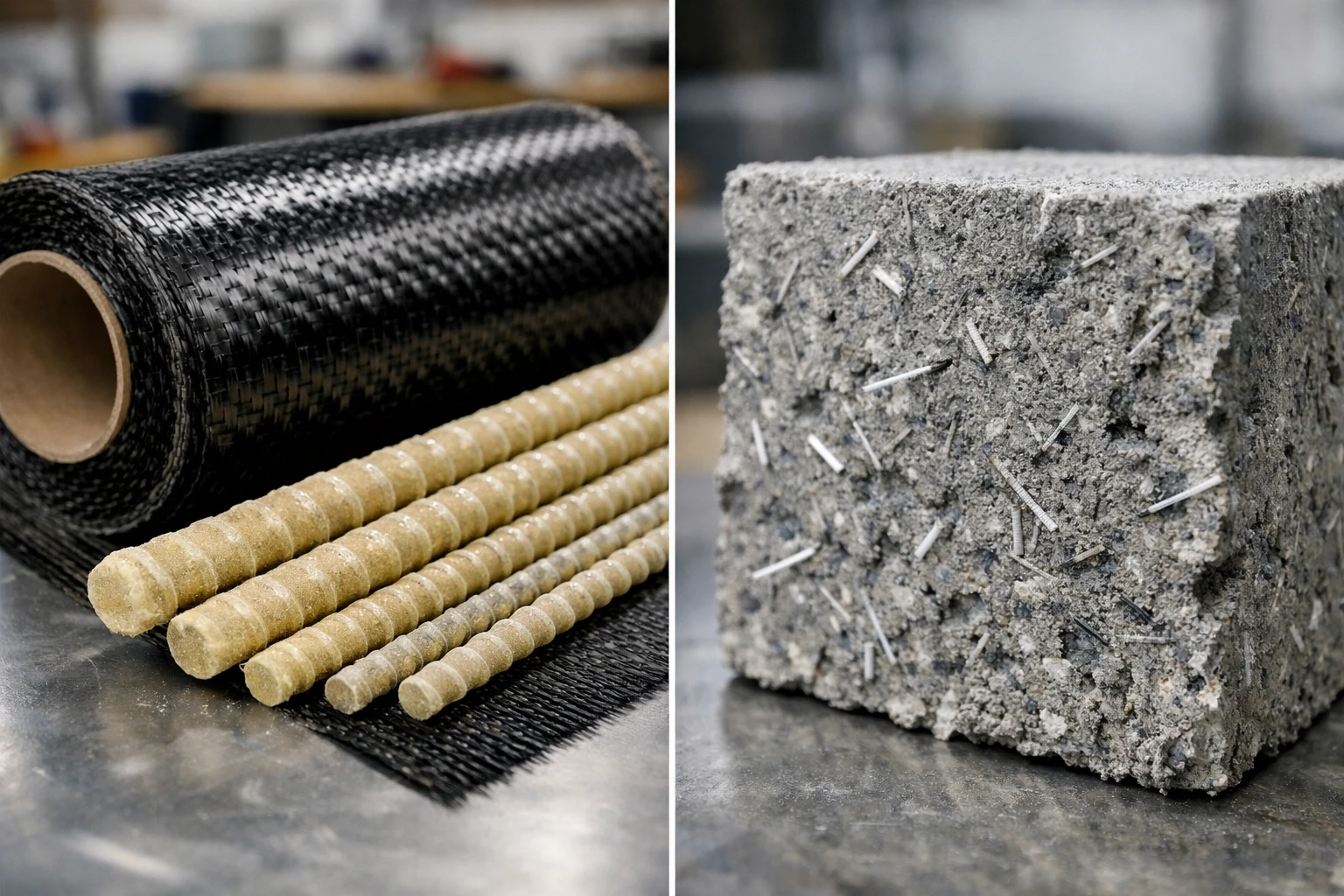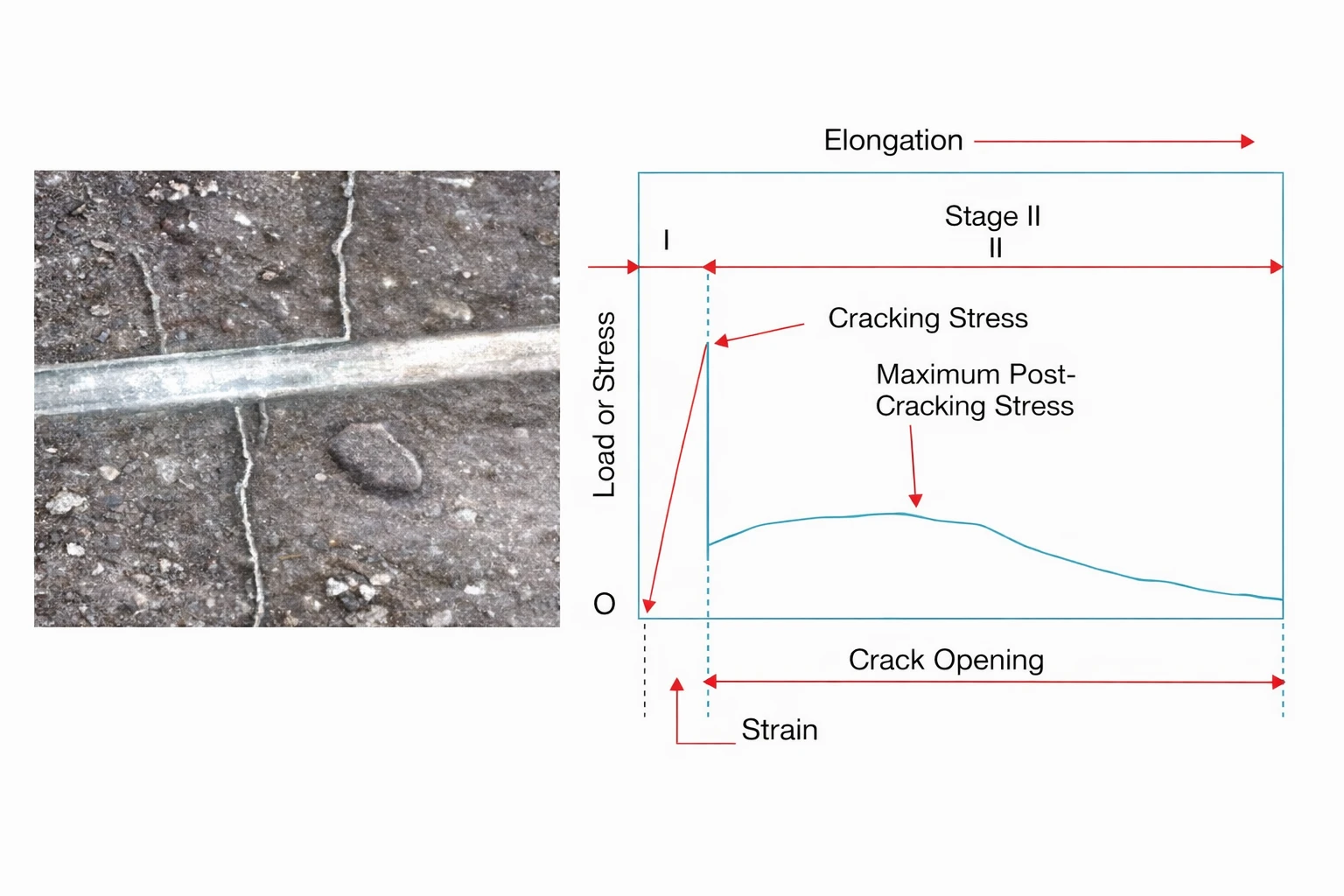
Steel fibre is used in concrete to control cracks and to make concrete behave less brittle after cracking. Steel fibres sit inside the mix as a distributed network. This gives the concrete some post-crack load capacity, especially in slabs and sprayed concrete. Many projects use steel fibre to reduce mesh handling time. Many projects use steel fibre to reduce floor repairs. These benefits show up most in industrial floors, pavements, sprayed concrete, plus precast elements.
What is steel fibre reinforced concrete?
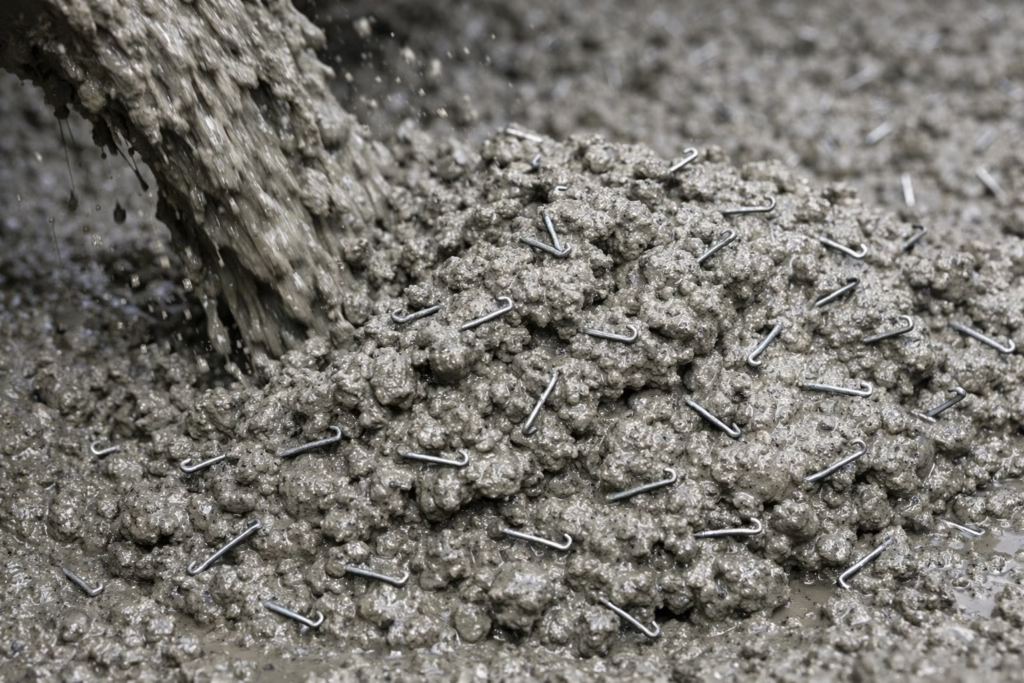
Steel fibre reinforced concrete (SFRC) is concrete that contains short steel fibres mixed through the whole batch. The fibres act like many small reinforcement elements. They bridge cracks as the concrete starts to open. This helps control crack width. It also helps the slab keep carrying load after first cracking, depending on fibre type and dosage.
ASTM C1116 is the common supply specification for fibre-reinforced concrete. It covers fibre concrete delivered with ingredients uniformly mixed. It also defines Type I steel fibre-reinforced concrete and links it to steel fibre requirements in ASTM A820/A820M.
What are the main uses of steel fibre in concrete?

Steel fibres are used most in slab and pavement work. The Concrete Society highlights industrial floors and pavements as major applications. It also lists sprayed concrete, composite slabs on steel decking, plus precast elements as key applications.
You can group the uses into two practical buckets:
- Flatwork and pavements: crack control plus post-crack capacity
- Sprayed concrete and precast: toughness plus handling resistance
Use 1: Industrial floors and slabs-on-ground

Industrial floors are the most common use case in many markets. The Concrete Society states steel fibre concrete is used extensively for industrial ground-supported floors. It notes typical dosages in the range of 20 to 50 kg/m³. It also notes the fibres provide crack control and post-cracking residual strength, which depends on fibre type and dosage.
This use case fits projects that need fewer repairs:
- logistics floors with forklifts
- factories with point loads
- distribution centers with heavy traffic at joints
Steel fibre helps with joint edges and corners because it improves post-crack behavior. It also reduces the risk of sudden break at local weak zones.
Use 2: Pavements and external paved areas

Pavements see repeated wheel loads. Pavements also see curling, shrinkage restraint, plus joint stress. Steel fibre concrete is used in external paved areas because fibres help control cracking. Fibres also help the slab carry load after cracking. The Concrete Society lists external paved areas and pavements as major applications for steel fibre reinforced concrete.
This option is often attractive when the owner wants:
- longer service life
- fewer patch repairs
- better resistance to impact and abrasion at the surface
Use 3: Shotcrete, tunneling, mining, and excavation support

Steel fibre is widely used in shotcrete, especially in underground work. ACI’s fibre reinforced concrete report lists steel fibre reinforced concrete and shotcrete use in slabs-on-grade, plus mining and tunneling support applications.
Steel fibre helps sprayed concrete because it increases toughness after cracking. Steel fibre can also reduce the need for mesh in some sprayed support layers, depending on design and safety requirements. TRB literature on steel fibre shotcrete discusses batching and mixing practices for steel fibre reinforced shotcrete, which shows it is a mature field application.
This use case fits:
- tunnel linings
- slope stabilization shotcrete
- underground support layers
Use 4: Precast elements and products

Precast work often has thin edges, lifting points, plus transport vibration. Steel fibres help reduce cracking in handling. Steel fibres also improve toughness, which reduces chipping and breakage risk.
The Concrete Society lists precast elements as a major application category for fibre reinforced concrete.
ACI’s fibre report also includes fabrication methods and applications across fibre types, including steel fibre reinforced concrete.
Precast producers often like steel fibre because it:
- reduces steel congestion in thin sections
- improves crack control in demolding
- supports edge durability in service
Use 5: Composite slabs on steel decking
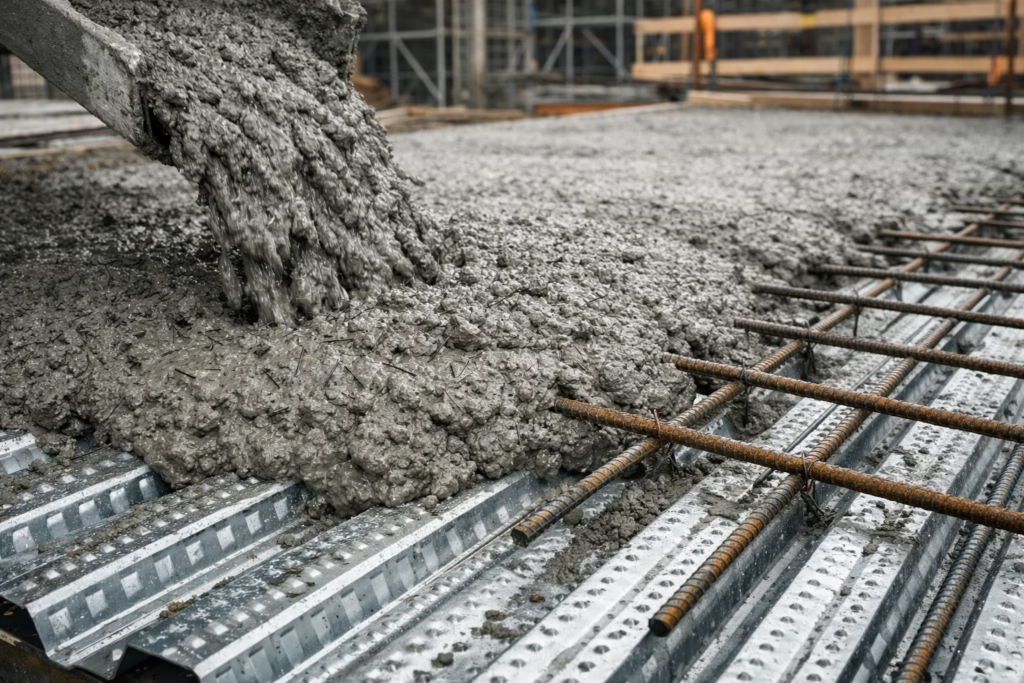
Composite deck slabs can use fibres to help with shrinkage and crack control. The Concrete Society lists composite slabs on steel decking as a major application for fibre reinforced concrete.
This use case still requires structural design checks. The project team must confirm how fibres fit with shrinkage reinforcement requirements and local code practice.
Use 6: Bridge decks and bridge deck overlays

Steel fibre concrete is used in bridge deck work because crack control protects durability. Research and practice reports describe fibre reinforced concrete in bridge decks and overlays, with emphasis on controlling cracking and resisting intrusion of aggressive solutions.
This use case is common when the owner wants:
- a durable overlay with controlled cracking
- improved protection of embedded steel
- reduced maintenance cycles
Some agencies also evaluate high-performance fibre systems for overlays and repairs.
What benefits does steel fibre add in real projects?
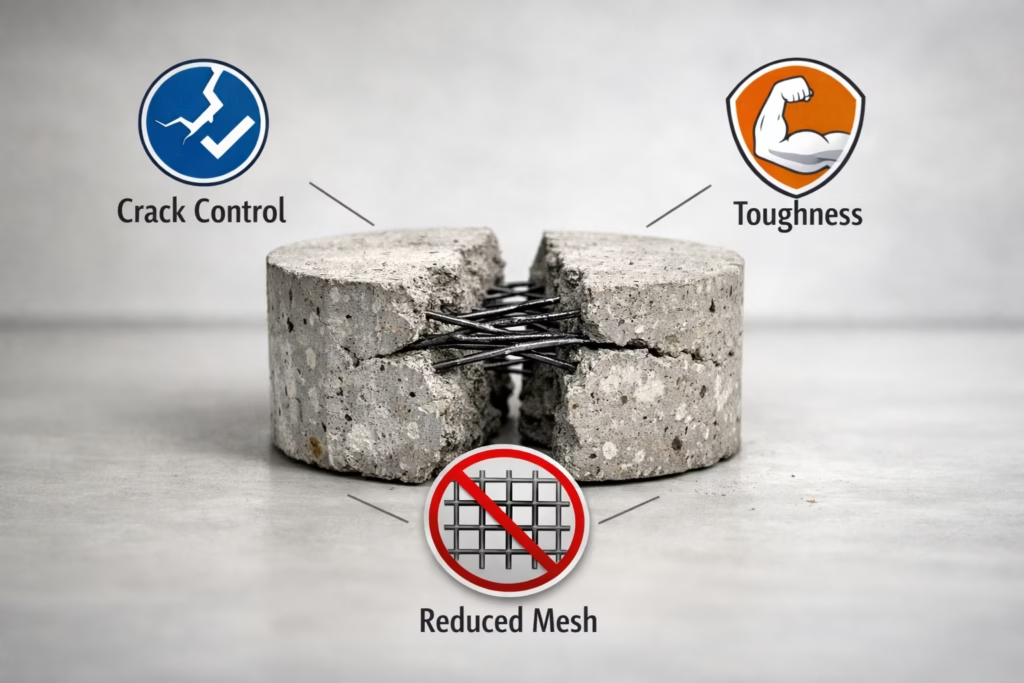
Steel fibre provides benefits that crews can see.
Crack control
Fibres help control early cracking and long-term shrinkage cracking in slabs. The Concrete Society lists crack control as a main reason for fibre use in floors.
Post-crack load capacity
Fibres can add residual strength after cracking. This is a key reason fibres are used in ground-supported slabs.
Toughness under impact
Fibres help the slab hold together after local damage. This is valuable in forklift traffic zones and drop zones.
Less steel handling in some slabs
Fibres can reduce the need for welded mesh in certain slab designs, subject to engineering acceptance. This can reduce labour and schedule risk.
Typical dosage ranges for steel fibre concrete

Dosage depends on the design goal. Dosage also depends on fibre geometry and slab thickness.
A practical reference from the Concrete Society is clear. It states industrial ground-supported floors often use 20–50 kg/m³ of steel fibres.
Other technical guides and design documents often discuss similar ranges for floor applications, with higher dosages for jointless slabs or special designs.
You should also know the practical upper bound for normal mixes. CCAA notes that in conventional concrete with typical coarse aggregate, it is rare for steel fibre dose rate to exceed about 1% by volume, which it describes as about 80 kg/m³, due to interference effects in the mix.
A safe purchase rule is simple:
- Use supplier guidance for the fibre product.
- Use project testing when fibres are used for structural contribution.
Mixing, placing, and finishing tips
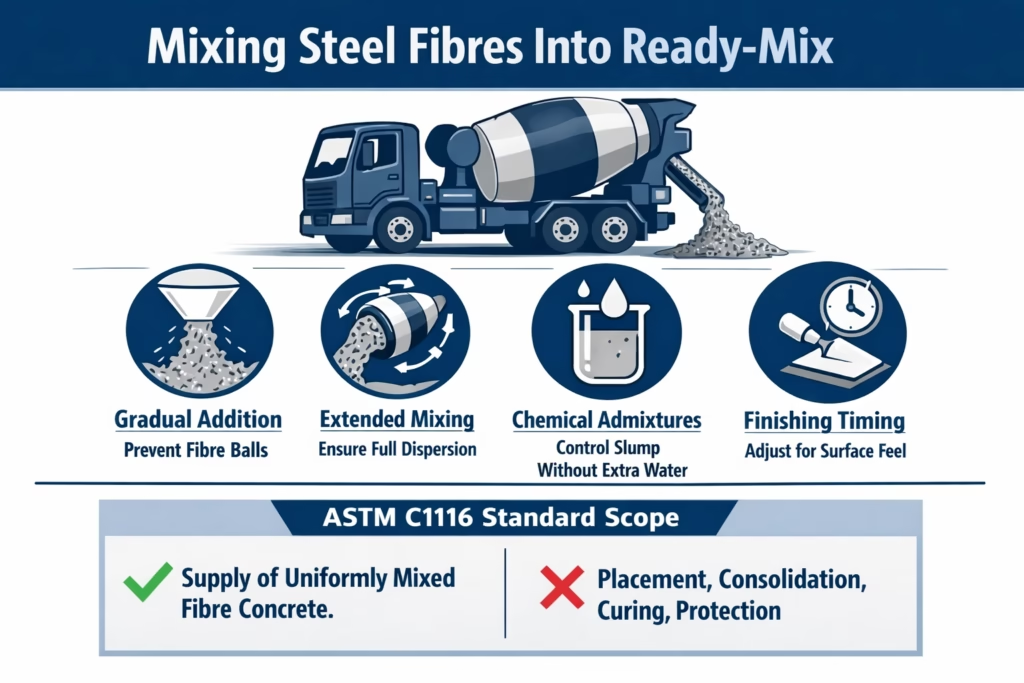
Steel fibre concrete succeeds when dispersion is controlled.
Practical steps that reduce problems:
- The crew adds fibres gradually, not in one dump.
- The driver mixes long enough for full dispersion.
- The plant controls slump with admixture, not extra water.
- The finisher adjusts timing because fibres can change surface feel.
ASTM C1116 also clarifies a key boundary. It covers supply of fibre concrete delivered uniformly mixed. It does not cover placement, consolidation, curing, or protection after delivery. That work stays with the contractor and spec.
Limits: when steel fibre does not replace rebar
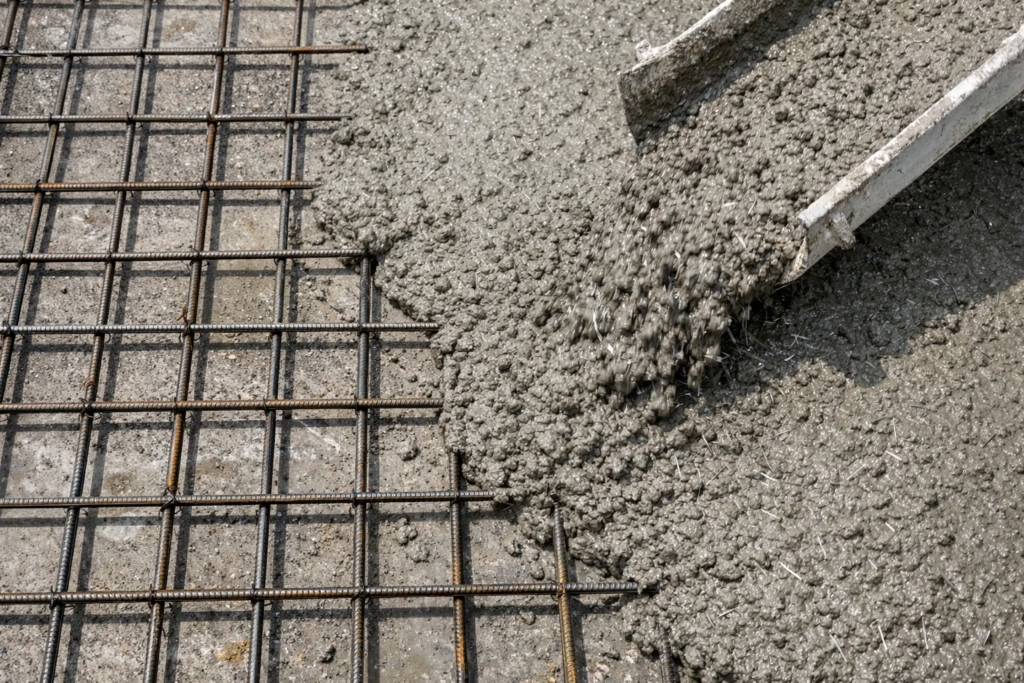
Steel fibre does not remove the need for structural design. It also does not replace rebar in most beams, columns, and suspended slabs.
ACI’s design guide preview states a conservative approach for structural members is to use reinforcing bars to support the total tensile loads. The guide also notes fibres can supplement and reduce the amount of conventional reinforcement in some cases.
So the decision should follow this logic:
- Use rebar when the element is structural and code-driven.
- Use steel fibre to control cracking and improve toughness.
- Use hybrid reinforcement when the project needs both benefits.
Standards and tests used for steel fibre concrete

Standards matter when you want reliable performance claims.
Supply and fibre type
- ASTM C1116 covers fibre-reinforced concrete supply, including Type I steel fibre-reinforced concrete.
Residual strength testing
- BS EN 14651 is commonly used for metallic fibre concrete to measure flexural tensile strength and residual values. The Concrete Society describes this test method and notes it uses a notched beam under a central line load.
This is the practical spec message:
- If you only specify “add steel fibre,” you may not get consistent results.
- If you specify residual strength targets with accepted tests, you control performance.
Expert guidance

Steel fibre works best when the purpose is clear.
A simple decision flow works:
- The owner defines the pain point. The pain point is often floor cracks, joint damage, plus repair cost.
- The engineer sets the performance target. The target can be crack control only, or post-crack residual capacity.
- The contractor matches fibre type and dosage to that target. The team verifies with trial pours or test data when needed.
Ecocretefiber™ | Shandong Jianbang Chemical Fiber Co., Ltd.
Ecocretefiber™ supports fibre reinforcement projects with general guidance first, then product matching. We help customers select a fibre type, set a dosage plan, then align the spec with the right standards and test methods. We also support quotation work plus distributor cooperation.
Related Products
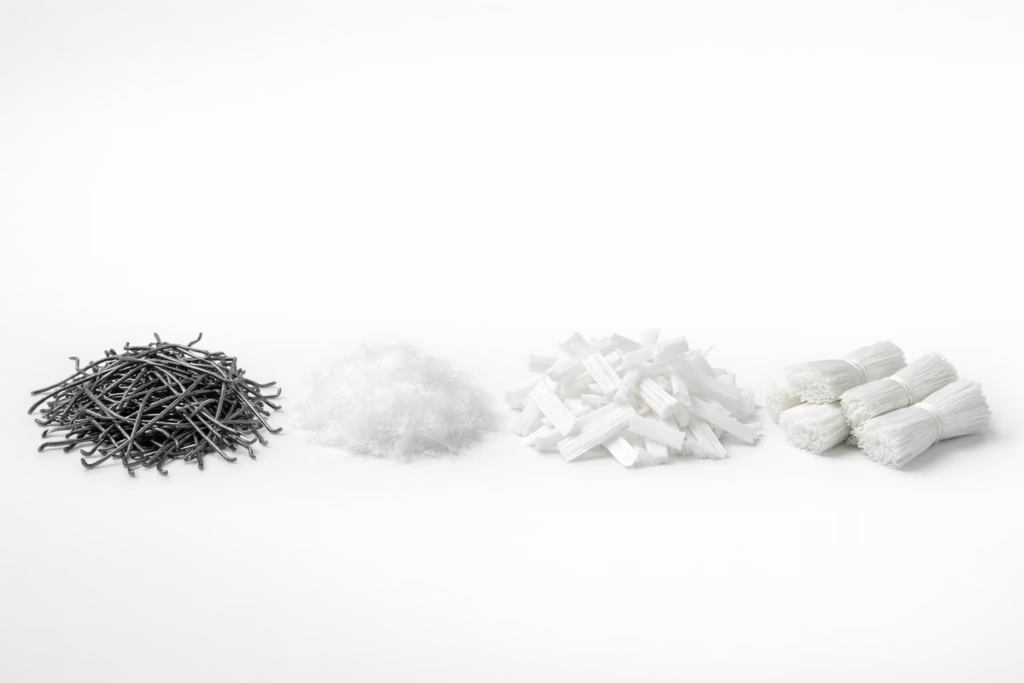
- Steel Fibre for Concrete (hooked end, straight, or deformed types)
- Polypropylene Microfiber (plastic shrinkage control)
- Polypropylene Macro-Synthetic Fiber (toughness for slabs)
- PVA Fiber (high-bond cement composites)
- AR Glass Fiber (GRC systems)
Conclusion
Steel fibre is used in concrete to control cracking and to add post-crack toughness. It is used most in industrial floors and pavements. It is also used in shotcrete, composite deck slabs, plus precast elements.
A good project treats steel fibre as a designed reinforcement system, not a generic additive. The team should link dosage to targets and verify performance with accepted standards such as ASTM C1116 for supply and EN 14651 for residual flexural testing where relevant.