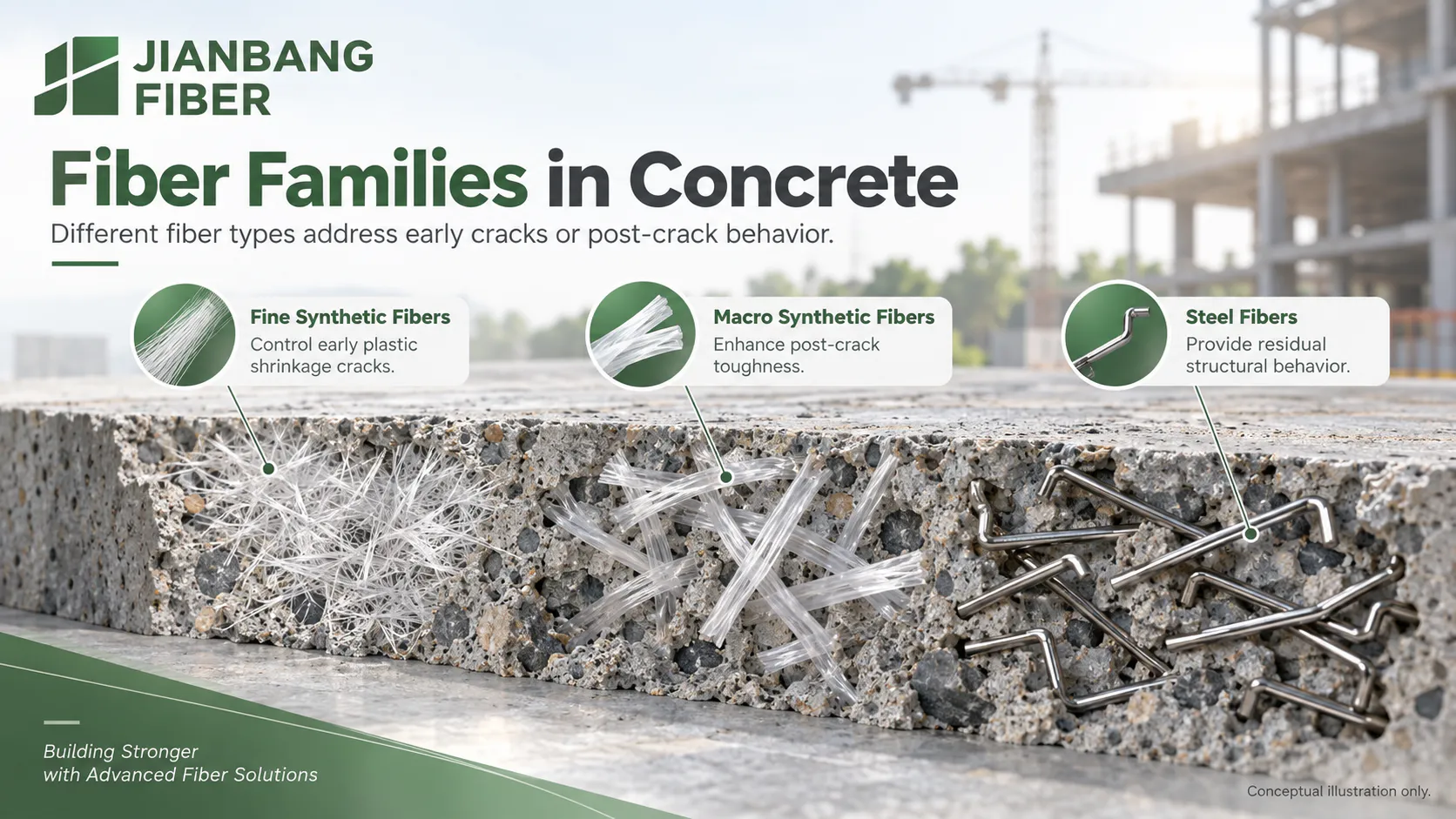
Concrete cracks because concrete is weak in tension. Shrinkage creates stress. Temperature change creates stress. Loads create stress. Fibers help because fibers bridge small cracks. Fibers also spread stress across the mix. This is the main purpose of adding fiber to concrete.
Fiber is not only one product. Fiber can be steel, glass, synthetic, or natural. ASTM classifies fiber-reinforced concrete by fiber type.
What is fiber-reinforced concrete (FRC)?

Fiber-reinforced concrete is concrete that contains short fibers mixed through the batch. ASTM C1116 describes it as fiber-reinforced concrete delivered to a purchaser with ingredients uniformly mixed.
Fibers work as “distributed reinforcement.” Rebar works as “placed reinforcement.” Fibers sit everywhere in the matrix. Rebar sits in specific tension zones. This difference explains why fibers are strong at crack control, while rebar is strong at structural tension capacity.
Purpose 1: Reduce early-age cracking

Early cracking can start in the first hours. Plastic shrinkage cracking can occur when the surface dries too fast. NRMCA’s guidance recommends considering synthetic fibers (ASTM C1116) to minimize plastic shrinkage cracking.
Fibers also help reduce plastic settlement cracking. NRMCA lists plastic settlement crack reduction as a key use.
Polypropylene micro-fibres are a common choice for this purpose. The Concrete Society explains that these fibers increase mix homogeneity, stabilize particle movement, and block bleed water channels. This slows bleeding and helps reduce plastic settlement. The same note states the filament network helps reduce plastic shrinkage cracking when the surface dries rapidly.
Purpose 2: Improve toughness after cracking
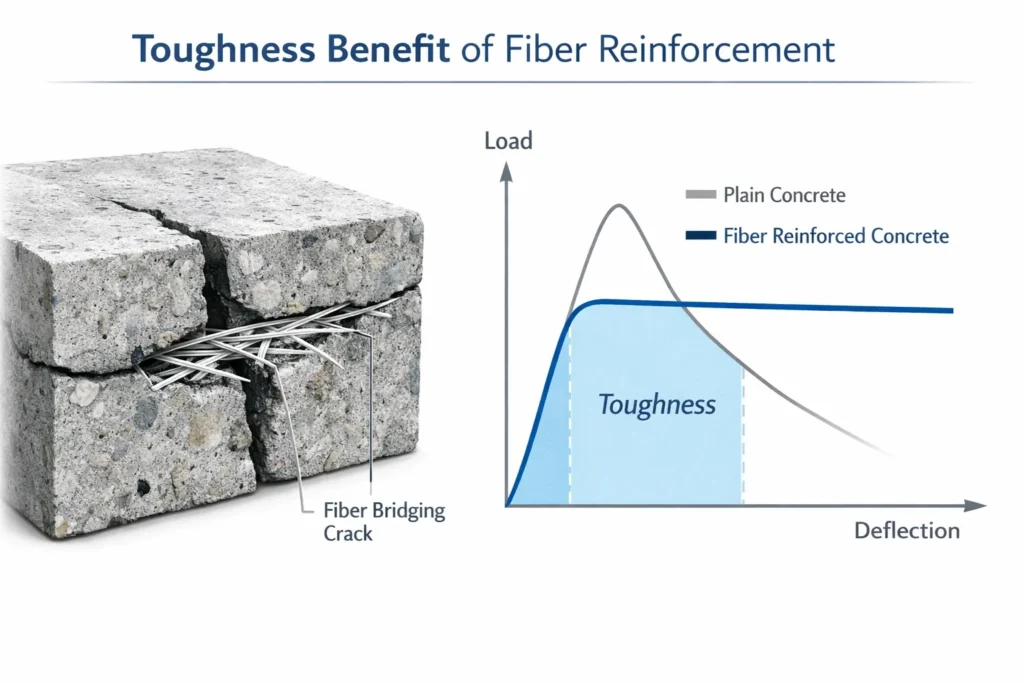
Plain concrete can lose performance quickly after cracking. Fiber concrete can keep carrying load after the first crack, depending on fiber type and dosage.
NRMCA lists “greater toughness and resistance to impact” as a core reason to use synthetic fibers.
NRMCA also explains that fibers bridge cracks and help hold concrete tightly together, with stronger benefits at higher dosages than typical microfiber dosages.
This purpose fits:
- industrial slabs with forklift traffic
- pavements and hardstands
- precast units that chip during handling
Purpose 3: Provide secondary shrinkage and temperature reinforcement in some slabs
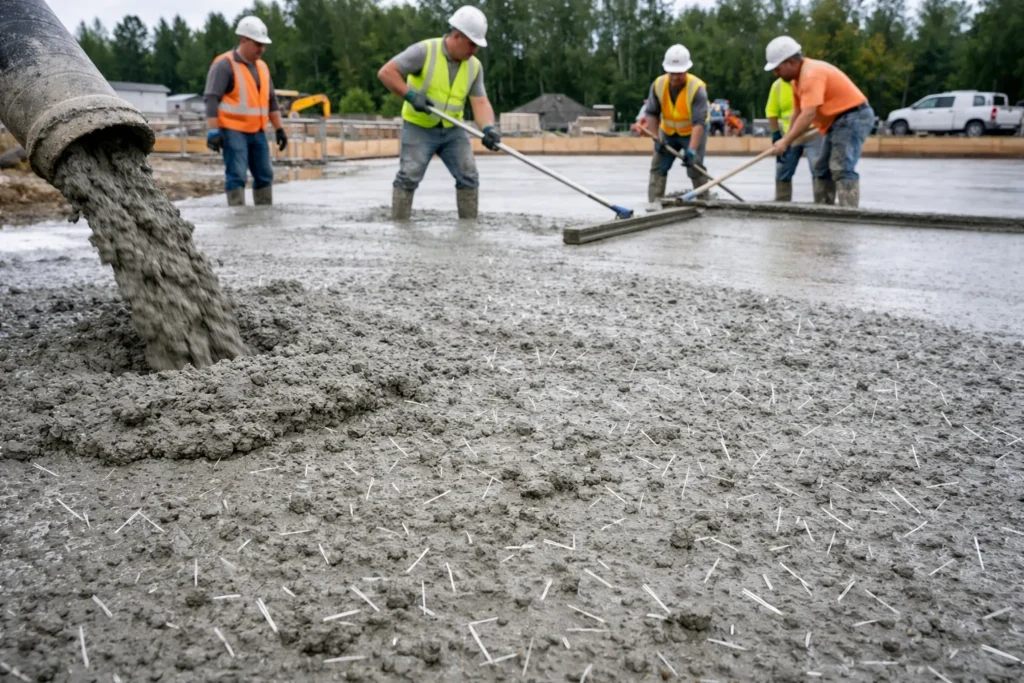
Some projects use fibers as an alternate system for nonstructural shrinkage or temperature reinforcement. NRMCA lists this use, with documentation, as a valid purpose.
NRMCA also states that synthetic fibers can serve as secondary reinforcement when the product meets hardened concrete criteria, supported by documentation such as ASTM C1609 residual flexural strength results.
This purpose is common in slabs-on-ground where the main risk is shrinkage cracking, not structural flexure capacity in suspended members.
Purpose 4: Improve placement stability in difficult pours
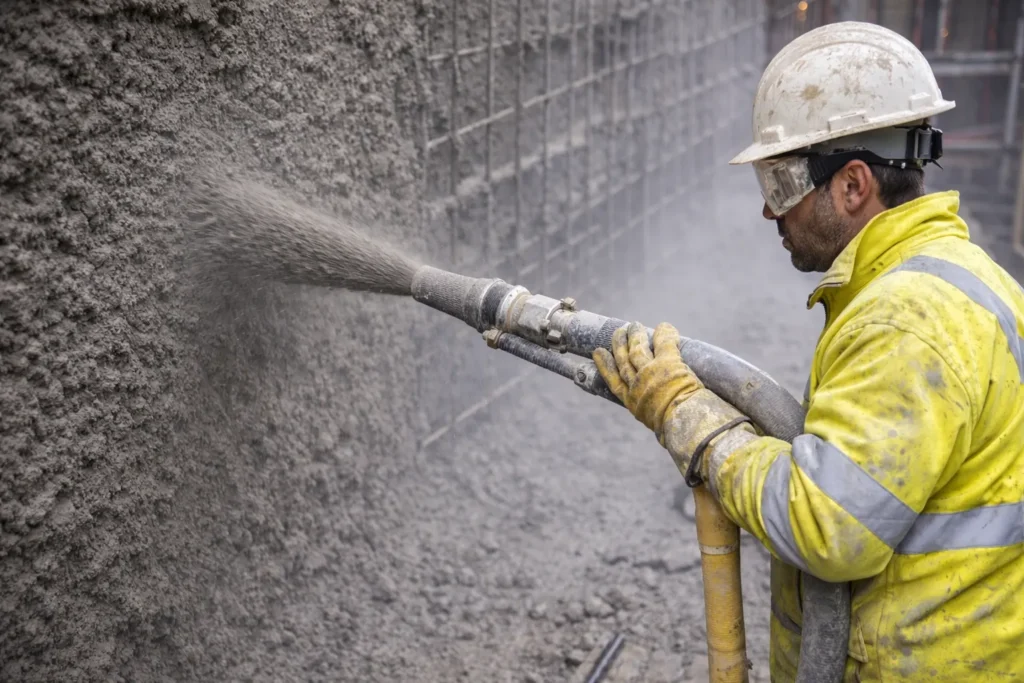
Fibers can improve internal support and cohesiveness in fresh concrete. NRMCA lists this as a key purpose, including concrete for steep inclines, shotcrete, and slip-formed placements.
This benefit is practical. Crews often see a mix that holds together better. This helps reduce sloughing in sprayed concrete. The Concrete Society also notes polypropylene fibers are used in sprayed concrete to improve initial properties and reduce sloughing and rebound.
Purpose 5: Improve durability and surface performance
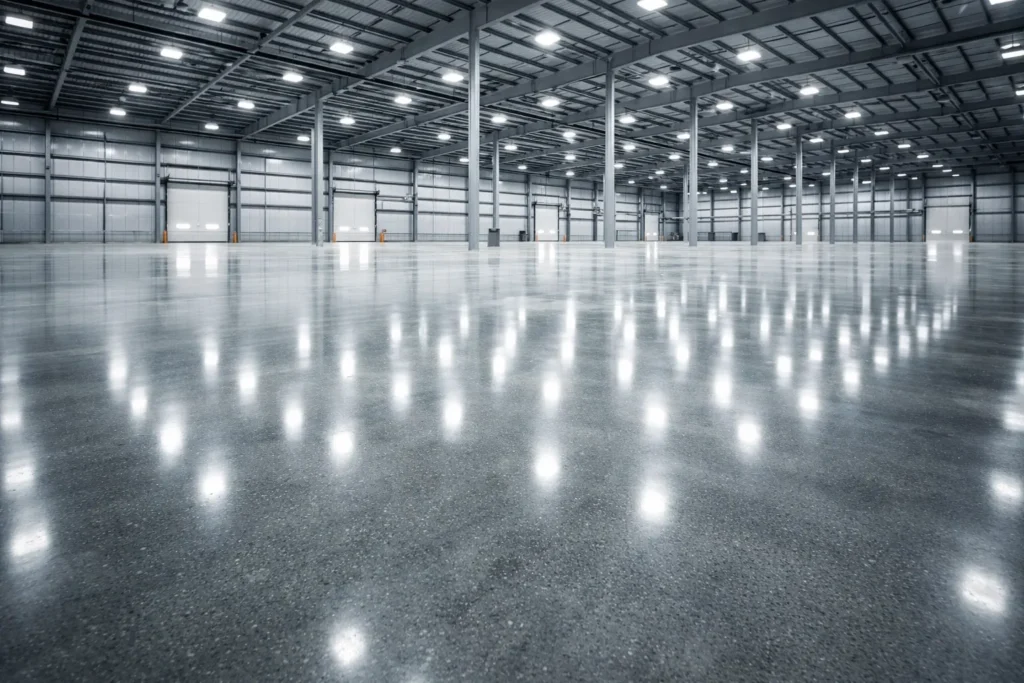
Crack control supports durability because crack width controls water entry. A tighter crack pattern can reduce pathways for fluids.
Fibers can also support surface quality. The Concrete Society notes polypropylene fibers reduce bleed and segregation, which helps maintain the original water/cement ratio of the surface mortar. It links this effect to improvements in the surface layer and higher abrasion resistance.
This purpose fits:
- warehouse floors
- ramps and loading bays
- slabs exposed to abrasion or frequent cleaning
Purpose 6: Reduce explosive spalling risk in fire for dense concrete

Dense concrete can spall in a fire. Moisture turns into vapor. Vapor pressure can build fast. Polypropylene fibers are widely used to reduce this risk in specific designs.
A peer-reviewed review explains a common mechanism: when fibers melt, pores form. Permeability increases. Vapor can escape. Vapor pressure drops. Spalling risk reduces.
This purpose is common in tunnel specifications and in high-performance mixes where fire exposure is part of the design basis.
What fibers should not be used for
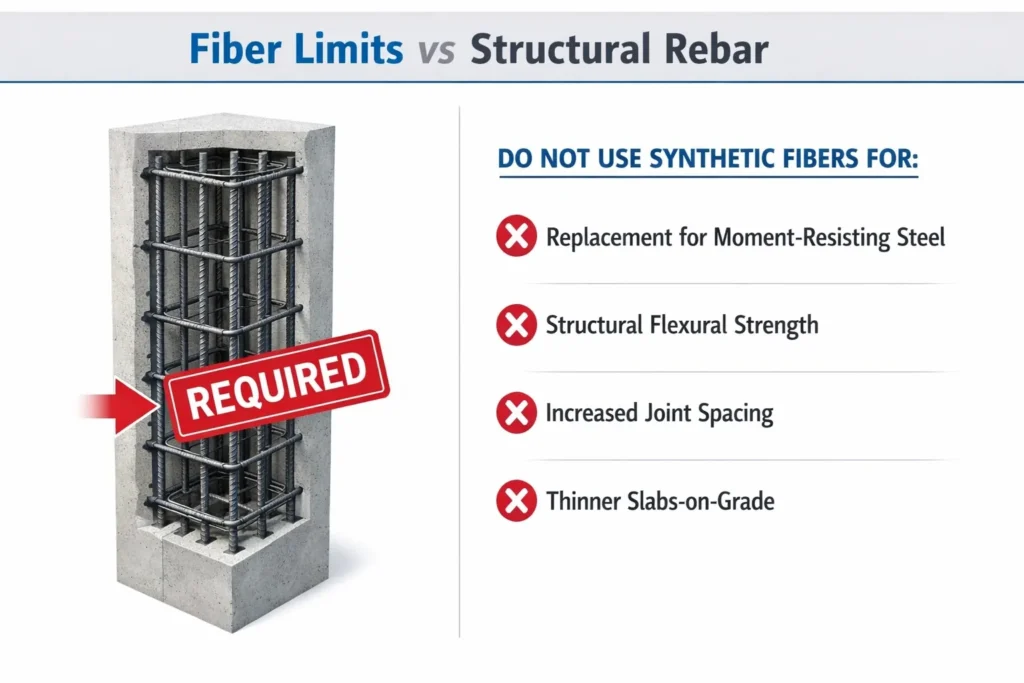
Fiber concrete is not a shortcut around structural design. NRMCA states synthetic fibers should not be used for replacement of moment-resisting or structural steel reinforcement. NRMCA also states fibers should not be used for higher structural compressive or flexural strength development.
Fibers also do not automatically allow:
- bigger joint spacing
- thinner slabs-on-grade
- reduced columns NRMCA lists these as “do not use” expectations.
How to choose the right fiber purpose and type

A simple decision starts with one question. What problem do you want to reduce?
If the problem is early surface cracking
Micro synthetic fibers are a common fit. ACI defines microsynthetic fibers as fibers below 0.3 mm diameter (or equivalent).
If the problem is toughness and post-crack performance
Macro synthetic fibers or steel fibers usually fit better. ACI defines macrosynthetic fibers as 0.3 mm or greater.
If the problem is fire spalling risk in dense concrete
Polypropylene microfibers are widely used in this role, especially in tunnels.
A buyer should also plan for workability control. The Concrete Society warns that fibers can reduce slump because fibers act like a thickening agent.
Standards that support specification and acceptance

If you need a clean purchase specification, start with ASTM C1116. ASTM states it covers fiber-reinforced concrete delivered with ingredients uniformly mixed. It also classifies fiber concrete by fiber type (steel, glass, synthetic, natural).
If your purpose is post-crack performance, you should specify performance targets, not only “add fiber.” NRMCA points to documentation using residual flexural strength testing such as ASTM C1609 for fibers used as secondary reinforcement.
Expert guidance
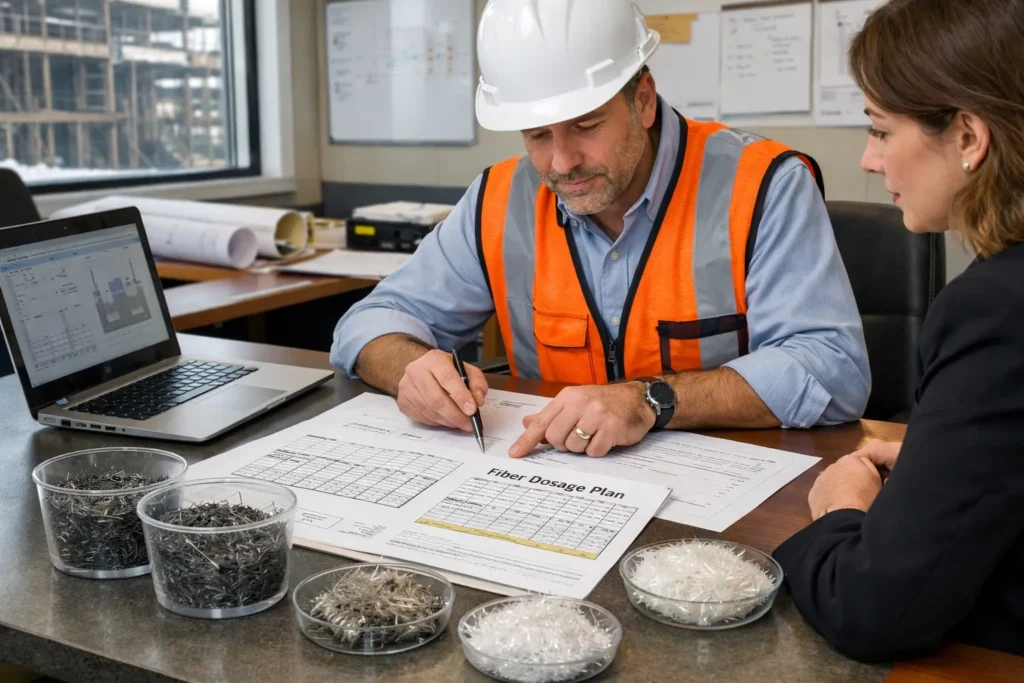
A fiber project succeeds when purpose and fiber type match.
A practical workflow works well:
- The owner defines the pain point: early cracks, joint damage, impact, fire risk.
- The engineer selects the role: crack control only, secondary reinforcement, post-crack capacity.
- The team chooses fiber type: micro vs macro, then sets dosage with supplier data plus trials. ACI provides typical dosage ranges by volume for micro and macro synthetic fibers.
- The contractor controls mixing and curing. Fibers reduce risk, but curing still controls shrinkage stress.
Ecocretefiber™ | Shandong Jianbang Chemical Fiber Co., Ltd.
Ecocretefiber™ supports this process with general guidance first, then product matching:
- micro fibers for plastic shrinkage and settlement crack control
- macro-synthetic fibers for toughness and post-crack control goals
- documentation support aligned with ASTM C1116 supply language, plus performance data where required
Related Products

- Polypropylene Microfiber (Monofilament / Fibrillated)
- Polypropylene Macro-Synthetic Fiber
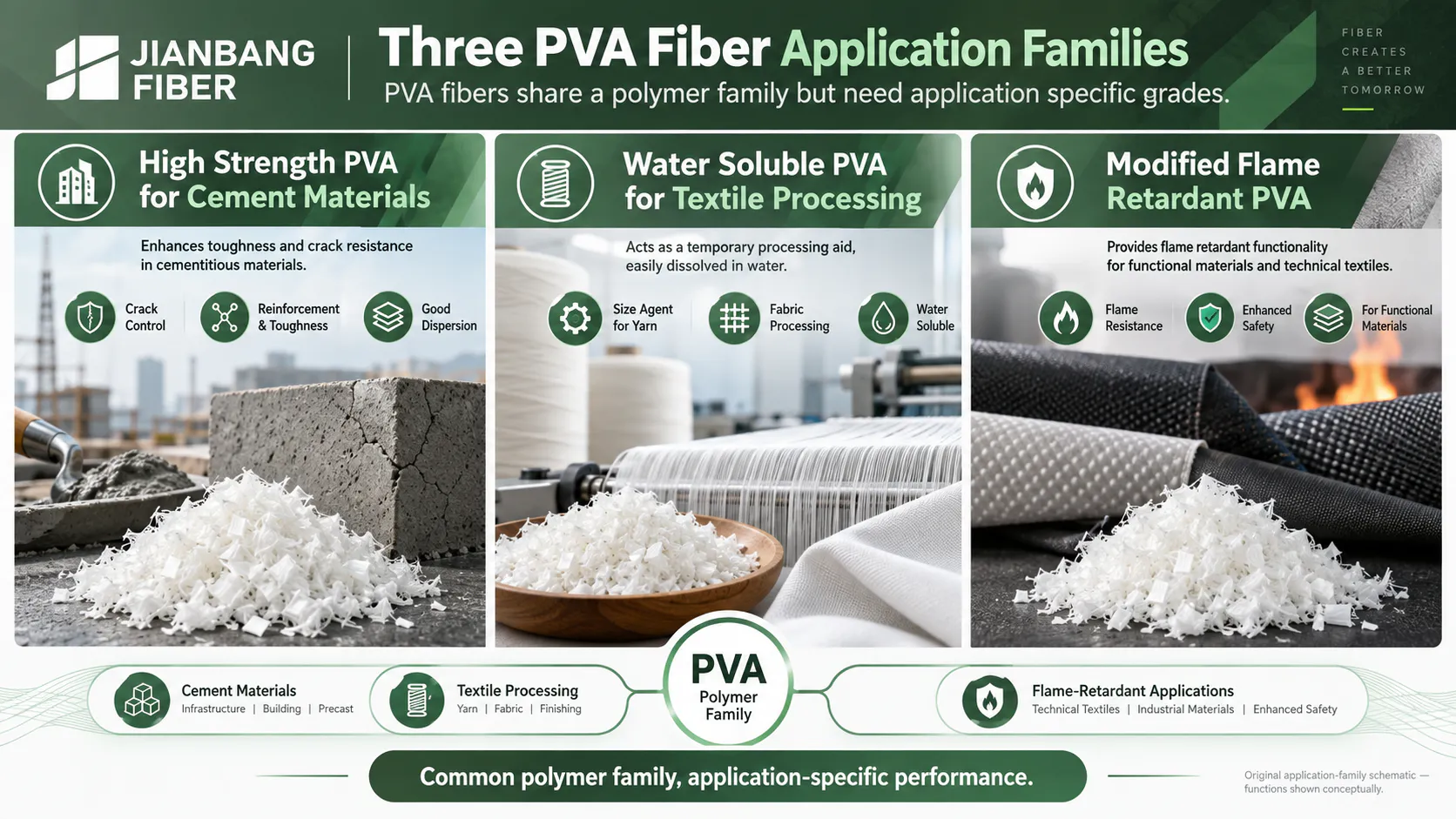
- PVA Fiber for Cement-Based Composites
- AR Glass Fiber for GRC Systems
Conclusion
The purpose of adding fiber to concrete is clear. Fibers control early cracking, especially plastic shrinkage plus plastic settlement.
Fibers improve toughness and impact resistance when the fiber type plus dosage target post-crack behavior.
Fibers can serve as secondary reinforcement in some slab applications when documentation supports performance.
In dense concrete exposed to fire, polypropylene fibers can reduce spalling risk by increasing permeability after melting.
A good specification starts with the purpose. A good result comes from correct fiber selection, controlled mixing, plus disciplined curing.