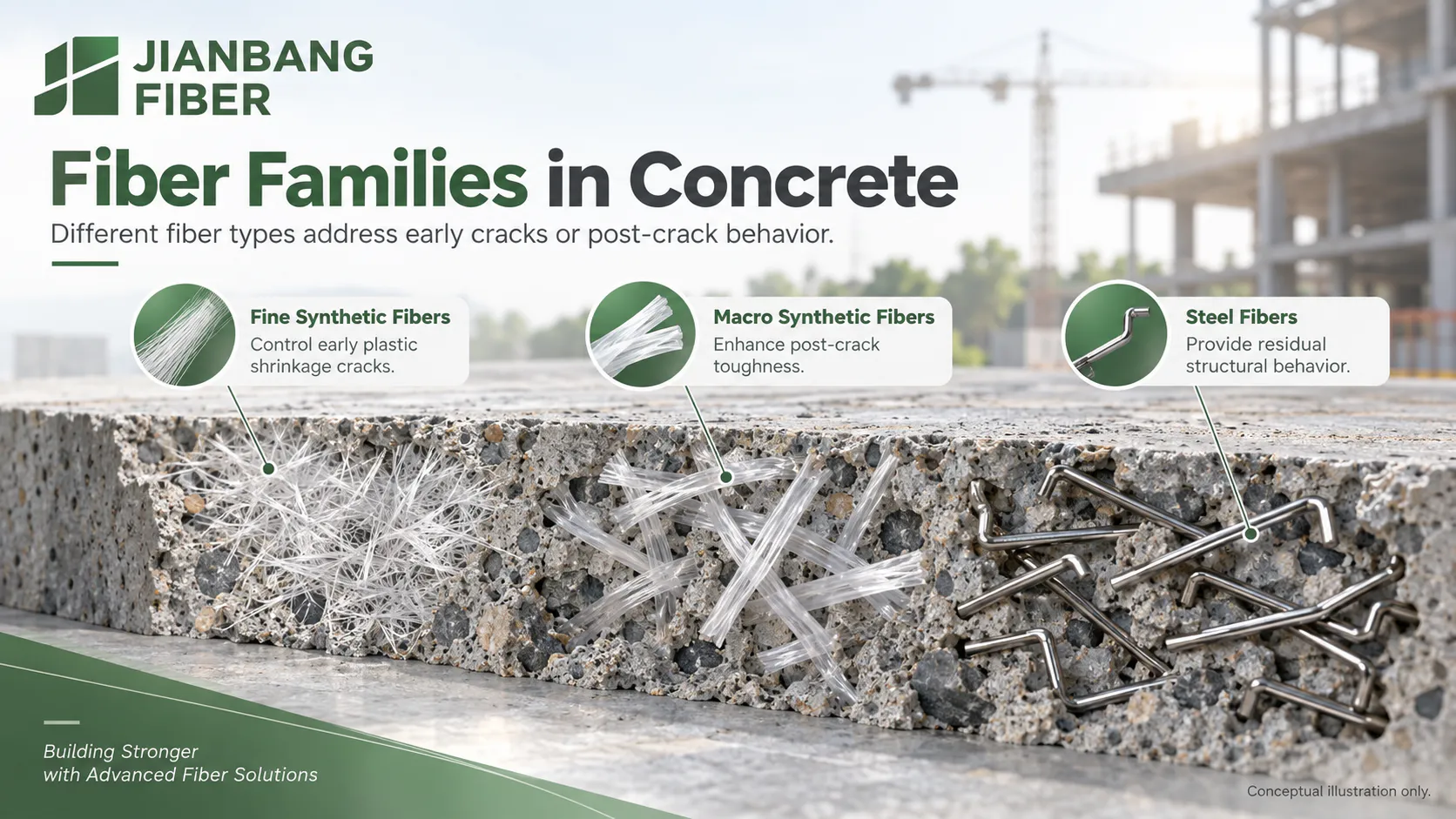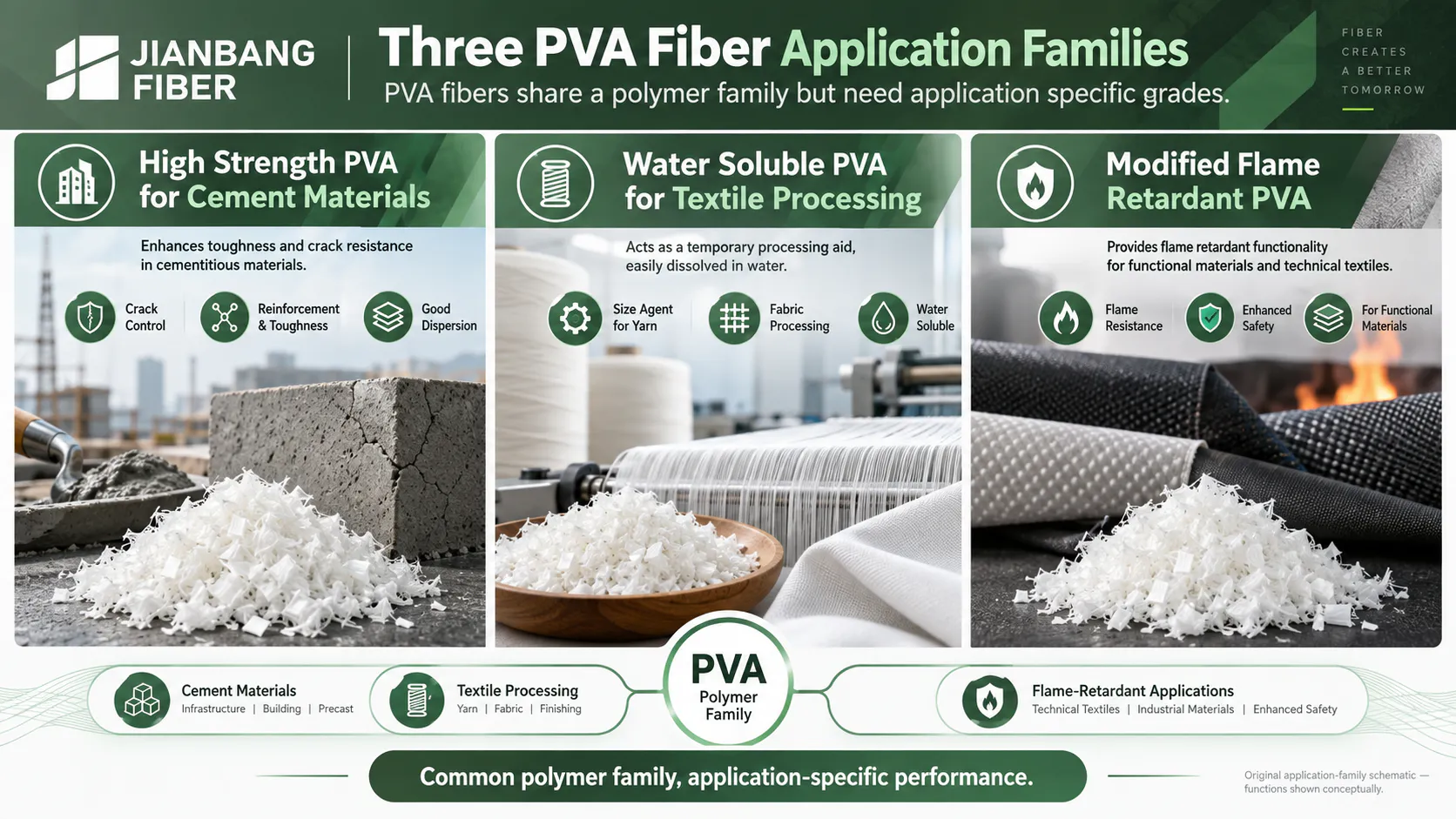
Micro fiber in concrete means very small, short fibers mixed throughout the concrete to improve its behavior, especially at the early stage. In current standards language, polymer micro fibres are typically defined as fibers with a diameter less than 0.30 mm. EN 14889-2 classifies them as Class I micro fibres, with Class Ia for monofilament fibers and Class Ib for fibrillated fibers. ACI’s fiber-reinforced shotcrete guide uses the same basic size line and defines microfibers as fibers with an equivalent diameter less than 0.3 mm.
In simple terms, micro fibers are not large structural fibers. They are fine, distributed fibers added to the mix to help control plastic shrinkage cracking, plastic settlement cracking, and fresh-concrete instability. In many practical concrete jobs, especially slabs and flatwork, that is their main value.
At Ecocretefiber™, the easiest way to explain micro fiber is this: it is usually an early-age crack-control fiber, not a primary structural reinforcement system. That distinction is important, because many buyers confuse micro fibers with macro synthetic fibers or steel fibers. The job of a micro fiber is usually to improve the concrete while it is still young and weak, not to replace rebar in a structural member.
What “Micro Fiber” Means in Concrete
The word “micro” is mainly about size. Under EN 14889-2, polymer fibers for concrete are split by physical form into micro fibres below 0.30 mm diameter and macro fibres above 0.30 mm. The same source notes that macro fibers are the class used where residual flexural strength is required, which already shows the practical difference between the two groups. Micro fibers are the smaller class; macro fibers are the heavier-duty class.
ACI’s shotcrete guide gives the same dividing line in a very practical way. It says microfibers are less than 0.012 in. or 0.3 mm in equivalent diameter, while macrofibers are 0.3 mm and above. It also says microfibers used in shotcrete are normally polyolefin-based, which is why polypropylene microfibers are so common in the market.
So when someone asks, “What is micro fiber in concrete?”, the most accurate short answer is: a very fine fiber, usually less than 0.3 mm in diameter, added to concrete mainly to control early cracking and improve fresh-concrete stability.
How Micro Fibers Work
Micro fibers work because they are spread uniformly through the concrete and create a small internal network during the early life of the mix. NRMCA explains that synthetic fibers inhibit the growth of micro shrinkage cracks by a mechanical blocking action, and that their internal support system inhibits the formation of plastic settlement cracks. The same document says the uniform distribution of fibers discourages the formation of large bleed-water capillary channels that can become weak points for later cracking.
NRMCA’s guidance on plastic shrinkage cracking adds an important point: when the concrete is still very weak, synthetic fiber reinforcement can help resist the tension that develops as the surface dries too quickly. That is why micro fibers are often discussed together with hot weather, wind, low humidity, fast evaporation, and slab work.
The Concrete Society explains the same mechanism from another angle. It says short polypropylene micro-fibres increase the homogeneity of the mix, stabilize the movement of solid particles, and block bleed-water channels. This reduces bleed capacity, slows bleed rate, and helps reduce plastic settlement. It also says the matrix of filaments helps reduce plastic shrinkage cracking when the surface dries rapidly.
The Most Common Types of Micro Fiber in Concrete
In real concrete work, the most common micro fibers are synthetic microfibers, especially polypropylene or other polymer-based products. NRMCA says synthetic fibers used in concrete are polymer-based materials such as polypropylene, nylon, or polyethylene and are designed to withstand the long-term alkaline environment of concrete.
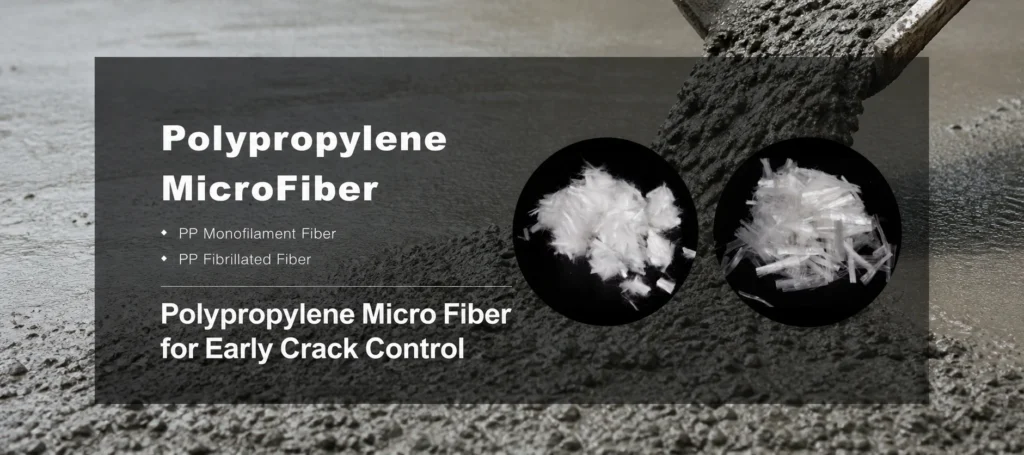
Under EN 14889-2, polymer micro fibres are divided into two physical subtypes. Class Ia are mono-filamented micro fibres, and Class Ib are fibrillated micro fibres. That matters because two products can both be called microfibers and still behave somewhat differently in mixing and crack control. Monofilament products are single-strand fibers; fibrillated products are net-like or film-split forms.
Glass can also appear in microfiber form. ACI 544.3R notes that dispersible alkali-resistant glass fibers quickly disperse into individual monofilaments in concrete, are considered microfibers, and are used mostly for plastic shrinkage crack control. That is useful because it shows “micro fiber” is not limited to polypropylene only, even if polypropylene is the most familiar example in the field.
What Micro Fibers Improve
The first and most important benefit is plastic shrinkage crack control. NRMCA lists reduced plastic shrinkage cracks as one of the main benefits of synthetic fibers, and the Concrete Society says polypropylene micro-fibres help reduce plastic shrinkage cracking when the surface dries too fast. ACI’s shotcrete guide also says microsynthetic fibers are added to minimize plastic shrinkage cracks.
The second major benefit is plastic settlement crack reduction. NRMCA says the internal support system of synthetic fibers inhibits plastic settlement cracks, and the Concrete Society says polypropylene micro-fibres reduce bleed and help reduce plastic settlement by stabilizing particles and blocking bleed channels.
The third benefit is better fresh-concrete cohesion. NRMCA lists internal support and cohesiveness among the application benefits of synthetic fibers, especially in concrete for steep inclines, shotcrete, and slip-formed placements. The Concrete Society similarly notes use in sprayed concrete to improve initial properties and reduce sloughing and rebound.
Micro fibers can also provide some secondary benefits beyond the first few hours of concrete life. The Concrete Society says polypropylene fibres may help with abrasion resistance at the surface, may help distribute impact stresses, and may provide some enhancement to frost resistance. NRMCA also lists increased toughness, impact resistance, and energy absorption as benefits of synthetic fibers generally, though it makes clear that higher dosages are needed when hardened-concrete crack control becomes the target.
Another important specialty use is fire-spalling mitigation, especially with polypropylene microfibers. ACI’s shotcrete guide says that if microfibers are used to mitigate explosive spalling in fires by melting and providing void space, they should be polypropylene with very fine diameters and short lengths. The Concrete Society also says polypropylene micro-fibres have been shown to reduce concrete spalling in fire.
What Micro Fibers Do Not Do
This is the part many buyers misunderstand. Micro fibers are not the same as macro fibers, and they are usually not intended to replace rebar or provide major post-crack structural load capacity. EN 14889-2 separates micro and macro fibers by the 0.30 mm size line, and explicitly links macro fibers to residual flexural strength roles.
The Concrete Society states this very clearly for polypropylene micro-fibres. It says they have a limited effect on the properties of hardened concrete and do not provide any significant post first crack ductility. It then warns that these short fibers must be distinguished from larger synthetic macro-fibres, which can provide some structural benefits similar to steel fibres depending on dosage.
NRMCA is equally direct. Its application guidance says synthetic fibers should not be used for control of cracking from external forces, should not be expected to raise structural compressive or flexural strength, and should not replace moment-resisting or structural steel reinforcement. That is a very useful rule for writing and for sales communication. If the fiber is being used as a typical microfiber, it is usually an early-age control fiber, not a structural bar substitute.
Typical Dosage and Practical Use
Typical microfiber dosage is fairly low compared with macrofiber systems. NRMCA says synthetic fibers are commonly used at about 1 to 2 lb/yd³, and it notes that at those rates the concrete mixture usually does not need to be modified, though higher addition rates can reduce workability and may require water reducers to retain slump.
The Concrete Society gives a very similar practical figure for short polypropylene micro-fibres and says they are typically added at about 0.9 kg/m³. That is useful because it confirms the common market picture: microfibers are generally low-dosage additives used to improve early-age performance, not high-dosage structural reinforcement systems.
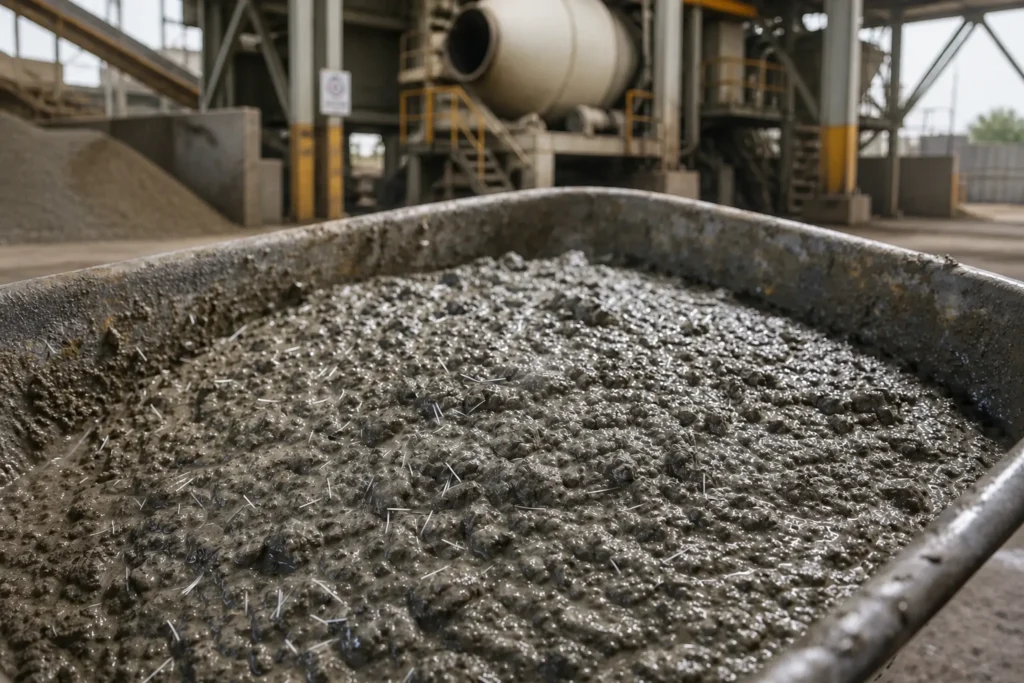
That same practical guidance also explains one common jobsite caution: fibers can reduce slump because they act as a thickening agent. So while micro fibers are usually easy to add, they still affect fresh-concrete behavior and should be treated as a real part of the mix design, not as an invisible extra.
Where Micro Fibers Are Commonly Used
Micro fibers are common in slabs, flatwork, residential concrete, toppings, and shotcrete, especially where the project wants fewer early surface cracks. NRMCA’s plastic-shrinkage guidance explains why this is so common in horizontal concrete: plastic shrinkage cracks form soon after placement when evaporation exceeds the rate at which bleed water can replace surface moisture. In those conditions, synthetic fibers help resist tension while the concrete is still weak.
They are also common in sprayed concrete. ACI says microsynthetic fibers are added in shotcrete to minimize plastic shrinkage cracks, and the Concrete Society says polypropylene micro-fibres are used in sprayed concrete to improve initial properties and reduce sloughing and rebound.
For a practical supplier explanation, that means micro fibers are most useful where the buyer wants better early-age crack control, better mix stability, and a small, simple reinforcement step added during batching. That is why micro PP fiber remains a standard product category in concrete supply. At Ecocretefiber™, this is the most practical way to position it: a fresh-concrete performance fiber first, not a structural replacement fiber.
Conclusion
Micro fiber in concrete means a very fine, short fiber—typically less than 0.30 mm in diameter—mixed throughout the concrete to improve performance, especially in the early stages. In most practical concrete work, micro fibers are used mainly to reduce plastic shrinkage cracking, reduce plastic settlement cracking, improve cohesion, and support better fresh-concrete stability. The most common examples are polypropylene and other synthetic microfibers, though some alkali-resistant glass products also fall into the microfiber category.
The most important distinction is this: micro fibers are usually not the same as macro fibers. Micro fibers are mainly early-age crack-control fibers. Macro fibers are the larger fibers used when residual strength and post-crack structural performance are needed. So the clearest answer to the title is simple: micro fiber in concrete is a fine distributed fiber used mainly to make young concrete crack less and behave better before and during early hardening. That is the definition that fits both the standards and the way the material is really used on site.