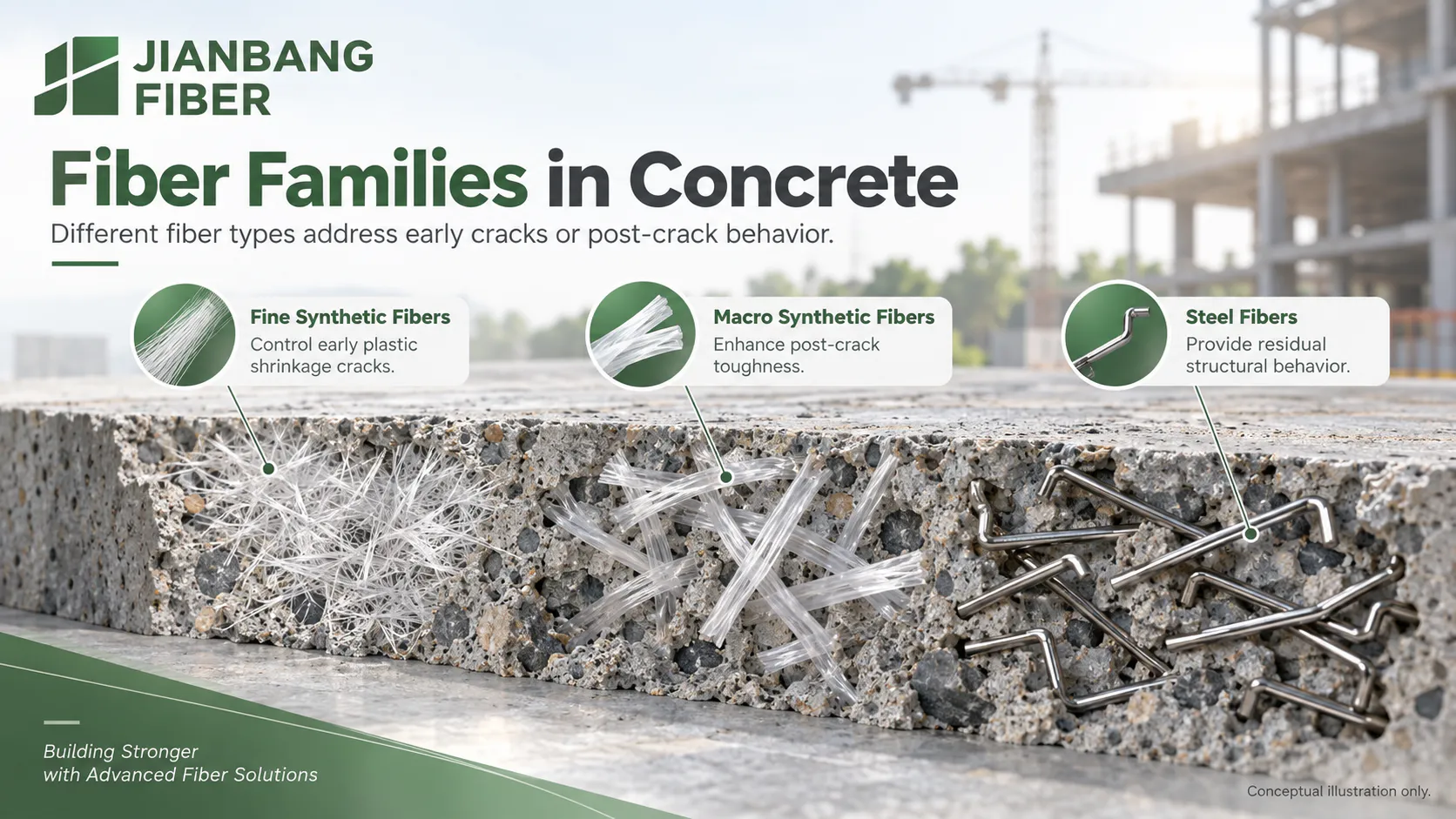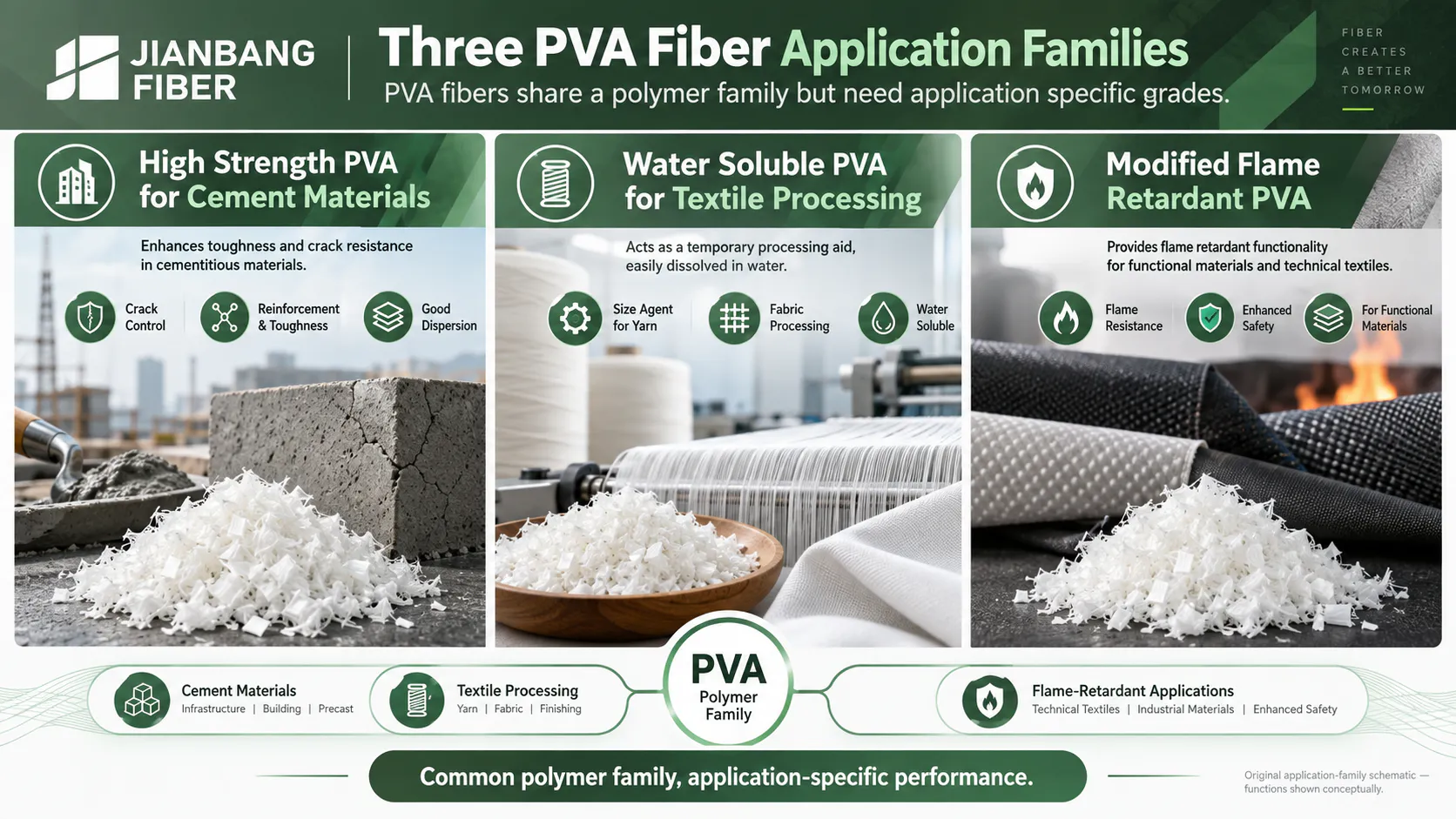
PVA fibers are polyvinyl alcohol fibers. They are synthetic fibers made for reinforcement. Many concrete and mortar systems use them because they bond well with cement. They also offer high tensile strength and high modulus compared with many common synthetic fibers.
In cement-based materials, PVA fibers help control cracking. They can also support ductility in high-ductility mixes such as engineered cementitious composites (ECC).
What are PVA fibers made of?
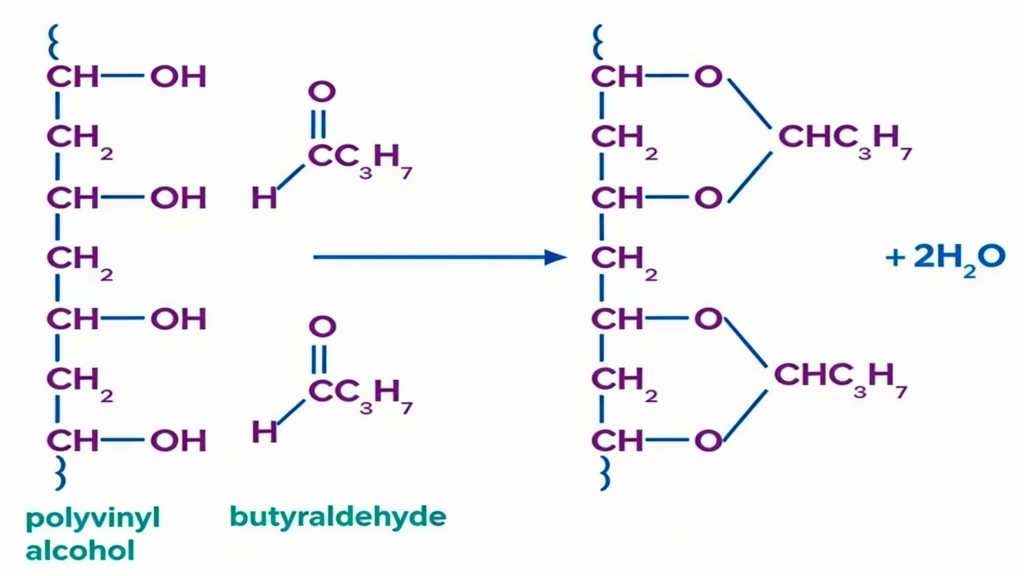
PVA fibers come from the polymer called polyvinyl alcohol. The fibers are produced as high-strength filaments, then cut into set lengths for industrial use. Many suppliers also offer special variants. Some variants are water-soluble for temporary functions. Some variants are flame-retardant for protective products.
In concrete terms, what matters is performance. ACI’s fiber property table lists typical PVA fiber ranges used in concrete materials. It reports a specific gravity around 1300 kg/m³. It reports tensile strength in the range of 900–1600 MPa. It reports a Young’s modulus of 23–40 GPa. It reports ultimate elongation around 7–8%.
These numbers explain why many designers treat PVA as a “high-bond” synthetic fiber option. The fiber can resist pullout. The fiber can also bridge small cracks without snapping early.
What do PVA fibers look like in real products?

Most PVA fibers for cement systems come as short chopped fibers. The fibers look like clean, white filaments. The product can be monofilament. The product can also be supplied in special forms for industrial processing.
A large producer, Kuraray, lists multiple PVA fiber variants. The company highlights high strength, high modulus, plus strong resistance to alkali and weather. The company also highlights strong adhesion to rubber and cement. The same page notes water-soluble PVA fiber variants that dissolve at different temperatures.
This matters for buyers because “PVA fiber” is not one single SKU. A buyer should match fiber type to the job. A buyer should also match fiber length to aggregate size and placement method.
Why do PVA fibers bond so well with cement?

PVA fibers are widely described as having strong adhesion to cementitious matrices.
That bond is a core reason they are used in high-ductility cement composites.
In simple terms, a strong bond changes crack behavior. The fiber bridges a crack. The fiber resists pullout. The crack width stays smaller. The material can form many fine cracks instead of one wide crack.
Research on ECC often contrasts fiber “bond style.” One study describes a hybrid approach that uses hydrophilic PVA fiber with hydrophobic polypropylene fiber, where PVA improves strength and reduces crack width.
This is a practical takeaway. If the project needs tight crack widths, PVA is often on the shortlist.
What do PVA fibers do inside concrete and mortar?
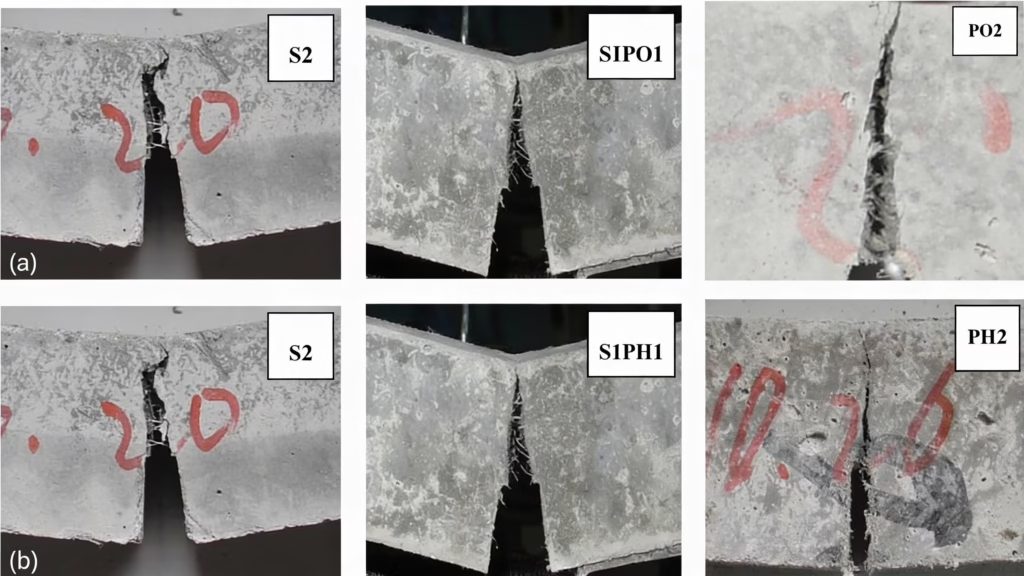
PVA fibers act as distributed reinforcement. The fiber network spreads through the mix. When micro-cracks start, fibers bridge those cracks. This reduces crack growth. It also increases toughness.
This effect becomes more visible in engineered cementitious composites (ECC). A review in Sustainability describes PVA-ECC as gaining attention because of high toughness and narrow cracks.
A large experimental study on ECC mixes with PVA fibers reports that tensile and flexural strengths can improve with PVA fiber addition. It reports performance outcomes across 1%–2% fiber volume fractions.
You do not need ECC to benefit from PVA fibers. Many repair mortars use PVA for crack control. Many thin cement toppings use PVA for the same reason. The fiber helps because thin sections crack easily.
Where are PVA fibers used?

PVA fibers show up in construction when a project needs better crack control and better toughness.
Common construction use cases include:
- ECC and high-ductility cement composites for overlays, repair layers, plus crack-resistant panels
- UHPC-related mixes in some proprietary systems, where fibers support tensile behavior and crack control (mix design depends on the system)
- Construction materials beyond concrete, such as geogrids and anti-spalling nets listed by Kuraray in its construction materials category
PVA fiber is also used outside construction. Kuraray lists ropes, sewing thread, plus other industrial materials.
That broader use matters because it supports stable industrial supply chains.
What is a typical dosage for PVA fibers in cement mixes?
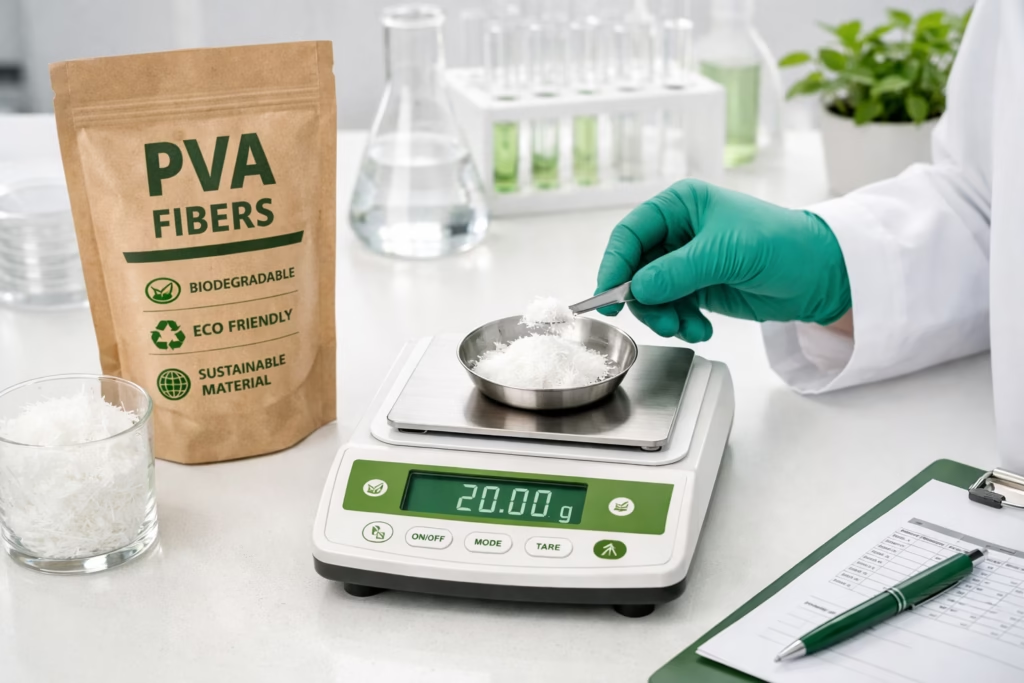
Dosage depends on the goal. Dosage also depends on fiber size and the base mix.
For ECC-style performance, many studies use about 1% to 2% by volume of PVA fibers. A 2023 ECC experimental program tested 1%, 1.5%, plus 2% PVA by volume fraction. It reported that strength and performance changed across those fiber levels.
For repair mortar or crack-control mortar, dosages can be lower. Supplier recommendations vary by fiber geometry and by target crack control level. A buyer should treat dosage as a performance parameter, not as a fixed rule.
A practical buying approach works well:
- Use the supplier’s recommended start range.
- Run a small trial batch.
- Check workability, fiber dispersion, plus finish quality.
- Adjust dosage based on crack control target.
What are the limits of PVA fibers?

PVA fibers improve crack control and toughness. PVA fibers do not remove the need for structural design. Many structural members still need rebar. Many code pathways still rely on conventional reinforcement for primary tensile capacity.
PVA fibers can also change workability. The mix can feel “sticky” at higher fiber volumes. The risk of fiber balling rises when the mixing method is weak. The risk also rises when the mix has low paste volume or poor dispersion energy.
Cost is another limit. PVA fibers are not the cheapest synthetic fiber option. A buyer should use them when the value is clear. Crack width control is a strong value driver. High durability overlays are another driver.
ACI’s fiber property table also signals why PVA often costs more. The fibers sit in a higher performance band for tensile strength and modulus compared with many common synthetics.
How to choose a PVA fiber for your project
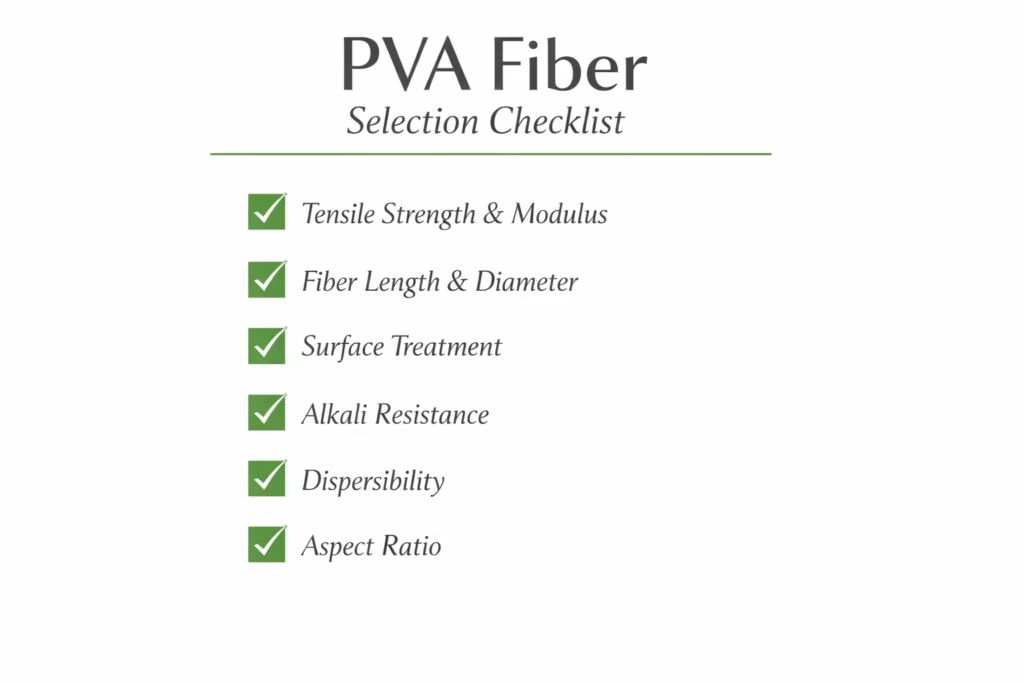
A buyer should choose PVA fiber based on a short checklist.
1) Pick the right geometry
Fiber length must fit aggregate size and placement method. Pumped mixes often need different geometry than hand-applied repair mortars.
2) Confirm core mechanical properties
ACI reports typical PVA fiber tensile strength of 900–1600 MPa, plus modulus of 23–40 GPa for fibers used in concrete materials.
A buyer should request a data sheet that matches the target performance.
3) Confirm alkali resistance and cement adhesion
Kuraray highlights alkali resistance and strong adhesion to cement as key characteristics.
This matters for long service life.
4) Align fiber choice with crack-width target
Research on ECC highlights that PVA fibers help keep crack widths narrow in ductile cement composites.
5) Verify with a trial mix
A trial mix is cheaper than a failed pour. This step protects finish quality and productivity.
Expert guidance

Most PVA fiber projects succeed when the team sets a clear goal. Crack width control is the most common goal. Toughness upgrade is another goal. The team then selects fiber geometry. The team then chooses dosage.
A practical support package should include:
- fiber type matching for mortar, concrete, or ECC-style mixes
- dosage start points tied to target crack behavior
- mixing steps that avoid fiber balling
- finishing guidance for smooth surfaces
- documentation support for procurement and distribution
Ecocretefiber™ is the fiber brand of Shandong Jianbang Chemical Fiber Co., Ltd.. We support general selection guidance first. We then match a PVA fiber option to your mix method, crack target, plus cost target. We also support quotation work plus distributor cooperation.
Related Products

- PVA Fiber (high-bond synthetic fiber for cement composites)
- Polypropylene Microfiber (plastic shrinkage crack control)
- Polypropylene Macro-Synthetic Fiber (toughness for slabs)
- Alkali-Resistant Glass Fiber (GRC applications)
- Steel Fiber (industrial floors, shotcrete support)
Conclusion
PVA fibers are polyvinyl alcohol fibers used for reinforcement. They stand out because they combine high tensile strength with high modulus, plus strong bonding to cement.
This bond supports crack bridging. It supports tight crack widths in ductile cement composites such as PVA-ECC.
If your project needs crack width control that stays stable over time, PVA fibers are a practical upgrade worth considering.