Why Steel Fiber Specifications Matter
Steel fiber reinforced concrete is widely used in industrial floors, bridge decks, tunnels, pavements, precast elements, hydraulic structures, and heavy-duty concrete slabs. But not every steel fiber works the same way.
The shape, production method, length, diameter, tensile strength, and surface condition of steel fiber all affect concrete performance. A steel fiber that works well in a thick industrial floor may not be suitable for a thin precast panel. A fiber that gives strong crack bridging may create mixing problems if the dosage and geometry are not controlled.
Shandong Jianbang Fiber finds out that many buyers only ask for “steel fiber” without checking the detailed specifications. This can lead to wrong product selection. Steel fiber is not one single product. It is a full category of concrete reinforcement materials.
At Shandong Jianbang Chemical Fiber Co., Ltd., our Ecocretefiber™ brand supplies steel fiber and other concrete fiber solutions for global infrastructure projects. We help customers select steel fiber based on project load, concrete thickness, crack control target, mixing method, and durability requirement.
This guide explains the main steel fiber specifications and how to choose the right type for different concrete applications.
Main Ways To Classify Steel Fiber
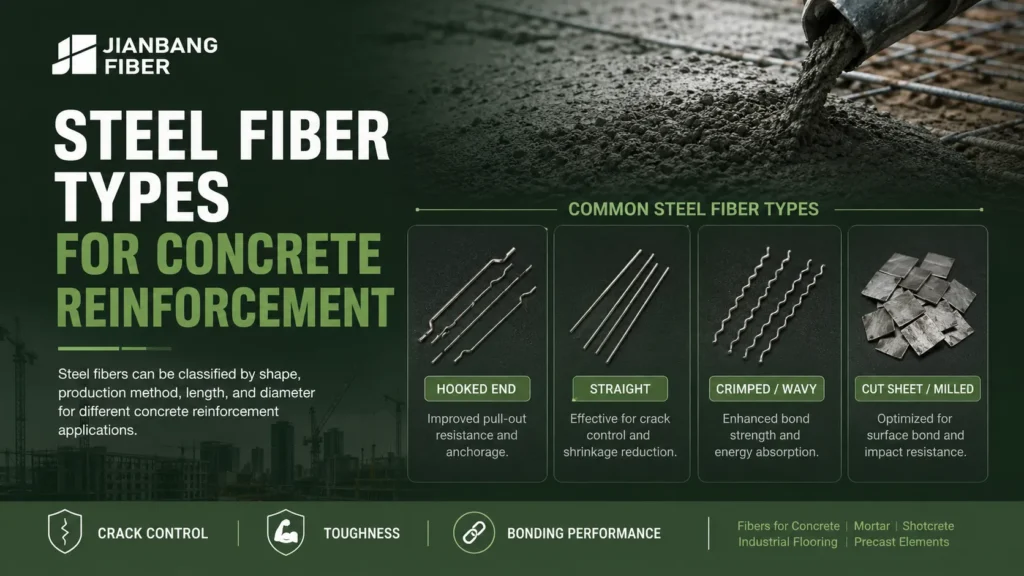
Steel fiber can be classified in several ways. The most common methods are shape, production process, length, and diameter.
Shape affects anchorage and pull-out resistance.
Production process affects fiber strength, surface roughness, dimensional control, and cost.
Length affects crack bridging and workability.
Diameter affects surface area, bonding, dispersion, and balling risk.
Shandong Jianbang Fiber finds out that a good steel fiber selection should never rely on one factor alone. A long fiber may improve bridging, but it may also reduce workability. A fine fiber may bond well, but it may clump during mixing. A hooked fiber may provide strong anchorage, but the concrete mix must be designed to disperse it evenly.
The best steel fiber is the one that fits the project.
Straight Steel Fiber
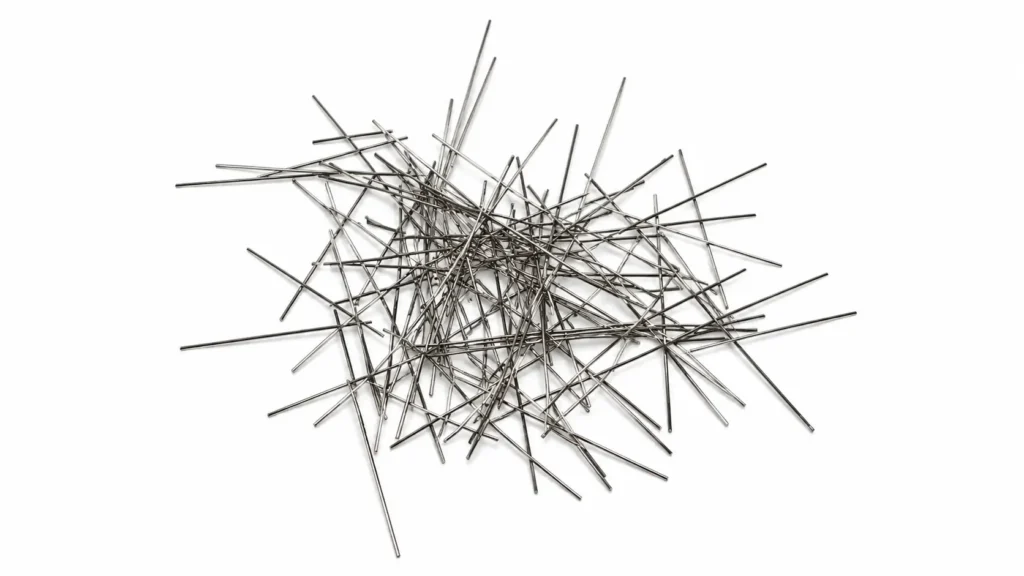
Straight steel fiber is the most basic shape. It has a simple structure and is relatively easy to produce. It mainly works through mechanical bonding with the concrete matrix.
Because it has no special end hook, wave, or indentation, its pull-out resistance is usually lower than deformed steel fibers. But it can still be useful in some ordinary concrete reinforcement applications where high anchorage is not required.
Shandong Jianbang Fiber finds out that straight steel fiber can be used in general floor hardening, small slabs, and concrete projects where the main goal is moderate crack control rather than high residual strength.
Its advantage is simplicity. It can be easier to produce and may be cost-effective for basic applications.
Its limitation is also clear. For structures that need strong post-crack performance, heavy load capacity, or high toughness, deformed fibers such as hooked end, indented, or crimped fibers may be better.
Indented Steel Fiber
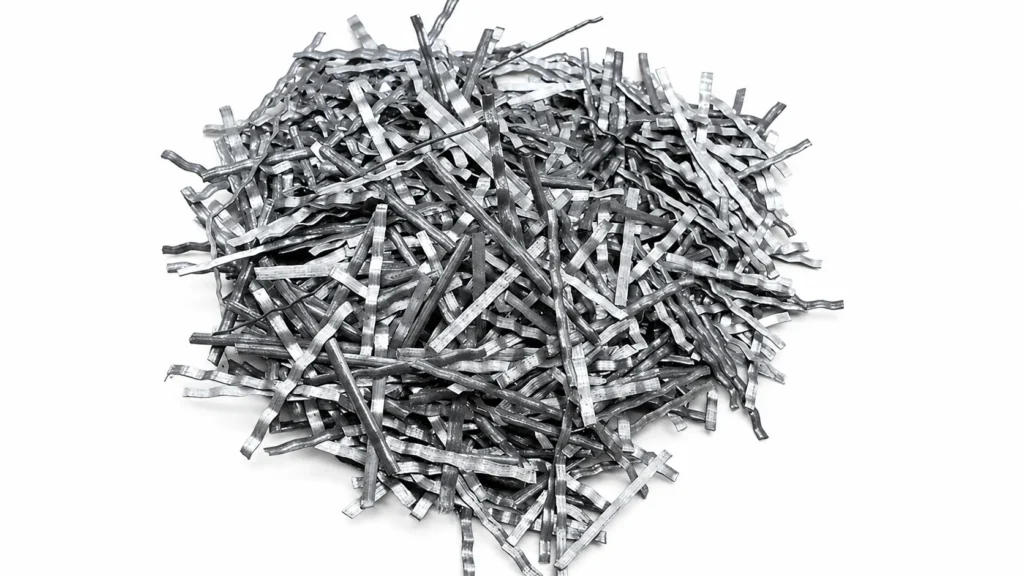
Indented steel fiber has dents or surface marks. These dents increase mechanical interlock with the concrete matrix. When concrete is pulled or bent, the indentations help prevent the fiber from being pulled out too easily.
This improves tensile behavior and toughness. The fiber can hold the cracked concrete together more effectively than a smooth straight fiber.
Shandong Jianbang Fiber finds out that indented steel fiber is suitable for concrete elements that need better tensile performance. These may include small beams, slabs, panels, and concrete components that need improved crack resistance.
The key value of indented steel fiber is its improved bonding surface. It does not rely only on smooth surface friction. It creates more mechanical grip.
For buyers, indented steel fiber is a good option when the project needs better bonding than straight fiber, but the application does not require the strongest hooked anchorage.
Crimped Or Wavy Steel Fiber
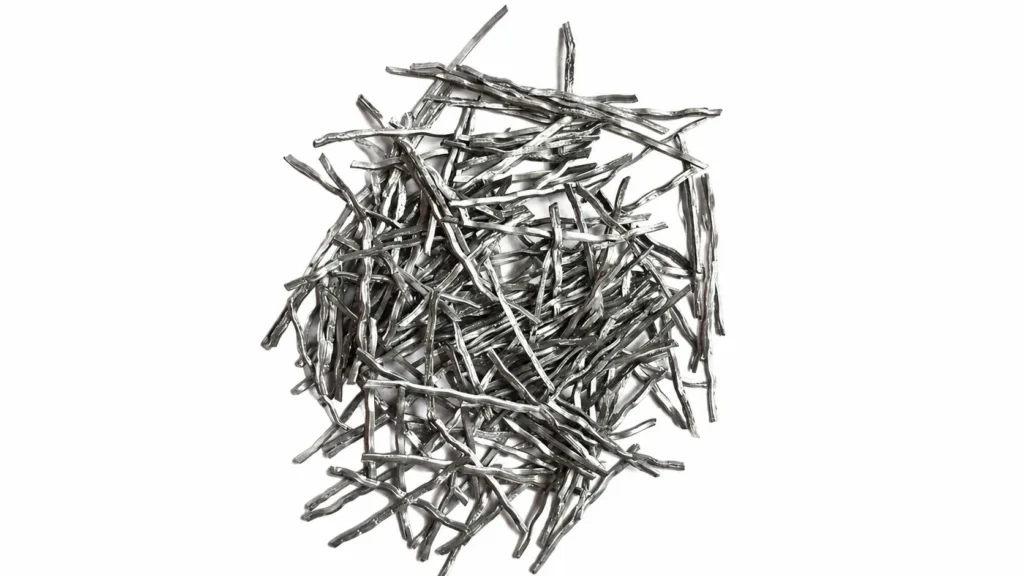
Crimped steel fiber has a wave-like shape. This wave increases anchorage inside the concrete. It also improves stress transfer between concrete and fiber.
When concrete cracks, the wavy steel fiber resists pull-out through its shape. It can improve flexural and shear performance. It can also increase energy absorption after cracking.
Shandong Jianbang Fiber finds out that crimped steel fiber is suitable for concrete structures with higher flexural or shear requirements. Road pavements, bridge decks, slabs, and other bending-sensitive concrete applications can benefit from this fiber type.
Its advantage is better anchorage than straight fiber. It can transfer stress more effectively. It can also help control crack growth.
Its limitation is that workability must be checked. If the fiber is too long or the dosage is too high, mixing and finishing may become more difficult.
Hooked End Steel Fiber
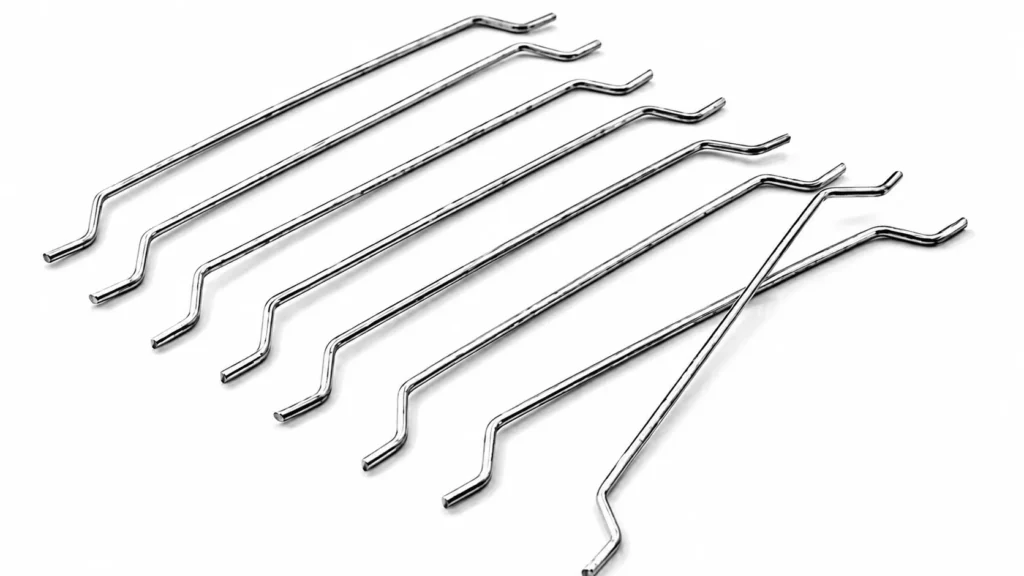
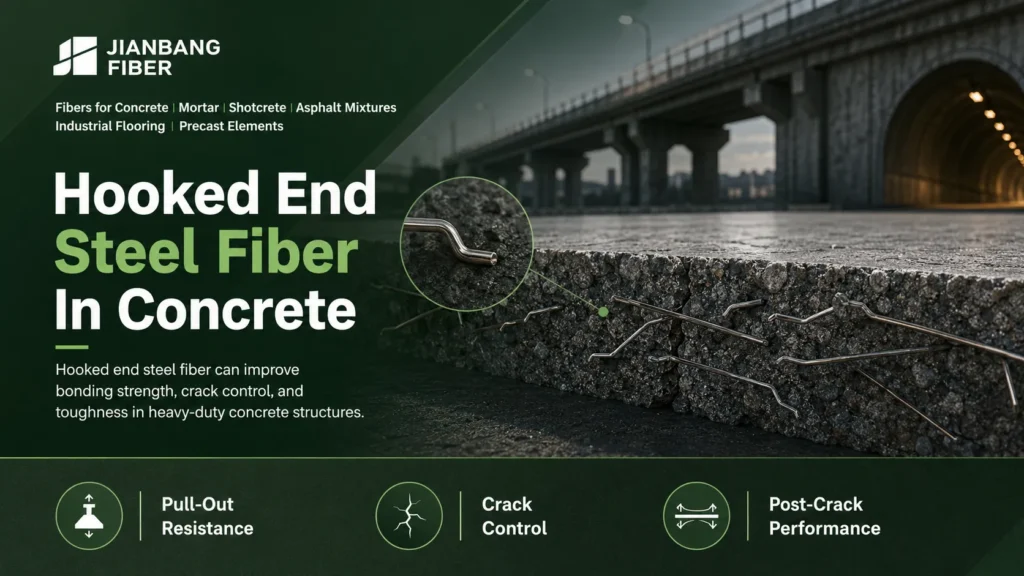
Hooked end steel fiber is one of the most widely used steel fiber types. Its key feature is the hook at the fiber end. The hook works like an anchor inside the concrete.
When a crack opens, the hooked end resists pull-out. This creates strong bonding and good post-crack performance.
Shandong Jianbang Fiber finds out that hooked end steel fiber is suitable for heavy-duty concrete applications. These include industrial floors, bridge decks, tunnel linings, shotcrete, high-rise building foundations, and large hydraulic concrete structures.
The main advantage is high pull-out resistance. The fiber does not slip out easily. This helps improve toughness, residual strength, and crack control.
The main construction requirement is good dispersion. Hooked end fiber can clump if it is added too fast or if the concrete mix is too dry. The mixing process must be controlled.
For many infrastructure projects, hooked end steel fiber offers one of the best balances between anchorage, performance, and availability.
Dumbbell-Shaped Steel Fiber
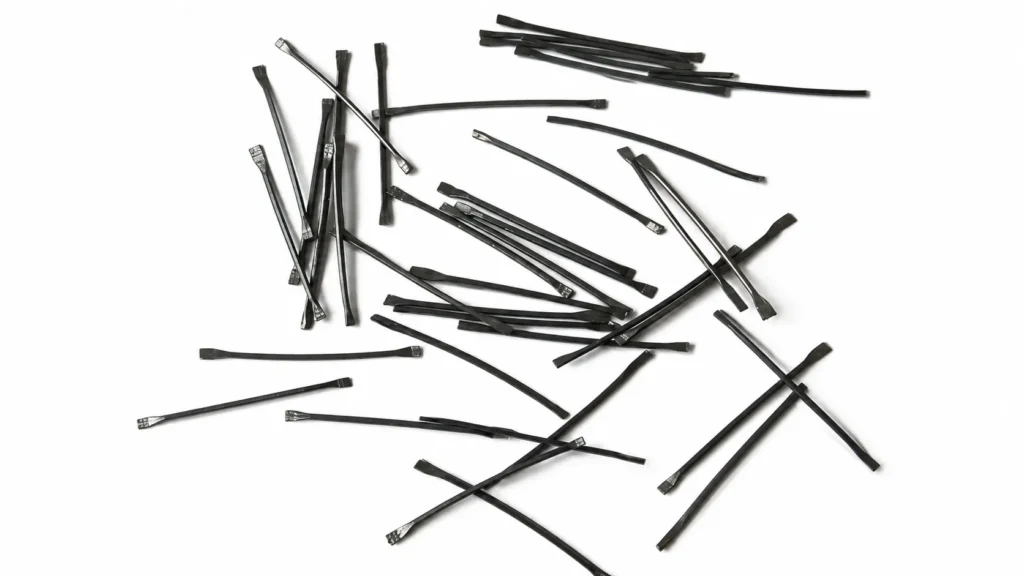
Dumbbell-shaped steel fiber has a thinner middle section and thicker ends. This shape helps distribute stress and improve anchorage at the fiber ends.
The thicker ends create better bonding with the concrete matrix. The thinner middle can help the fiber deform and distribute stress.
Shandong Jianbang Fiber finds out that dumbbell-shaped steel fiber can be useful in special engineering structures. These include marine concrete, complex stress structures, and projects where the concrete must resist multiple load directions and environmental pressure.
This fiber type may be selected when the project needs both stress distribution and strong end anchorage.
However, it may not be necessary for every project. Buyers should compare cost, availability, performance data, and mixing behavior before selection.
Cold-Drawn Wire Cut Steel Fiber
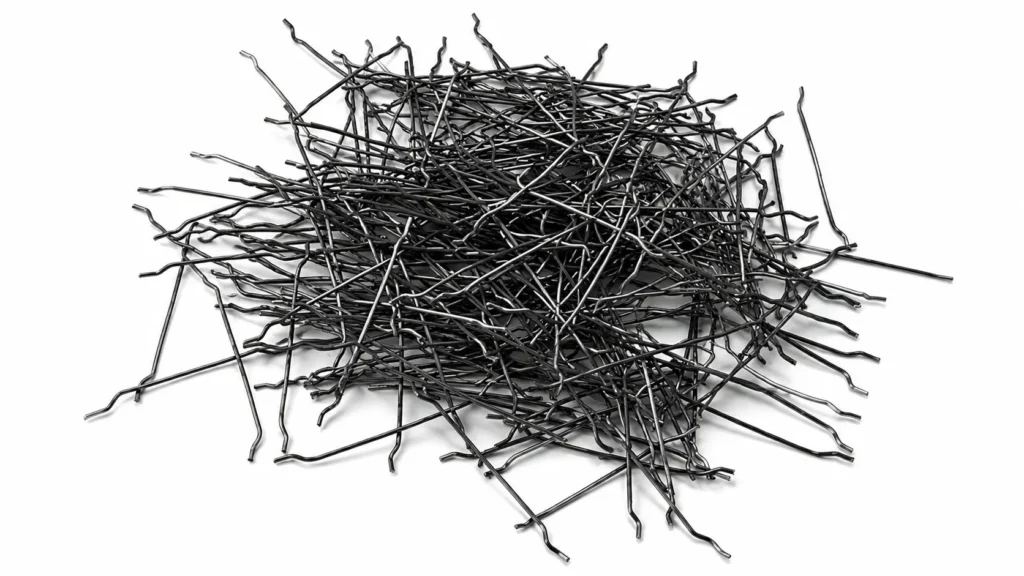
Cold-drawn wire cut steel fiber is made from cold-drawn steel wire and then cut to a required length. The cold drawing process can improve wire strength. The cutting process can produce relatively uniform fiber length.
This type is widely used because the process is relatively simple and cost-effective.
Shandong Jianbang Fiber finds out that cold-drawn wire cut steel fiber can be used in ordinary concrete reinforcement projects. These include small civil building floors, ground hardening, non-load-bearing walls, and general slabs.
Its advantage is stable length and reasonable cost. Its limitation is that performance depends strongly on whether the fiber is straight or deformed. If the fiber has no hook or surface deformation, pull-out resistance may be limited.
For heavy-duty structures, modified cold-drawn wire fibers or hooked end steel fibers may be preferred.
Cut Sheet Steel Fiber
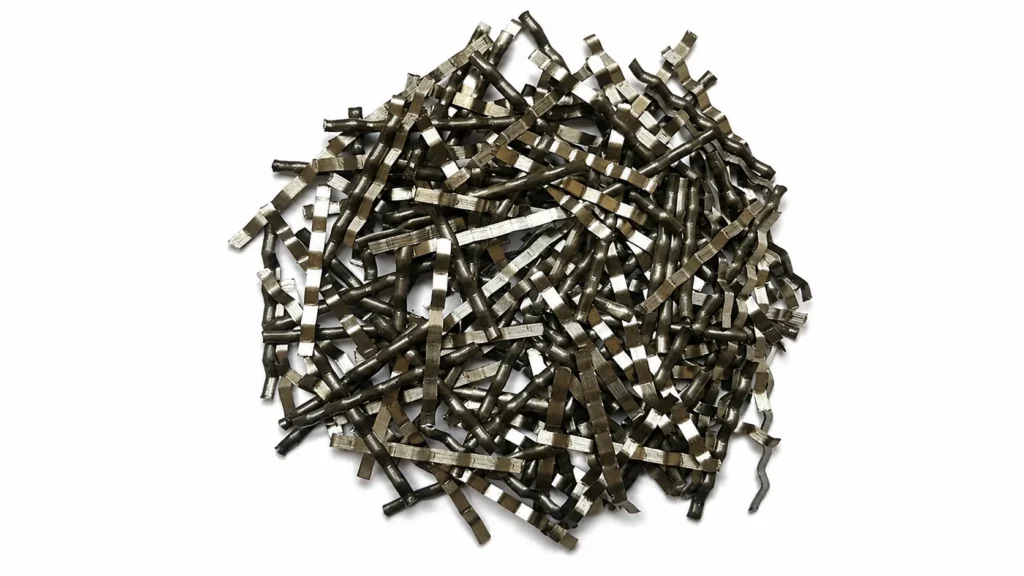
Cut sheet steel fiber is made by cutting thin steel sheets. This process allows good control of shape and size. Different molds can produce different shapes, such as crimped, hooked, or other deformed forms.
Shandong Jianbang Fiber finds out that cut sheet steel fiber is useful when the project needs specific fiber geometry. Industrial buildings, special concrete, and engineered concrete components may benefit from controlled shape and dimensional accuracy.
Its advantage is flexibility in shape production. The manufacturer can design the fiber profile based on bonding and anchorage needs.
Its limitation is that sheet thickness, edge shape, and tensile strength must be controlled. Poor-quality sheet fiber may not provide the required performance.
Buyers should check fiber tensile strength, dimensional tolerance, shape consistency, and test data before ordering.
Melt-Extracted Steel Fiber
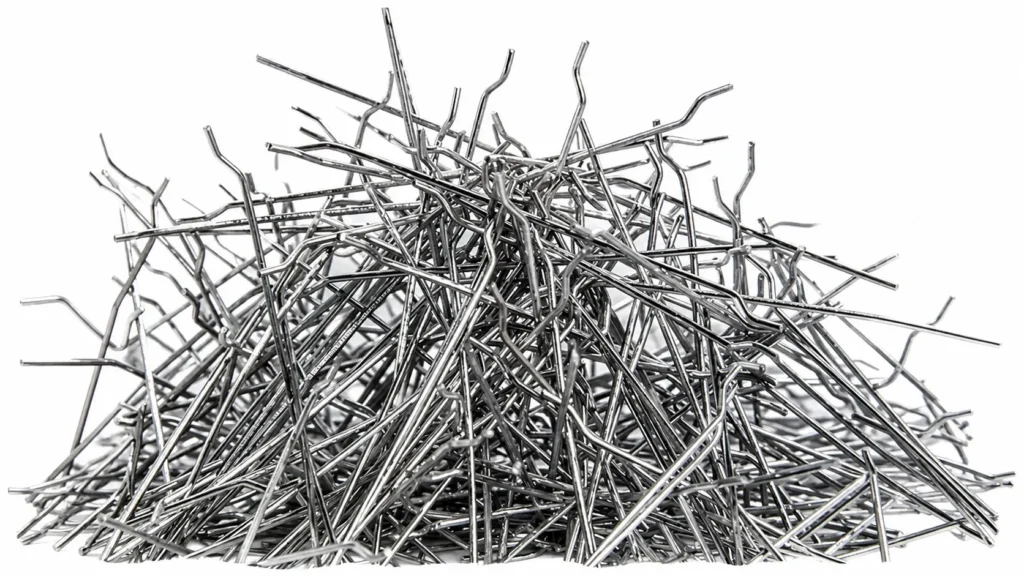
Melt-extracted steel fiber is made by extracting fibers from molten steel through a special process. Its surface is usually rough. This rough surface can improve bonding with concrete.
This process can support continuous production and high production efficiency. It is often used in large-scale concrete projects.
Shandong Jianbang Fiber finds out that melt-extracted steel fiber is suitable for large bridges, highway concrete, mass concrete, and infrastructure projects where high production efficiency and good bonding are important.
Its advantage is surface roughness and efficient production. Its limitation is that dimensional control and fiber consistency should be checked carefully.
For large projects, supplier stability is very important. Buyers should confirm production capacity, batch consistency, and quality control.
Steel Fiber Length Selection
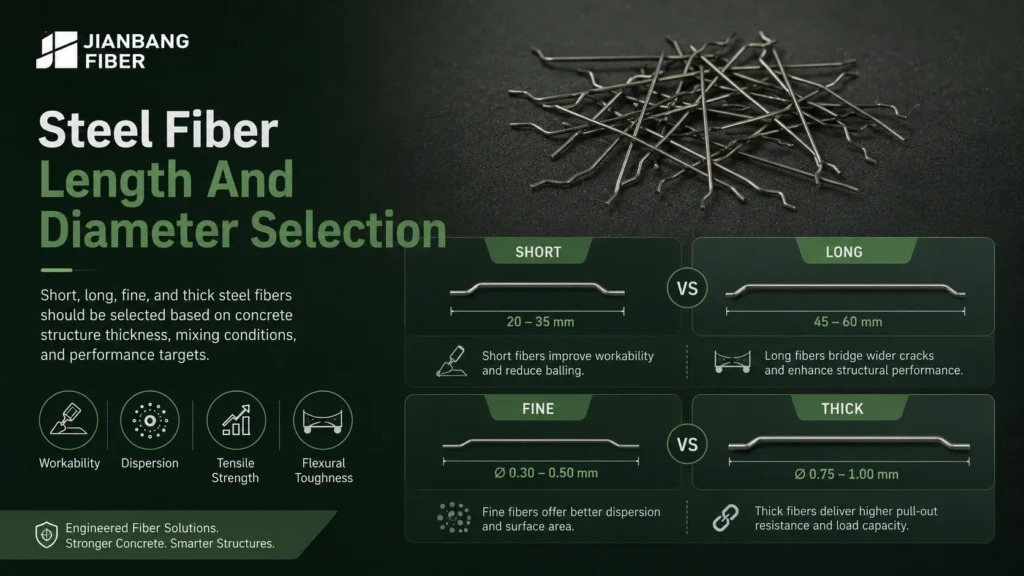
Steel fiber length usually ranges from 15 mm to 60 mm. Length affects workability, dispersion, and crack-bridging performance.
Short steel fibers, such as 15 mm to 30 mm, distribute more easily in concrete. They are easier to mix. They are suitable for thin concrete elements, decorative concrete panels, repair mortar, and small precast parts.
Long steel fibers, such as 30 mm to 60 mm, provide better crack bridging. They are more useful for tensile and flexural performance. They are suitable for large slabs, bridge decks, dams, bridge piers, tunnel lining, and industrial floors.
Shandong Jianbang Fiber finds out that length should match concrete thickness and aggregate size. If the fiber is too long for the mix, workability can become poor. If the fiber is too short for the crack control target, post-crack performance may be limited.
A practical rule is simple. Thin sections need shorter fibers. Thick and heavy-duty sections often need longer fibers.
Steel Fiber Diameter Selection
Steel fiber diameter usually ranges from 0.3 mm to 1.2 mm. Diameter affects the number of fibers per kilogram, bonding surface, and mixing behavior.
Fine steel fibers, such as 0.3 mm to 0.6 mm, have higher surface area. They can bond well with concrete and may improve early strength and toughness. But they can also clump more easily during mixing.
Thicker steel fibers, such as 0.6 mm to 1.2 mm, are easier to mix and less likely to ball. They are more stable in handling. But they have less surface area per kilogram, so the performance improvement may be different.
Shandong Jianbang Fiber finds out that steel fiber diameter must be selected together with length, dosage, shape, and concrete workability.
A fine hooked fiber may provide strong performance but needs careful mixing. A thicker fiber may be easier for construction but may require different dosage or geometry to reach the same crack control target.
Aspect Ratio And Bonding
The ratio between fiber length and diameter is called the aspect ratio. It is one of the most important steel fiber parameters.
A higher aspect ratio can improve crack bridging and pull-out resistance. But it can also reduce workability and increase balling risk.
A lower aspect ratio can improve mixing and dispersion. But it may not provide the same bridging performance.
Shandong Jianbang Fiber recommends evaluating aspect ratio with the full mix design. Cement paste volume, aggregate size, sand ratio, water reducer, and fiber dosage all affect whether a certain aspect ratio works well.
A project should not select steel fiber only by tensile strength. Shape, length, diameter, aspect ratio, and surface condition are all important.
How To Choose Steel Fiber For Different Projects
For ordinary floors and ground hardening, straight or low-deformation steel fiber may be enough if the performance requirement is moderate.
For industrial floors with forklifts and heavy traffic, hooked end or crimped steel fiber is usually a stronger choice.
For tunnels and shotcrete, hooked end or deformed steel fiber can improve toughness and support performance.
For hydraulic structures and large mass concrete, longer fibers with good anchorage may be useful.
For marine engineering and complex stress conditions, dumbbell-shaped or specially deformed fibers may be considered.
Shandong Jianbang Fiber finds out that no single fiber type is best for every project. The correct steel fiber depends on structure type, load condition, crack control requirement, durability target, and construction method.
Mixing And Construction Notes
Steel fiber must be evenly dispersed in concrete. Poor dispersion can cause fiber balls and weak zones.
The first rule is to avoid fast dumping. Steel fiber should be added gradually.
The second rule is to keep workability under control. If the mix is too dry, fiber dispersion becomes difficult.
The third rule is to check aggregate grading. Good aggregate grading helps mixing and reduces balling.
The fourth rule is to control dosage. More fiber is not always better. Too much fiber can reduce workability.
The fifth rule is to run a trial mix. A trial mix can reveal slump loss, clumping, segregation, finishing problems, and pumpability issues.
Shandong Jianbang Fiber finds out that many steel fiber problems are not product problems. They are mixing and construction problems. Good process control is essential.
Quality Control For Steel Fiber Buyers
A good steel fiber purchase should include more than price comparison. Buyers should check the following parameters.
| Parameter | Why It Matters |
|---|---|
| Shape | Controls anchorage and pull-out resistance |
| Production process | Affects strength, cost, surface quality, and consistency |
| Length | Affects crack bridging and workability |
| Diameter | Affects bonding surface and balling risk |
| Tensile strength | Affects load transfer capacity |
| Bendability | Shows whether fiber can deform without breaking |
| Surface condition | Affects bond with concrete |
| Dosage recommendation | Helps match project performance target |
| Test report | Confirms product quality and compliance |
Shandong Jianbang Fiber recommends asking suppliers for technical data sheets, test reports, application references, and dosage guidance.
Why Choose Ecocretefiber™ Steel Fiber
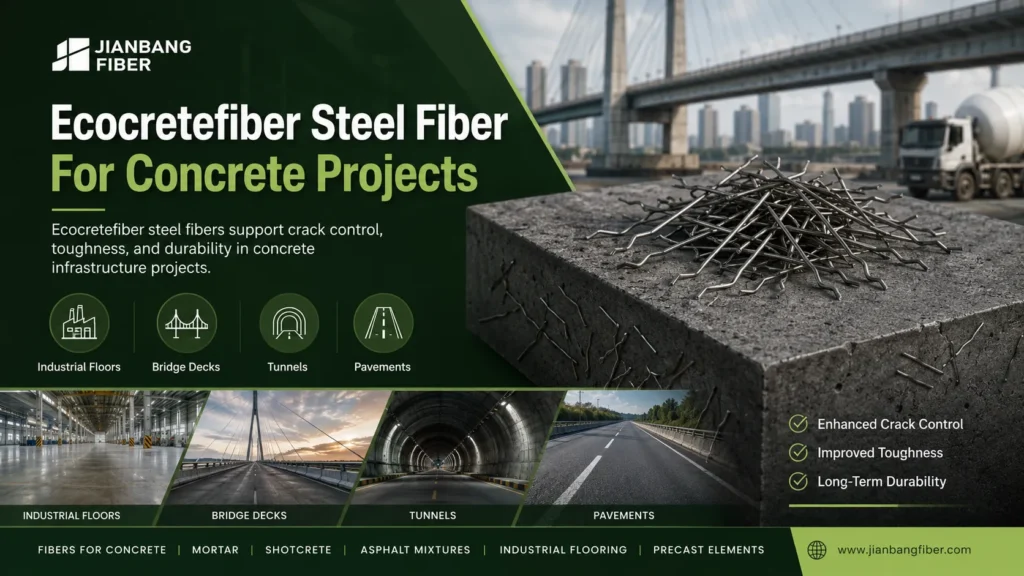
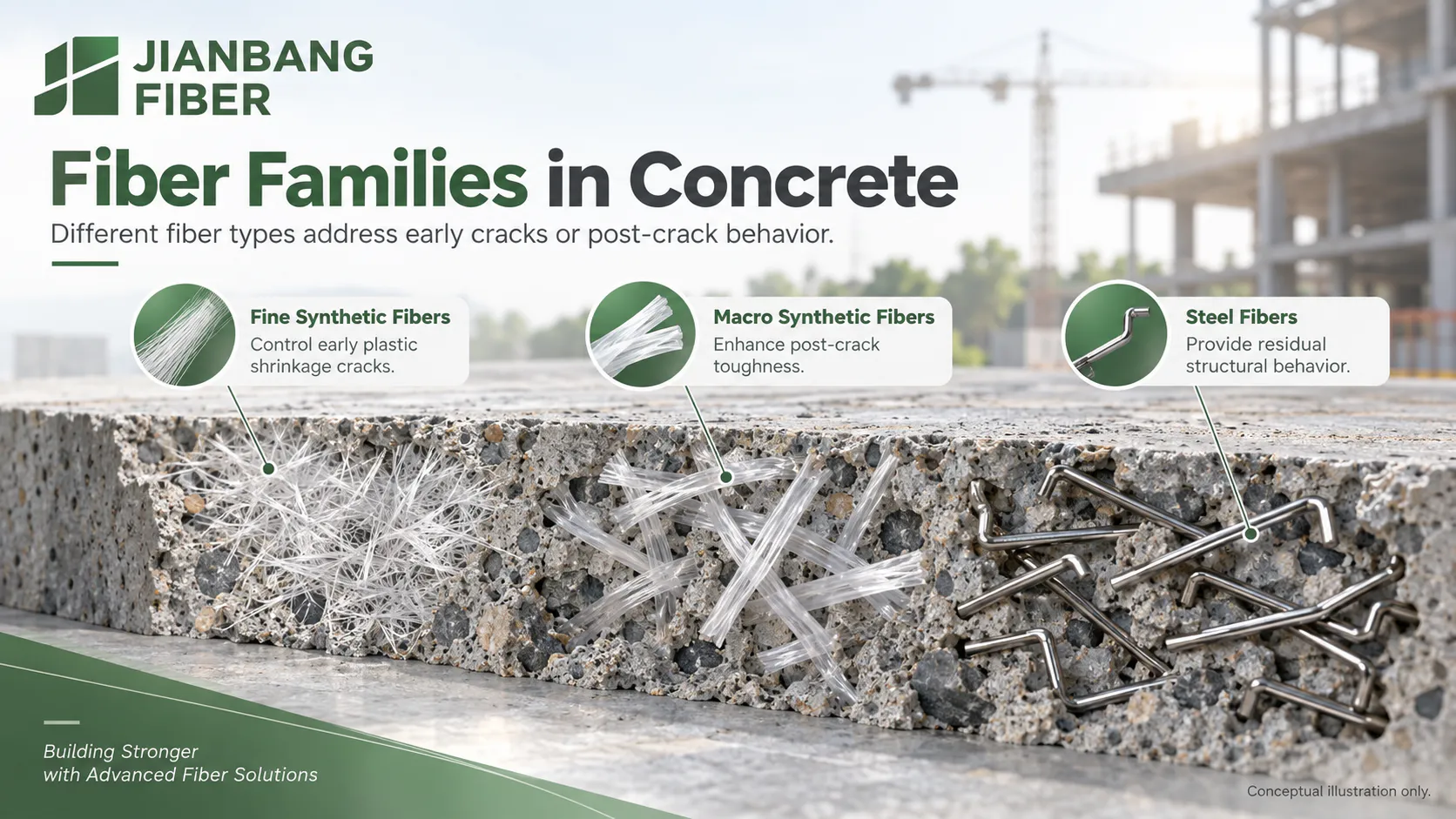
Ecocretefiber™ is the concrete fiber brand of Shandong Jianbang Chemical Fiber Co., Ltd. We supply steel fiber, macro synthetic fiber, polypropylene fiber, basalt fiber, PVA fiber, PAN fiber, and other concrete reinforcement fibers.
Our steel fiber solutions can support industrial floors, road pavements, bridge decks, tunnel linings, shotcrete, hydraulic structures, precast concrete, and heavy-duty slabs.
We help customers compare steel fiber shape, length, diameter, production process, and dosage. We also support OEM packaging, distributor product planning, and project-based technical communication.
Our goal is not only to sell steel fiber. Our goal is to help customers choose the right fiber for the right concrete system.
Buyer Checklist Before Ordering Steel Fiber
Before ordering steel fiber, buyers should confirm these details.
| Question | Why It Matters |
|---|---|
| What is the project application? | Floors, roads, bridges, tunnels, dams, and precast parts need different fibers. |
| What load level is expected? | Heavy load requires stronger anchorage and toughness. |
| What concrete thickness is used? | Thin sections may need shorter fibers. |
| What aggregate size is used? | Aggregate size affects fiber dispersion. |
| What fiber shape is preferred? | Straight, crimped, hooked, indented, and dumbbell fibers perform differently. |
| What fiber length is suitable? | Length affects bridging and workability. |
| What fiber diameter is suitable? | Diameter affects surface area and balling risk. |
| What mixing equipment is available? | Mixing method affects fiber distribution. |
| Is a trial mix planned? | Trial mixing reduces construction risk. |
| What standards are required? | Project specifications may require ASTM, EN, or local standards. |
This checklist helps reduce wrong selection and improves project communication.
Conclusion
Steel fiber specifications have a direct effect on concrete performance. Shape affects anchorage. Production method affects quality and cost. Length affects crack bridging. Diameter affects bonding and workability.
Shandong Jianbang Fiber finds out that straight steel fiber is simple and suitable for general applications. Indented steel fiber improves mechanical interlock. Crimped steel fiber improves anchorage and stress transfer. Hooked end steel fiber offers strong pull-out resistance for heavy-duty structures. Dumbbell-shaped steel fiber can help in complex stress environments.
Shandong Jianbang Fiber also finds out that cold-drawn wire cut steel fiber is cost-effective for general use. Cut sheet steel fiber allows controlled shape production. Melt-extracted steel fiber offers rough surface bonding and efficient large-scale production.
The right steel fiber is not the longest, thickest, or cheapest one. The right steel fiber is the one that matches the structure, load, mix design, and construction method.
Shandong Jianbang Chemical Fiber Co., Ltd. supplies Ecocretefiber™ steel fiber solutions for customers who need better crack control, toughness, and concrete durability. If your project needs steel fiber for industrial floors, bridges, tunnels, roads, dams, or precast concrete, Ecocretefiber™ can help you select a suitable specification.