C50 steel fiber concrete combines a specified compressive strength grade with steel fibers distributed through the mix. For a floor, bridge overlay, tunnel lining, or repair element, the reason to add fibers is usually the behavior after a crack starts: fibers bridge the crack, resist pullout, and help the concrete carry load as it deflects. That benefit depends on the complete mix and the way it is placed. A bag of fibers cannot guarantee it on its own.
At Shandong Jianbang Chemical Fiber Co., Ltd., we help project teams choose Ecocretefiber™ steel fiber grades for their concrete and construction method. This guide explains which performance gains to specify, how to qualify the mix, and what to control from batching through curing. The central decision is straightforward: define the required C50 compression result and the required fiber-reinforced performance separately, then prove both with project trials.
What does C50 mean in steel fiber concrete?
In the Chinese concrete-strength classification, C50 identifies a nominal 50 MPa compressive strength grade based on the prescribed cube-strength framework. The project specification controls specimen preparation, acceptance age, sampling, and the actual acceptance rule. A 50 MPa cube grade should not be treated as a direct conversion to a cylinder-strength class used in another jurisdiction.
Steel fiber is a separate part of the specification. It does not turn a concrete batch into C50 by itself, and the C50 label does not tell an engineer how much load the member can carry after cracking. Cementitious materials, water-to-binder ratio, aggregates, admixtures, batching consistency, and curing establish the concrete matrix. Fiber geometry, dosage, orientation, anchorage, and dispersion influence the reinforced composite. Both parts must work together.
For projects in China, the current JGJ/T 221-2010 fiber-reinforced concrete application code organizes requirements around raw materials, mixture design, construction, and quality inspection. For an international project, the applicable structural code and contract specification take precedence. The test method and acceptance value should be agreed before the first production batch.
Which benefits should the project expect and measure?
Flexural performance after cracking
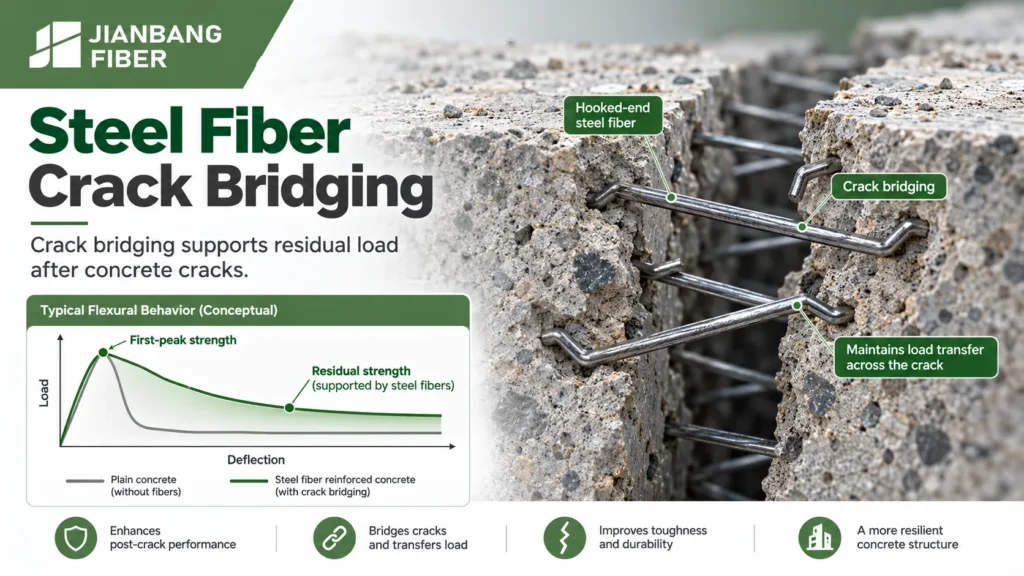
Ordinary concrete can lose load rapidly once a flexural crack forms. Dispersed steel fibers crossing that crack provide a load-transfer mechanism as they stretch, debond, or pull out. Hooked ends can increase mechanical anchorage. This is often the most useful reason to specify a steel fiber in slabs, pavements, overlays, and precast components.
The important distinction is between first-crack or first-peak strength and residual strength at a stated deflection. They are different test results. ASTM C1609/C1609M-24 reports first-peak, peak, and residual flexural strengths from a beam load-deflection test. It also provides a toughness measure. A mix can improve residual capacity substantially while changing first-peak strength only slightly. We therefore recommend specifying a residual-strength target at the deflection relevant to the design instead of promising a generic percentage increase in “flexural strength.”
Impact, fatigue, and crack control
Under repeated wheel loading or localized impact, a well-designed fiber network can help distribute damage and retain load after cracking. The result depends on fiber content, bond, member geometry, joints, and the actual load history. An impact claim needs a representative test or a project-specific design basis; a static beam result alone is not an impact rating.
Fibers can also restrain the opening of certain cracks after they form. Narrower service cracks may help limit paths for water and aggressive agents, but the matrix, cover, joints, waterproofing, exposure class, and curing remain decisive. Steel fiber concrete should not be advertised as inherently waterproof or corrosion-free. If low permeability is required, specify and measure the appropriate transport or exposure performance of the whole concrete system.
Construction efficiency where the design allows it
Uniformly distributed fibers can reduce some placement work associated with secondary reinforcement in appropriately engineered slabs on ground and overlays. ACI SPEC-544.12-23 provides a performance-based route for those applications, including an equivalent flexural residual-strength requirement. This is a defined scope, not blanket permission to eliminate reinforcing bars from beams, columns, suspended slabs, seismic members, or every bridge element. The structural engineer must approve any change to the reinforcement design.
How to select a steel fiber for a C50 mix
Fiber selection starts with the element and the placement method. A long, slender fiber may provide useful anchorage but increase the risk of entanglement or pump resistance in a congested mix. A short or coarse fiber may disperse more easily but deliver a different residual-strength response. Hook shape, wire strength, surface condition, and compatibility with aggregate size also matter. Compare candidates by testing the finished concrete, not by a single fiber property.
Our Ecocretefiber™ hooked-end steel fiber range lists example grades such as J-50/50, J-65/60, and J-80/60. Listed lengths range from 25 to 60 mm, with aspect ratios from 45 to 80, depending on the model. These are product-family options rather than a promise that every grade suits every C50 concrete. Confirm the exact grade, dimensional tolerance, declared tensile strength, packaging, and batch identification on the current product data sheet. ASTM A820/A820M-22 provides a relevant steel-fiber material specification when the project calls for it.
| Decision | Questions for the trial | Why it matters |
| Geometry and anchorage | Which length, diameter, aspect ratio, and end form fit the element? | Influences crack bridging, pullout, finishing, and congestion. |
| Dosage | Which trial contents meet the residual-strength target? | Increasing mass alone may reduce workability or create balls. |
| Aggregate and paste | Is the coarse aggregate size and mortar volume compatible? | Fibers must move and disperse through the entire mix. |
| Delivery method | Will the mix be pumped, bucket placed, sprayed, or precast? | Each method changes pressure, orientation, rebound, and finish risk. |
| Surface requirement | Are exposed fibers or a hard-troweled finish acceptable? | The finishing plan may call for a revised grade or process. |
For orientation only, our hooked-end product page presents 20–40 kg/m³ for general slabs and industrial floors and different ranges for other applications. These are starting windows for trials, not a C50 formula or a structural design value. A specific project may need a different amount. The required content should follow the engineer’s performance target, trial results, and workable production process. Our steel fiber dosage guide explains how dosage is connected to application and testing.
Build and qualify the mixture before production
Start with a control C50 mixture that meets the project’s exposure, strength, workability, and placement requirements. Then introduce the selected fiber while adjusting the mixture as a whole. Steel fibers increase solid surface area and can change rheology. Simply adding water on site to restore slump can undermine the compressive-strength and durability targets. Adjustments to admixture, paste volume, aggregate grading, and mixing energy belong in controlled trials.
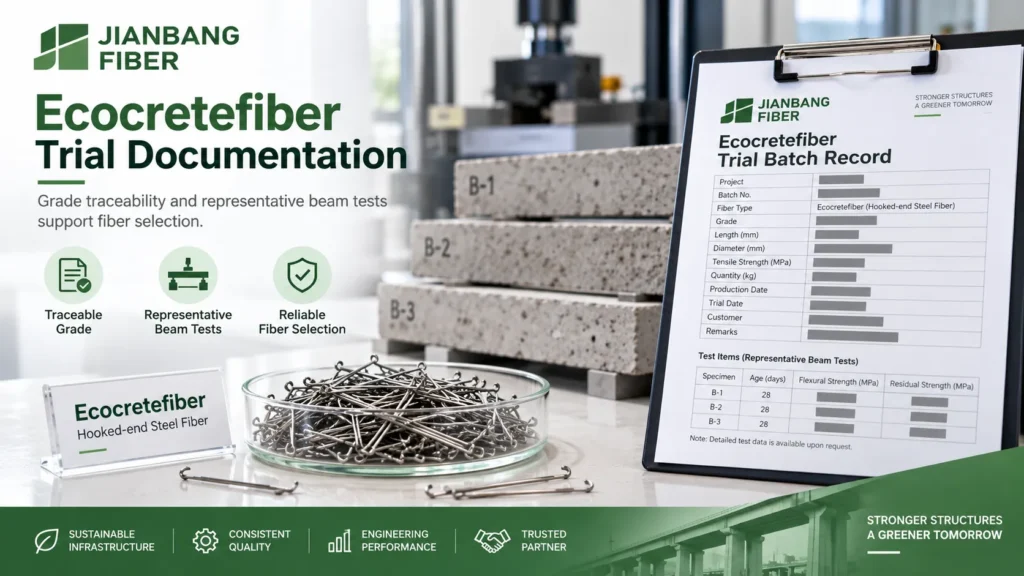
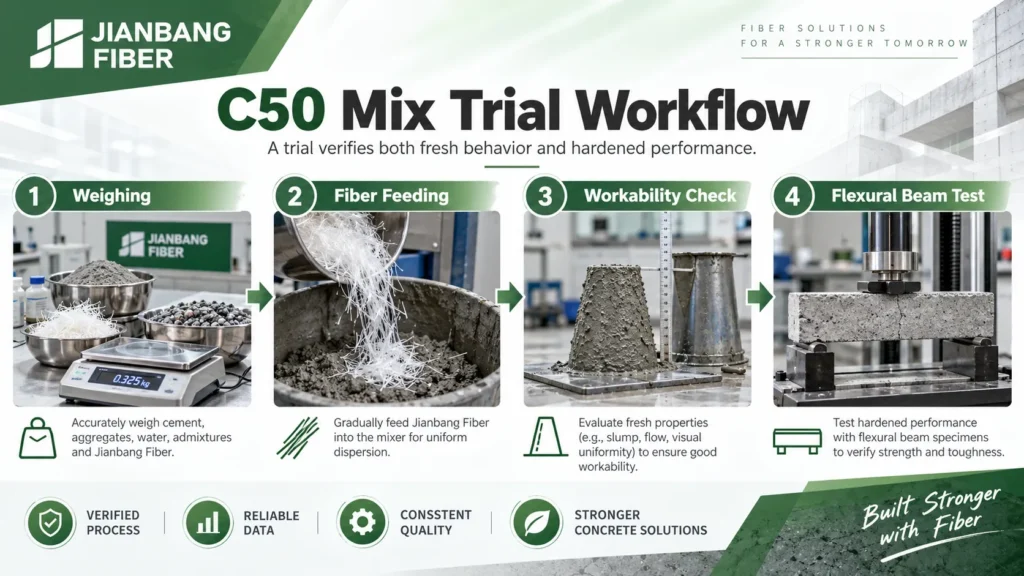
Prepare trial batches with actual project materials and practical batch sizes. Record fiber mass per cubic meter, feed sequence, mixer type, mixing time, fresh workability, air content where applicable, and visible dispersion. If the project will pump the concrete, run a pump trial with representative line length and bends. If it will use a dense reinforcement cage or a thin section, cast a mockup. A laboratory bowl that mixes well does not prove that the mix will pass through the field equipment and fill the element.
Test compression and post-crack flexure at the specified ages. Retain enough trial specimens to check the range of results, not only the best beam. Inspect the cut or fractured surfaces for distribution and identify any fiber balls, voids, segregation, or preferential alignment. Agree on the acceptance limits and corrective actions before ordering a large production volume.
Construction controls from batching to curing
Feed fibers evenly and keep them separated
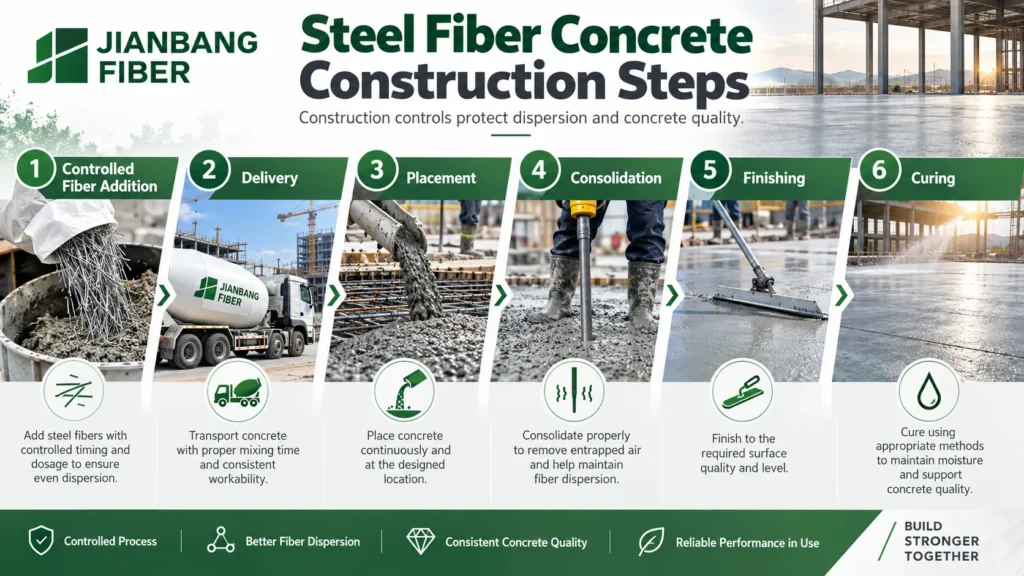
The addition sequence should follow the trial-proven mixer procedure and the supplier’s instructions. Introduce fibers at a controlled rate into a moving mix; avoid dumping a full package into a stagnant pocket or placing loose fibers directly on a dry, concentrated pile. Verify that any glued bundles separate during mixing. Check several points in the discharged batch for visible balls or uneven concentration. Do not assume a longer mixing time always fixes poor dispersion: excessive mixing can affect workability and production consistency.
Transport, pump, and place within the approved window
Coordinate truck cycle time, discharge rate, hose diameter, line bends, and the target workability. Fiber addition can change pump pressure and discharge behavior. A blockage calls for the site procedure and safe isolation; forcing an unqualified mix through a line is not a quality-control method. Recheck workability after significant delays and follow the approved limits for admixture adjustment. Do not add uncontrolled water.
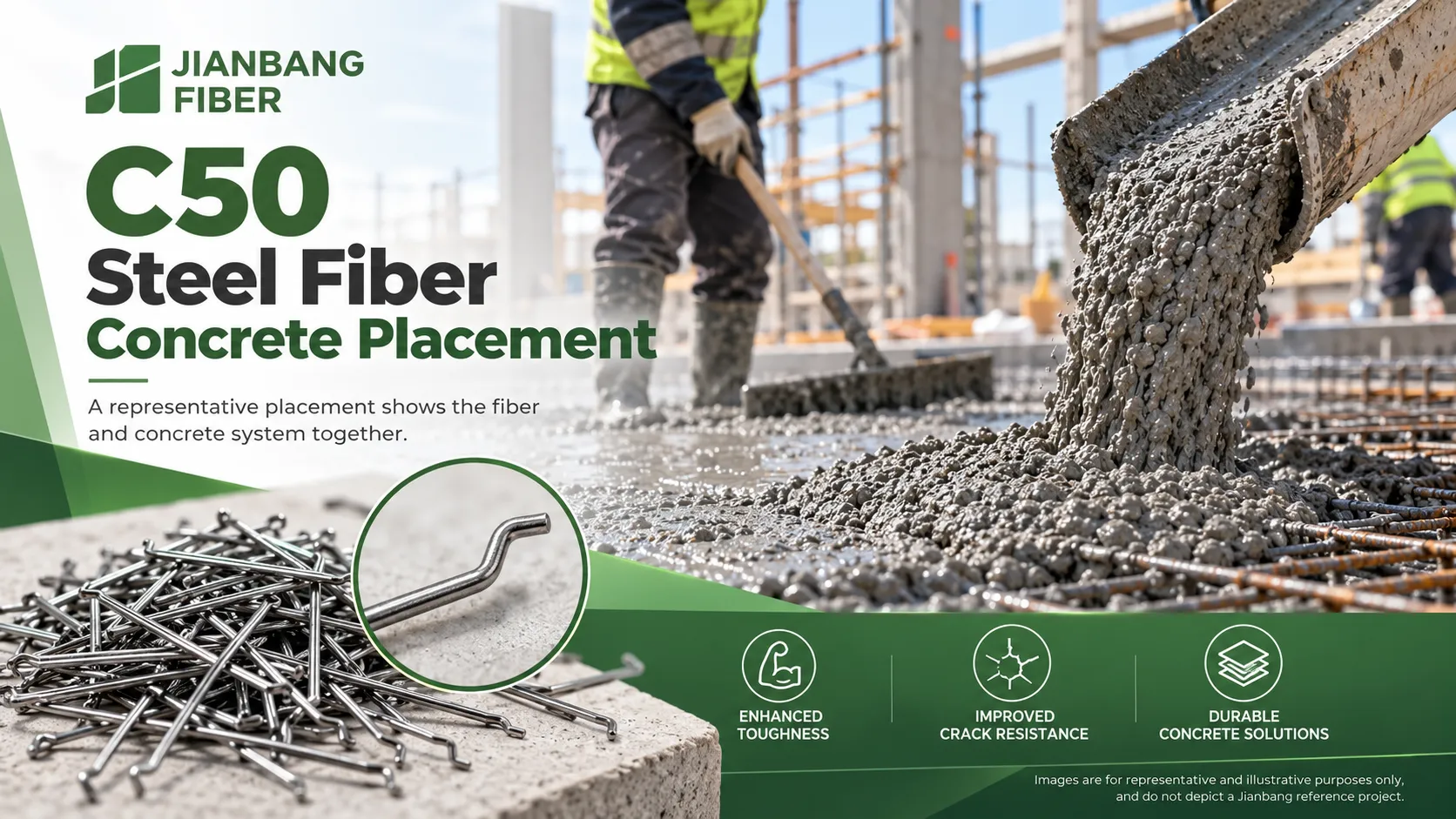
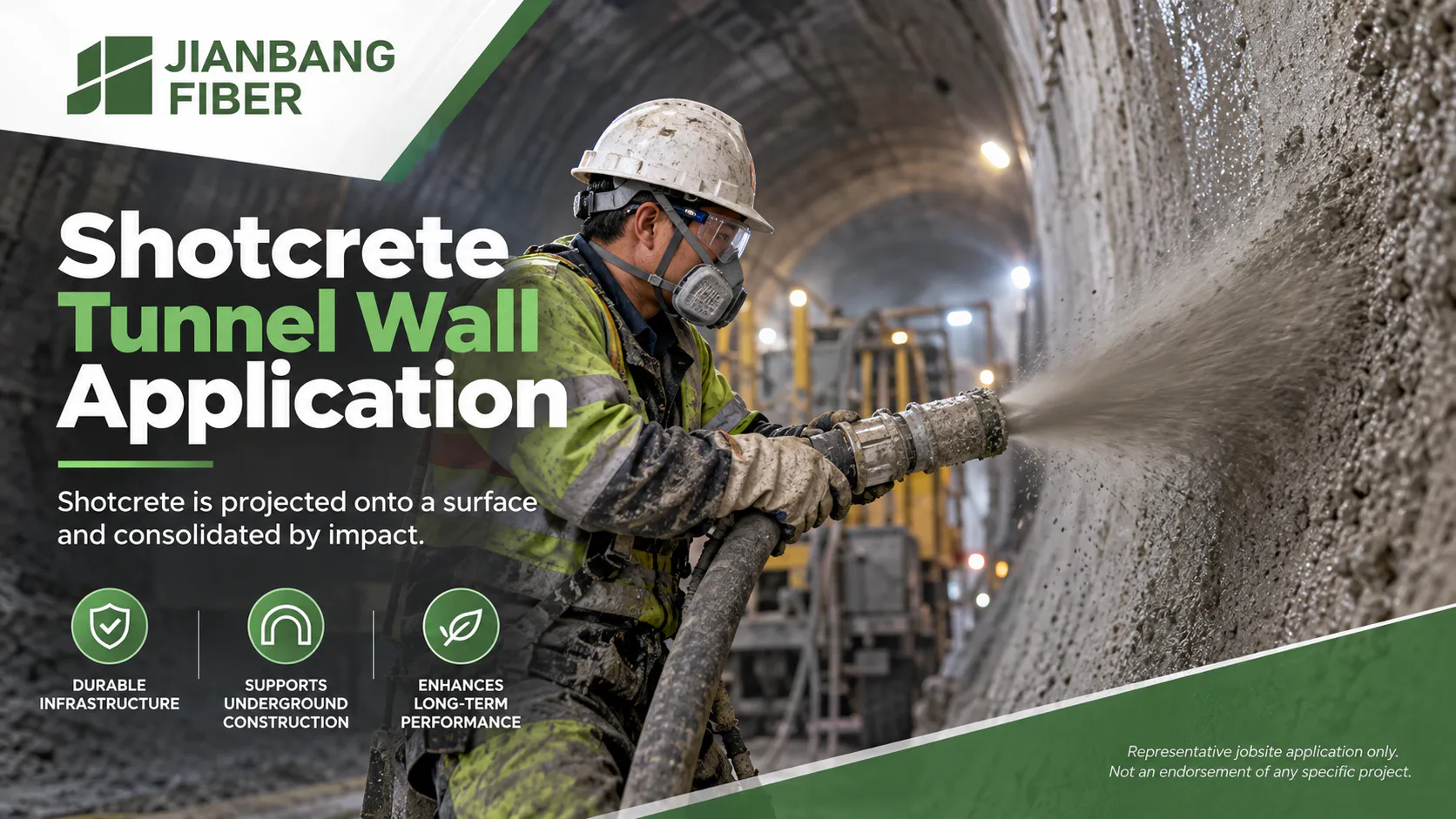
Place in a sequence that avoids cold joints and unnecessary rehandling. In formed work, confirm that the concrete flows around embeds and reinforcement. In floors, manage screed operation and fiber exposure at the top surface. In sprayed concrete, qualify rebound, build-up, layer thickness, and panel performance for the exact equipment. Record any changes in fiber type, dose, aggregate, or admixture as a new trial condition when they can affect the approved results.
Compact, finish, and cure the concrete
Use the consolidation method proven in the mockup. Inadequate vibration can leave voids; excessive vibration can promote segregation or disturb fiber distribution. Finish the surface to the specified tolerance without dragging fibers into clusters. Plan joint layout, saw-cut timing, and edge details for slabs; fibers do not make control joints unnecessary.
Begin curing promptly and maintain the specified moisture and temperature conditions. The C50 matrix still needs hydration and protection against early drying. Poor curing can impair strength and crack control even when fiber dispersion is excellent. Inspect the finished element for honeycombing, exposed fiber concentrations, early cracking, and defects at joints. Define repair and retest rules in advance.
Set up an acceptance plan that measures the right properties
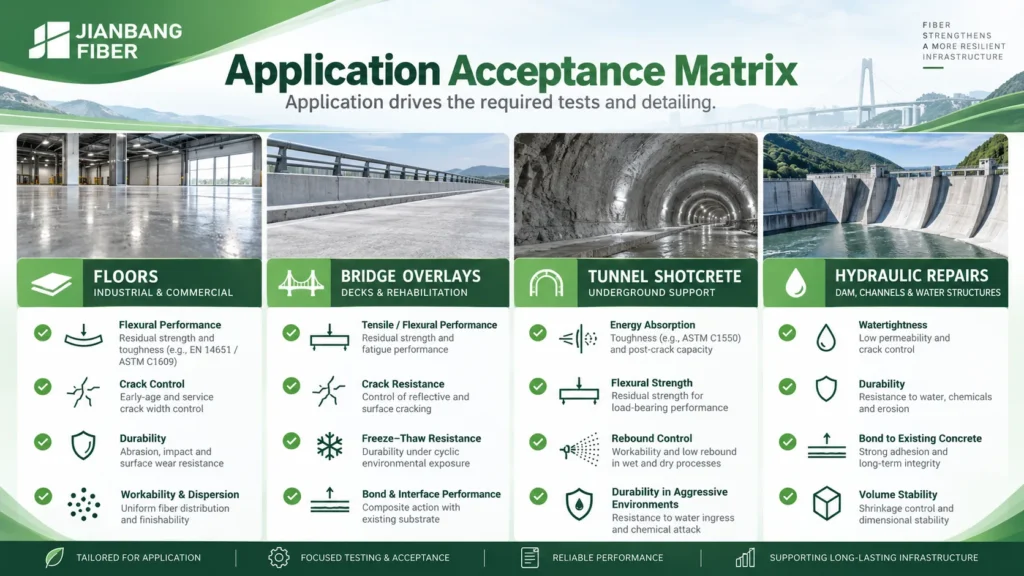
A specification should separate material checks, fresh-concrete checks, and hardened-concrete performance. The contractual method and statistical acceptance rules govern. The following matrix is a practical starting point for a trial and inspection plan, not a substitute for the engineer’s project specification.
| Stage | Evidence to record | Typical acceptance question |
| Fiber delivery | Grade, batch, mass, dimensions, and applicable material certificate | Is this the approved fiber and quantity? |
| Fresh concrete | Batch record, workability, air when relevant, temperature, and dispersion | Can the mix be placed without balls or segregation? |
| Compressive performance | Specimens and age required by the C50 project specification | Does the concrete meet the specified strength grade? |
| Flexural performance | Beam test such as ASTM C1609, or the specified local method | Are residual strengths at stated deflections adequate? |
| Durability and serviceability | Exposure-specific tests, crack-width and joint requirements | Does the entire element meet its environment and use case? |
ASTM C1116/C1116M-23 is a useful reference for fiber-reinforced concrete specifications. The project’s adopted local code may use different specimens or acceptance terms; do not mix numerical results from different beam methods without a justified correlation. Record the beam size, loading configuration, span, age, and deflections together with the result. The orientation of fibers in a trial beam may differ from a full-scale slab or sprayed lining, which is another reason to make representative mockups.
Match the system to the application
Industrial floors and overlays. Wheel loads, joint spacing, subgrade or substrate, curling, and surface finish drive the design. A performance-based residual-strength specification can make fiber selection clear. Do not replace a substrate, joint, or load-transfer design with a fiber dosage table.
Bridge work. Overlays, precast pieces, and repair zones may benefit from post-crack toughness, but exposure, fatigue, bond to existing concrete, cover, and structural detailing require separate checks. The bridge authority and engineer define the acceptance plan.
Tunnels and shotcrete. Fiber-reinforced shotcrete may improve residual capacity and reduce handling of mesh in a designed lining system. Rebound, nozzle technique, panel testing, and layer bonding matter. A steel fiber addition alone does not establish a fire-resistance rating or protection against explosive spalling; fire performance needs the specified system test and design.
Hydraulic and underground structures. Crack-width control can be valuable, but water tightness depends on the concrete matrix, joints, membranes, waterstops, and detailing. Specify the relevant permeability or leakage criteria explicitly.
Buildings and residential work. Slabs on ground are different from suspended slabs, walls, columns, and seismic systems. Keep conventional reinforcement wherever the approved structural design requires it. Any proposed substitution must be checked against the governing code and the actual load path.
A purchase checklist for project teams
Send the fiber supplier the C50 strength specification, element thickness, aggregate grading, mixing equipment, placement method, planned pumping arrangement, finish requirement, exposure conditions, and target residual strengths. Ask for the exact fiber grade data sheet, packaging method, applicable certificate, batch traceability, and a sample for the trial. Confirm who will run the beam tests and how deviations will be handled during production.
At Ecocretefiber™, we can help compare hooked-end options against the workability and performance needed for your application. We recommend approving the final grade and dosage only after a representative trial and engineer review. This approach makes the expected benefit measurable and gives the contractor a repeatable field procedure.
Frequently asked questions
Does C50 steel fiber concrete have higher compressive strength than ordinary C50 concrete?
Not automatically. C50 is a compressive strength grade. A fiber may change measured compression in a particular mixture, but the key design benefit is often residual capacity after cracking. Test the production mixture for both specified properties.
Can steel fibers replace rebar in C50 concrete?
Only where the approved structural design and applicable specification permit it. Some slabs on ground and overlays have a performance-based substitution route. That permission should not be extended to suspended members, seismic reinforcement, or all reinforcement in a bridge or tunnel.
What is the correct steel fiber dosage for C50?
There is no universal C50 dosage. Select a trial range from the element, loading, fiber grade, residual-strength target, and placement method. Confirm workability, distribution, pumpability, and beam performance before specifying the production amount.
Will steel fibers make the concrete waterproof or fireproof?
No single fiber addition establishes either rating. Water resistance depends on the matrix and detailing, while fire behavior depends on the complete system and the required test. Include those requirements separately in the design.
Why test residual flexural strength if the mix already passes C50 compression?
Compression verifies the strength grade; residual flexural tests show how much load the fiber concrete can carry at specified deflections after cracking. A passing cube result cannot answer the post-crack design question.
Plan your C50 steel fiber trial with Jianbang
For an industrial floor, bridge repair, lining, or precast element, share your target compressive grade, residual-strength criterion, aggregate size, placement method, and exposure conditions with our team. We can help identify a candidate Ecocretefiber™ hooked-end steel fiber and prepare the product information needed for a controlled trial. Contact Shandong Jianbang to discuss your mix and request a suitable sample.