
How to Choose a Macro PP Fiber Manufacturer?

Choosing a macro PP fiber manufacturer is not only about finding a low price. It is about finding a supplier whose fibers perform well in real concrete, meet the right standards, and stay consistent from batch to batch. That matters because macro polypropylene fiber is usually chosen for post-crack performance, toughness, and crack control, not […]
What Is the Difference Between GFRC and GRP?
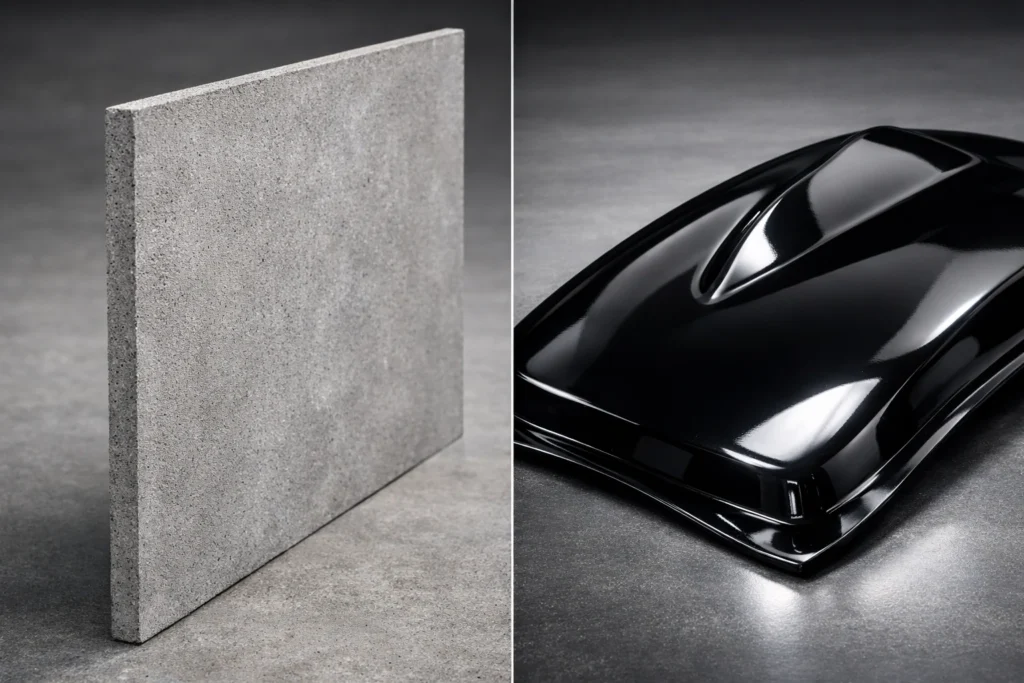
The difference between GFRC and GRP starts with the matrix. GFRC means glass fiber-reinforced concrete. It is a cementitious material in which alkali-resistant glass fibers are embedded in a cement-based mix. ACI describes GFRC as a composite of alkali-resistant glass fibers embedded in a cementitious mixture, which can be paste, mortar, or concrete. ASTM C1666 […]
How Is Polypropylene Fiber Manufactured?
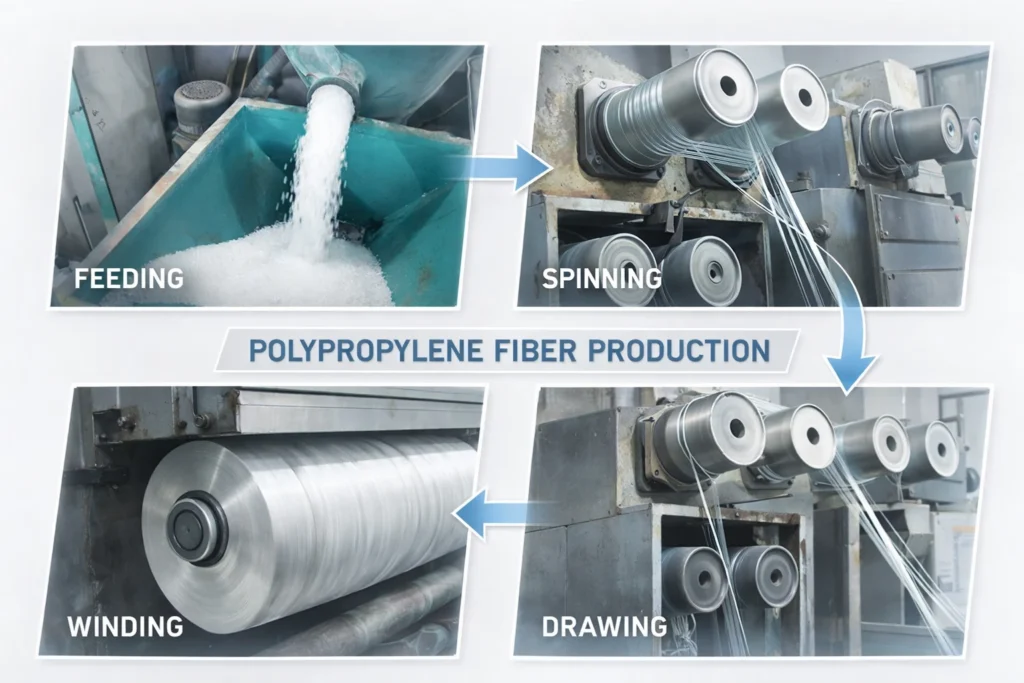
At Shandong Jianbang Chemical Fiber Co., Ltd., we manufacture polypropylene fiber in two linked stages. First, polypropylene resin is made from propene by polymerization. Then that resin is turned into fiber by melt processing, extrusion, cooling, drawing, and cutting or other downstream conversion steps. In simple words, we start with polymer, then we turn that […]
What Is the Difference Between FRP and FRC?
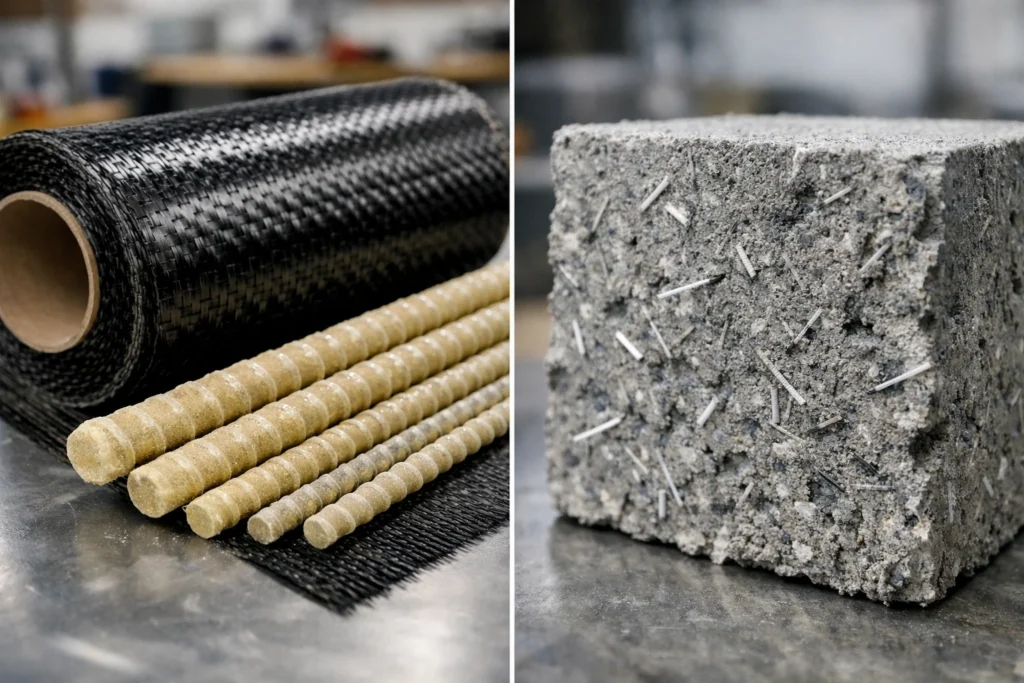
The difference between FRP and FRC is simple once you separate the letters. FRP means fiber-reinforced polymer. It is a composite material made from strong fibers inside a resin matrix. In concrete work, FRP usually appears as bars, tendons, sheets, strips, grids, or near-surface-mounted elements used to reinforce or strengthen concrete members. ACI explains that […]
What Is Polypropylene Fiber-Reinforced Concrete Used For?
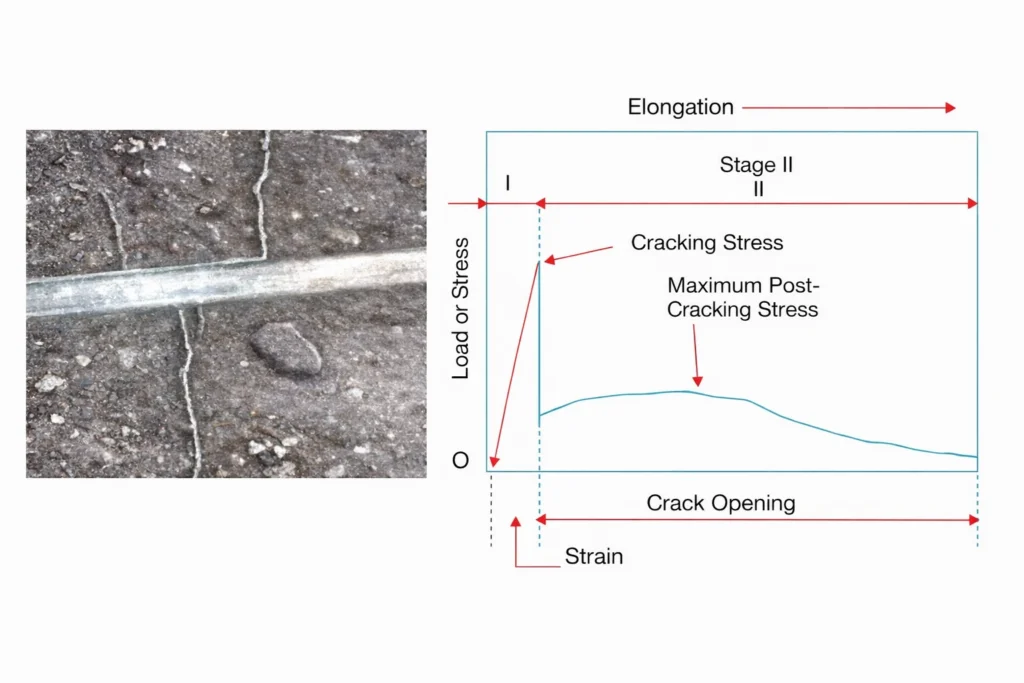
Polypropylene fiber-reinforced concrete is used to control cracking, improve toughness, support post-crack behavior, and solve specific durability or fire-related problems in concrete. The exact use depends on the fiber type. Micro polypropylene fibers are usually used for early-age crack control. Macro polypropylene fibers are usually used where the concrete needs better performance after cracking. ACI […]
What Is Fibrillated Polypropylene?
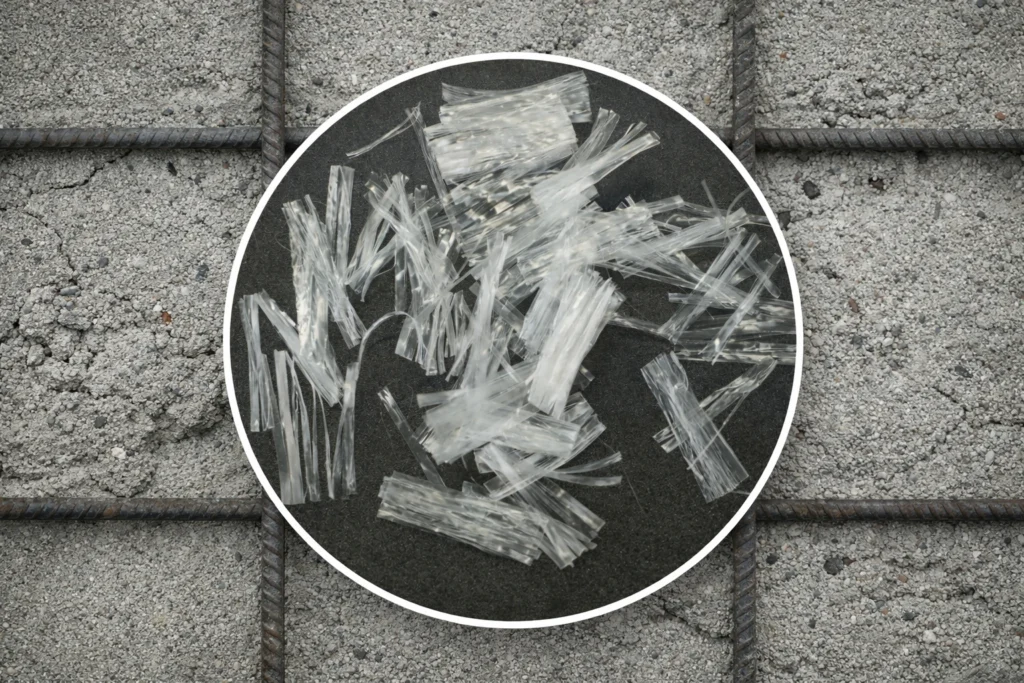
Fibrillated polypropylene is a polypropylene fiber made in a slit-film form that opens into many small branching fibrils. In concrete, it usually means a micro synthetic fiber used to reduce early cracking and improve cohesion in the fresh mix. The National Precast Concrete Association explains that fibrillated fibers are a slit-film fiber where parts of […]
What Is PP Embossed Macrofiber?
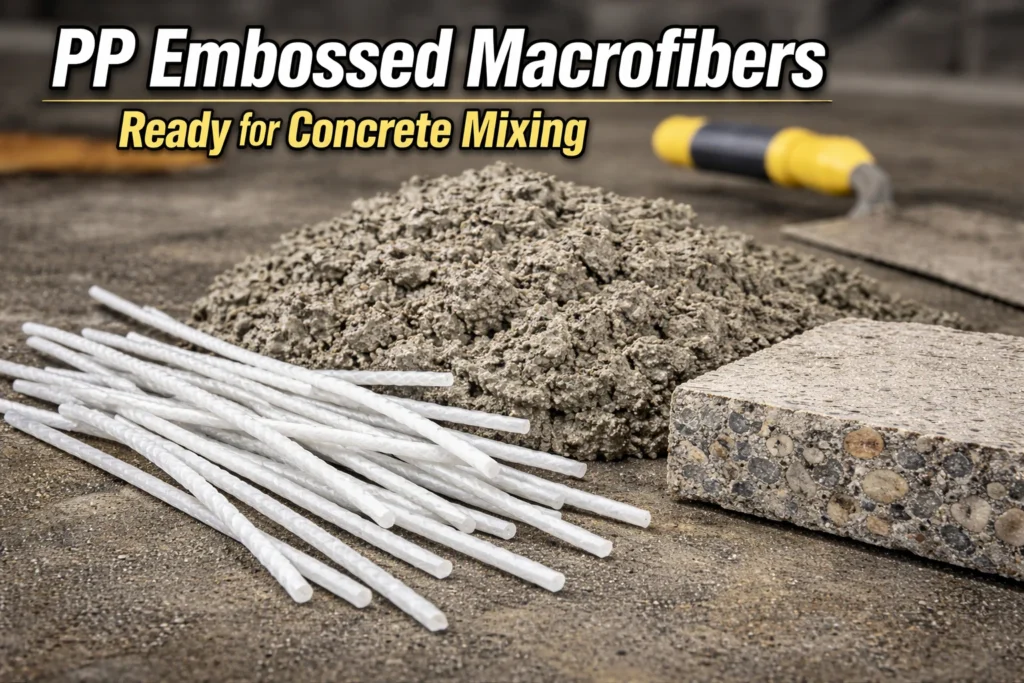
PP embossed macrofiber is a macro synthetic concrete fiber made from polypropylene, with a textured or embossed surface that helps the fiber grip the concrete better after cracks start to form. The term is common in product pages and sales materials, but the idea behind it is technical and standard-based. ACI defines macrosynthetic fibers as […]
What Are 5 Examples of Synthetic Fibers?
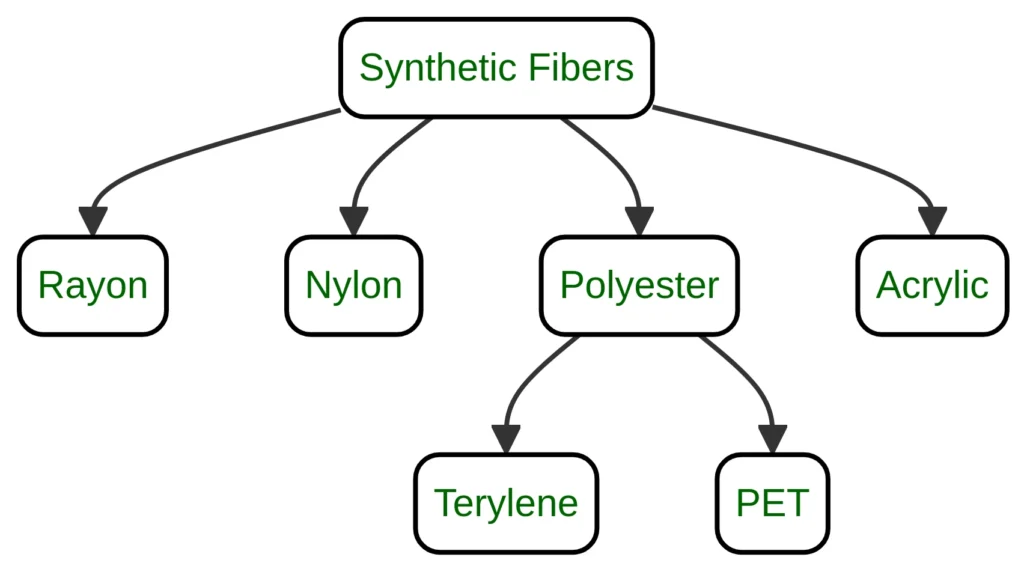
If someone asks for five examples of synthetic fibers, a clear and useful answer is this: nylon, polyester, acrylic, polypropylene, and aramid. These are all man-made fibers made from synthetic polymers, and each one has its own use and performance profile. Britannica explains that synthetic fibers are made from polymers that do not occur naturally, […]
What Is the Best Fiber for Concrete?
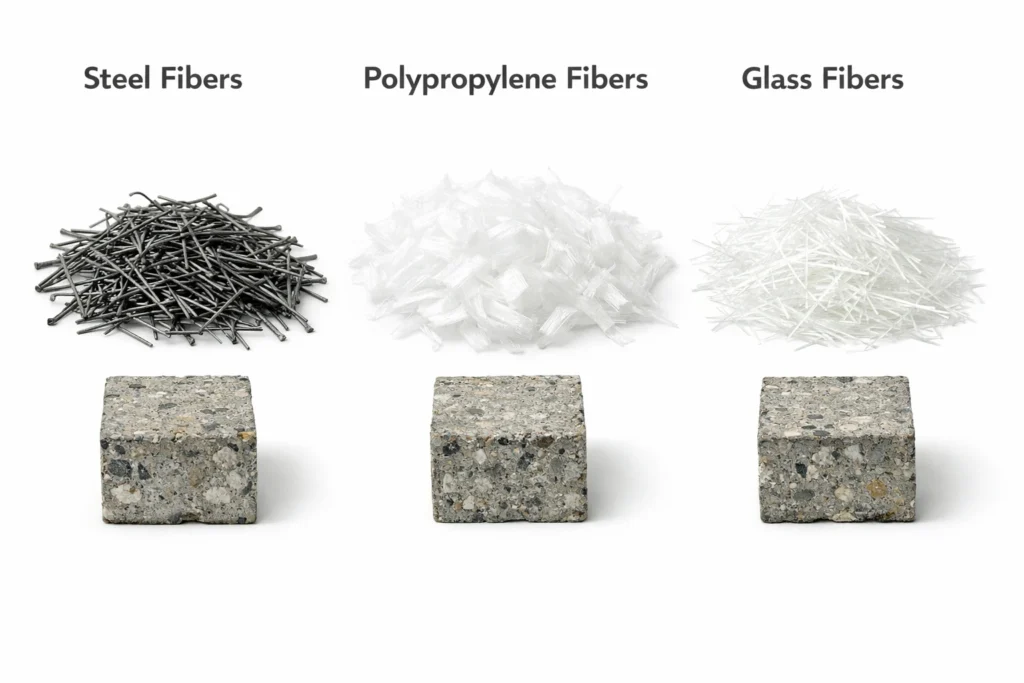
“Best” depends on the concrete problem, and the problem has to come first A contractor often asks, “What is the best fiber for concrete?” A spec writer also asks the same question. A buyer wants one answer because buying needs speed and clarity. A team still gets better results when the team asks one small […]
What Are PP Fibers?
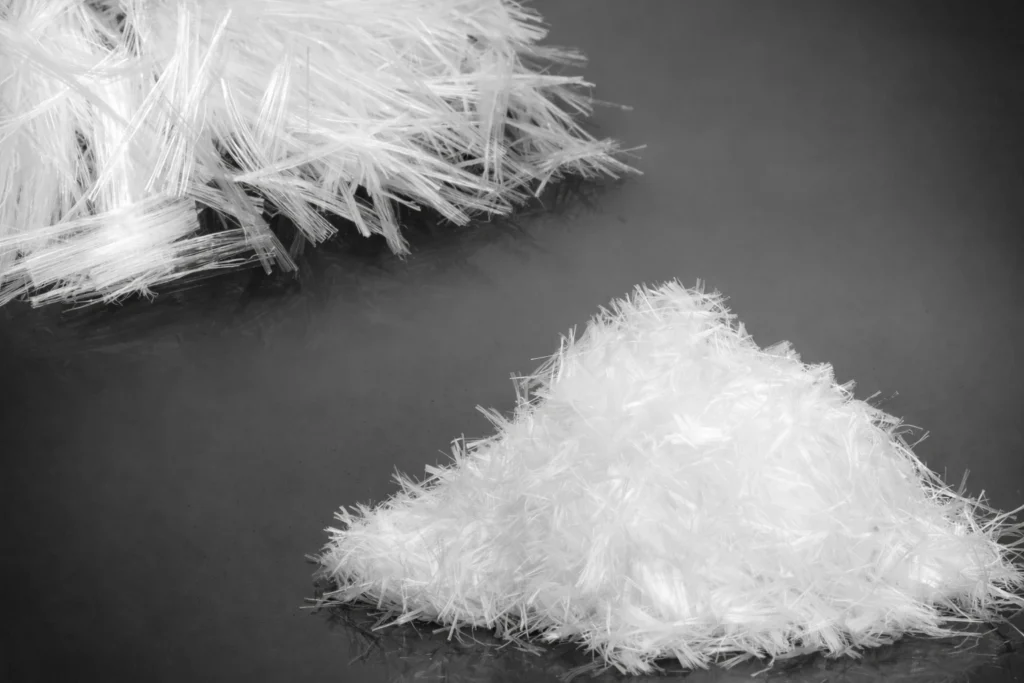
PP fibers mean polypropylene fibers PP fibers are polypropylene fibers. People in construction often shorten “polypropylene” to “PP.” A team adds PP fibers into concrete during mixing. The team adds fibers to reduce cracking and to improve concrete behavior in specific ways. Many buyers ask one simple question. Buyers ask what PP fibers do that […]