More contractors and engineers are specifying steel fiber in concrete projects than ever before. Floors. Tunnels. Precast elements. The demand is real. But the distributors who win those projects are the ones who understand the specs, standards, and sourcing behind the product.
This guide covers what distributors need to know: how steel fiber works, what types sell, which certifications open doors, and how to evaluate a supplier before committing.
What Steel Fiber Does for Concrete
How Steel Fiber Changes Concrete Performance
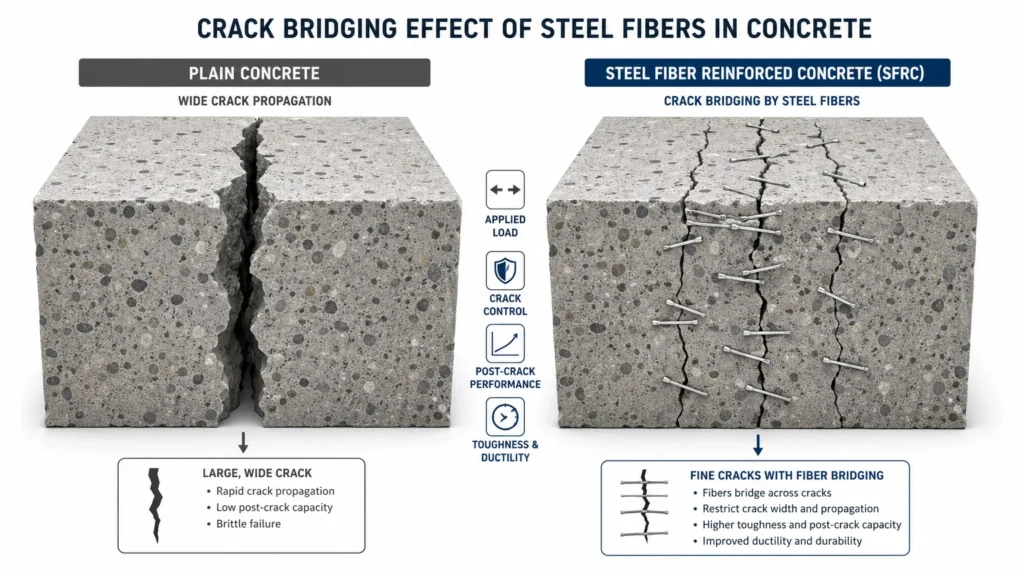
Concrete is strong in compression but weak in tension. Steel fiber changes that. When small steel filaments are mixed into concrete, they bridge cracks as they form. The result is post-cracking residual strength. The concrete doesn’t just shatter when it reaches its breaking point. It holds together. It carries load after it cracks.
The practical effects are clear:
- Crack control. Steel fiber limits both the width and the spread of cracks. This matters for industrial floors, pavements, and any structure exposed to heavy loads or repeated impact.
- Impact and abrasion resistance. SFRC (steel fiber reinforced concrete) absorbs energy better than plain concrete. That’s why it’s standard in warehouse floors, airport taxiways, and loading docks.
- Reduced conventional reinforcement. In some applications, steel fiber can replace or reduce traditional rebar and wire mesh. This cuts labor costs and speeds up placement.
For distributors, the takeaway is simple: steel fiber isn’t a niche additive. It’s a specification-driven product that engineers actively write into projects. If you don’t stock it, your customers will find someone who does.
Where Steel Fiber Is Used in Practice
Steel fiber reinforced concrete shows up in specific application categories:
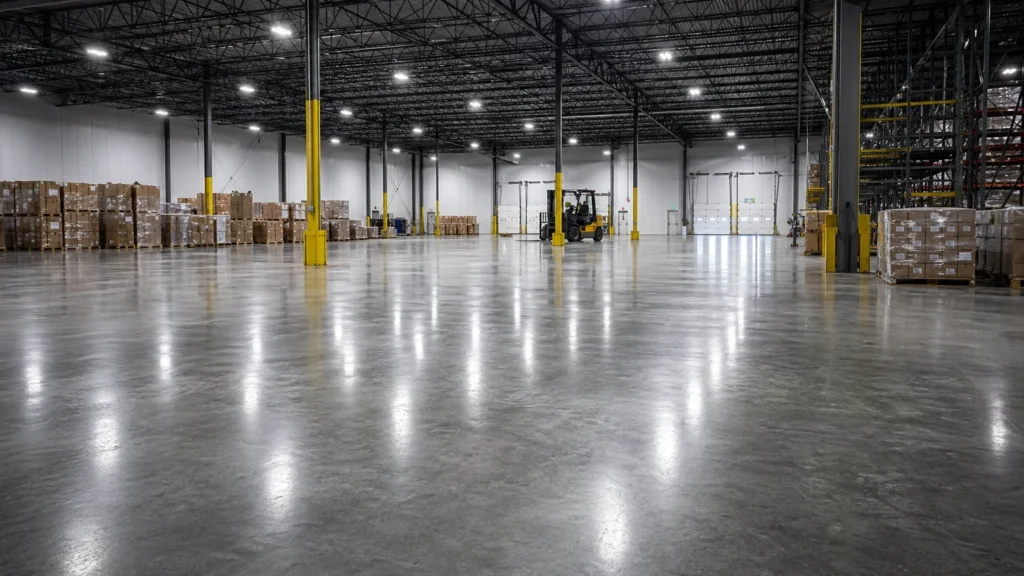
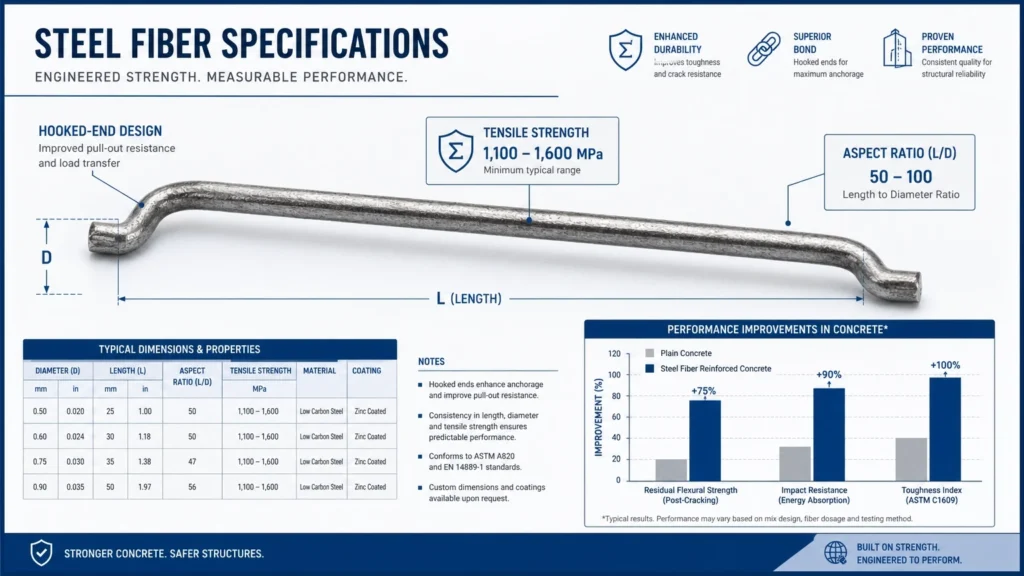
- Industrial floors and pavements. The single largest market. Warehouses, factories, and distribution centers use SFRC for joint-free or widely-spaced joint floors that handle forklift traffic and heavy loads.
- Tunnel linings and shotcrete. Steel fiber is standard in tunnel construction worldwide. It replaces wire mesh in sprayed concrete, reducing application time and improving safety.
- Precast elements. Manhole covers, utility vaults, drainage channels, and other precast products use steel fiber for durability and thinner section design.
- Infrastructure. Bridge decks, highway barriers, and airport pavements.
Regional demand patterns differ. The US market is strongest in industrial flooring and pavement. Europe leads in tunnel infrastructure and precast. The Middle East drives demand through mega-projects — airports, metro systems, and large-scale commercial developments. Southeast Asia is a growth market, particularly for industrial construction as manufacturing capacity expands.
Types of Steel Fiber for Concrete
By Manufacturing Process
ASTM A820 classifies steel fiber into five types based on how they’re made:
- Type I: Cold-drawn wire. The most common type on the market. High tensile strength (typically 1,000–2,000+ MPa), consistent geometry, and reliable performance. Most hooked-end fibers fall into this category. If you’re stocking one type, this is it.
- Type II: Cut sheet. Produced by cutting thin steel sheet into fibers. Lower tensile strength than cold-drawn wire, but also lower cost. Used in price-sensitive markets and non-structural applications.
- Type III: Melt-extracted. Made by extracting molten steel from a rotating wheel. Irregular shape provides good bond characteristics. Niche product, often specified for refractory and high-temperature applications.
- Type IV: Mill cut. Produced by milling steel directly into fiber shapes. Relatively uncommon in distribution.
- Type V: Modified cold-drawn wire. A newer classification for wire fibers with modified geometry for enhanced performance.
From a distributor’s perspective, Type I cold-drawn wire is the backbone of any steel fiber product line. Type II fills the budget tier. The rest are specialty items you stock based on specific project demand.
By Shape and Bond Mechanism
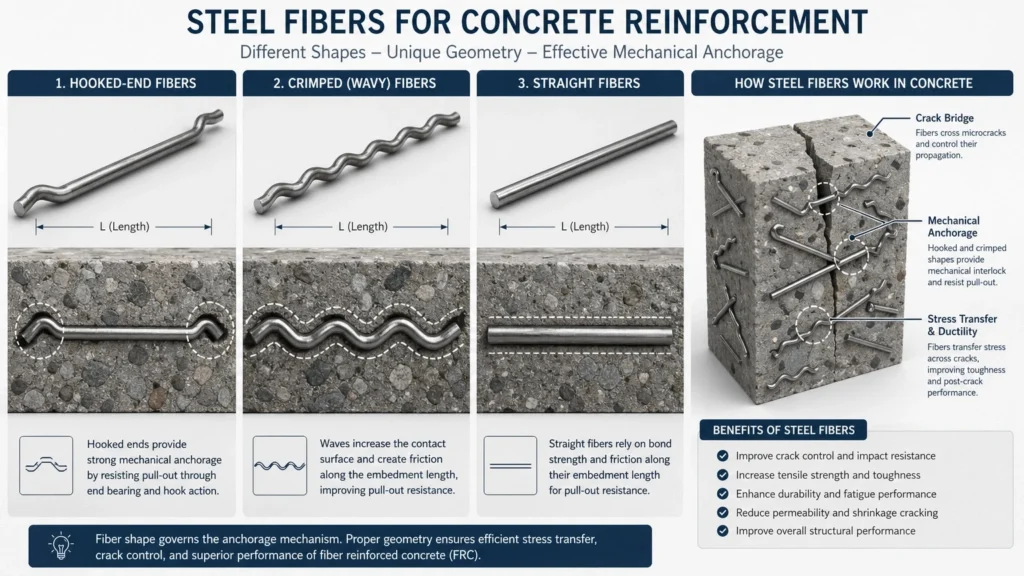
The shape of a steel fiber determines how well it anchors in the concrete matrix. This drives performance, and it’s what your customers care about most.
- Hooked-end. The dominant shape in the market. The hooks at each end mechanically anchor the fiber in the concrete, providing strong pull-out resistance. If you’re choosing one shape to lead with, hooked-end steel fiber is the safe bet. For a deeper look at fiber shapes, see our guide on the different types of steel fiber.
- Crimped. Wavy or corrugated fibers that grip the concrete through friction along their entire length. Strong in shotcrete and spray applications where fibers need to stay in place during high-velocity placement.
- Straight. The simplest and cheapest shape. Limited pull-out resistance because there’s no mechanical anchor. Used in budget applications or where dosage is high enough to compensate for lower individual fiber performance.
- Twisted and shaped. Fibers with twisted geometry or proprietary shapes designed for specific performance characteristics. Higher price point, higher margin potential. Typically project-specified rather than stocked off-the-shelf.
Which Type Sells Best in Your Market
Hooked-end cold-drawn wire (Type I) dominates the US and European markets. It’s the default specification for industrial floors and tunnel linings. Crimped fiber has a strong position in shotcrete applications, particularly in European tunnel construction.
Regional preferences are real, and they affect your SKU strategy. A distributor serving the US industrial flooring market should lead with hooked-end Type I fibers in 30–60 mm lengths. A distributor focused on European infrastructure might stock more crimped options alongside hooked-end.
Start with the bestseller — hooked-end Type I — and expand based on customer requests. Don’t try to stock every shape before you have demand for it.
Key Specifications Distributors Should Know
Tensile Strength and Aspect Ratio
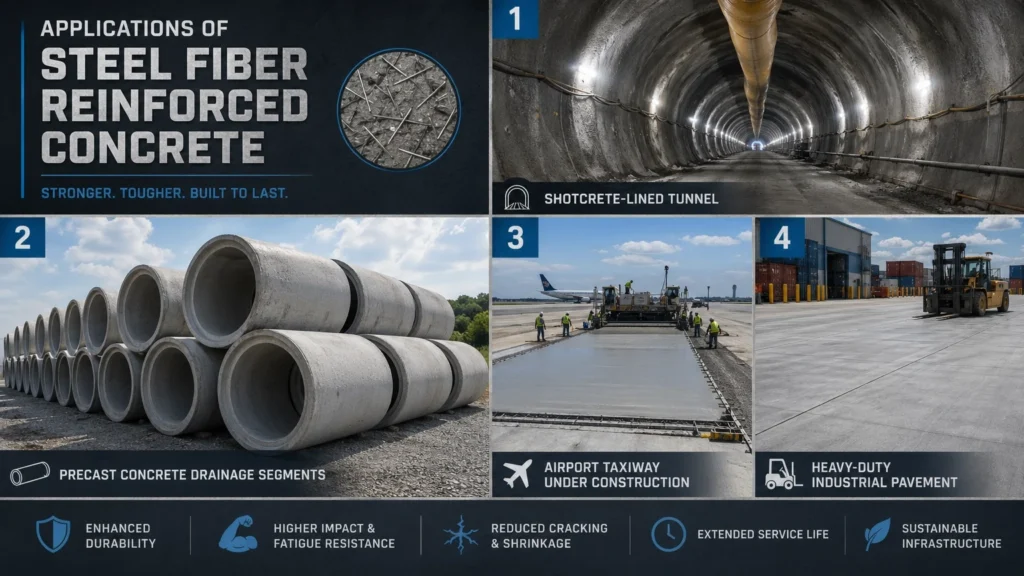
Two numbers matter more than any other when your customers evaluate steel fiber: tensile strength and aspect ratio.
Tensile strength ranges from roughly 345 MPa at the low end (cut sheet fibers) to over 2,000 MPa for high-performance cold-drawn wire. Higher tensile strength means better post-cracking performance. For most commercial applications, your customers will look for fibers in the 600–1,200 MPa range.
Aspect ratio is the ratio of fiber length to its equivalent diameter. A fiber 50 mm long with a 0.75 mm diameter has an aspect ratio of about 67. Higher aspect ratios generally improve performance because there’s more surface area for bonding. But they also increase the risk of balling (fibers clumping together during mixing). The practical range for most applications is 40–80.
What your customers actually ask about vs. what manufacturers advertise can be different. Engineers specify minimum tensile strength and preferred aspect ratio. Contractors want to know “will this ball up in my mix?” and “how much do I need?” Be ready to address both perspectives.
Dosage Rates and Mix Design
Steel fiber dosage is measured in kilograms per cubic meter of concrete (kg/m³). Typical ranges:
- Light reinforcement (crack control): 15–25 kg/m³
- Moderate reinforcement (industrial floors): 25–40 kg/m³
- Heavy reinforcement (tunnel linings, high-impact areas): 40–60 kg/m³
Dosage affects both performance and cost. Higher dosage means better crack control and residual strength, but it also means higher material cost and potential workability issues in the mix.
When customers ask “how much do I need?”, the honest answer is: it depends on the application, the project specification, and the fiber type. But having a reference chart with typical dosage ranges by application builds trust. It shows you know the product, not just the price.
Corrosion Resistance Options
Most steel fiber used in concrete is carbon steel. For indoor applications and dry environments, this works fine. Concrete’s alkaline environment passivates the steel, and as long as the fiber is fully embedded, corrosion isn’t a concern.
But some projects need more:
- Galvanized steel fiber — zinc-coated for moderate corrosion resistance. Common in structures exposed to moisture but not salt. Price premium is typically 15–25% over plain carbon steel.
- Stainless steel fiber — for marine environments, chemical plants, and structures exposed to de-icing salts. Price premium is significant (2–3x plain steel), but the projects that specify it have budgets to match.
Your customers usually know if they need corrosion-resistant fiber because their project specs require it. The opportunity for distributors is having the right product on the shelf when that spec comes in, rather than scrambling to source it at the last minute.
Standards and Certifications That Move Product
ASTM A820 — Steel Fiber Specification
ASTM A820 (officially ASTM A820/A820M) is the primary standard for steel fibers used in fiber-reinforced concrete in the US market. It classifies fibers by manufacturing process (Types I–V), specifies minimum tensile strength requirements, and defines dimensional tolerances.
Virtually every US public project that specifies steel fiber references ASTM A820. If your fiber doesn’t meet it, you can’t sell into those projects. Period.
As a distributor, you need to verify compliance through mill test certificates. Every batch of fiber from a reputable manufacturer comes with documentation showing tensile strength, dimensions, and compliance with A820. If a supplier can’t provide this, walk away.
EN 14889-1 — European Standard for Steel Fibres
EN 14889-1 is the European counterpart to ASTM A820. It covers classification, performance requirements, and conformity assessment for steel fibers used in concrete.
For distributors selling into the EU and UK, EN 14889-1 compliance is non-negotiable. Products bearing the CE mark must meet this standard. Your customers — especially those bidding on public infrastructure projects — will require it.
The key difference from ASTM A820 is that EN 14889-1 includes performance classes based on residual flexural strength. The standard doesn’t just evaluate the fiber itself. It evaluates how the fiber performs in concrete. Engineers find this more useful, and it’s a specification point worth understanding when you talk to customers.
ASTM C1116 — Fiber-Reinforced Concrete Specification
ASTM C1116 covers the concrete itself, not just the fiber. It specifies requirements for fiber-reinforced concrete as delivered to a purchaser, including mixture proportions, fiber content, and performance testing.
Contractors reference C1116 in project specifications. As a distributor, you don’t test the concrete — but you should know that this standard exists, because your customers will mention it. It’s also relevant when discussing polypropylene fiber for concrete, since C1116 covers all fiber types (steel, glass, and synthetic), and EN 14889-2 is the European counterpart for synthetic fibers specifically.
Why Certifications Matter for Your Customers
Certifications are not just regulatory checkboxes. They’re sales tools.
Here’s why they matter to your customers:
- Public projects require certified materials. Government-funded infrastructure — roads, tunnels, public buildings — almost always requires fibers that meet ASTM or EN standards. Without certified product, your customer can’t bid on those projects.
- Liability protection. If a concrete floor fails and the fiber wasn’t certified, the liability chain leads back to the supplier. Distributors who sell certified product protect themselves and their customers.
- Competitive advantage. When a contractor compares two suppliers, the one who can immediately provide mill test certificates and compliance documentation wins. Speed and documentation close deals — separately and together.
Make certification documentation part of your standard offering. Don’t wait for customers to ask for it.
Steel Fiber vs. Polypropylene Fiber: A Market Perspective
Performance Differences
Steel fiber and polypropylene fiber solve different problems in concrete. Understanding the distinction helps you sell both correctly.
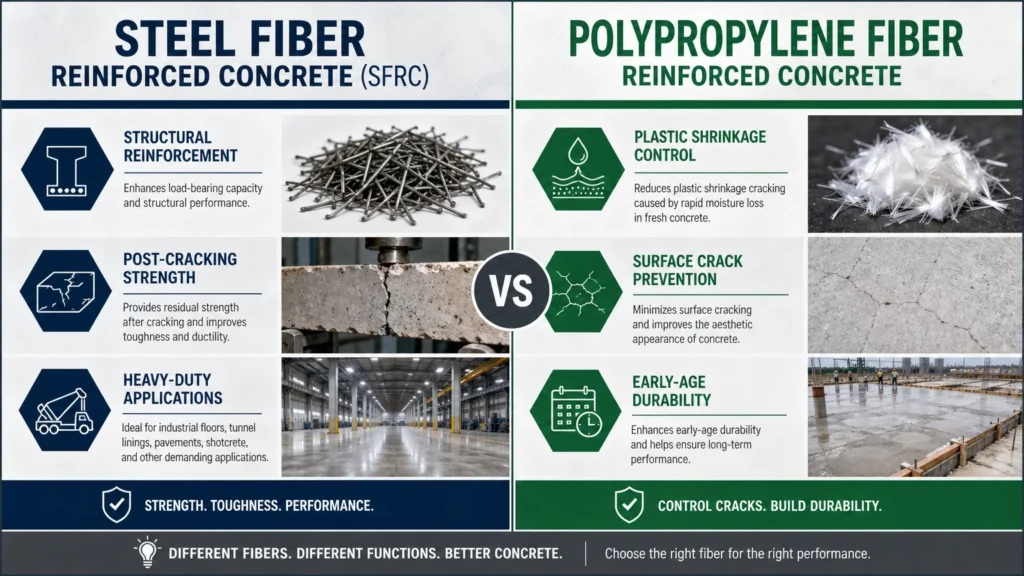
Steel fiber provides structural reinforcement. It increases post-cracking residual strength, improves impact resistance, and can replace or reduce traditional rebar in certain applications. Engineers specify it where load-bearing performance after cracking matters.
Polypropylene fiber controls plastic shrinkage cracking. It works during the early stages of concrete curing, when the mix is still settling and vulnerable to surface cracks from rapid moisture loss. It does not provide structural reinforcement.
These are not competing products. They’re complementary. Steel fiber handles structural demands. Polypropylene fiber handles early-age crack control. Many projects use both. For more on how PP fiber performs in concrete, see our article on polypropylene fiber reinforced concrete.
Market Positioning Differences
From a distributor’s perspective, these two products occupy different positions:
- Steel fiber is a specification-driven, project-based sale. Higher price per kilogram, higher margins, but longer sales cycles. You sell it when a project spec calls for it.
- Polypropylene fiber is often a stock item. Lower price per kilogram, lower margins, but higher volume and repeat orders. Contractors buy it routinely for crack control, even on projects where no one specified it.
The customer segments overlap but aren’t identical. Precast manufacturers and industrial flooring contractors are your core steel fiber buyers. General contractors and ready-mix suppliers are your core PP fiber buyers. Some customers buy both.
Why Many Distributors Carry Both
Carrying both steel and polypropylene fiber makes business sense for several reasons:
- Hybrid fiber concrete is growing. More engineers are specifying blends of steel and synthetic fibers to get both structural reinforcement and plastic shrinkage control in a single mix. This trend creates demand for both products from the same customer.
- Different projects need different solutions. A distributor who only carries steel fiber loses the crack-control customer. A distributor who only carries PP fiber loses the structural reinforcement customer. Carrying both keeps you in the conversation regardless of the project type.
- Cross-selling opportunity. When a customer calls about steel fiber for a tunnel lining, you can ask about crack control for their other projects — and offer PP fiber. The reverse works too. Learn more about how polypropylene fiber affects concrete performance.
The distributors who win are the ones who understand both products well enough to recommend the right one, or the right combination.
Sourcing Steel Fiber: What to Look For in a Supplier
Manufacturing Capacity and Consistency
The most important thing in a steel fiber supplier is consistency. Not the highest tensile strength. Not the lowest price. Consistency.
Why? Your customers, especially engineers and project managers, need to know that the fiber they tested in a lab sample is the same fiber that shows up on the jobsite in 6 months. If tensile strength varies between batches, the mix design becomes unreliable. That’s a fast way to lose a repeat buyer.
When evaluating a supplier, ask:
- What’s your annual production capacity? (Is it enough to handle your projected orders?)
- How do you ensure batch-to-batch consistency? (Look for specific answers: process controls, statistical sampling, ISO 9001 certification.)
- Can you provide consistent supply over a 12-month period? (Seasonal production fluctuations are a red flag.)
Red flags: vague answers about quality control, no ISO certification, unwillingness to provide test certificates from recent batches, or prices that seem too good to be true.
Quality Control and Test Certificates
Every reputable steel fiber manufacturer provides mill test certificates with each batch. These documents show:
- Tensile strength test results
- Dimensional measurements (length, diameter, aspect ratio)
- Compliance with the specified standard (ASTM A820, EN 14889-1, or both)
As a distributor, you should request third-party test reports as well — especially for your first order from a new supplier. Independent lab verification adds credibility when you’re selling to specifiers who need documentation.
Ecocretefiber™ provides mill test certificates with every shipment and supports third-party verification for key accounts. This is the level of documentation your customers expect, and it should be the standard you hold your suppliers to.
MOQ, Lead Time, and Logistics
Practical sourcing considerations:
- Minimum order quantity (MOQ). From Chinese manufacturers, MOQ typically ranges from 5 to 20 metric tons per order. Some suppliers offer trial quantities for new distributors. Negotiate this upfront — it affects your initial inventory investment.
- Lead time. Production takes 15–25 working days. Ocean freight from China to the US takes another 25–35 days. Plan for 6–8 weeks from order to delivery. Air freight is possible for urgent orders but doubles or triples the per-kilogram cost.
- Shipping optimization. Steel fiber is dense. A standard 20-foot container holds approximately 20–25 metric tons. Plan your ordering around container loads to minimize per-ton shipping costs.
Warehouse planning matters too. Steel fiber stores well in dry conditions and doesn’t degrade. But you need space. Factor in your projected monthly sales volume and order in batches that keep 60–90 days of inventory on hand.
Pricing and Margin Considerations
What Drives Steel Fiber Pricing
Steel fiber prices are tied to several variables:
- Raw material cost. Wire rod (the primary input for cold-drawn wire fiber) is a commodity. Its price fluctuates with global steel markets. When wire rod prices spike, fiber prices follow within 30–60 days.
- Manufacturing process. Cold-drawn wire fiber costs more to produce than cut sheet fiber because of the additional drawing process. Hooked-end shapes add another cost layer for the end-forming step.
- Coating and treatment. Galvanized and stainless steel options carry significant premiums. Plain carbon steel is the baseline.
- Order volume. Larger orders get better per-ton pricing from manufacturers. This is where distributor volume becomes an advantage.
Price volatility is real. Distributors who lock in pricing with supply agreements, even short-term ones, protect their margins better than those who buy spot.
Typical Margin Structures for Distributors
Distributor margins on steel fiber vary by market and customer type:
- US market: Distributor markup typically ranges from 15–30% over landed cost, depending on volume, project size, and competitive situation.
- European market: Margins tend to be tighter (10–20%) due to more established supply chains and stronger competition from local manufacturers.
- Middle East: Higher margins are possible (20–35%) because of project-driven demand and less price competition, but payment terms can be longer.
The key to protecting margins is value-add. Distributors who provide technical support, certification documentation, and reliable delivery earn higher margins than those competing on price alone. Be the supplier engineers call first, not the one they call last.
Frequently Asked Questions
What’s the minimum order quantity for steel fiber? Most manufacturers set MOQ between 5 and 20 metric tons. Some suppliers offer smaller trial orders for new distributors. Expect to commit to a container load for the best pricing.
Do I need different fibers for different applications? Yes. Tunnel shotcrete, industrial floors, and precast products each have different fiber requirements — different shapes, lengths, and tensile strengths. Start with the most demanded type in your market (usually hooked-end, 30–60 mm) and expand from there.
How do I store steel fiber before selling? Store in a dry, covered area. Steel fiber doesn’t have a shelf life in dry conditions, but moisture causes surface rust on carbon steel fiber. Keep the packaging intact until use.
Can steel fiber replace traditional rebar? In some applications, yes. Industrial floors, pavements, and certain precast elements can use steel fiber as a partial or full replacement for rebar or wire mesh. But this depends on structural requirements and local building codes. Always defer to the project engineer’s specification.
What’s the shelf life of steel fiber? Indefinite in dry storage. Carbon steel fiber may develop surface rust over time, but this doesn’t affect performance in concrete. Galvanized and stainless steel fibers have even better storage stability.
How do I know if a fiber meets ASTM A820? Request the mill test certificate from the manufacturer. It should list tensile strength, dimensions, and explicit compliance with ASTM A820. For added assurance, you can send samples to an independent testing lab.
Conclusion
Steel fiber for concrete is a specification-driven product with growing demand across industrial, infrastructure, and precast markets. Distributors who understand the types, specifications, and certification requirements are better positioned to win project bids and build lasting customer relationships.
The key is knowing what your customers need before they ask. Stock the right types. Maintain certification documentation. Understand the difference between steel fiber and polypropylene fiber — and carry both if your market supports it.
Ecocretefiber™ supplies both steel fiber and polypropylene fiber for concrete reinforcement, manufactured by Shandong Jianbang Chemical Fiber Co., Ltd. with full certification support and mill test documentation for every shipment. Contact us for product specifications, pricing, and sample requests.