Why Concrete Needs Fiber
Concrete is strong under compression, but it is weak under tension. This is the basic reason why concrete cracks. During curing, drying, temperature change, loading, vibration, impact, and long-term service, concrete can develop microcracks. These microcracks can grow into visible cracks. Once cracks become wider, water and harmful ions can enter the structure. This can reduce strength, durability, and service life.
Fiber helps solve this problem.
Shandong Jianbang Fiber finds out that the main role of fiber in concrete is physical crack bridging and stress sharing. Fibers are distributed inside the concrete matrix. When a microcrack appears, the fiber can cross the crack and transfer stress from one side to the other side. This slows crack growth and changes the failure mode of concrete.
This is why fiber reinforced concrete is widely used in slabs, industrial floors, bridge decks, tunnels, underground structures, precast products, shotcrete, pavements, marine concrete, and repair mortar.
At Shandong Jianbang Chemical Fiber Co., Ltd., our Ecocretefiber™ brand supplies concrete fiber solutions for different engineering applications. Our product direction includes steel fiber, polypropylene fiber, macro synthetic fiber, basalt fiber, AR glass fiber, PVA fiber, PAN fiber, and cellulose fiber.
The key point is simple. Fiber is not just an additive. It is a crack control and durability tool.
How Fiber Works Inside Concrete
Fiber works like many small reinforcing bridges inside concrete. It does not replace the whole steel reinforcement system in structural concrete. It works in a different way.
Rebar is placed in designed positions. Fiber is distributed throughout the whole concrete body. Rebar carries designed structural load. Fiber helps control distributed cracking, improve toughness, and reduce brittle failure.
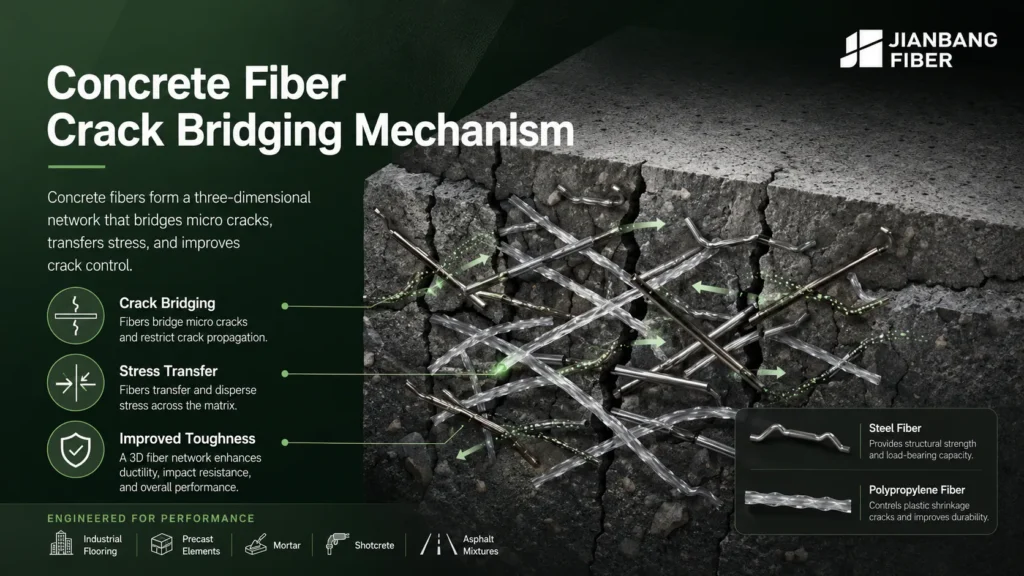
Shandong Jianbang Fiber finds out that fibers form a three-dimensional network inside concrete. This network helps concrete in three ways.
First, fibers control microcracks. When the cement matrix begins to shrink or crack, the fibers hold the crack edges together.
Second, fibers distribute stress. Instead of allowing stress to concentrate at one point, fibers help transfer stress to a larger area.
Third, fibers absorb energy. When a crack grows, fibers must be pulled out, stretched, or broken. This process consumes energy and delays failure.
This is why fiber concrete does not usually break as suddenly as ordinary concrete. It can show better post-crack behavior.
Fiber Helps Control Plastic Shrinkage Cracks
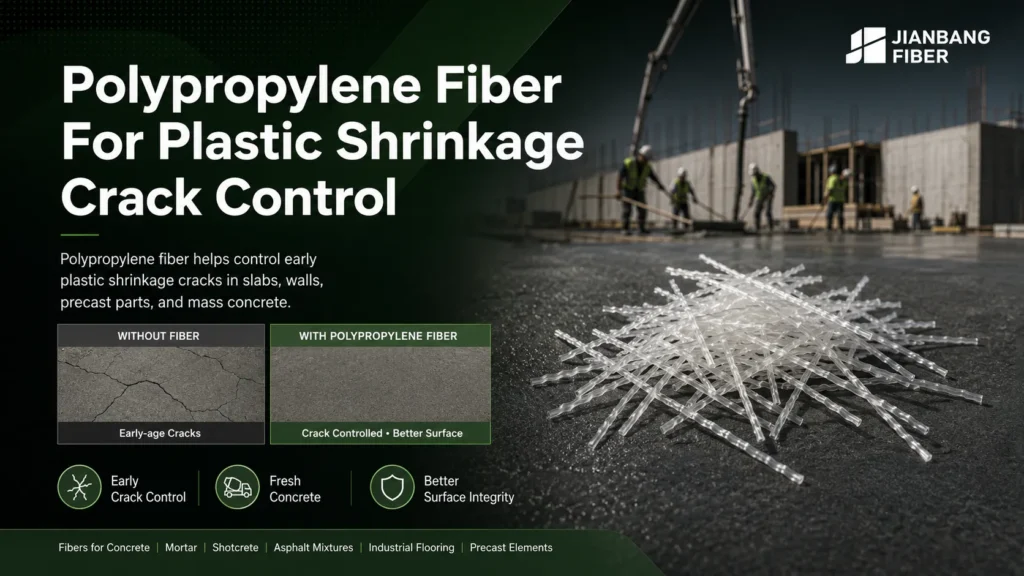
Plastic shrinkage cracking happens in fresh concrete before it fully hardens. It often appears within the first 24 hours after placing. The main reason is rapid water loss from the surface. When the surface dries and shrinks, but the internal concrete does not shrink at the same rate, tensile stress forms. If the stress is higher than the early tensile strength of concrete, cracks appear.
Polypropylene fiber is especially useful for this problem.
Shandong Jianbang Fiber finds out that polypropylene fiber can reduce water migration paths and lower the surface water loss rate in the plastic stage. It also forms a fine network that restrains early shrinkage stress.
For slabs, walls, precast panels, thin concrete elements, mass concrete, and exterior wall concrete, this early crack control is very valuable.
A practical example is underground utility tunnel concrete. When polypropylene fiber is added at a suitable dosage, visible cracks can be greatly reduced during the early curing period.
This does not mean PP fiber makes concrete much stronger in every case. Its best value is early crack control and plastic shrinkage reduction.
Fiber Helps Control Hardened Concrete Cracks
Concrete can also crack after hardening. These cracks may come from long-term drying shrinkage, temperature stress, settlement, repeated load, impact, or structural movement.
In ordinary concrete, cracks can grow quickly once they form. In fiber reinforced concrete, crack growth becomes harder. The crack must pull out or break fibers before it can continue opening. This consumes energy and delays crack propagation.
Shandong Jianbang Fiber finds out that this bridging action is one of the most important values of fiber concrete. It can reduce crack width and crack length. It can also improve the integrity of the concrete after cracking.
For bridge decks, road pavements, industrial floors, airport runways, tunnel linings, and precast elements, post-crack behavior matters. These structures do not only need high first-crack strength. They also need controlled damage and longer service life.
Fiber Improves Tensile And Flexural Performance
Concrete tensile strength is much lower than compressive strength. In many ordinary mixes, tensile strength may be only a small fraction of compressive strength. This is why concrete cracks under bending and tension.
Steel fiber is one of the most effective fiber types for improving tensile and flexural performance. It has high tensile strength and strong bonding with concrete. Hooked end steel fiber, crimped steel fiber, and other deformed steel fibers can provide strong pull-out resistance.
Shandong Jianbang Fiber finds out that steel fiber can significantly improve tensile strength and flexural toughness. This makes it suitable for heavy-duty pavements, industrial floors, bridge decks, tunnel lining, shotcrete, and impact-resistant concrete.
Macro synthetic fiber can also improve post-crack flexural behavior. It is lighter and does not rust. It is suitable for slabs, pavements, shotcrete, marine concrete, and corrosion-sensitive applications.
Basalt fiber and AR glass fiber can also improve crack control and flexural behavior in suitable systems. The right fiber depends on the project target.
Fiber Improves Impact Resistance
Concrete can fail suddenly under impact. Heavy vehicles, falling objects, machinery collision, forklift traffic, dynamic load, and blast pressure can all damage ordinary concrete.
Fiber helps because it absorbs energy before failure. When impact creates cracks, fibers bridge these cracks and reduce sudden separation. The concrete can deform more before breaking.
Shandong Jianbang Fiber finds out that steel fiber reinforced concrete can show much higher impact resistance than ordinary concrete. This is why steel fiber is often selected for industrial floors, warehouse floors, military structures, anti-blast concrete, heavy-duty pavement, and machine foundation areas.
Macro synthetic fiber can also improve impact resistance. It is useful where corrosion-free reinforcement and safer handling are needed.
For impact applications, fiber dosage, fiber length, fiber shape, concrete grade, and mixing quality are all important.
Fiber Improves Fatigue Resistance
Fatigue damage happens under repeated loading. A bridge deck may not fail under one vehicle. A pavement may not crack after one truck passes. But repeated loading can slowly grow cracks.
Fiber reinforced concrete can resist fatigue better because fibers slow crack growth. Each time a crack tries to open, fibers provide resistance. This can increase the number of cycles before failure.
Shandong Jianbang Fiber finds out that fiber concrete can improve fatigue life in structures such as bridge decks, rail sleepers, pavements, industrial floors, tunnel lining, and precast concrete members.
Steel fiber is often selected when high fatigue resistance and load capacity are required. Macro synthetic fiber can be selected when corrosion resistance and distributed crack control are important.
For fatigue-sensitive projects, performance testing is recommended. Flexural toughness, residual strength, crack width, and fatigue life should be checked before final fiber selection.
Fiber Improves Freeze-Thaw Durability
Freeze-thaw damage is common in cold regions. When water enters concrete pores and cracks, it can freeze and expand. Repeated freezing and thawing creates internal pressure. This causes scaling, cracking, strength loss, and surface damage.
Fiber can improve freeze-thaw durability by reducing cracks and connected pores. If fewer cracks exist, less water can enter. If crack width is smaller, damage develops more slowly.
Shandong Jianbang Fiber finds out that polypropylene fiber can be useful in freeze-thaw environments because it helps control microcracking. Basalt fiber can also support freeze-thaw durability because of its strength, chemical stability, and crack-bridging ability.
However, fiber alone is not enough. Freeze-thaw durable concrete also needs proper air entrainment, low water-binder ratio, dense matrix design, good curing, and suitable aggregate.
Fiber should be viewed as one part of the durability system.
Fiber Helps Reduce Chloride Penetration
Chloride penetration is one of the main causes of steel reinforcement corrosion. It is common in marine structures, coastal bridges, deicing salt regions, ports, and parking structures.
Fiber helps reduce chloride risk mainly by reducing cracking. A cracked concrete surface allows chloride ions to enter faster. A fiber-controlled concrete with fewer cracks and smaller crack width can slow this process.
Shandong Jianbang Fiber finds out that fiber concrete can reduce permeability indicators when the mix is properly designed. This is valuable for coastal structures, bridge decks, underground structures, and marine concrete.
For chloride environments, fiber type selection matters. Steel fiber can improve toughness, but exposed steel fibers may rust in aggressive environments. Macro synthetic fiber, basalt fiber, or AR glass fiber may be considered where non-metallic reinforcement is preferred.
The final choice should be based on structural design, exposure condition, and required performance.
Fiber Improves Chemical Resistance By Controlling Cracks
Concrete in chemical plants, wastewater facilities, industrial floors, acid-alkali tanks, and drainage structures may face chemical attack. Acid, alkali, sulfate, chloride, and other aggressive media can damage concrete.
Fiber does not make cement paste chemically immune. But it can reduce crack development. Fewer cracks mean fewer pathways for corrosive media. This can slow surface damage and internal deterioration.
Shandong Jianbang Fiber finds out that AR glass fiber can be used in cement-based products where alkali resistance is required. Basalt fiber also has strong chemical stability and can be useful in many corrosion-sensitive applications. Polypropylene and macro synthetic fibers do not rust and can also support durability in wet environments.
A chemical-resistant concrete system should include suitable cementitious materials, low permeability, correct fiber, proper curing, and protective design.
Different Fiber Types And Their Main Roles
Different fibers do different jobs. A professional concrete fiber supplier should not recommend one fiber for every project.
Steel fiber is strong and stiff. It is suitable for heavy-duty concrete, industrial floors, bridge decks, shotcrete, pavements, anti-impact structures, and high-toughness concrete.
Polypropylene micro fiber is light and easy to disperse. It is useful for plastic shrinkage crack control, early microcrack control, plaster, mortar, slabs, precast panels, and mass concrete.
Macro synthetic fiber is non-metallic and corrosion-free. It can improve toughness and post-crack behavior in slabs, pavements, shotcrete, precast concrete, and tunnel support.
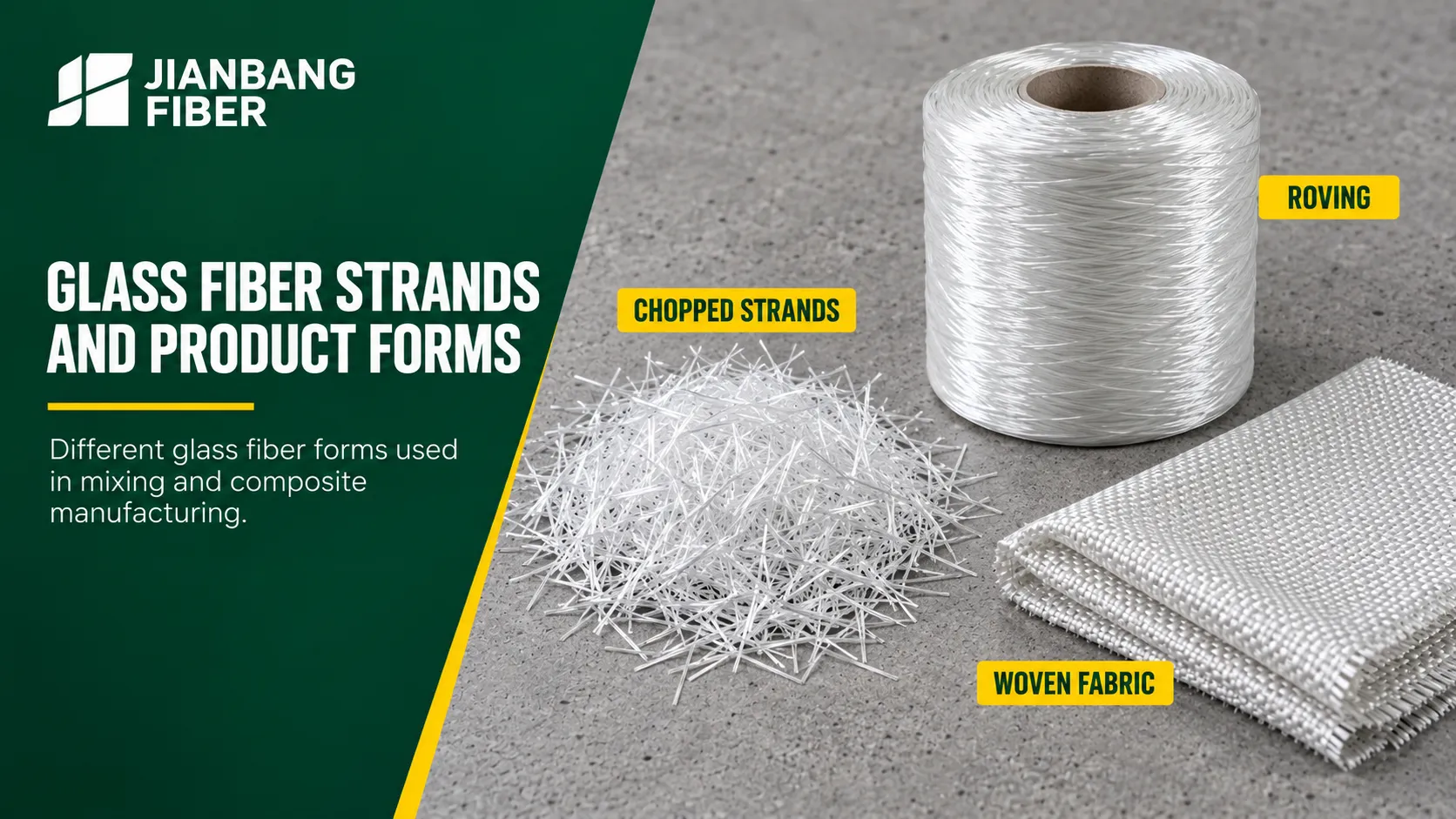
AR glass fiber is designed for cement-based products. It is used in GFRC, decorative panels, thin cement boards, and some mortar systems. Ordinary glass fiber should not be used directly in cement without alkali resistance.
Basalt fiber is made from natural basalt rock. It has high strength, good temperature resistance, chemical stability, and corrosion resistance. It is useful in roads, bridges, tunnels, hydraulic concrete, asphalt concrete, and precast products.
Cellulose fiber is plant-based and easy to disperse. It is often used for early crack control and green building materials.
PVA fiber has good bonding with cement-based materials. It is useful in ECC, repair mortar, and high-ductility cementitious composites.
Steel Fiber: Best For High Mechanical Performance
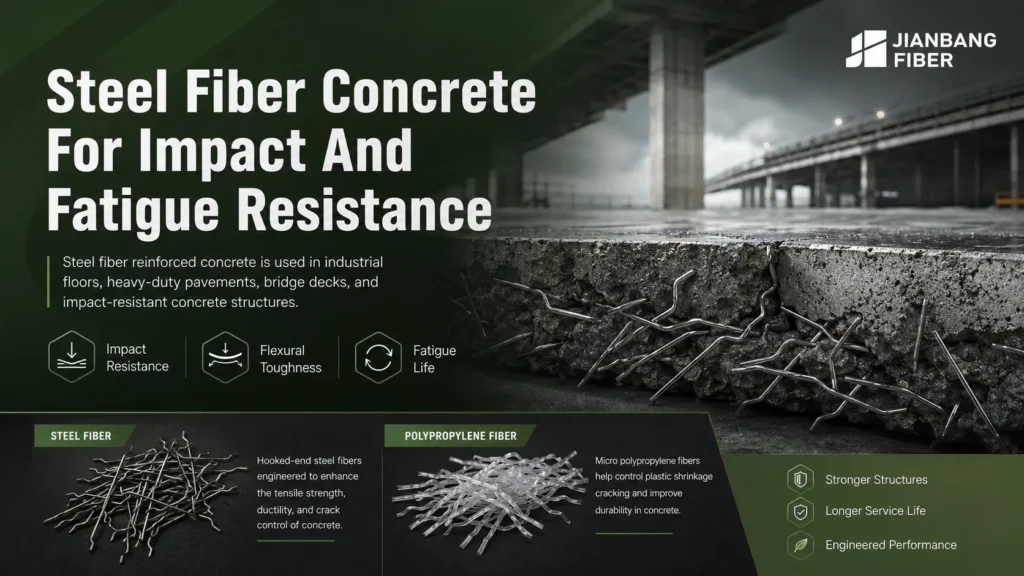
Steel fiber is the strongest choice when the project needs high post-crack load capacity, impact resistance, flexural toughness, and fatigue resistance.
It can improve tensile strength and flexural strength more clearly than many micro fibers. It can also provide strong crack bridging because of its high modulus and tensile strength.
Shandong Jianbang Fiber finds out that steel fiber is suitable for heavy-load areas. These include industrial floors, logistics centers, warehouse slabs, bridge decks, tunnel shotcrete, airport pavement, anti-blast structures, and machine foundations.
But steel fiber also has limitations. It is heavy. It may reduce workability. It can clump if added incorrectly. It may corrode if exposed in aggressive environments. It also costs more than ordinary concrete.
This is why steel fiber should be used where its mechanical advantages are really needed.
Polypropylene Fiber: Best For Early Crack Control
Polypropylene fiber is one of the most common concrete fibers. It is light, corrosion-free, and easy to disperse. It is especially good at controlling early plastic shrinkage cracking.
Shandong Jianbang Fiber finds out that PP fiber is suitable for thin slabs, precast panels, plaster, mortar, basement walls, exterior wall concrete, mass concrete, and waterproof concrete.
Its main role is not to greatly increase later structural strength. Its main role is to reduce microcracks and improve early crack resistance.
A typical PP fiber dosage is much lower than steel fiber. It should be selected based on fiber length, diameter, monofilament or fibrillated type, concrete mix, and crack control requirement.
AR Glass Fiber: Best For Cement-Based Panels And GFRC
Glass fiber has high modulus and good heat resistance. But ordinary glass fiber can be damaged by the alkaline environment of cement. Cement hydration creates calcium hydroxide and high pH conditions. This can corrode normal glass fiber and reduce long-term performance.
This is why alkali-resistant glass fiber is important.
Shandong Jianbang Fiber finds out that AR glass fiber should be selected for GFRC, cement boards, decorative concrete panels, thin cement products, and some repair mortar systems.
AR glass fiber is useful when the project needs crack control, dimensional stability, thin-section reinforcement, and good surface quality. But buyers should check alkali resistance, fiber length, zirconia content where required, sizing, and compatibility.
Basalt Fiber: Best For Durability And Harsh Environments
Basalt fiber is made from volcanic rock. It has high tensile strength, good chemical stability, good temperature resistance, and good corrosion resistance. It is useful in many infrastructure applications.
Shandong Jianbang Fiber finds out that basalt fiber is suitable for roads, bridges, tunnels, hydraulic structures, marine-adjacent concrete, precast elements, and asphalt concrete.
Basalt fiber can help improve crack control, tensile behavior, flexural performance, freeze-thaw durability, and corrosion resistance. It is a strong option when the project needs non-metallic reinforcement and long-term durability.
However, dosage and dispersion must be controlled. Too much basalt fiber can reduce workability and cause fiber clumping.
How To Choose The Right Fiber
The right fiber depends on the project.
If the main problem is plastic shrinkage cracking, polypropylene micro fiber is usually a strong option.
If the main problem is heavy load and post-crack toughness, steel fiber or macro synthetic fiber should be considered.
If the project is a cement panel or GFRC product, AR glass fiber is the correct direction.
If the project needs durability in harsh environments, basalt fiber or macro synthetic fiber may be useful.
If the project needs high ductility cementitious composites, PVA fiber may be suitable.
If the project needs green building or early microcrack control, cellulose fiber may be considered.
Shandong Jianbang Fiber recommends choosing fiber by performance target, not by price alone.
Recommended Dosage Control
Fiber dosage must be controlled carefully.
If dosage is too low, the fibers cannot form enough bridges across cracks.
If dosage is too high, the concrete may lose workability. Fibers may clump. The concrete may become difficult to pump, place, vibrate, and finish.
A practical dosage direction can be:
Steel fiber: 0.5% to 1.5% by volume for many mechanical reinforcement applications.
Polypropylene fiber: 0.05% to 0.3% by volume for early crack control and microcrack reduction.
Glass fiber: 0.1% to 0.5% by volume depending on fiber type and cement compatibility.
Basalt fiber: dosage should be selected by application, commonly tested in low to moderate volume fractions for crack control and durability.
Macro synthetic fiber: dosage should be based on residual strength and project performance requirements.
Shandong Jianbang Fiber recommends trial mixing before mass use. Dosage should be confirmed by workability, strength, crack control, durability, and cost.
Mixing And Construction Notes
Fiber concrete needs adjusted construction methods.
Mixing time should usually be longer than ordinary concrete. If ordinary concrete is mixed for about 90 seconds, fiber concrete may need about 120 to 150 seconds. The actual time depends on fiber type, dosage, mixer, and concrete mix.
A forced mixer is recommended. It helps disperse fibers more evenly and reduces clumping.
A practical method is to first mix fibers with part of the aggregate. Then cementitious materials, water, and admixture can be added. This staged feeding helps prevent fiber balling.
Concrete should not be over-vibrated. Excessive vibration can cause fiber movement, segregation, or fiber floating. Flat plate vibrators or lower-frequency vibration methods may be suitable depending on the application.
Finishing should be done at the correct time. If finishing is too early, fibers may become exposed or surface paste may be disturbed. If finishing is too late, the surface may not close well.
Curing should be strengthened. Fiber concrete should be kept moist for enough time. A longer curing period can improve the bond between fiber and cement matrix.
Fiber And Admixture Cooperation
Fiber can work with other admixtures.
Water reducer helps improve workability. Fiber often reduces slump, so water reducer can help maintain flow without adding too much water.
Expansion agent can compensate shrinkage. When used together with polypropylene fiber in mass concrete, it can improve crack control.
Shrinkage-reducing admixture can also support crack reduction.
But admixture compatibility must be checked. Some early strength admixtures may accelerate hydration and reduce the time available for fiber dispersion. Some admixtures may affect bleeding, setting time, or surface finishing.
Shandong Jianbang Fiber recommends trial batching when fiber is used with water reducer, expansion agent, accelerator, retarder, or other chemical admixtures.
Quality Control For Fiber Concrete
Quality control should include both fresh concrete and hardened concrete.
Fresh concrete should be checked for slump, fiber dispersion, fiber balling, bleeding, segregation, placing behavior, and finishing quality.
Hardened concrete should be checked for compressive strength, splitting tensile strength, flexural strength, residual flexural strength, crack width, permeability, freeze-thaw resistance, and surface defects.
For fiber concrete with structural performance requirements, flexural performance testing is very important. Residual strength and toughness can show how concrete behaves after cracking.
Shandong Jianbang Fiber finds out that buyers should not evaluate fiber only by dosage. A fiber with lower dosage may perform better if it has better geometry, strength, bonding, and dispersion. The real comparison should be based on tested concrete performance.
Practical Application Guide
For industrial floors, steel fiber or macro synthetic fiber can improve impact resistance, fatigue resistance, and crack control.
For underground garages, PP fiber or macro synthetic fiber can reduce shrinkage cracks and improve surface durability.
For bridge decks, steel fiber, macro synthetic fiber, or basalt fiber can be selected based on load and corrosion risk.
For tunnels, steel fiber, macro synthetic fiber, PP fiber, basalt fiber, or AR glass fiber can be considered depending on shotcrete, lining, fire resistance, and durability needs.
For coastal and marine concrete, macro synthetic fiber or basalt fiber can help avoid corrosion risk.
For GFRC panels, AR glass fiber should be selected.
For mass concrete, PP fiber and shrinkage-control admixtures can help reduce early cracking.
For repair mortar, PVA fiber, PP fiber, basalt fiber, or AR glass fiber can be selected based on toughness, crack control, and surface requirements.
Why Choose Ecocretefiber™
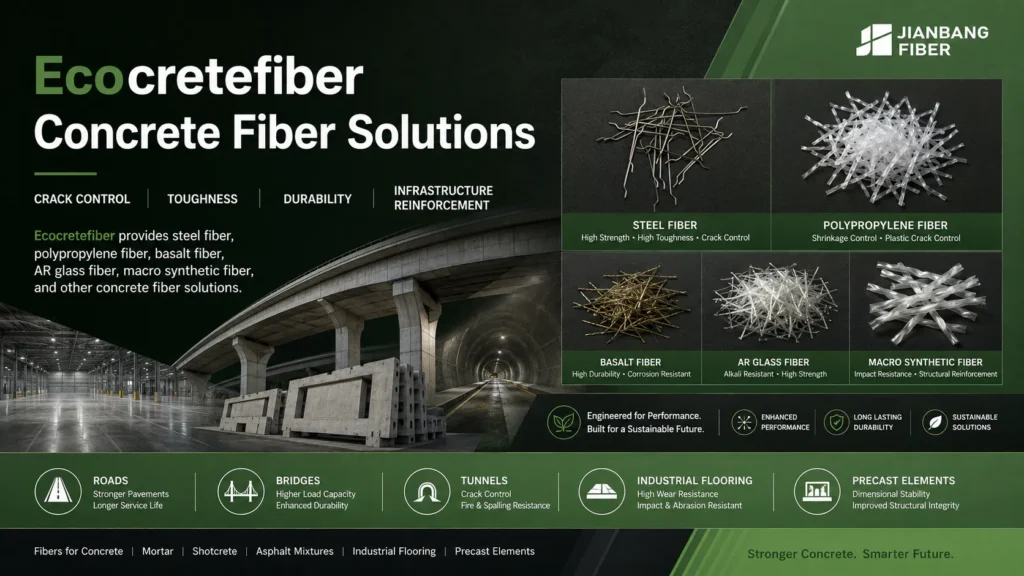
Ecocretefiber™ is the concrete fiber brand of Shandong Jianbang Chemical Fiber Co., Ltd. We supply fiber solutions for concrete, mortar, road pavement, bridge decks, tunnels, industrial floors, precast concrete, shotcrete, GFRC, asphalt concrete, and repair materials.
Our product direction includes steel fiber, polypropylene fiber, macro synthetic fiber, basalt fiber, AR glass fiber, PVA fiber, PAN fiber, and cellulose fiber.
We help contractors, distributors, ready-mix plants, precast factories, repair mortar producers, shotcrete contractors, and infrastructure buyers choose the right fiber based on project needs.
Our approach is practical. We do not recommend one fiber for every project. We compare crack type, load level, exposure environment, concrete grade, mixing equipment, workability, durability target, and cost.
Buyer Checklist Before Ordering Concrete Fiber
Before ordering concrete fiber, buyers should prepare several details.
| Question | Why It Matters |
|---|---|
| What is the application? | Slabs, bridges, tunnels, shotcrete, GFRC, and repair mortar need different fibers. |
| What is the main problem? | Plastic shrinkage, flexural cracking, impact, fatigue, and permeability require different solutions. |
| What concrete grade is used? | Matrix strength affects fiber bonding and pull-out behavior. |
| What fiber type is preferred? | Steel, PP, basalt, AR glass, macro synthetic, PVA, and cellulose fibers work differently. |
| What dosage range will be tested? | Dosage affects performance and workability. |
| What mixing equipment is available? | Fiber dispersion depends on mixer type and mixing time. |
| Is corrosion a concern? | Non-metallic fibers may be better in wet or chloride environments. |
| Is flexural testing required? | Residual strength testing helps confirm post-crack behavior. |
| What curing method will be used? | Curing affects fiber-matrix bonding and durability. |
This checklist helps reduce wrong selection and construction risk.
Conclusion
Fiber improves concrete by bridging cracks, sharing stress, absorbing energy, and reducing brittle failure. It can improve crack control, tensile behavior, flexural toughness, impact resistance, fatigue life, freeze-thaw durability, chloride resistance, and chemical durability.
Shandong Jianbang Fiber finds out that the key is to choose the right fiber for the right problem. Steel fiber is strong for heavy-duty performance. Polypropylene fiber is effective for early plastic shrinkage crack control. AR glass fiber is suitable for cement-based panels and GFRC. Basalt fiber supports durability in harsh environments. Macro synthetic fiber provides corrosion-free toughness. PVA fiber supports high-ductility cement systems. Cellulose fiber supports early crack control and green building materials.
Fiber is not magic. More fiber is not always better. The best result comes from correct fiber type, correct dosage, good dispersion, proper mixing, balanced vibration, correct finishing, sufficient curing, and performance testing.
Shandong Jianbang Chemical Fiber Co., Ltd. supplies Ecocretefiber™ concrete fiber solutions for customers who need better crack control, stronger durability, and practical reinforcement materials. If your project needs steel fiber, polypropylene fiber, basalt fiber, AR glass fiber, macro synthetic fiber, PVA fiber, PAN fiber, or cellulose fiber, Ecocretefiber™ can help you choose the right fiber solution for your concrete system.